top of page

Follow on Social Media

  • Facebook
  • Twitter
  • Screenshot 2022-09-18 at 5.20.40 PM

M'sia Developments
[on SubStack]

  • Screenshot 2022-09-18 at 5.20.40 PM

KUALA LUMPUR, Malaysia, May 12 2026 (IPS) - Transnational agribusinesses increasingly shape food policies worldwide. Claiming to best address recent food security concerns, they seek to profit more from innovations in food production, processing, and distribution.


Post-war food security

Food policies in the Global South have evolved significantly since World War Two (WWII), especially after nations in Asia and Africa gained independence, often after experiencing wartime food deprivations.

The early post-WWII and post-colonial eras saw new emphases on food security, especially following severe food shortages before, during, and after the war.

Many starved as millions experienced acute malnutrition. The wartime Bengal famine in India claimed over three million lives as Churchill prioritised British imperial interests and military priorities.

After WWII, colonial powers weaponised food supplies for counterinsurgency and population control purposes, especially to overcome popular anti-imperialist resistance.

Many who died were not military casualties but victims of deliberate counter-insurgency food deprivation. Unsurprisingly, food security efforts became a popular policy priority after WWII.

Western-controlled research organisations, including the United Nations Food and Agriculture Organisation (FAO), became highly influential, shaping and even developing post-colonial food security policies.


Green Revolution

Public research institutions were established in developing countries, many of which are affiliated with the Consultative Group on International Agricultural Research (CGIAR).

The Green Revolution initially focused on increasing yields of wheat, maize, and rice. These efforts increased cereal production unevenly during the 1960s and 1970s.

Malthusian logic held that rising life expectancies meant population growth outstripped the increase in food supply, constrained by limited agricultural land.

As government funding from wealthy nations declined, powerful corporate interests and philanthropies became even more influential. They often promoted their own interests at the expense of farmers, consumers, and the environment.

The International Fund for Agricultural Development (IFAD) was established in the 1970s, channelling a small share of windfall petroleum incomes into food and agricultural development.


Soon after, the US transformed its Public Law (PL) 480 program into the World Food Programme (WFP). Thus, some FAO functions were ceded to donor-controlled UN funds and programmes also set up in Rome.


Embarrassingly, an FAO report found WFP food supplies were withheld from Somalia to avoid being taken by the ‘Islamist’ As-Shabaab militia. Chatham House also estimated two to three hundred thousand deaths as a consequence.


Neoliberalism

The counter-revolution against national development efforts in the 1980s undermined government fiscal capacities, import-substituting industrialisation, and food security efforts.


Neoliberal structural adjustment policies involving economic liberalisation were imposed on heavily indebted developing countries, mainly in Latin America and Sub-Saharan Africa.


The Global North promoted trade liberalisation, undermining earlier protection of and support for food and industrial production.


Powerful food conglomerates sponsored and promoted import-friendly food security indicators, undermining FAO and other civil society research and advocacy efforts.


Countries hardly producing any food were highly ranked, as civil society organisations tried to counter with their own indicators, mainly focused on food sovereignty.


Trump 2.0

A new phase has begun with Donald Trump’s re-election as US president.


Trump 2.0’s weaponisation of economic policies and agreements, including food supplies, has ominous implications for countries trying to assert some independence.


Economic and military threats have been used for diverse ends, including economic, political, and other ‘strategic’ goals. Tariffs and sanctions are now part of a diverse arsenal of such weapons deployed for various purposes.


Governments have even been threatened with tariffs and sanctions for personal reasons. Trump has demanded Brazilian ex-President Jair Bolsonaro’s freedom following his failed coup after losing the last presidential election.


Deploying such economic weapons has worsened the deepening worldwide economic stagflation, as various Trump economic and military policy threats exacerbate contractionary and inflationary pressures.


The US-controlled WFP was long used to provide food aid selectively. But there is little sympathy left in Washington for other nations’ food security concerns.


To cut federal government spending, Trump has ended official development and humanitarian assistance, including food aid, while the US remains the world’s leading food exporter.


Nevertheless, Trump may take unexpected new steps to boost farmers’ earnings to recover electoral support before the November mid-term election.


Weaponisation of food aid took an ominous turn during the Israeli siege of Gaza, by calibrating food access to enable selective ethnic cleansing.


The Gaza Humanitarian Foundation attracted hungry residents to its food centres, causing hungry families desperately seeking food to be shot while seeking food.


Poverty is primarily defined by inadequate access to food, while the FAO considers income the main determinant of food insecurity.


Although World Bank poverty measures have generally continued to decline, FAO indicators suggest a reversal of earlier progress in food security over the last decade.


These contradictory trends not only reflect problems in estimating and understanding poverty and food security but also suggest that resulting policies are poorly informed, if not worse.


Related IPS Articles


Professor Felice Noelle Rodriguez is Director of the Centre for Local History and Culture, Universidad de Zamboanga, Philippines.


KUALA LUMPUR, Malaysia, Mar 31 2026 (IPS) - While media coverage of Iran’s restrictions on passage through the Hormuz Straits focuses on fuel prices, partial closure is also disrupting crucial fertiliser and other supplies, risking catastrophe for billions worldwide.


Hormuz chokepoint

Since the war began, only a few of the hundred or so vessels, previously passing through the narrow Straits of Hormuz daily, still do so.


Hormuz is not just a chokepoint on a shipping lane for oil and gas; it has strategic implications for fertiliser, helium, and other energy-intensive exports as well as for food and other imports to the region.

Higher energy costs affect most transportation and farming requirements, such as tilling and harvesting, as well as fertiliser supplies.

Wars, especially protracted ones, have lasting effects, including for agrifood systems. Without earlier investments, output elsewhere cannot be easily increased.

Alternative fertiliser supply sources are not readily available, especially as agro-ecological options have rarely been seriously pursued despite their proven viability.

As with renewable energy generation to reduce the need for petroleum imports, it is unclear whether the looming food crisis will accelerate the needed and feasible agro-ecological transition for enhanced food security.

Disrupted food supplies

Shipping delays and port congestion disrupt food supplies, trade and availability.


The Gulf’s populations, augmented by millions of migrant workers, have become reliant on food imports for wheat, rice, soy, sugar, cooking oil, meat, animal feed and more.

Many states have recently tried to improve their food security, expanding strategic reserves, investing in food agriculture and alternative supply routes.

Such measures have improved resilience but cannot address a prolonged blockade of the Persian Gulf. About 70% of the food for Saudi Arabia, Iraq and the Gulf emirates passes through Hormuz.

Replacing disrupted food imports for about 100 million people would require moving almost 100 million kilograms (kg) of food into the region daily by other means.

Supplying food to the Gulf region under blockade would require an unprecedented operation, possibly through contested airspace.

In 2024, the UN World Food Programme delivered about 7 million kg of food daily to 81 million people in 71 countries.

Weather-driven food shortages and price spikes triggered political instability in 2008 and 2010-11. With food systems worldwide increasingly vulnerable to climate shocks, food insecurity threatens regimes everywhere.


Fertilisers

Farmers worldwide need stable supplies of fertilisers and fuel.


The Iran war threatens to disrupt these supplies, so crucial to agricultural production. Staple crops like wheat, rice and maize rely heavily on fertilisers.


Iran, Qatar, Saudi Arabia, the Emirates and Bahrain all ship petroleum products through Hormuz, including a fifth of the world’s liquefied natural gas (LNG).


As LNG is key to producing many fertilisers, Gulf exports have become more significant, especially after the war cut Ukraine’s exports, and China and Russia reduced theirs as well.


In 2024, the Middle East accounted for almost 30% of major fertiliser exports, including nitrogen, phosphate and potash.


The Gulf alone exported 23% of the world’s ammonia and 34% of its urea, while 30-40% of the world’s nitrogen fertiliser exports pass through Hormuz!


In mid-2025, Kpler estimated that a Hormuz closure could reduce fertiliser supplies by 33%, with sulphur-based ones falling by 44% and urea by 30%.


Reduced nitrogen-based fertiliser exports would hurt major food exporters such as Brazil, the US, Thailand, and India, all heavily reliant on fertiliser imports. However, the impact of shortages may be delayed until imported stocks run out.


As the war drags on, farmers may cut fertiliser use by planting less or switching to crops requiring less. Poorer harvests would, in turn, adversely affect later investment, planting and fertiliser use.


Who suffers most?

The economic consequences of the unprovoked US-Israeli assault on Iran and Tehran’s responses are spreading fast and catastrophically, especially for the most vulnerable.


Iran’s new leadership mistrusts Washington and will keep Hormuz closed – choking fuel, food, and fertiliser flows through it – to secure the guarantees it needs to reduce its vulnerability.


As attacks on Iran continued, Tehran stepped up targeted attacks on infrastructure in the Gulf kingdoms hosting US military facilities. US-led efforts have provided little relief to its allies.


The worldwide impact is uneven, with the poorest taking the brunt. Asia and Africa have been hard hit by heavy reliance on oil, gas, and fertiliser imports.


Rich nations’ aid cuts to increase military spending have worsened poverty and hunger for millions, many of whom are also victims of war and aggression.


Unlike the rich, many migrant workers in the Gulf who cannot leave will struggle to make ends meet and send money home to their families.


And as the world’s attention has turned to the Gulf, Israel has worsened conditions in Gaza while taking over southern Lebanon and increasing Yemen’s pain.


Concerned about retribution in November’s mid-term elections, the White House is keen on a ceasefire.


But it has not offered terms acceptable to Iran, which remains suspicious of the US commitment to its own promises, let alone the rule of law.


Hence, the Iranian leadership is unlikely to agree to a ceasefire without credible guarantees for its future security from renewed Israeli and US aggression.


The Iran war has highlighted, yet again, the collateral damage of war and the food system’s vulnerability. Meanwhile, the suffering of the more vulnerable is ignored by the greater powers, who pay little heed to their plight.


Related IPS Articles


Latest Videos

All Videos

All Videos

AN URGENT CALL: A PEOPLE"S VACCINE AGAINST COVID-19

00:00
9 June 2020: IHD-ILO-ISLE Virtual Conference - Day 2

9 June 2020: IHD-ILO-ISLE Virtual Conference - Day 2

05:08:34
Learning in Governance in times of COVID-19

Learning in Governance in times of COVID-19

46:30
Beyond the Lockdown: Towards the ‘New Normal’

Beyond the Lockdown: Towards the ‘New Normal’

59:10

About Jomo

Jomo Kwame Sundaram is Research Adviser, Khazanah Research Institute, Fellow, Academy of Science, Malaysia, and Emeritus Professor, University of Malaya. Previously, he was UN Assistant Secretary-General for Economic Development, Assistant Director General, Food and Agriculture Organization (FAO), Founder-Chair, International Development Economics Associates (IDEAs) and President, Malaysian Social Science Association. 

In The Media

TheStar 26 June 2020

TheStar 26 June 2020

The Star 20 Sept 2019

The Star 20 Sept 2019

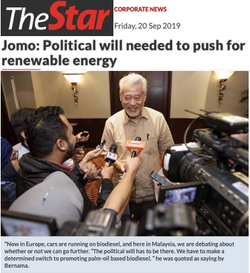
Political will needed to push for renewable energy

The Star 10July 2019

The Star 10July 2019

Malaysian businesses need boost

The Star 9 Oct 2019

The Star 9 Oct 2019

Subsidise public transport for bottom 40%

The Edge 26 Sept 2019

The Edge 26 Sept 2019

Call for measures to counteract global headwinds

The Edge 9 Oct 2019

The Edge 9 Oct 2019

Subsidise public transportation, not fuel

The Star 8 Oct 2019

The Star 8 Oct 2019

Subsidise public transportation for bottom 70%

TheEdge 2Oct 2019

TheEdge 2Oct 2019

"We need to counteract downward forces"

Fake News

PLEASE BEWARE OF MISREPRESENTATIONS OF IMAGES OF JOMO

Commercial and political misrepresentation of his image attributing to him to things which he never said or misrepresenting things he may have said is being circulated on websites such as those posted here. 


You should also be warned, in case you are not already aware, of ‘click bait’ i.e. using such images simply to attract your interest, and then to download your online information for abuse for a variety of ends.

Please inform us and provide a screenshot and weblink to enable further action, which is incredibly difficult. 

Thank you for reading this and for your help and cooperation.

This has also been flagged on his official Facebook page


JKS image ad2.jpg
JKS image Bitcoin ad on  Facebook.jpg
JKS - Fake News 2.jpg
Contact Me
JKS - Fake News 3.jpg
JKS fake news 1.jpg

Contact Me

  • Facebook Social Icon
  • Twitter Social Icon

Thank you for reaching out!

bottom of page