top of page

Follow on Social Media

  • Facebook
  • Twitter
  • Screenshot 2022-09-18 at 5.20.40 PM

M'sia Developments
[on SubStack]

  • Screenshot 2022-09-18 at 5.20.40 PM

KUALA LUMPUR, Malaysia, Dec 16 2025 (IPS) - The new US National Security Strategy (NSS) repositions the superpower’s role in the world. Hence, foreign policy will be mainly driven by considerations of ‘making America great again’ (MAGA).


Changing course

The new NSS no longer presumes US world leadership and alliances based on values. It breaks with earlier post-Cold War foreign policy, upsetting those committed to its sovereigntist unipolar world.


Quietly released on December 4, it is certainly not an easily forgettable update of long-established positions, cloaked in obscure bureaucratic and diplomatic parlance.

Mainly drafted under the leadership of ‘neo-con’ Secretary of State and National Security Adviser Marco Rubio, it is already seen as the most significant document of Trump 2.0.

It asserts, “The days of the United States propping up the entire world order like Atlas are over.” Instead, foreign policy should now prioritise advancing US interests.


New priorities

The NSS implies the US will no longer be the world’s policeman. Instead, it will exercise power selectively, prioritising transactional rather than strategic considerations.


It emphasises economic strength as key to national security, rebuilding industrial capacity, securing supply chains and ensuring the US never relies on others for critical materials.


Even if the Supreme Court overrules the President’s tariffs, the US has already secured many concessions from governments fearful of their likely adverse impacts.


The NSS is ostensibly based on MAGA considerations involving immigration control, hemispheric dominance, and cultural ethno-chauvinism.

Mainstream commentators complain it lacks the supposedly enlightened values underlying foreign policy in the US-dominated world order after the Second World War.

They complain the new NSS is narrow in focus, redefining interests, and sharing power. Its stance and tone are said to be more 19th-century than 21st-century.

Besides pragmatic imperatives, mixed messages may be due to unsatisfactory compromises among rival factions in Trump’s administration.


MAGA foreign policy

Long-term observers see the NSS as unprecedented and blatantly ideological.


White supremacist ideology influences not only national cultural politics but also foreign policy. The NSS unapologetically promotes Judaeo-Christian chauvinism despite the constitutional separation of church from state.


MAGA’s ‘America First’ priority is evident throughout. Border security is crucial as immigration is deemed the primary national security concern.


For Samuel Huntington, immigration threatens the US by making it less WASP (White Anglo-Saxon Protestant).


The NSS blames social and economic breakdown on immigration. Inflows into the Western Hemisphere, not just the US, must be urgently stopped by all available means.


Ironically, the US has long been a nation of immigrants, with relatively more immigrants than any European country. Its non-white numbers are almost equal to whites.


Trump’s neocolonial interpretation of the 1823 Monroe Doctrine emphasises the Americas as the new foreign policy priority.


Foreign rivals must not be allowed to acquire strategic assets, ports, mines, or infrastructure in Latin America and the Caribbean, mainly to keep China out.


Trump’s NSS prioritises the Western Hemisphere, with Asia second. Africa receives three paragraphs, primarily for its minerals.


Europe is downgraded to third, due to its ostensible immigration-induced civilizational decline. Surprisingly, the NSS urges halting North Atlantic Treaty Organisation (NATO) expansion.


China near peer!

The NSS policy on China is widely viewed as unexpectedly restrained. China remains a priority, but is no longer its primary antagonist; it is now a peer competitor.


Now, the US must rebalance its economic relationship with China based on mutually beneficial reciprocity, fairness, and the resurgence of US manufacturing.


The US will continue to work with allies to limit China’s growth and technological progress. However, China is allowed to develop green technologies due to US disinterest.


Meanwhile, US hawks have ensured a military ‘overmatch’ for Taiwan. The NSS emphasises Taiwan’s centrality to Indo-Pacific security and world chip production.


The NSS warns China would gain access to the Second Island Chain if it captured Taiwan, reshaping regional power and threatening vital US trade routes.


With allied support, the US military will seek to contain China within the First Island Chain. However, Taiwan fears US support will wane after TSMC chip production moves to the US.


The NSS expects the ‘Quad’ of the US, Australia, Japan and India to enhance Indo-Pacific security. For Washington, only India can balance China in Asia, and is hence crucial to contain China in the long term.


Regional reordering

The NSS also downgrades the Middle East (ME). Conditions that once made the region important have changed.


The ME’s importance stemmed from its petroleum and Western guilt over Israel. Now, the US has become a significant oil and gas exporter.


Critically, the US strike on Iran in mid-2025 is believed to have set back Tehran’s nuclear programme.


The ME seems unlikely to continue to drive US strategic planning as it has over the last half-century. For the US, the region is now expected to be a major investor.


As US foreign policy is redefined, the world worries. The ME has been downgraded as Latin America has become the new frontline region.


Much has happened in less than a year of Trump 2.0, with little clear or consistent pattern of continuity or change from his first term. But policies have also been quickly reversed or revised.


While the NSS is undoubtedly important and indicative, it would be presumptuous to think it will actually determine policy over the next three years, or even in the very near future.


Related IPS Articles


CAMPINAS, Brazil, Aug 26 2025 (IPS) - The Global South had little voice, let alone influence, in shaping the economically ‘neoliberal’ and politically ‘neoconservative’ globalisation leading to contemporary geopolitical economic conflicts. Pacifist non-aligned cooperation for sustainable development offers the best way forward.


Peace, Freedom, Neutrality

Realising non-alignment for our times should begin with current realities rather than abstract, ahistorical principles. 2025 is also the 70th anniversary of the beginnings of non-alignment, first mooted at the Asia-Africa summit in Bandung, Indonesia.

The Association of South-East Asian Nations (ASEAN) was established in 1967 by anti-communist governments of the region. In 1973, its leaders agreed the area should be a Zone of Peace, Freedom, and Neutrality (ZOPFAN).

The world was deemed unipolar American discourse after the first Cold War. Meanwhile, most of the Global South remained non-aligned in what the Rest see as a multipolar world.

Despite critical dissent, the West seems to have lost interest in preserving peace. Unsurprisingly, the US and its NATO allies increasingly ignore the United Nations. Foreign military interventions since the first Cold War already exceed the many of that longer era.

During World War II, military production generated growth and employment in Germany, Japan and the US. But surely, development today is best achieved peacefully and cooperatively.

Pacifist non-alignment should cut unnecessary military spending. Although big powers compete for hegemony by weaponising international relations, they will still try to ‘buy’ support from the non-aligned.


Realistically, most small developing nations cannot lead international peace-making. But they can and should be a stronger moral force urging justice, peace, freedom, neutrality, development, and international cooperation.


Return of the Global South

The Group of 77 (G77) developing countries’ caucus and the UN Conference on Trade and Development (UNCTAD) were both established in 1964. Headquartered in Geneva, UNCTAD is part of the UN Secretariat but has been steadily marginalised.


The G77 has a formal presence throughout the UN multilateral system. It now has over 130 members, including China, but its impact outside New York in recent decades has been limited.


Sustainability challenges and planetary heating are generally worse in the tropics, where most people in developing countries are. Meanwhile, hunger worldwide has worsened since 2014, while World Bank-reported income poverty has risen since the COVID-19 pandemic.


An inclusive and equitable multilateralism can better address the world’s challenges, especially peace and sustainable development – so crucial for progress in our dark times.


Global South needs better voice

While working for Goldman Sachs, Lord Jim O’Neill referred to Brazil, Russia, India, and China as the BRIC countries.


With South Africa joining, ostensibly representing Africa, they soon began meeting regularly. As members of the G20 group of the world’s twenty largest economies, the BRICS initially lobbied on financial issues.


They have since incorporated other large economies of the South, but also incurred the wrath of President Trump. While some nations have sought to join the enlarged BRICS plus (BRICS+), a few have hesitated after being invited.


BRICS has no record of strong and consistent advocacy of the interests of smaller developing economies. Most financially weak small nations doubt that BRICS+ will serve them well.


Higher US interest rates have triggered massive capital inflows, especially from the poorest countries, depriving them of finance at a time of greater need.


Meanwhile, aid levels have fallen tremendously, especially with Trump 2.0. Official development assistance (ODA) to the Global South is now below 0.3% of GDP, less than half the 0.7% commitment made in 1969.


Lowering tax rates has further squeezed the West’s already limited budgetary resources as stagnation deepens. Trump’s tariffs, US expenditure cuts, and greater Western military spending deepen worldwide economic contraction.


Non-alignment for our times

The Global South must urgently promote a new non-alignment for multilateral peace, development, and international cooperation to address Third World challenges better.


Even IMF number two, Gita Gopinath, agrees that developing countries should opt for non-alignment to benefit from not taking sides in the new Cold War.


With the exception of Brazil’s Lula, leadership by statesmen with international standing beyond their national stature largely passed with Nelson Mandela.


A few dynamic new leaders have emerged, but have not taken on the responsibilities of Global South leadership. Such leadership is in short supply despite the urgent need.


It is much easier to revive, reform, and reinvigorate NAM than to start from scratch. Although it has been less influential in recent decades, it can be revitalised.


Also, foreign policies are typically less subject to other typical national domestic policy considerations. Hence, they do not vary as much with the governments of the day.


Also, most developing country governments must appear to protect national interests to secure political support and legitimacy for survival.


Hence, conservative, even reactionary governments may take otherwise surprising anti-hegemonic positions in multilateral fora, especially with growing widespread resentment of bullying for extortion.


Related IPS Articles:


Jomo Kwame Sundaram


KUALA LUMPUR: Goodbye 2020, but unfortunately, not good riddance, as we all have to live with its legacy. It has been a disastrous year for much of the world for various reasons, Elizabeth II’s annus horribilis. The crisis has exposed previously unacknowledged realities, including frailties and vulnerabilities.

For many countries, the tragedy is all the greater as some leaders had set national aspirations for 2020, suggested by the number’s association with perfect vision. But their failures are no reason to reject national projects. As Helen Keller, the deaf and blind author activist, noted a century ago, “The only thing worse than being blind is having sight, but no vision.”

After JFK’s assassination in November 1963 ended US opposition to Western intervention in Indonesia, President Sukarno warned his nation in August 1964 that it would be living dangerously’,vivere pericoloso, in the year ahead. A year later, a bloody Western-backed military coup had deposed him, taking up to a million lives, with many more ruined.


Further economic slowdown

Lacklustre economic growth after the 2009 Great Recession has been worsened in recent years by growing international tensions largely associated with US-China relations, Brexit and slowing US and world growth although stock markets continued to bubble.

Economic growth has slowed unevenly, with Asia slowing less than Europe, Latin America and even the US. With effective early pre-emptive measures, much of East Asia began to recover before mid-2020. Meanwhile, most other economies slowed, although some picked up later, thanks to successful initial contagion containment as well as adequate relief and recovery measures.

International trade has been picking up rapidly, accelerating rebounds in heavily trading economies. Commodity prices, except for fossil fuels, have largely recovered, perhaps due to major financial investments by investment banks and hedge funds, buoying stock and commodity prices since late March.

Very low US, EU and Japanese interest rates have thus sustained asset market bubbles. Meanwhile, new arbitrage opportunities, largely involving emerging market economies, have strengthened developing countries’ foreign reserves and exchange rates, thus mitigating external debt burdens.


The pandemic worsened poverty, hunger and vulnerability by squeezing jobs, livelihoods and earnings of hundreds of millions of families. As economic activities resumed, production, distribution and supply barriers, constrained fiscal means, reduced demand, debt, unemployment, as well as reduced and uncertain incomes and spending have become more pronounced.

While many governments initially provided some relief, these have generally been more modest and temporary in developing countries. Past budget deficits, debt, tax incentives and the need for good credit ratings have all been invoked to justify spending cuts and fiscal consolidation.

Meanwhile, pandemic relief funds have been abused by corporations, typically at the expense of less influential victims with more modest, vulnerable and precarious livelihoods. Many of the super-rich got even richer, with the US’s 651 billionaires making over US$1 trillion.

On the pretext of saving or making jobs, existing social, including job protection has been eroded. But despite hopes raised by vaccine development, the crisis is still far from over.


Don’t cry for me, says Argentina

Meanwhile, intellectual property blocks more affordable production for all. Pharmaceutical companies insist that without the exhorbitant monopoly profits from intellectual property, needed tests, treatments and vaccines would never be developed. Meanwhile, a proposed patent waiver for Covid-19 vaccines has been blocked by the US and its rich allies at the World Trade Organization (WTO).

Hence, mass vaccination is likely to be very uneven and limited by intellectual property, national strategic considerations (‘vaccine nationalism’), prohibitive costs, fiscal and other constraints. Already, the rich have booked up almost all early vaccine supplies.

The main challenge then is fiscal. Economic slowdowns have reduced tax revenues, requiring more domestic debt to increase spending needed to ensure the recessions do not become protracted depressions. Meanwhile, rising debt-to-GDP ratios and increased foreign debt have long constrained bolder fiscal efforts.

But despite the urgent need for more fiscal resources, we are told that if the richest are required to pay more taxes, even on windfall profits, they will have no incentive to ‘save’ the rest of us. Nevertheless, new wealth taxes have just passed in Argentina.


This time is different

As the pandemic economic impacts began to loom large, International Monetary Fund Managing Director Kristalina Georgieva quickly offered debt relief for low-income countries on terms much better than the G20’s miserly proposal.

Unlike well-meaning debt-fixated researchers and campaigners, even new World Bank chief economist, erstwhile debt hawk Carmen Reinhart has urged, “First you worry about fighting the war, then you figure out how to pay for it”.

Nobel laureate Amartya Sen is concerned that “in the policies against the present pandemic, equity has not been a particularly noticeable priority… Instead, the focus has been on drastic control and sudden lockdowns…with little attention paid to labourers who lose their jobs or the many migrant workers, the poorest of the poor, who are kept hundreds of miles from their homes”.

COVID-19 may still bring major reforms, such as Roosevelt’s New Deal response to the Great Depression. But now, it seems likely to usher in a world where insecurity and unpredictability define the new normal. While professing to protect victims’ interests, ethno-populism blames ‘Others’ as the enemy responsible.

Still, many hope for a silver lining. Sen suggests that “a better society can emerge from the lockdowns”, as happened after World War Two, with greater welfare state provisioning and labour protections in much of the West and agrarian reforms in East Asia. But there is nothing to guarantee a better ‘new normal’.


Beyond neoliberalism?

For many, Joe Biden’s election to succeed Trump is being celebrated as a resurgent triumph for neoliberalism, enabling the US and the rest of the world to return to ‘business as usual’.

Incredibly, another Nobel laureate Michael Spence has even called for structural adjustment programme conditionalities for countries seeking help from the Bank and Fund, repudiating the Bank’s Growth Commission he once chaired, i.e., which found that seemingly fair, often well-intentioned conditionalities had resulted in “lost decades” of development.

But thankfully, there is widespread recognition that all is not well in the world neoliberalism and Western dominance created. Incredibly, Klaus Schwab, transnational capitalism’s high priest, has conceded, “the neoliberalist … approach centers on the notion that the market knows best, that the ‘business of business is business’...Those dogmatic beliefs have proved wrong”.

Instead, he advised, “We must move on from neoliberalism in the post-COVID era”, recognising: “Free-market fundamentalism has eroded worker rights and economic security, triggered a deregulatory race to the bottom and ruinous tax competition, and enabled the emergence of massive new global monopolies. Trade, taxation, and competition rules that reflect decades of neoliberal influence will now have to be revised”.


Will we ever learn?

The philosopher Santayana once warned, “Those who cannot remember the past are condemned to repeat it.” Hegel had observed earlier that history repeats itself, to which Marx added, “the first time as tragedy, the second time as farce”. Nevertheless, hope remains an incurable disease that keeps us all striving and struggling.

As FDR reminded his supporters, no progressive policies will come about simply by relying on the goodwill of those in authority. Instead, they will only be enacted and implemented thanks to popular pressure from below. As Ben Phillips has put it, “the story of 2021 has not yet been written: we can write it; we can right it”.


Latest Videos

All Videos

All Videos

AN URGENT CALL: A PEOPLE"S VACCINE AGAINST COVID-19

00:00
9 June 2020: IHD-ILO-ISLE Virtual Conference - Day 2

9 June 2020: IHD-ILO-ISLE Virtual Conference - Day 2

05:08:34
Learning in Governance in times of COVID-19

Learning in Governance in times of COVID-19

46:30
Beyond the Lockdown: Towards the ‘New Normal’

Beyond the Lockdown: Towards the ‘New Normal’

59:10

About Jomo

Jomo Kwame Sundaram is Research Adviser, Khazanah Research Institute, Fellow, Academy of Science, Malaysia, and Emeritus Professor, University of Malaya. Previously, he was UN Assistant Secretary-General for Economic Development, Assistant Director General, Food and Agriculture Organization (FAO), Founder-Chair, International Development Economics Associates (IDEAs) and President, Malaysian Social Science Association. 

In The Media

TheStar 26 June 2020

TheStar 26 June 2020

The Star 20 Sept 2019

The Star 20 Sept 2019

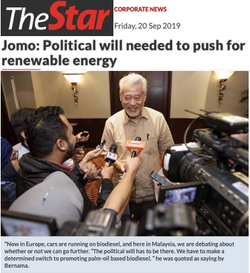
Political will needed to push for renewable energy

The Star 10July 2019

The Star 10July 2019

Malaysian businesses need boost

The Star 9 Oct 2019

The Star 9 Oct 2019

Subsidise public transport for bottom 40%

The Edge 26 Sept 2019

The Edge 26 Sept 2019

Call for measures to counteract global headwinds

The Edge 9 Oct 2019

The Edge 9 Oct 2019

Subsidise public transportation, not fuel

The Star 8 Oct 2019

The Star 8 Oct 2019

Subsidise public transportation for bottom 70%

TheEdge 2Oct 2019

TheEdge 2Oct 2019

"We need to counteract downward forces"

Fake News

PLEASE BEWARE OF MISREPRESENTATIONS OF IMAGES OF JOMO

Commercial and political misrepresentation of his image attributing to him to things which he never said or misrepresenting things he may have said is being circulated on websites such as those posted here. 


You should also be warned, in case you are not already aware, of ‘click bait’ i.e. using such images simply to attract your interest, and then to download your online information for abuse for a variety of ends.

Please inform us and provide a screenshot and weblink to enable further action, which is incredibly difficult. 

Thank you for reading this and for your help and cooperation.

This has also been flagged on his official Facebook page


JKS image ad2.jpg
JKS image Bitcoin ad on  Facebook.jpg
JKS - Fake News 2.jpg
Contact Me
JKS - Fake News 3.jpg
JKS fake news 1.jpg

Contact Me

  • Facebook Social Icon
  • Twitter Social Icon

Thank you for reaching out!

bottom of page