top of page

Follow on Social Media

  • Facebook
  • Twitter
  • Screenshot 2022-09-18 at 5.20.40 PM

M'sia Developments
[on SubStack]

  • Screenshot 2022-09-18 at 5.20.40 PM

KUALA LUMPUR, Malaysia, Jul 1 2025 (IPS) - President Trump’s tariffs have exposed neoliberal trade ideology and undermined corporate lobbying in the name of free trade. But his rhetoric has also exposed the fallacies of his own economic strategy.


Ideological shift?

To be sure, there has never really been an era of truly free trade in centuries. International trade has typically been partially and unevenly free and, more often than not, regulated.


Most supposed neoliberals have never consistently promoted free trade regardless of circumstances, but only when it seemed to serve their national and corporate interests well, e.g., via unequal exchange.


Trump’s tariffs claim to revive manufacturing jobs, which the US has lost to cheaper imports. But employment lost to automation will be almost impossible to regain. Worse, his tariffs will regressively tax US consumers.

Free trade does not help selective investment and technology promotion. Biden sought to promote new industries, often at high cost, with his Inflation Reduction Act, CHIPS and Science Act, and other industrial policy measures.

However, these have been undermined by Trump’s insistence on repudiating earlier administrations’ initiatives and cutting non-military government spending even when they serve his ostensible strategic ends.

With tariffs, his main policy weapon in his bullying transactional approach to exclusively bilateral bargaining, Trump’s reindustrialisation ambitions may only partially succeed.

His refusal to bargain collectively enhances the US advantage in such asymmetric negotiations. Others anxious to curry favour have already conceded excessive concessions, even exceeding Washington’s expectations!


The fates of the worst-off thus only worsen, generating widespread resentment and antagonism. But few tangible gains are likely from the weakest, except for mineral concessions.


Bretton Woods over

In the 1960s, French President Charles de Gaulle complained the 1944 Bretton Woods agreement (BWA) had given the US an ‘exorbitant privilege’. The price of an ounce of gold was set at $35.


This peg allowed the US to borrow cheaply from those who needed US dollars. Selling US Treasury bonds to the world thus closed both its current account (trade) and fiscal deficits.


Pressure on the greenback rose over the 1960s, especially with sharply rising Vietnam War spending. France then led others to demand gold instead of holding dollars.


In August 1971, President Nixon unilaterally repudiated the US’s BW obligation to redeem gold at the promised dollar price. But this did not end the US’s exorbitant privilege.


The US allowed the Saudi-led OPEC to raise the oil price if payments were in dollars. The petroleum price hike also set back its emerging European and Japanese industrial rivals.


Since 1971, US dollar acceptance has relied on the belief that it will continue as the international reserve currency.


Thus, exorbitant privilege has become a matter of faith.


Ironically, while Eurodollars had undermined the BWA, petrodollars saved the dollar’s reserve currency status and exorbitant privilege, with oil becoming the ‘new gold’.


Neoliberal trade myths

Half a century of neoliberal trade rhetoric has claimed ‘trade liberalisation’ benefits all, e.g., free trade lifts all boats, its leading myth.


Although this has not even been true of the Global North, it has not deterred economic policy pundits from advocating free trade agreements with the US as the solution to Trump’s tariffs!


But even trade mahaguru Jagdish Bhagwati insists that only an equitable multilateral trade agreement can lift all boats. He denounced bilateral, regional, and other plurilateral agreements as termites detracting from it.


The most popular computable general equilibrium (CGE)-based trade simulations assume unchanging full employment, trade, and fiscal balances.


Such estimates of free trade gains are misleading, as their methodologies typically ignore trade liberalisation’s significant problematic effects, such as output and job losses and trade and fiscal imbalances.


Unsurprisingly, cost-benefit studies by the World Bank and others projected net losses for most of the Global South from the 2001 Doha Round of World Trade Organization (WTO) negotiations.


False narratives

Trump’s ‘shock and awe’ Liberation Day announcement brought much of the world to heel in one fell swoop. As the president bragged, scores of governments rushed to “kiss his arse”.


However, Trump’s priorities, especially his proposed tax cuts, the changing world political economy, and the diverse nature of US interests, will erode public support for his agenda.


Trump’s policy narrative is unashamedly incoherent and self-contradictory. The Financial Times noted, “The US president wants both to protect domestic manufacturing and hold the dollar as the reserve currency.”


Self-servingly dismissive of received conventional wisdom, his jingoistic rhetoric and self-congratulatory style successfully target his faithful with cherry-picked evidence and half-truths.


Even if Trump’s tariffs fail on his own terms, he can still claim to have tried to make America great again. He will continue to blame opposition within and without to secure his jingoist MAGA base.


Related IPS Articles:


Available online here: Trump Undresses Rival Trade Myths


  • Jun 3, 2025
  • 4 min read

KUALA LUMPUR, Malaysia, Jun 3 2025 (IPS) - With two-fifths of the world economy, East Asia can inspire others by creatively responding to the US President’s tariff challenge by promoting fair, dynamic and peaceful regional cooperation.


No winners in economic war

Trump’s Liberation Day tariff announcement on April 2nd poses a common challenge that everyone needs to take seriously. Dismissing it as crazy or stupid for rejecting conventional policy wisdom is useless.


Politics and economics have been said to be war by other means. This old insight helps make sense of our times. His announcement emphasised it is about world domination, not just tariffs.


His first shot was arguably fired when Canada arrested Huawei’s founder’s daughter at the behest of the first Trump administration. Others suggest different starting points.

Obama announced the US ‘pivot to Asia’ to contain China. The Nobel Peace Laureate also undermined the multilateral World Trade Organization (WTO)’s ability to settle disputes by blocking arbitration panel appointments.

Trump’s approach is termed transactional. It presumes ‘zero-sum games’ and ignores cooperative ‘win-win’ solutions. Its implications mean we live in perilous times.

His penchant for ‘shock and awe’ is well-known. As if demanding instant gratification, Trump seems uninterested in the medium-term, let alone the long-term.

He insists on bilateral one-on-one transactions – weakening ‘the other’ by refusing collective bargaining. He rejects plurilateral and other collective arrangements but embraces cooperation to share costs. China is different but exceptionally so.


ASEAN

The Association of South East Asian Nations (ASEAN) did not include all in the region when it was formed in 1967.

Malaysia had recently had conflicts with all other founding members. Indonesia and the Philippines both opposed the new British-sponsored Malaysian confederation established in 1963, and in 1965, Singapore seceded from it.


Like the European Union, ASEAN helped resolve recent conflicts. But ASEAN soon got its act together, even before the Vietnam, Cambodian and Laotian wars ended in 1975.


In 1973, ASEAN leaders agreed that Southeast Asia should become a zone of peace, freedom, and neutrality (ZOPFAN). But its progress has been mixed.


The Philippines removed all US military bases before the end of the 20th century, but now has eleven, with four new ones in the north, facing Taiwan.


ZOPFAN is especially relevant now as several Global North powers have a military presence in the South China Sea. Worse, several Asian leaders have made generous concessions to ‘circumvent’ personal legal ‘problems’ with US authorities.


The recent ASEAN summit will be followed by a second one later in 2025. Two ASEAN precedents, established in response to earlier predicaments, remain relevant.


Bandung

The 1955 Bandung conference of Asian and African leaders of newly emerging nations, which led to the birth of the Non-Aligned Movement, remains relevant.


Europe recently celebrated the 80th anniversary of the defeat of Nazi Germany. Now rejecting peaceful coexistence with its erstwhile liberator, Europe insists on fighting Russia to the last Ukrainian.


Military interventions after the first Cold War now exceed the number during it! Despite its rhetoric, the Global North seems uninterested in freedom and neutrality.


Western pundits deemed the world unipolar after the 1980s. However, many now see it as multipolar, with most in the Global South preferring not to be aligned with any particular world power.


Major Western powers have increasingly marginalised the UN, undermining its capacity for peacemaking. Few in the West, especially in NATO, remain seriously committed to the UN Charter despite giving much lip service.


But realistically, ASEAN cannot really lead international peacemaking. It can only be a pro-active, pro-UN voice of reason for peace, freedom, neutrality, development and international cooperation.


East Asia

Meanwhile, the world economy is stagnating, mainly due to Western policies since 2008. ASEAN+3 (including Japan, South Korea, and China) is especially relevant now with its Regional Comprehensive Economic Partnership (RCEP).


The earlier ASEAN+3 Chiang Mai Agreement responded to the 1997-98 Asian financial crises. After years of Northeast Asian encouragement, ASEAN nations agreed to move from bilateral to multilateral swap arrangements.

Meanwhile, the ASEAN Free Trade Area (AFTA) has progressed little since its creation over three decades ago.


More recently, the governments of Japan, China, and South Korea met without ASEAN in late March to prepare for Trump’s tariffs.


Sadly, key ASEAN leaders can hardly envision regional economic cooperation beyond yet another free trade agreement.

Trump has declared he wants to remake and rule the world to make America great again. His tariffs and Mar-a-Lago proposals should be seen as long overdue wake-up calls that ‘business as usual’ is over.


Will East Asia rise to the challenge and go beyond defensive actions to offer an alternative for the region’s economies and people, if not beyond?


The UN-led multilateral system still largely serves the US, but not enough for Trump. Thus, the US still invokes multilateral language self-servingly, e.g., it claims its unilateral tariffs are ‘reciprocal’.


Hence, despite his blatant contempt for them, Trump is unlikely to withdraw from all multilateral organisations and arrangements, especially those which serve him well.


Related IPS Articles


Available online here: Can East Asia Show the Way?


KUALA LUMPUR, Malaysia, May 6 2025 (IPS) - US President Donald Trump has deliberately sown discord worldwide in attempting to remake the world to serve supposed American interests better. He will not cede influence, let alone power and control, to other nations, let alone people.


Mar-a-Lago Accord

His chief economic adviser, Stephen Miran, has offered some rationale for Trump’s tariffs besides promoting his ‘Mar-a-Lago Accord’ plan for US imperial revival. But even if most governments comply, the US deficits dilemma will not be resolved.


For Miran, Trump is reshaping the US-led unipolar world more equitably by getting others to bear more of the costs of ‘global public goods’ that the US ostensibly provides.

As geopolitical economist Ben Norton has noted, the US spends trillions on its global empire, with around 800 military bases abroad! While influential US corporate interests have benefited most, others have also gained.

The US contributed to the Global North’s reconstruction boom after World War II (WW2). After pre-empting growing Soviet influence from the last year of WW2, the US enhanced its hegemony by strengthening allies during the first Cold War.

However, Miran complains it is too “costly” to maintain the post-Cold War unipolar order without others bearing their “fair share” of the US costs of providing a “global security umbrella” and international dollar liquidity.


1985 Plaza Accord

In the 1980s, many complained about how Japan and Germany, which had lost WW2, had benefited from imposed military spending constraints and US occupation to gain industrial leadership worldwide.


At its second meeting at New York’s Plaza Hotel, the US-led Group of Five (G5), of the largest Western economies, agreed that the yen and Deutschemark should greatly appreciate against the US dollar.


This would ensure US recovery from its slowdown following dollar strengthening due to the Fed’s high-interest rate policy to quell inflation after the second oil price hike.


As the yen appreciated, Japan’s 1989 ‘Big Bang’ financial reforms sealed its fate. Its asset price bubble burst, also ending the post-war Japanese miracle boom.


Miran acknowledges US dollar “overvaluation has weighed heavily on the American manufacturing sector while benefiting financialised sectors of the economy in manners that benefit wealthy Americans”.


From Plaza to Mar-a-Lago

Unlike Plaza, Miran’s proposed Mar-a-Lago Accord, named for Trump’s private Florida retreat, will be imposed on all, especially allies in the Global North.


The Global North must improve the US trade balance by deterring imports and increasing exports by letting the dollar depreciate. Allies have been threatened with tariffs and unilateral withdrawal of the US security umbrella.


Miran’s proposal also envisions foreign governments holding 100-year US Treasury bonds. This should transfer long-term losses due to inflation to bondholders abroad.


He also wants a US sovereign wealth fund financed by revaluing US gold reserves to market prices. Meanwhile, his proposed cryptocurrency stabilisation fund already threatens to disrupt international finance.


His plan claims to reduce US trade deficits and bring back good jobs. Miran expects it will significantly shrink the US current account and fiscal deficits without requiring more tax revenue or spending cuts.


Weaker dollar not enough

Jenny Gordon has challenged Miran’s argument. She reasons that his plan is unrealisable without significantly shifting US resources from non-tradables to tradables.


Manufacturing investments needed to substitute imports and increase exports have to be financed. But the US has been a net borrower for almost half a century!


Its current account deficit reflects these savings-investment imbalances. The US would have to cut its capital account surplus by borrowing much less from others to reduce its current account deficit.


Making manufacturing more competitive requires a weaker dollar and new investment. The US must encourage Americans to save more, consume less, divert investment from elsewhere, and cut its fiscal deficit.


Otherwise, foreign borrowings financing manufacturing investments will strengthen the US dollar. Worse, a weaker greenback is needed to boost US competitiveness.


Miran may prevail

Even if US manufacturing recovers, well-paid jobs in depressed areas remain unlikely. Besides ageing, changing technology, consumption, and incomes have adversely affected prospects for reviving US manufacturing.


Government spending cuts have hurt state-sponsored research, which enabled the US to lead technological innovation worldwide until early this century.


Miran’s proposed forced conversion of US Treasury bonds held in official reserves to ‘century bonds’ will reduce confidence in the dollar and its liquidity value.


Besides lowering US borrowing costs, it would undermine the deep secondary market for US T-bills and dollar-denominated trade and financial flows—all key to dollar privilege.


The dollar’s status as a reserve currency has enabled the US to maintain massive fiscal deficits without high interest rates or the threat of currency collapse. But it has also constrained US economic options, favouring finance and other modern services.


Trump does not want to lose the dollar’s status as a reserve currency. His threat to the BRICS suggests likely harsh retaliation against efforts to reduce reliance on the US dollar.


The dollar’s status in international finance also enables the US to threaten others credibly. However, Trump’s treatment of allies reminds us that compliance does not ensure stability.


Miran presumes that trade and investment partner countries will do as he wants. While few may agree to his proposal, which will not work, not many may stand up to Trump. Worse, some are already giving lip service to the proposal.


Related IPS Articles:


Latest Videos

All Videos

All Videos

AN URGENT CALL: A PEOPLE"S VACCINE AGAINST COVID-19

00:00
9 June 2020: IHD-ILO-ISLE Virtual Conference - Day 2

9 June 2020: IHD-ILO-ISLE Virtual Conference - Day 2

05:08:34
Learning in Governance in times of COVID-19

Learning in Governance in times of COVID-19

46:30
Beyond the Lockdown: Towards the ‘New Normal’

Beyond the Lockdown: Towards the ‘New Normal’

59:10

About Jomo

Jomo Kwame Sundaram is Research Adviser, Khazanah Research Institute, Fellow, Academy of Science, Malaysia, and Emeritus Professor, University of Malaya. Previously, he was UN Assistant Secretary-General for Economic Development, Assistant Director General, Food and Agriculture Organization (FAO), Founder-Chair, International Development Economics Associates (IDEAs) and President, Malaysian Social Science Association. 

In The Media

TheStar 26 June 2020

TheStar 26 June 2020

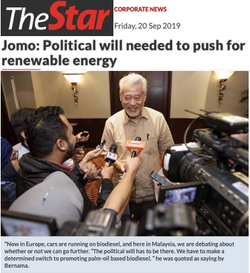
The Star 20 Sept 2019

The Star 20 Sept 2019

Political will needed to push for renewable energy

The Star 10July 2019

The Star 10July 2019

Malaysian businesses need boost

The Star 9 Oct 2019

The Star 9 Oct 2019

Subsidise public transport for bottom 40%

The Edge 26 Sept 2019

The Edge 26 Sept 2019

Call for measures to counteract global headwinds

The Edge 9 Oct 2019

The Edge 9 Oct 2019

Subsidise public transportation, not fuel

The Star 8 Oct 2019

The Star 8 Oct 2019

Subsidise public transportation for bottom 70%

TheEdge 2Oct 2019

TheEdge 2Oct 2019

"We need to counteract downward forces"

Fake News

PLEASE BEWARE OF MISREPRESENTATIONS OF IMAGES OF JOMO

Commercial and political misrepresentation of his image attributing to him to things which he never said or misrepresenting things he may have said is being circulated on websites such as those posted here. 


You should also be warned, in case you are not already aware, of ‘click bait’ i.e. using such images simply to attract your interest, and then to download your online information for abuse for a variety of ends.

Please inform us and provide a screenshot and weblink to enable further action, which is incredibly difficult. 

Thank you for reading this and for your help and cooperation.

This has also been flagged on his official Facebook page


JKS image ad2.jpg
JKS image Bitcoin ad on  Facebook.jpg
JKS - Fake News 2.jpg
Contact Me
JKS - Fake News 3.jpg
JKS fake news 1.jpg

Contact Me

  • Facebook Social Icon
  • Twitter Social Icon

Thank you for reaching out!

bottom of page