top of page

Follow on Social Media

  • Facebook
  • Twitter
  • Screenshot 2022-09-18 at 5.20.40 PM

M'sia Developments
[on SubStack]

  • Screenshot 2022-09-18 at 5.20.40 PM

KUALA LUMPUR, Malaysia, Jan 6 2026 (IPS) - While US President Donald Trump has blamed the BRICS and foreign investors for de-dollarisation, his rhetoric, actions and policy measures are mainly responsible for the trend’s recent acceleration.


Threats and reactions

Although Trump is not the sole cause of de-dollarisation, which began much earlier, well before he became president, his recent initiatives have accelerated the trend.


Despite some temporary reversals, the dollar’s post-World War II role as world reserve currency has gradually declined over the decades, especially since the 1970s. Ben Norton has argued that several Trump measures have accelerated this trend.

Trump claims his supposedly ‘reciprocal tariffs’ will reduce the US trade or current account deficit with the rest of the world. But if countries cannot export to the US, they cannot earn dollars to meet their trade and investment needs.

Many believe Trump’s tariffs and other threats are enhancing US leverage vis-à-vis others, but their reactions, including defensive countermeasures, are accelerating de-dollarisation.

Trump’s measures, such as his insistence on bilateral negotiations, have alarmed most nations, including long-time allies. As nations, including allies, rethink their economic relations with and vulnerability to the US, de-dollarisation inadvertently accelerates.


Trump vs the Fed

The US Federal Reserve Bank’s overnight lending or funds rate has been higher since 2022, responding to higher consumer price inflation following the pandemic and the Russian invasion of Ukraine.


As the Fed raised interest rates, yields on US government debt rose. But Trump now wants the Fed to cut interest rates to reduce the high debt servicing costs of both the government and private corporations.


In 2024, the US federal government paid about 3% of GDP in debt interest alone. Although such debt exceeds 120% of GDP, debt service costs are deemed manageable as long as interest rates remain low.


Trump’s pressures on the Fed to cut interest rates have inadvertently undermined investor confidence and prompted ‘flights [from dollar assets] to safety’.


Trump’s recent campaign against his earlier Fed chair appointee, Jerome Powell, has inadvertently raised investor concerns about his espoused monetary policy priorities.


Inflation fears persist

Investors now worry that Trump is pressuring the Fed to cut interest rates. They believe this will stoke inflation and cause the dollar to fall against other major currencies. As Trump is seen forcing down interest rates, he risks being blamed for persistent inflation.


If the Fed buys US Treasuries to reduce yields, for a new round of ‘quantitative easing’ (QE), dollar asset investments will realise lower, if not negative, real yields.


Although inflation hawks’ worst fears of higher inflation have not materialised so far, few believe tariffs will not raise inflation.


Expecting Trump 2.0 to impose more tariffs, many US companies stockpiled imports before April 2. As tariffs took effect and stocks declined, prices rose.


Many investors have sold their dollar assets as monetary authorities worldwide seek alternatives to the greenback. Such sell-offs lower the dollar’s value, further spurring de-dollarisation.


Trump now wants to lower US Treasury bond yields as foreign governments and investors seek alternatives to holding dollar assets.


Many are considering switching to non-dollar assets despite stagnation tendencies elsewhere in the Global North, especially in Europe and Japan. If investors stop buying dollar assets or sell them to purchase non-dollar assets, de-dollarisation will gain momentum.


Foreign demand falling

Washington is understandably worried that foreign investors will dump Treasury securities. In 2015, a third was held by foreigners, but this has since fallen to under a quarter.


The ‘Mar-A-Lago Accord’ proposal, which requires foreign governments to hold US Treasury ‘century bonds’ for 100 years despite assured losses, will compound resentment.


Lowering Treasury bond yields is both risky and difficult due to the highly financialised US economy. Past bond market turmoil has triggered stock market selloffs, lowering Treasury yields, share prices and tax revenue.


Government and corporate borrowing costs rise together. As trillions of dollars’ worth of corporate bonds mature over the next two years, high interest rates will raise corporations’ borrowing costs. Many want to refinance at lower interest rates.


These efforts to bring down interest rates are apparent to all. But lower interest rates and negative ‘actual yields’ for Treasury securities will ensure high inflation persists.


De-dollarisation accelerating?

Trump’s actions, especially threats of tariffs and sanctions, have elicited diverse reactions, often undermining dollar hegemony and accelerating de-dollarisation.


Many recent developments have undermined public confidence in the US government and the rule of law, accelerating de-dollarisation.


As investors sold US assets in mid-2025, the dollar saw its biggest fall since the 1973 oil price hike. It fell by over 10% against other major currencies, triggering temporary falls in the prices of many financial assets, including equities and bonds.


Since then, there has been increased capital market uncertainty and volatility, as in the US bond market, although a strong rally followed the ensuing stock market crash.


In many recent episodes of financial volatility, dollar liquidity was considered the safe option. But in 2025, confidence in dollar assets fell, prompting selloffs and de-dollarisation.


Thus far, Trump has been adept at managing short-term volatility, but his style implies no one knows when the music will stop.


Related IPS Articles


Available online here: Trump De-dollarisation Accelerant


MANILA, Philippines, Nov 11 2025 (IPS) - US President Trump’s economic strategy for his second term aims to get the rest of the world, especially its wealthy allies with greater means, to pay more to help strengthen the US economy.


Recent US initiatives have undoubtedly accelerated de-dollarisation but these have largely been unavoidable consequences of its own actions rather than due to any conspiracy by others to that end.

De-dollarisation distraction

Harvard economist Kenneth Rogoff recently observed, “We are absolutely at the biggest inflection point in the global currency system since the Nixon shock to end the last vestige of the gold standard.”

After the Bretton Woods Conference in 1944, the gold price was set at $35 per ounce. In August 1971, US President Richard Nixon ended this gold-dollar parity.

De-dollarisation has gradually continued since, with occasional brief spurts and reversals. For example, capital flows abroad rose following the 2008-09 global financial crisis.

Growing weaponisation of economic relations has probably accelerated de-dollarisation. Rogoff observed, “this was happening for a decade before Trump. Trump is an accelerant.”

Governments, central banks and BRICS countries have been de-dollarising. Even US dollar hegemony advocates no longer deny alternatives to the dollar’s role as global reserve currency.

Meanwhile, private foreign investors, including foreign asset managers, investment banks and pension funds, do not want to be left behind.

Investment fund managers are increasingly ‘de-risking’ by cutting exposure to dollar-denominated assets.

Mar-a-Lago plan

Economist Stephen Miran has proposed a new Trump initiative to require other governments to pay the US for services purportedly rendered.

First appointed chair of Trump’s Council of Economic Advisers, Miran has since been appointed to the US Federal Reserve Board.

A few days after Trump announced his Liberation Day tariffs on April 2, Miran articulated five expectations. These expect other nations to pay the US for ‘public goods’ services it ostensibly provides the world.

Allies will be expected to pay the US more for the ‘security umbrella’ it provides to NATO and other allies. The US also expects those buying Treasury bonds to pay more for the ‘privilege’

In November 2024, Miran’s A User’s Guide to Restructuring the Global Trading System proposed the Mar-A-Lago accord, named for Trump’s exclusive Florida island resort and residence.

He also referred to the Plaza Accord, which the Reagan administration imposed on its G5 allies in September 1985. Then, the US forced Japan and Germany to appreciate their currencies against the dollar.

The yen’s appreciation fuelled a massive Japanese asset price bubble that burst with devastating consequences in 1989, ending its post-war boom.

Trump now seeks the appreciation of other major currencies. Already, he has succeeded in getting his European allies to agree.

However, it seems unlikely that Trump will get China and other BRICS economies to do so, as they are aware of how the Plaza Accord affected Japan.

Century bonds

Other national monetary authorities buying US Treasury bonds to stabilise their own currencies have long caused dollar appreciation.

They are now expected to help depreciate the dollar. Miran has proposed that the US issue century, i.e., 100-year bonds, at very low interest rates, well below the current rates for US Treasury securities.

Miran wants foreign central bank reserve currency managers to sell off their dollar-denominated assets. They should “term out” their “remaining reserve holdings” and refinance short-term debt with long-term borrowings.

Miran is explicit: “The US Treasury can effectively buy duration back from the market and replace that borrowing with century bonds sold to the foreign official sector.”

His plan thus intends to force foreign holders of US government debt (‘Treasuries’) to extend the duration of their loans.

Very low interest rates for century bonds will ensure that foreign bondholders effectively pay the US more for the ‘privilege’ of borrowing dollars.

For Miran, the appreciation of other currencies against the dollar will also strengthen the American economy. US manufacturing will strengthen as its exports become more competitive.

Thus, his Mar-A-Lago accord plan expects other nations to pay more to strengthen the world’s largest and richest economy.

Miran’s Mar-A-Lago plan is not yet official US policy. However, this can change with Miran’s likely appointment as the next Fed chair, replacing Trump 1.0 appointee Jerome Powell.

BRICS de-dollarisation?

However, Miran’s declared plan to strengthen the US economy by depreciating the dollar against other major currencies has also accelerated de-dollarisation.

In recent years, the BRICS have been accused of conspiring to accelerate de-dollarisation worldwide, but this is certainly not a shared ambition.

Lacking significant trade surpluses, Brazil and South Africa have long advocated de-dollarisation. But Russia’s complaints have more to do with recent NATO weaponisation of financial instruments against it.

There is no comparable enthusiasm among other BRICS member states, which have much healthier trade surpluses and more dollar assets.

Its recent membership expansion will make an official BRICS de-dollarisation stance even more unlikely.

Nevertheless, Trump’s leadership relies on the American public believing the rest of the world is conspiring against them.


DAKAR, Senegal / KUALA LUMPUR, Malaysia, Jan 29 2025 (IPS) - Ending US dollar dominance alone will not end monetary imperialism. Only much better multilateral arrangements to clear international payments can meet the Global South’s aspirations for sustainable development.


De Gaulle v US dollar

Challenges to US dollar hegemony did not begin with the BRICS. French President Charles de Gaulle famously dissented in the 1960s.


Valéry Giscard d’Estaing, his Minister of Finance and Economic Affairs between 1962 and 1966, coined the phrase ‘exorbitant privilege’ to complain of US dollar dominance.


With the dollar’s status as the global reserve currency, the US can buy foreign goods, services, and assets on credit. It also enables the US to spend much more on foreign military bases and wars.


The privilege allows such extravagance with limited adverse effects on its balance of payments and the US dollar’s exchange rate. French economist Jacques Rueff noted the US could thus maintain external deficits “without tears”.


De Gaulle demanded the US Federal Reserve Bank convert France’s surplus ‘Eurodollars’ into monetary gold. The French challenge called the US bluff, forcing it to end dollar-gold convertibility at the heart of the 1944 Bretton Woods arrangement in 1971.


To gain some economic advantage in a system otherwise dominated by the dollar, post-war France imposed a monetary arrangement on most of its former African colonies, giving it a neocolonial privilege similar to the US’s worldwide.


With the CFA franc zone, France gained two advantages. First, it did not need to hold dollars to buy goods and services from territories it dominated. Second, it had complete discretionary control over the zone’s dollar earnings.


Replacing the French franc with the euro in 1999 did not end this monetary imperialism. Now, 14 Sub-Saharan African countries with over 200 million people still use the CFA franc.


Created in 1945, this currency arrangement helped rebuild and use its colonies to accelerate post-war reconstruction of the French economy. It remains under the legal custodianship of the French Treasury.


France benefiting from its currency relations with its former colonies imply that the US’s rivals can also benefit from monetary hegemony if they succeed in displacing dollar dominance without subverting monetary imperialism.


De-dollarization

The term de-dollarization currently refers to the development of alternative bilateral and plurilateral payments initiatives reducing the role of the dollar and dollar-based financial arrangements in settling international economic obligations and managing foreign exchange transactions.


This has been growing. In 2022, international trade worldwide was estimated at $46 trillion, with over half invoiced in currencies other than the US dollar. More countries are trading with one another and settling in currencies other than the greenback.


Although this trend has eroded the dollar’s share of total official foreign currency reserves, this is not about to dethrone the dollar’s status as the global reserve currency.


Indeed, international trade is only the tip of the iceberg of international financial transactions, which are still mainly denominated in US dollars.


The current challenge to dollar hegemony has much to do with the unilateral financial sanctions by the US and its mainly European allies on several nations, including Russia, Iran and Venezuela.


These countries have been expelled from the SWIFT messaging system and/or have seen their assets abroad, especially dollar, euro, or gold reserves, unilaterally confiscated on various pretexts.


Facing such sanctions, more countries want to develop alternative payment systems, reduce their dollar and euro reserves, and find more secure ways to store their external surpluses.


A recent report by the Russian government for the BRICS criticised the West’s weaponisation of international payments arrangements. It called for an international monetary and financial system consistent with the principles of security, independence, inclusion, and sustainability.


Resource-rich countries with significant foreign exchange surpluses are understandably concerned with this threat. But the report did not address the problems and needs of deficit countries constituting much of the Global South.


International clearing union

A fundamental problem of the existing international monetary and financial system is that a national currency – the US dollar – functions as a reserve asset for the rest of the world.


This obliges most nations, especially in the Global South, to accumulate US dollars to meet their external obligations. Struggling to secure enough US dollars, such countries are especially vulnerable to external debt crises.


Their problems will not be addressed if US dollar dominance is no longer unrivalled, and its privilege has to be shared with other international reserve currencies.


A fair international monetary and financial system supportive of sustainable development should eliminate the obligation to accumulate foreign exchange reserves, e.g., if every country can pay for imports with its currency, which is technically possible.


With an International Clearing Union, Ernst Friedrich Schumacher noted “every national currency is made into a world currency, whereby the creation of a new world currency becomes unnecessary”.


Such arrangements would address the Global South’s financial, debt, and climate crises. However, there have not been renewed efforts since 1944 to secure the multilateral consensus necessary for such a transformation.


Related IPS Articles

Available online here: An 'Exorbitant Privilege' For All?


Latest Videos

All Videos

All Videos

AN URGENT CALL: A PEOPLE"S VACCINE AGAINST COVID-19

00:00
9 June 2020: IHD-ILO-ISLE Virtual Conference - Day 2

9 June 2020: IHD-ILO-ISLE Virtual Conference - Day 2

05:08:34
Learning in Governance in times of COVID-19

Learning in Governance in times of COVID-19

46:30
Beyond the Lockdown: Towards the ‘New Normal’

Beyond the Lockdown: Towards the ‘New Normal’

59:10

About Jomo

Jomo Kwame Sundaram is Research Adviser, Khazanah Research Institute, Fellow, Academy of Science, Malaysia, and Emeritus Professor, University of Malaya. Previously, he was UN Assistant Secretary-General for Economic Development, Assistant Director General, Food and Agriculture Organization (FAO), Founder-Chair, International Development Economics Associates (IDEAs) and President, Malaysian Social Science Association. 

In The Media

TheStar 26 June 2020

TheStar 26 June 2020

The Star 20 Sept 2019

The Star 20 Sept 2019

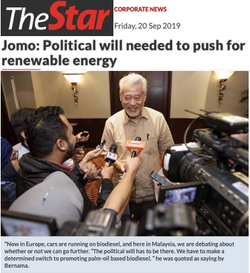
Political will needed to push for renewable energy

The Star 10July 2019

The Star 10July 2019

Malaysian businesses need boost

The Star 9 Oct 2019

The Star 9 Oct 2019

Subsidise public transport for bottom 40%

The Edge 26 Sept 2019

The Edge 26 Sept 2019

Call for measures to counteract global headwinds

The Edge 9 Oct 2019

The Edge 9 Oct 2019

Subsidise public transportation, not fuel

The Star 8 Oct 2019

The Star 8 Oct 2019

Subsidise public transportation for bottom 70%

TheEdge 2Oct 2019

TheEdge 2Oct 2019

"We need to counteract downward forces"

Fake News

PLEASE BEWARE OF MISREPRESENTATIONS OF IMAGES OF JOMO

Commercial and political misrepresentation of his image attributing to him to things which he never said or misrepresenting things he may have said is being circulated on websites such as those posted here. 


You should also be warned, in case you are not already aware, of ‘click bait’ i.e. using such images simply to attract your interest, and then to download your online information for abuse for a variety of ends.

Please inform us and provide a screenshot and weblink to enable further action, which is incredibly difficult. 

Thank you for reading this and for your help and cooperation.

This has also been flagged on his official Facebook page


JKS image ad2.jpg
JKS image Bitcoin ad on  Facebook.jpg
JKS - Fake News 2.jpg
Contact Me
JKS - Fake News 3.jpg
JKS fake news 1.jpg

Contact Me

  • Facebook Social Icon
  • Twitter Social Icon

Thank you for reaching out!

bottom of page