top of page

Follow on Social Media

  • Facebook
  • Twitter
  • Screenshot 2022-09-18 at 5.20.40 PM

M'sia Developments
[on SubStack]

  • Screenshot 2022-09-18 at 5.20.40 PM

KUALA LUMPUR, Malaysia, Jun 9 2026 (IPS) - Recent geopolitical trends threaten more food crises, especially in developing countries. A new IPES-Food report urges a strategy of ‘resilient self-reliance’, proposing available opportunities to improve equity, sustainability and solidarity.


Enhancing vulnerability

The New Geopolitics of Food. Navigating policies for resilient self-reliance argues that international food systems have been profoundly transformed by the geopolitical changes of the last four decades.

Geopolitics – referring to political sanctions, trade disputes, military conflicts, multilateral challenges, aid cuts, planetary heating, and corporate interests – is affecting food availability worldwide.

Science


Corporate interests have increasingly reshaped food systems over the last half-century – promoting selective trade liberalisation, deregulation, privatisation, financialization and cost reductions, ostensibly to improve food security efficiently.

Prioritising cost and fiscal savings led to the neglect and closure of buffer stocks. Food systems became more vulnerable as price volatility worsened.

Just-in-time supply chains have also been more susceptible to geopolitical shocks, planetary heating, and market manipulation.

World Bank structural adjustment programmes made developing countries more reliant on food and input imports. Tariffs and sanctions have disrupted food supplies worldwide.


Supplies have become more vulnerable to disruption, whether due to poor harvests or political sanctions. Price volatility has also worsened food insecurity, even in large countries.


Wars in Ukraine, Iran and elsewhere have disrupted supplies, spiking prices, and have most hit poor food-importing countries. Powerful governments have also weaponised food supplies for political reasons, as against Cuba.

Major donor countries have cut aid, with lethal consequences for the most vulnerable, as in Sudan, Palestine, Afghanistan, and the Democratic Republic of Congo.

The legitimacy and capacity of multilateral institutions – such as the UN, World Trade Organization (WTO) and World Health Organization (WHO) – have been deliberately undermined by superpowers abusing international arrangements for their own advantage.

Food prices have been much higher since 2020, following the COVID-19 pandemic, the Ukraine and Iran wars, and other major disruptions. For instance, the Hormuz fertiliser disruptions will hurt food supply for some time to come.

Import bills have risen sharply, worsening debt burdens in poor food-importing countries. Food inflation has hurt low-income communities most, especially when governments juggle imports with debt servicing.


Corporate concentration has also worsened fertiliser and food supply and price volatility, especially hurting smaller producers. Powerful interests have also abused food crises for profit.


Geopolitics has also worsened environmental crises, as planetary heating intensifies extreme weather events, hurting crop yields and food availability.


Managing markets

To enhance food security, governments must effectively influence markets with appropriate policy instruments.


The report proposes adapting policy tools once widely used before corporate-inspired neoliberal reforms, to improve contemporary market management, supply resilience and price stability.


Public stockholdings (PSHs) involve government procurement, storage, and timely release of stocks to enhance food security, including by stabilising prices. PSHs can thus help smallholdings while improving emergency preparations.


Using minimum support prices with its Targeted Public Distribution System, India subsidises grain for two-thirds of its people, while insulating national food prices from international volatility.


Meanwhile, the Economic Community of West African States (ECOWAS) has established a Regional Food Security Reserve to pool members’ stocks and collectively respond to crises.


Supply management

Other supply management mechanisms include production quotas, marketing boards, and import controls.


Market management has also supported other policy goals aimed at improving rural vitality, equity, food sovereignty, environmental sustainability, and democratic participation.


Thus, unlike in the US, Canada’s dairy, poultry, and egg production is subject to quotas and negotiated minimum prices to limit price volatility and stabilise farm incomes.


But policy implementation remains challenging. PSH programmes are often complex and costly, and risk leakage, corruption, and inefficiency.


Government commitments, such as trade agreements, limit policy options. Supply management measures may also raise consumer prices and favour wealthier farmers, as neoliberal critics have been quick to exaggerate.


But these policy tools can also support small-scale producers, reduce waste, strengthen national supply chains, and mitigate risks posed by highly centralised industrial agriculture.


Resilient Self-Reliance

The report promotes resilient self-reliance, requiring appropriate market management to stabilise  food supplies and improve equity, sustainability, and food sovereignty.


Resilient self-reliance combines resilience (the ability to withstand and recover from shocks) with food self-reliance (the capacity to meet food needs with domestic production and cooperative trade).


The report recommends innovative trade partnerships, including international buffer stocks and cooperative regionalism, citing CARICOM’s regional food strategy.


Resilient self-reliance upholds food sovereignty norms, emphasising farmer rights, agroecology, territorial markets, and democratic governance, stressing equity, diversity, ecological balance, and flexibility.


Managing markets can also support agroecological transitions, culturally appropriate food diversity, territorial markets, and strategic reserves to cushion shocks.


Vulnerable countries, often due to earlier neoliberal reforms, typically try to reduce their susceptibility to international market volatility, but are usually less able to do so.


Market management mechanisms, agroecological practices, territorial markets, and cooperative trade arrangements can help ensure more stable and equitable food systems.


Stressing the urgent need for policy reform, the authors argue that recent geopolitics not only threatens crises but also offers new opportunities to reform food systems for greater equity, solidarity and sustainability.


For instance, the Hormuz crisis may spur developing economies to accelerate transitions to more renewable energy, thereby reducing their vulnerability to fossil fuel and other energy imports.


Related IPS Articles


KUALA LUMPUR, Malaysia, Mar 31 2026 (IPS) - While media coverage of Iran’s restrictions on passage through the Hormuz Straits focuses on fuel prices, partial closure is also disrupting crucial fertiliser and other supplies, risking catastrophe for billions worldwide.


Hormuz chokepoint

Since the war began, only a few of the hundred or so vessels, previously passing through the narrow Straits of Hormuz daily, still do so.


Hormuz is not just a chokepoint on a shipping lane for oil and gas; it has strategic implications for fertiliser, helium, and other energy-intensive exports as well as for food and other imports to the region.

Higher energy costs affect most transportation and farming requirements, such as tilling and harvesting, as well as fertiliser supplies.

Wars, especially protracted ones, have lasting effects, including for agrifood systems. Without earlier investments, output elsewhere cannot be easily increased.

Alternative fertiliser supply sources are not readily available, especially as agro-ecological options have rarely been seriously pursued despite their proven viability.

As with renewable energy generation to reduce the need for petroleum imports, it is unclear whether the looming food crisis will accelerate the needed and feasible agro-ecological transition for enhanced food security.

Disrupted food supplies

Shipping delays and port congestion disrupt food supplies, trade and availability.


The Gulf’s populations, augmented by millions of migrant workers, have become reliant on food imports for wheat, rice, soy, sugar, cooking oil, meat, animal feed and more.

Many states have recently tried to improve their food security, expanding strategic reserves, investing in food agriculture and alternative supply routes.

Such measures have improved resilience but cannot address a prolonged blockade of the Persian Gulf. About 70% of the food for Saudi Arabia, Iraq and the Gulf emirates passes through Hormuz.

Replacing disrupted food imports for about 100 million people would require moving almost 100 million kilograms (kg) of food into the region daily by other means.

Supplying food to the Gulf region under blockade would require an unprecedented operation, possibly through contested airspace.

In 2024, the UN World Food Programme delivered about 7 million kg of food daily to 81 million people in 71 countries.

Weather-driven food shortages and price spikes triggered political instability in 2008 and 2010-11. With food systems worldwide increasingly vulnerable to climate shocks, food insecurity threatens regimes everywhere.


Fertilisers

Farmers worldwide need stable supplies of fertilisers and fuel.


The Iran war threatens to disrupt these supplies, so crucial to agricultural production. Staple crops like wheat, rice and maize rely heavily on fertilisers.


Iran, Qatar, Saudi Arabia, the Emirates and Bahrain all ship petroleum products through Hormuz, including a fifth of the world’s liquefied natural gas (LNG).


As LNG is key to producing many fertilisers, Gulf exports have become more significant, especially after the war cut Ukraine’s exports, and China and Russia reduced theirs as well.


In 2024, the Middle East accounted for almost 30% of major fertiliser exports, including nitrogen, phosphate and potash.


The Gulf alone exported 23% of the world’s ammonia and 34% of its urea, while 30-40% of the world’s nitrogen fertiliser exports pass through Hormuz!


In mid-2025, Kpler estimated that a Hormuz closure could reduce fertiliser supplies by 33%, with sulphur-based ones falling by 44% and urea by 30%.


Reduced nitrogen-based fertiliser exports would hurt major food exporters such as Brazil, the US, Thailand, and India, all heavily reliant on fertiliser imports. However, the impact of shortages may be delayed until imported stocks run out.


As the war drags on, farmers may cut fertiliser use by planting less or switching to crops requiring less. Poorer harvests would, in turn, adversely affect later investment, planting and fertiliser use.


Who suffers most?

The economic consequences of the unprovoked US-Israeli assault on Iran and Tehran’s responses are spreading fast and catastrophically, especially for the most vulnerable.


Iran’s new leadership mistrusts Washington and will keep Hormuz closed – choking fuel, food, and fertiliser flows through it – to secure the guarantees it needs to reduce its vulnerability.


As attacks on Iran continued, Tehran stepped up targeted attacks on infrastructure in the Gulf kingdoms hosting US military facilities. US-led efforts have provided little relief to its allies.


The worldwide impact is uneven, with the poorest taking the brunt. Asia and Africa have been hard hit by heavy reliance on oil, gas, and fertiliser imports.


Rich nations’ aid cuts to increase military spending have worsened poverty and hunger for millions, many of whom are also victims of war and aggression.


Unlike the rich, many migrant workers in the Gulf who cannot leave will struggle to make ends meet and send money home to their families.


And as the world’s attention has turned to the Gulf, Israel has worsened conditions in Gaza while taking over southern Lebanon and increasing Yemen’s pain.


Concerned about retribution in November’s mid-term elections, the White House is keen on a ceasefire.


But it has not offered terms acceptable to Iran, which remains suspicious of the US commitment to its own promises, let alone the rule of law.


Hence, the Iranian leadership is unlikely to agree to a ceasefire without credible guarantees for its future security from renewed Israeli and US aggression.


The Iran war has highlighted, yet again, the collateral damage of war and the food system’s vulnerability. Meanwhile, the suffering of the more vulnerable is ignored by the greater powers, who pay little heed to their plight.


Related IPS Articles


Latest Videos

All Videos

All Videos

AN URGENT CALL: A PEOPLE"S VACCINE AGAINST COVID-19

00:00
9 June 2020: IHD-ILO-ISLE Virtual Conference - Day 2

9 June 2020: IHD-ILO-ISLE Virtual Conference - Day 2

05:08:34
Learning in Governance in times of COVID-19

Learning in Governance in times of COVID-19

46:30
Beyond the Lockdown: Towards the ‘New Normal’

Beyond the Lockdown: Towards the ‘New Normal’

59:10

About Jomo

Jomo Kwame Sundaram is Research Adviser, Khazanah Research Institute, Fellow, Academy of Science, Malaysia, and Emeritus Professor, University of Malaya. Previously, he was UN Assistant Secretary-General for Economic Development, Assistant Director General, Food and Agriculture Organization (FAO), Founder-Chair, International Development Economics Associates (IDEAs) and President, Malaysian Social Science Association. 

In The Media

TheStar 26 June 2020

TheStar 26 June 2020

The Star 20 Sept 2019

The Star 20 Sept 2019

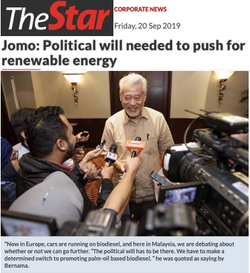
Political will needed to push for renewable energy

The Star 10July 2019

The Star 10July 2019

Malaysian businesses need boost

The Star 9 Oct 2019

The Star 9 Oct 2019

Subsidise public transport for bottom 40%

The Edge 26 Sept 2019

The Edge 26 Sept 2019

Call for measures to counteract global headwinds

The Edge 9 Oct 2019

The Edge 9 Oct 2019

Subsidise public transportation, not fuel

The Star 8 Oct 2019

The Star 8 Oct 2019

Subsidise public transportation for bottom 70%

TheEdge 2Oct 2019

TheEdge 2Oct 2019

"We need to counteract downward forces"

Fake News

PLEASE BEWARE OF MISREPRESENTATIONS OF IMAGES OF JOMO

Commercial and political misrepresentation of his image attributing to him to things which he never said or misrepresenting things he may have said is being circulated on websites such as those posted here. 


You should also be warned, in case you are not already aware, of ‘click bait’ i.e. using such images simply to attract your interest, and then to download your online information for abuse for a variety of ends.

Please inform us and provide a screenshot and weblink to enable further action, which is incredibly difficult. 

Thank you for reading this and for your help and cooperation.

This has also been flagged on his official Facebook page


JKS image ad2.jpg
JKS image Bitcoin ad on  Facebook.jpg
JKS - Fake News 2.jpg
Contact Me
JKS - Fake News 3.jpg
JKS fake news 1.jpg

Nadi Insan by the People's History Centre

Read all editions of #NadiInsan from 1979 to 1983 free of charge at the Peoples History Center website.


Containing writings on socio-political issues, film and cultural commentary, as well as in-depth interviews, Nadi Insan is motivated by community activists and intellectuals in Malaysia.

Happy reading!

Dapatkan kesemua siri majalah #NadiInsan dari tahun 1979 hingga 1983 secara percuma di laman Pusat Sejarah Rakyat.


Berisi tulisan memperihal sosio-politik, ulasan filem dan budaya sehinggalah wawancara yang rencam, Nadi Insan digerakkan oleh aktivis masyarakat dan intelektual di Malaysia.


Selamat membaca!

Contact Me

  • Facebook Social Icon
  • Twitter Social Icon

Thank you for reaching out!

bottom of page