top of page

Follow on Social Media

  • Facebook
  • Twitter
  • Screenshot 2022-09-18 at 5.20.40 PM

M'sia Developments
[on SubStack]

  • Screenshot 2022-09-18 at 5.20.40 PM

KUALA LUMPUR, Malaysia, Nov 26 2025 (IPS) - Although inequality among countries still accounts for a far greater share of income inequality worldwide than national-level inequalities, discussions of inequality continue to focus on the latter.


South African initiative

The G20 Extraordinary Committee of Independent Experts on Global Inequality, chaired by Nobel laureate Joseph Stiglitz, was commissioned by South Africa’s 2025 presidency of the G20, the group of the world’s twenty largest national economies.


South Africa (SA) and Brazil, the previous G20 host, have long had the world’s highest national-level inequalities. However, their current governments have led progressive initiatives for the Global South.

Although due to take over the G20 presidency next year, US President Trump refused to participate in this year’s summit, inter alia, because of alleged SA oppression of its White minority.

Inequality growing faster

The G20 report utilises various measures to show the widening gap between the rich and the poor.

National-level inequality is widespread: 83% of countries, with 90% of the world’s population, have high Gini coefficients of income inequality above 40%.

While income inequality worldwide is very high, with a Gini coefficient of 61%, it has declined slightly since 2000, primarily due to China’s economic growth.


Meanwhile, wealth concentration has continued. Wealth inequality is even greater than income inequality, with the richest 10% owning 74% of the world’s assets.


The average wealth of the richest 1% grew by $1.3 million from 2000, accounting for 41% of new wealth by 2024! Private wealth has risen sharply since 2000, while public assets have declined.


Besides income and wealth, the report reviews other inequalities, including health, education, employment, housing, environmental vulnerability, and even political voice.


Such inequalities, involving class, gender, ethnicity, and geography, often ‘intersect’. The promise of equal opportunity is rarely meaningful, as most enjoy limited social mobility options.


The report thus serves as the most comprehensive and accessible review of various dimensions of economic inequality available.


Harmful effects

The G20 report condemns ‘extreme inequality’ for its adverse economic, political, and social consequences.


Inadequate income typically means hunger, poor nutrition and healthcare. Economies underperform, unable to realise their actual potential.


Inequality, including power imbalances, influences resource allocation. Such disparities enhance the incomes of the rich, often at the expense of working people.


Natural resources typically enrich owners while undermining environmental sustainability and social well-being.

The report argues that economic inequality inevitably involves political disparities, as the rich are better able to buy influence.


New rules and policies favour the rich and powerful, increasing inequalities and undermining national and worldwide economic performance.


High inequality, due to rules favouring the wealthy, also undermines public trust in institutions. The declining influence of the middle class threatens both economic and political stability, especially in the West.


Drivers of inequality

The report argues that public policy can address inequalities by influencing how market incomes are initially distributed and how taxes and transfers redistribute them.


Market income distribution is determined by asset distribution (mediated by finance, skills, and social networks) and among labour, capital, and rents. Returns to shareholders are prioritised over other claims.


Increased inequality in recent decades is attributed to weakened equalising policies, or ‘equilibrating forces’, and stronger ‘disequilibrating forces’, including wealth inheritance.


New economic policies over recent decades have favoured the wealthy by weakening labour via market deregulation and restricting trade unions.


Tax systems have become less progressive with the shift from direct to indirect taxes, lowering taxes paid by large corporations and the wealthy. Fiscal austerity has exacerbated the situation, especially for the vulnerable.


Financial deregulation has also generated more instability, triggering crises, with ‘resolution’ usually favouring the influential.


Privatisation of public services has also favoured the well-connected, at the expense of the public, consumers, and labour.


International governance

International economic and legal institutions have also shaped inequality.


More international trade and capital mobility have lowered wages, increased income disparities and job insecurity, and weakened workers’ bargaining power.


Liberalising financial flows has favoured wealthy creditors over debtors, worsening financial volatility and sovereign debt crises.

International inequalities have adverse cross-border effects, especially for the environment and public health.


Overconsumption and higher greenhouse gas emissions by the rich significantly worsen planetary heating.

International health inequalities have been worsened by stronger transnational intellectual property rights and increased profits at the expense of poorer countries.


International tax agreements have enabled the wealthy, including transnational corporations, to pay less than those less fortunate. Meanwhile, Oxfam reported that the top one per cent in the Global North drained the South at a rate of $30 million per hour.


Inaction despite consensus?

The report claims a new analytical consensus that inequality is detrimental to economic progress, and reducing inequality is better for the economy.


Inequality is attributed to policy choices reflecting moral choices and economic trade-offs. It argues that combating inequality is both desirable and feasible.


Recent research from the International Monetary Fund (IMF) and the Organisation for Economic Co-operation and Development (OECD) has criticised growing national inequalities.


However, there is no evidence of serious efforts by the G20, IMF, and OECD to reduce inequalities, especially inter-country, particularly between North and South.


Related IPS Articles


  • Sep 23, 2025
  • 4 min read

JOHANNESBURG, South Africa, Sep 23 2025 (IPS) - US President Trump’s snide barbs against his appointee, US Federal Reserve Bank Chairman Jerome Powell, have revived support for central bank independence – long abused by powerful finance interests against growth and equity.


Independent central banks are supposed to improve the quality, equity, and growth impact of monetary policy. Instead, they have primarily served powerful financial interests, with contractionary and regressive effects leading to slower, unequal growth.


Independent of whom?

Central banks were established to determine monetary policy to shape financial conditions to achieve national economic objectives.


In recent decades, the new conventional policy wisdom has been that independent central banks should set monetary policy. Thus, they have been influenced by powerful financial interests, typically foreign, in smaller, open developing countries.


In the last half-century, many governments have changed laws under the influence of international finance to legislate central bank independence from governments of the day, especially the executive and legislative branches.


Meanwhile, most central banks have come to equate financial stability with price stability as ‘inflation targeting’ became the leading policy fetish.


When inflation rises, central banks raise interest rates, which reduces economic activity. However, some central banks of open economies, especially those pegging to major international currencies, target the exchange rate.


Thus, reducing inflation by conventional means worsens contractionary pressures. Many governments now face the threat of ‘stagflation’, i.e., recession with inflation. Central banks recognise this trade-off regarding how much growth has to decline for inflation to fall.


With interest rate management as their primary policy tool, central banks may raise interest rates in anticipation of inflation, despite its adverse consequences for growth, income and employment.


Such contractionary effects have reduced wages and jobs worldwide. Only a few, mainly large developed economies, have had other priorities, such as growth or employment.


Ironically, the end of the Bretton Woods fixed exchange rates regime and the counter-revolution against Keynesian economics from the late 1970s ensured the irrelevance of Milton Friedman’s monetarist emphasis on central banks’ money supply targeting.


Worsening inequity

Central banks worldwide respond to and anticipate inflation by raising interest rates to curb inflation.


‘Inflation targeting’ causes significant collateral damage, typically reducing growth, income and employment. Poor households’ incomes are likelier to fall, especially with labour-displacing technological change, such as mechanisation, automation, and artificial intelligence (AI) applications.


As unemployment increases, poor workers are more likely to lose jobs, especially hurting poorer families. Banks have typically profited handsomely from such situations, although most people are worse off.


With lending rates rising, banks get even more interest as borrowing rates lag, not increasing as much. Max Lawson cites an IMF study finding that the adverse effects of higher interest rates are “not counterbalanced by the positive effects of lower interest rates.”


The US Fed strongly influences central banks worldwide. Higher Fed interest rates from 2023, in response to minor inflationary pressures, have hurt developing countries, especially the poorest.


As most Global South companies and governments have incurred dollar-denominated debt, countries’ central banks raised interest rates to deter capital outflows.


Quantitative easing

‘Quantitative easing’ (QE) refers to central bank interventions buying financial assets. Such interventions were sought as it is difficult for central banks to cut interest rates below zero to revive economies. QE seemed to fit the bill.


Commercial banks typically get more for their deposits with the central bank when it raises interest rates. Thus, they receive considerable additional windfall interest payments from the central bank risk-free.


QE programmes seek to raise asset prices. Central banks buy assets such as government debt, inducing private investors to acquire riskier assets. US government debt is still the most important financial asset in the international monetary system.


Thus, QE tries to induce growth, presuming earlier contractionary policies will continue to curb or ‘moderate’ inflation.

This has even been justified as prudent, as inflation rates were below target despite interest rates near zero.


Major Western central banks adopted QE following the 2008-09 global financial crisis. Many governments spent even more in response to the COVID-19 pandemic from 2020.


Such efforts sought to counter the downward spiral of falling financial asset prices. The US Fed’s QE intervention involved ‘portfolio rebalancing’. It bought over $600 billion in US Treasury bonds and almost $300 billion in mortgage-backed securities.


Wealth is concentrated in relatively few hands in most societies. Jordi Bosch showed the top ten per cent holding 11 times more wealth than the bottom half in the euro zone, while the bottom fifth had more debt than assets.


QE interventions increase financial asset prices, enriching owners, especially the rich, who have more assets. As prices rise, their worth generally increases. Hence, such central bank interventions further enrich the already wealthy.


As the world struggles to cope with challenges posed by the current conjuncture, we must not jump out of the frying pan back into the fire kindled by central bank independence.


Related IPS Articles:


KUALA LUMPUR, Malaysia, Sep 9 2025 (IPS) - Greenhouse gas (GHG) emissions have risen over the last two centuries, with current and accumulated emissions per capita from rich nations greatly exceeding those of the Global South.


Tropical vulnerability

The last six millennia have seen much higher ‘carrying capacities’, soil fertility, population densities, and urbanisation in the tropics than in the temperate zone.


Most of the world’s population lives in tropical and subtropical areas in developing nations, now increasingly threatened by planetary heating.


Different environments, geographies, ecologies and means affect vulnerability to planetary heating. Climate change’s effects vary considerably, especially between tropical and temperate regions.

Extreme weather events – cyclones, hurricanes, or typhoons – are generally much more severe in the tropics, which are also much more vulnerable to planetary heating.

Although they have emitted relatively less GHGs per capita, tropical developing countries must now adapt much more to planetary heating and its consequences.

Many rural livelihoods have become increasingly unviable, forcing ‘climate refugees’ to move away. Increasing numbers in the countryside have little choice but to leave.

Worse, economic and technological changes of recent decades have limited job creation in many developing countries, causing employment to fall further behind labour force growth.

Unequal development has also worsened climate injustice. Adaptation efforts are far more urgent in the tropics as planetary heating has damaged these regions much more.

Technological solutions?

While science may offer solutions, innovation has become increasingly commercialised for profit. Previously, developing countries could negotiate technology transfer agreements, but this option is becoming less available.


Strengthened intellectual property rights (IPRs) limit technology transfer, innovation, and development. The World Trade Organization (WTO) greatly increased the scope of IPRs in 1995 with its new Trade-Related Intellectual Property Rights (TRIPS) provisions.


Thus, access to technology depends increasingly on ability to pay and getting government permission, slowing climate action in the Global South. Financial constraints doubly handicap the worst off.


Despite rapidly mounting deaths due to the unprecedented COVID-19 pandemic, European governments refused to honour the West’s public health exception (PHE) concession in 2001 to restart WTO ministerial talks after the 1999 Seattle debacle.


Instead of implementing the TRIPS PHE as the pandemic quickly spread, Europeans dragged out negotiations until a poor compromise was reached years after the pandemic had been officially declared and millions had died worldwide.


With the second Trump administration withdrawing again from the World Health Organization (WHO) and cutting research funding, tropical threats will continue to dominate the WHO list of neglected diseases.


Climate finance inadequate

Citing the 2008 global financial crisis (GFC), rich nations claimed they could only afford to contribute a hundred billion dollars annually to climate finance for developing countries in line with the sustainable development principle of ‘common but differentiated responsibility’.


This hundred-billion-dollar promise was made before the 2009 Copenhagen Conference of the Parties (COP) to secure support for a significant new climate agreement after the US Senate rejected the Kyoto Protocol before the end of the 20th century.


Rich nations promised to raise their concessional climate finance contributions from 2020 after recovery from the recession following the GFC. However, official development assistance has declined while military spending pledges have risen sharply.


The rich OECD nations now claim that the hundred-billion-dollar climate finance promise has been met with some new ‘creative accounting’, including Italian government funding support for a commercial gelateria chain abroad!


In recent climate finance talks, Western governments increasingly insist that only mitigation funding should qualify as climate finance, claiming adaptation efforts do not slow planetary heating.


Meanwhile, reparations funds for ‘losses and damages’ remain embarrassingly low. Worse, in recent years, much of the West has abandoned specific promises to slow planetary heating.


Despite being among the greatest GHG emitters per capita, the USA has made the least progress. The two Trump administrations’ aggressive reversals of modest earlier US commitments have further reduced the negligible progress so far.


In late 2021, the Glasgow climate COP pledged to end coal burning for energy. But less than half a year later, the West abandoned this promise to block energy imports from Russia after it invaded Ukraine.


Concessional to commercial finance

Responding to developing countries’ demands for more financial resources on concessional terms to achieve the Sustainable Development Goals (SDGs) and address the climate crisis, World Bank president Jim Kim promoted the ‘from billions to trillions’ financing slogan.


The catchphrase was used to urge developing countries to take much more commercial loans as access to concessional finance declined and borrowing terms tightened.


With lower interest rates in the West due to unconventional monetary policies following the 2008 GFC, many developing nations increased borrowing until interest rates were sharply raised from early 2022.


Funds leaving developing countries in great haste precipitated widespread debt distress, especially in many poorer developing countries. Thus, purported market financial solutions compounded rather than mitigated the climate crisis.


Meanwhile, growing geopolitical hostilities, leading to what some consider a new Cold War, are accelerating planetary heating and further threatening tropical ecologies, rural livelihoods, and well-being.


Related IPS Articles:


Latest Videos

All Videos

All Videos

AN URGENT CALL: A PEOPLE"S VACCINE AGAINST COVID-19

00:00
9 June 2020: IHD-ILO-ISLE Virtual Conference - Day 2

9 June 2020: IHD-ILO-ISLE Virtual Conference - Day 2

05:08:34
Learning in Governance in times of COVID-19

Learning in Governance in times of COVID-19

46:30
Beyond the Lockdown: Towards the ‘New Normal’

Beyond the Lockdown: Towards the ‘New Normal’

59:10

About Jomo

Jomo Kwame Sundaram is Research Adviser, Khazanah Research Institute, Fellow, Academy of Science, Malaysia, and Emeritus Professor, University of Malaya. Previously, he was UN Assistant Secretary-General for Economic Development, Assistant Director General, Food and Agriculture Organization (FAO), Founder-Chair, International Development Economics Associates (IDEAs) and President, Malaysian Social Science Association. 

In The Media

TheStar 26 June 2020

TheStar 26 June 2020

The Star 20 Sept 2019

The Star 20 Sept 2019

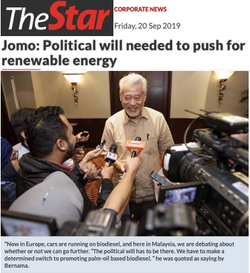
Political will needed to push for renewable energy

The Star 10July 2019

The Star 10July 2019

Malaysian businesses need boost

The Star 9 Oct 2019

The Star 9 Oct 2019

Subsidise public transport for bottom 40%

The Edge 26 Sept 2019

The Edge 26 Sept 2019

Call for measures to counteract global headwinds

The Edge 9 Oct 2019

The Edge 9 Oct 2019

Subsidise public transportation, not fuel

The Star 8 Oct 2019

The Star 8 Oct 2019

Subsidise public transportation for bottom 70%

TheEdge 2Oct 2019

TheEdge 2Oct 2019

"We need to counteract downward forces"

Fake News

PLEASE BEWARE OF MISREPRESENTATIONS OF IMAGES OF JOMO

Commercial and political misrepresentation of his image attributing to him to things which he never said or misrepresenting things he may have said is being circulated on websites such as those posted here. 


You should also be warned, in case you are not already aware, of ‘click bait’ i.e. using such images simply to attract your interest, and then to download your online information for abuse for a variety of ends.

Please inform us and provide a screenshot and weblink to enable further action, which is incredibly difficult. 

Thank you for reading this and for your help and cooperation.

This has also been flagged on his official Facebook page


JKS image ad2.jpg
JKS image Bitcoin ad on  Facebook.jpg
JKS - Fake News 2.jpg
Contact Me
JKS - Fake News 3.jpg
JKS fake news 1.jpg

Contact Me

  • Facebook Social Icon
  • Twitter Social Icon

Thank you for reaching out!

bottom of page