top of page

Follow on Social Media

  • Facebook
  • Twitter
  • Screenshot 2022-09-18 at 5.20.40 PM

M'sia Developments
[on SubStack]

  • Screenshot 2022-09-18 at 5.20.40 PM

KUALA LUMPUR, Malaysia, Jul 14 2026 (IPS) - Trump insists the West must unite on his terms against the Rest, particularly China and Iran. Europe, however, wants greater Trump support for Ukraine’s Zelensky regime to replace Putin’s leadership of Russia.


Europe v China?

In June 2026, European officials accused China of training Russian military personnel to fight in Ukraine.


After Secretary of State Marco Rubio’s Munich appeal for Western unity based on shared race, culture and imperial history, this appears to have been a European effort to strengthen its alliance with the US.

The unsubstantiated charge of Chinese military support to Russia against Ukraine, a claim never corroborated by Kyiv, is expected to worsen relations between Europe and China.

Portraying China as a strategic threat to Europe justifies greater belligerence against Beijing. It no longer seems to matter that China has never endorsed Russia’s invasion of Ukraine.

However, China retains strong ties with Kyiv, calling for a ceasefire and political settlement, while repeatedly offering to mediate between the warring neighbours.

The G7summit of the seven largest rich economies in late June followed the EU in trying to consolidate Western strategic solidarity against Russia, China and Iran.

With financial crises from 1997 threatening G7 legitimacy, then US Treasury Secretary Larry Summers initiated the G20. But the recently expanded G7 role marginalises the more inclusive but less amenable G20.


Neoliberalism over

Since the 2008 global – actually Western – financial crisis, Europe has become even more protectionist.


More Chinese goods have entered European markets, with prices and quality that most others cannot match. For years, Western leaders happily enabled this by liberalising trade, appreciating cheap Chinese imports, for keeping inflation low.

After decades of state-encouraged investment, China’s still growing industrial capacity now supplies the world, enabled by Western-drafted WTO rules.

Before Trump 2.0, Washington had imposed investment restrictions, Section 301 measures, sanctions, tariffs and more following Obama’s ‘pivot to Asia’. Facing less US market access, more Chinese exports have gone elsewhere.

European industry can no longer compete, even where it once led. Instead of neoliberal WTO trade liberalisation, EU protectionism supposedly ‘levels the playing field’.

US advisers increasingly warn European officials that China’s industrial ‘overcapacity’ will soon scale up the ‘China shock’ in most industrially significant supply chains.

China now refines and processes most of the world’s ‘rare earth’ minerals, exercising near-monopsonistic leverage over suppliers by processing at scale at much lower cost.


With China successfully countering Trump’s trade policies, Western leaders worry Beijing will abuse its near-monopolistic control of rare earth elements, which downstream industries need.


Jeffrey Sachs argues that New York and London rare earth market reactions indicate major institutional investors view recent developments as significant.


G7 vs China

Protecting European industry, labour and  economic sovereignty is now constrained by the rules Western leaders put in place over decades, often coordinated by the OECD.


Splits inside the EU soon extended beyond commercial faultlines to ostensible strategic interests defined by the fluid geopolitics after the first Cold War.


German car exports to China have been superseded by Chancellor Metz’s military Keynesianism, in line with Trump’s demand for NATO allies to spend much more on the military to greatly strengthen Western military power and global dominance.


French President Emmanuel Macron’s earlier push for unaligned European ‘strategic autonomy’ has given way to a NATO+ strategic view embracing Western imperialism.


Meanwhile, smaller EU member states remain cautious, fearing the collateral effects of new Western ambitions, such as Chinese restrictions on imports that Europe depends on.


Great power rivalry

With the Iran war refusing to fade from daily headlines despite Trump’s on-off-on ceasefire, other myths are also evaporating. Few still believe Israel will accept a ‘two-state solution’ or that peace will prevail between trading partners.


NATO, OECD, G7, EU and other such arrangements have become variable links in the hegemonic US-led bloc. Such coalitions – including Europe, Canada, Australia, and Japan – were never seamless together or fully fit-for-purpose.


Trump expects unilateral US aggression against Washington’s chosen enemies must be fully supported and subsidised by NATO allies, with reluctance deemed disloyal, even antagonistic.


Countries not aligned with the major poles may be alternatively courted and coerced by rival poles, especially by the affluent West. Cooperation among others may be seen and portrayed as proof of the existence of an antagonistic bloc.


Multiple poles are likely to coalesce into the West versus the Rest, competing for support and influence, as those courted try to gain from their suitors.


With reduced  government engagement and less sustained inter-state cooperation and order, disruptions in an increasingly anarchic world economy have required governments to prioritise resilience as businesses, consumers and labour face rising costs.


As the US and its allies weaponise economic rules and arrangements to discipline both friends and foes, the world economy is slowing unevenly as prices rise sporadically.


The US-Israel war on Iran underscores how current conflicts can develop in unpredictable ways as states and other significant non-state ‘actors’ innovate strategically in unexpected conditions.


Related IPS Articles


  • May 20, 2025
  • 4 min read

KUALA LUMPUR, Malaysia, May 20 2025 (IPS) - With President Trump’s efforts to end the Ukraine war, Europeans are now mainly responsible for prolonging it. Despite lame protestations of peace, Europe seems committed to fighting ‘to the last Ukrainian’.


Unsustainable peace

As Europe celebrated the end of the Nazi-initiated Second World War earlier in May, it does not seem to know how to sustain peace after war.


Both ‘world wars’ of the 20th century started in Europe as inter-imperialist wars, killing millions. In 1884-5, the Berlin Conference divided Africa among the dominant European powers.


After attending the Versailles palace negotiations following WW1, the young John Maynard Keynes’ The Economic Consequences of the Peace warned the agreement’s terms undermined a sustainable peace, almost anticipating Nazism’s later rise.

Towards the end of World War II (WW2), FDR’s Treasury Secretary, Henry Morgenthau, insisted Germany should not be allowed to re-industrialise after the War.

After starting and losing two world wars, German military aggression seemed unavoidable. For Morgenthau, reindustrialisation would inevitably lead Germany to war again.

For FDR, only postwar recovery for all would ‘win the peace’, not subjugating and destroying the loser.

His WW2 generals, famously Eisenhower, Marshall and MacArthur, imposed ‘pacifist’ constitutions and reforms for postwar growth on Germany and Japan.


Imperial oversight?

Despite his brilliant contemporaneous insights into the unsustainability of the peace secured at Versailles, Keynes ignored its outcome for China.


At Versailles, the Shandong peninsula, previously ruled by the Germans, was not returned to China, but given to Japan instead!


The resulting May 4th (1919) movement culminated in the Chinese revolution. Keynes was as blind to this as to WW2’s three million lives lost to the Bengal famine.


Although invisible in movies, tens of thousands from China were involved in WW1, mainly digging trenches for European troops in a war primarily remembered for trench warfare.


German possessions in southern Africa were not returned to Africans, but instead held ‘in trust’ by European powers, including the white South African regime.


While there have not been more ‘world wars’ since the end of the Cold War, there have been many more wars in the supposedly unipolar/multipolar world.


NATO v the UN

At the UN General Assembly, 141 countries condemned the Russian invasion of Ukraine in 2022. But many also oppose North Atlantic Treaty Organization (NATO) expansion via Ukraine to threaten Russia.


This is reminiscent of broad international support for President John F Kennedy in 1962 when he insisted Soviet missiles be withdrawn from Cuba, just off Florida.


NATO was established for the Cold War and should have been dissolved at its end. Its raison d’être, the rival Warsaw Pact, was gone. Worse, NATO expansion continues while it conducts unlawful wars not sanctioned by the UN Security Council.


German Chancellor Angela Merkel and French President François Hollande have both confessed that the 2014 Minsk deal with the Russians was intended to buy time to arm Ukraine for war later, not to secure peace.


Similarly, British Prime Minister Boris Johnson successfully blocked negotiations between Ukraine and Russia in the last half-year of his tenure. A peace deal would have ended hostilities and saved hundreds of thousands of lives, mainly Ukrainian.


Europe has continued to insist on war despite worsening odds. And when NATO allies blew up the gas pipeline from Russia to Germany, no protests followed.


NATO should have been dissolved at the end of the Cold War, once its raison d’être, the rival Warsaw Pact, was gone.


Despite Europe’s pretensions of leading worldwide efforts against global warming, it quickly reversed earlier commitments, even abandoning its 2021 Glasgow commitment to reject coal less than half a year later.


Unsurprisingly, the Global South remains sceptical of the EU’s carbon border adjustment mechanism (CBAM), perhaps only the latest form of European trade protectionism.


The EU has already worsened world economic conditions by raising interest rates, imposing illegal sanctions, insisting on fiscal austerity and cutting social spending in favour of military expenditure.


European leaders now proudly announce military Keynesian policies, expecting growth from more war spending. Thus, the turn to war has meant less growth and more inequality.


A non-aligned South?

FDR envisaged a peaceful new multilateral order offering progress for all. But such hopes have been squelched by political pressures for informal empire abetted by a resurgent military-industrial complex.


A different world is needed based on much stronger commitments to peace, freedom and non-alignment. It may be time for the West, the Global North and others to learn from the South-East.


In 1955, Indonesia hosted the Afro-Asian summit in Bandung, which boldly spoke for the post-colonial South and made the case for non-alignment as the Cold War began.


Over half a century ago, in 1973, the Association for South East Asian Nations (ASEAN), set up in 1967, committed to creating a zone of peace, freedom and neutrality (ZOPFAN).


Creating the enabling conditions for ongoing cooperation, development, and progress can help sustain the bases for a peaceful and progressive new world order.


KUALA LUMPUR, Malaysia, Mar 11 2025 (IPS) - NATO geopolitical strategy has now joined the ‘coalition’ of Western geoeconomic forces accelerating planetary heating, now led again by re-elected US President Donald Trump.


Industrial Revolution

Economic development is typically associated with the spread of industrialisation over the last two centuries. The Industrial Revolution involved greater energy use to increase productive capacities significantly.


Burning biomass and fossil fuels greatly expanded mechanical energy generation. The age of industry in the last two centuries has thus involved more hydrocarbon combustion to increase output.

Uneven development has also transformed population geography. Tropical soils were far more productive, enabling higher population-carrying capacities. Hence, during the Anthropocene over the last six millennia, human settlement was denser around the tropics.

Greater water availability enabled more botanical growth, supporting more fauna that was less subject to seasonal vicissitudes. If not undermined by aridification and desertification, much denser human settlements and populations became more viable in and near the tropics.

Meanwhile, industrialisation has been uneven. It was initially mainly located in the temperate West until after decolonisation following the Second World War (WW2).


However, post-WW2 industrialisation in the Global South was largely denounced as protectionist and inefficient until the East Asian miracles were better understood.


Sustainable development goals

The 1972 Stockholm Environment Summit helped catalyse public awareness of ecological and related vulnerabilities. The 1992 Rio Earth Summit promoted a more comprehensive approach centred on sustainable development.


The Millennium Development Goals (MDGs) were drafted in 2001 by a small group appointed by the UN Secretary-General. In sharp contrast, the formulation and greater legitimacy of the 17 Sustainable Development Goals (SDGs) required time-consuming widespread consultations.


Undoubtedly, many SDGs contain apparent contradictions, omissions, and unnecessary inclusions. While participatory processes tend to be messy and slow, genuine cooperation is impossible without inclusive consultation.


After decades, developing countries successfully secured recognition for the need to compensate for losses and damages, i.e., provide climate reparations, yet most prosperous countries have given nothing so far.


While mitigation is undoubtedly crucial for slowing planetary heating, resources for adaptation are urgently needed by all developing countries. Those located in the tropics have been more adversely affected.


Sustainable development should sustain ecology and human progress. Planetary heating should be curbed fairly to ensure those living precariously are not worse off.


Planetary heating

Thus, the neoliberal – and neocolonial – counter-revolution against development economics from the 1980s, with its insistence on trade liberalisation, deprived much of recently independent Africa and others of industry and food security.


The worst consequences of planetary heating are in the tropics, where populations are generally denser but poorer. European settler colonialism in temperate regions exacerbated this, blocking later immigration from the tropics.


Economic growth, higher productivity and living standards have been closely associated with more greenhouse gas (GHG) emissions in the last two centuries. Historical GHG accumulation now exacerbates planetary heating.


The New York Times has identified significant benefits of planetary heating for the US and, by extension, the Global North. Thus, the commitment of the temperate West to urgently address planetary heating remains suspect.


It claimed the melting Arctic ice cap would eventually allow inter-ocean shipping, even during winter, without using the Panama Canal, thus cutting marine transport costs. Planetary warming would also extend temperate zone summers, increasing plant and animal growth.


Sad tropics

Former central banker Mark Carney, then UN Special Envoy on Climate Action and Finance, has warned that average planetary temperatures will exceed the 1.5°C (degrees Celsius) threshold over pre-industrial levels in less than a decade.


This threshold was mainly demanded by tropical developing countries but opposed by the Global North, especially temperate European countries, who wanted it higher at 2°C. Planetary heating exacerbates poverty, with most of the world’s poor living in the tropics.


Adaptation to planetary warming is thus very urgent for developing nations. But most concessionary climate finance is earmarked for mitigation, ignoring urgent adaptation needs. Meanwhile, extreme weather events have become more common.


At least ten provinces in Vietnam now have seawater seeping into rice fields, reducing production. As rice is the main staple in Asia, higher prices will reduce its affordability, undermining the region’s food security.


War worsens planetary heating

The North Atlantic Treaty Organization (NATO) response to the Ukraine invasion has blocked Russian exports of oil and gas, strengthening the US monopoly of European fossil fuel imports.


With higher oil and gas prices, Europe has provided various energy price subsidies to ensure public support for the NATO war against Russia. The UK host secured a commitment to abandon coal at the Glasgow 26th UN climate Conference of Parties at the end of 2021.


As Mrs Thatcher had crushed the militant British coal mineworkers’ trade union in the 1980s, abandoning was easier for UK Conservatives. But the vow was soon abandoned, and coal mining in Europe revived to block cheap Russian oil and gas imports.


Thus, NATO’s energy strategy has exposed European climate hypocrisy, with the West abandoning its coal pledge for geopolitical and geoeconomic advantage. Such considerations have also undermined carbon markets’ ability to mitigate planetary heating.


Last year, the European Parliament voted to give Ukraine 0.25% of their national incomes while official OECD development assistance to the entire Global South has fallen to 0.3%! Burn, tropics, burn!


Related IPS Articles


Latest Videos

All Videos

All Videos

AN URGENT CALL: A PEOPLE"S VACCINE AGAINST COVID-19

00:00
9 June 2020: IHD-ILO-ISLE Virtual Conference - Day 2

9 June 2020: IHD-ILO-ISLE Virtual Conference - Day 2

05:08:34
Learning in Governance in times of COVID-19

Learning in Governance in times of COVID-19

46:30
Beyond the Lockdown: Towards the ‘New Normal’

Beyond the Lockdown: Towards the ‘New Normal’

59:10

About Jomo

Jomo Kwame Sundaram is Research Adviser, Khazanah Research Institute, Fellow, Academy of Science, Malaysia, and Emeritus Professor, University of Malaya. Previously, he was UN Assistant Secretary-General for Economic Development, Assistant Director General, Food and Agriculture Organization (FAO), Founder-Chair, International Development Economics Associates (IDEAs) and President, Malaysian Social Science Association. 

In The Media

TheStar 26 June 2020

TheStar 26 June 2020

The Star 20 Sept 2019

The Star 20 Sept 2019

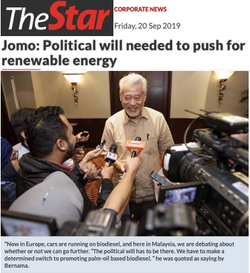
Political will needed to push for renewable energy

The Star 10July 2019

The Star 10July 2019

Malaysian businesses need boost

The Star 9 Oct 2019

The Star 9 Oct 2019

Subsidise public transport for bottom 40%

The Edge 26 Sept 2019

The Edge 26 Sept 2019

Call for measures to counteract global headwinds

The Edge 9 Oct 2019

The Edge 9 Oct 2019

Subsidise public transportation, not fuel

The Star 8 Oct 2019

The Star 8 Oct 2019

Subsidise public transportation for bottom 70%

TheEdge 2Oct 2019

TheEdge 2Oct 2019

"We need to counteract downward forces"

Fake News

PLEASE BEWARE OF MISREPRESENTATIONS OF IMAGES OF JOMO

Commercial and political misrepresentation of his image attributing to him to things which he never said or misrepresenting things he may have said is being circulated on websites such as those posted here. 


You should also be warned, in case you are not already aware, of ‘click bait’ i.e. using such images simply to attract your interest, and then to download your online information for abuse for a variety of ends.

Please inform us and provide a screenshot and weblink to enable further action, which is incredibly difficult. 

Thank you for reading this and for your help and cooperation.

This has also been flagged on his official Facebook page


JKS image ad2.jpg
JKS image Bitcoin ad on  Facebook.jpg
JKS - Fake News 2.jpg
Contact Me
JKS - Fake News 3.jpg
JKS fake news 1.jpg

Nadi Insan by the People's History Centre

Read all editions of #NadiInsan from 1979 to 1983 free of charge at the Peoples History Center website.


Containing writings on socio-political issues, film and cultural commentary, as well as in-depth interviews, Nadi Insan is motivated by community activists and intellectuals in Malaysia.

Happy reading!

Dapatkan kesemua siri majalah #NadiInsan dari tahun 1979 hingga 1983 secara percuma di laman Pusat Sejarah Rakyat.


Berisi tulisan memperihal sosio-politik, ulasan filem dan budaya sehinggalah wawancara yang rencam, Nadi Insan digerakkan oleh aktivis masyarakat dan intelektual di Malaysia.


Selamat membaca!

Contact Me

  • Facebook Social Icon
  • Twitter Social Icon

Thank you for reaching out!

bottom of page