top of page

Follow on Social Media

  • Facebook
  • Twitter
  • Screenshot 2022-09-18 at 5.20.40 PM

M'sia Developments
[on SubStack]

  • Screenshot 2022-09-18 at 5.20.40 PM

KUALA LUMPUR, Malaysia, Apr 28 2026 (IPS) - The January 2026 US National Defense Strategy (NDS) departs significantly from those preceding it, including from Trump’s first term. Is it deliberately misleading? Or is actual policy, including war, being driven by other considerations?


National Defense Strategy

The 34-page NDS begins by asserting: “For too long, the US Government neglected – even rejected – putting Americans and their concrete interests first”.


Much like the latest National Security Strategy (NSS), released by Secretary of State and National Security Adviser Marco Rubio in December 2025, the NDS claims to be about putting ‘America First’.

Both documents promise ‘no more business as usual’. They claim to change decades of strategy, supposedly in the national interest. Unlike earlier US military blueprints, the NDS is filled with vague rhetoric and eschews interventions abroad.

But in Trump 2.0’s first year alone, the US bombed ten countries, threatening at least four more, all in the Americas. Despite scant mention in both documents, the US-Israel war on Iran resumed on 28 February!

Europe

The NDS claims the US is reducing its direct military role in Europe but still wants to be influential.

It pledges to remain central to NATO “even as we calibrate US force posture and activities in the European theater” to meet US priorities.


Noting “Russia will remain a persistent but manageable threat to NATO’s eastern members for the foreseeable future”, the NDS insists NATO allies must “take primary responsibility for Europe’s conventional defense”.


The NDS blows hot and cold on Europe’s aggressive support for Ukraine’s Zelensky, envisaging a reduced troop presence on NATO’s borders with Ukraine.

Many European allies complain the Trump administration has created a ‘security vacuum’ by leaving Europe to confront Russia with uncertain US support.

They also complain about Secretary Pete Hegseth’s insistence on “credible options to guarantee US military and commercial access to key terrain”. The NDS insists on more than access to Greenland and the Panama Canal.

Issued days after Trump claimed he had a “framework of a future deal” on Arctic security with NATO chief Mark Rutte, he insisted it ensured the US “total access” to Greenland, long a territory of NATO ally, Denmark.

However, Danish officials insisted formal negotiations had not yet begun. Trump also threatened European nations opposing his Greenland plan with tariffs.


Western Hemisphere

The NDS supports the NSS and Trump’s ‘Donroe doctrine’ focus on the Western Hemisphere, envisaging the Americas as the US backyard.


In his January Davos speech, Canadian Prime Minister Mark Carney noted that recent US actions are disrupting established international norms.


The NDS was issued three days later, after a week of tensions between the White House and its Western allies. Cooperation with the Americas, including Canada, is conditional, to “ensure that they respect and do their part to defend our shared interests”.


It warns the US will “actively and fearlessly defend America’s interests throughout the Western Hemisphere. And where they do not, we will stand ready to take focused, decisive action that concretely advances US interests.”


Trump had declared the US should retake Panama and its Canal, accusing the government of ceding control to China. Later, however, Trump was more ambiguous about ‘taking back’ both the country and the canal.


Many also doubt Trump’s intentions in kidnapping Venezuelan President Nicolás Maduro and his wife, ostensibly for trial on drug charges in the US.


Asia-Pacific

The previous NDS, issued in 2022 under then-President Joe Biden, had deemed China the US’s principal threat. Biden also embraced Trump 1.0’s Indo-Pacific alliance to encircle China.


In contrast, the new NDS describes China as an established power in the Indo-Pacific region that only needs to be discouraged from dominating the US and its allies.


The goal “is not to dominate China; nor is it to strangle or humiliate them… This does not require regime change or some other existential struggle…President Trump seeks a stable peace, fair trade, and respectful relations with China”.


The NDS even proposes “a wider range of military-to-military communications” with Chinese counterparts! The U-turn followed the administration’s retreat from its threatened tit-for-tat tariff escalation after China’s successful retaliation.


Biden’s 2022 NDS promised the US would “support Taiwan’s asymmetric self-defense”. The new NDS offers no such assurances to the self-governing island province of China, which Beijing warns it will take by force if necessary.


The NDS also calls for “a sharp shift – in approach, focus, and tone”, insisting US allies must take more responsibility for countering adversaries such as China, Russia and North Korea.


It insists, “South Korea is capable of taking primary responsibility for deterring North Korea with critical but more limited US support”.


Cutting costs of empire

Like Trump, the new NDS wants allies to pay much more for US ‘protection’.


It echoes his frequent criticisms of allies for taking advantage of previous administrations to subsidise their defence and being ungrateful for US protection.


But the terms of such subordination remain ambiguous and arbitrary, even extortionate and corrupt. Gulf monarchies may now regret their generous donations to the president, apparently to little avail so far.


Trump’s treatment of allies, the Netanyahu-led war on Iran, and continuing US-led efforts to ‘contain’ China suggest both documents offer poor guidance to knowing and understanding, let alone anticipating, US policies abroad.


Related IPS Articles


Nurina Malek is an economics graduate of the University of Wisconsin-Madison, currently working on policy research at the Khazanah Research Institute.


Updated: May 16, 2025


KUALA LUMPUR, Malaysia, Dec 17 2024 (IPS) - The new geopolitics after the first Cold War undermines peace, sustainability, and human development. Hegemonic priorities continue to threaten humanity’s well-being and prospects for progress.


End of first Cold War

The end of the first Cold War has been interpreted in various ways, most commonly as a US triumph. Francis Fukuyama famously proclaimed the ‘end of history’ with the victory of capitalism and liberal democracy.


With the collapse of the Soviet Union and allied regimes, the US seemed unchallenged and unchallengeable in the new ‘unipolar’ world. The influential US journal Foreign Affairs termed ensuing US foreign policy ‘sovereigntist’.


But the new order also triggered fresh discontent. Caricaturing cultural differences, Samuel Huntington blamed a ‘clash of civilisations’. His contrived cultural categories serve a new ‘divide-and-rule’ strategy.


Today’s geopolitics often associates geographic and cultural differences with supposed ideological, systemic and other political divides. Such purported fault lines have also fed ‘identity politics’.


The new Cold War is hot and bloody in parts of the world, sometimes spreading quickly. As bellicosity is increasingly normalised, hostilities have grown dangerously.


Economic liberalisation, including globalisation, has been unevenly reversed since the turn of the century. Meanwhile, financialization has undermined the real economy, especially industry.


The G20 finance ministers, representing the world’s twenty largest economies, including several from the Global South, began meeting after the 1997 Asian financial crisis.


The G20 began meeting at the heads of government level following the 2008 global financial crisis, which was seen as a G7 failure. However, the G20’s relevance has declined again as the North reasserted G7 centrality with the new Cold War.


NATO rules

The ostensible raison d’être of the North Atlantic Treaty Organization (NATO) has gone with the end of the first Cold War and the Soviet Union.


The faces of Western powers have also changed. For example, the G5 grew to become the G7 in 1976. US infatuation with the post-Soviet Russia of Boris Yeltsin and Vladimir Putin even brought it into the G8 for some years!


Following the illegal US invasion of Iraq in 2003, the sovereigntist Wolfowitz doctrine of 2007 redefined its foreign policy priorities to strengthen NATO and start a new Cold War. NATO mobilisation of Europe – behind the US against

Russia – now supports Israel targeting China, Iran and others.


Violating the UN Charter, the 2022 Russian invasion of eastern Ukraine united and strengthened NATO and Europe behind the US. Despite earlier tensions across the north Atlantic, Europe rallied behind Biden against Russia despite its high costs.


International law has also not stopped NATO expansion east to the Russian border. The US unilaterally defines new international norms, often ignoring others, even allies. But Trump’s re-election has raised ‘centrist’ European apprehensions.


Developing countries were often forced to take sides in the first Cold War, ostensibly waged on political and ideological grounds. With mixed economies now ubiquitous, the new Cold War is certainly not over capitalism.


Instead, rivalrous capitalist variants shape the new geoeconomics as state variations underlie geopolitics. Authoritarianism, communist parties and other liberal dirty words are often invoked for effect.


New Europe

Despite her controversial track record during her first term as the European Commission (EC) president, Ursula von der Leyen is now more powerful and belligerent in her second term.


She quickly replaced Joseph Borrell, her previous EC Vice President and High Representative in charge of international relations. Borrell described Europe as a garden that the Global South, the surrounding jungle, wants to invade.


For Borrell, Europe cannot wait for the jungle to invade. Instead, it must pre-emptively attack the jungle to contain the threat. Since the first Cold War, NATO has made more, mainly illegal military interventions, increasingly outside Europe!


The US, UK, German, French and Australian navies are now in the South China Sea despite the 1973 ASEAN (Association of South-East Asian Nations) commitment to a ZOPFAN (zone of peace, freedom and neutrality) and no request from any government in the region.


Cold War nostalgia

The first Cold War also saw bloody wars involving alleged ‘proxies’ in southwestern Africa, Central America, and elsewhere. Yet, despite often severe Cold War hostilities, there were also rare instances of cooperation.


In 1979, the Soviet Union challenged the US to eradicate smallpox within a decade. US President Jimmy Carter accepted the challenge. In less than ten years, smallpox was eradicated worldwide, underscoring the benefits of cooperation.


Official development assistance (ODA) currently amounts to around 0.3% of rich countries’ national incomes. This is less than half the 0.7% promised by wealthy nations at the UN in 1970.


The end of the first Cold War led to ODA cuts. Levels now are below those after Thatcher and Reagan were in power in the 1980s. Trump’s views and famed ‘transactional approach’ to international relations are expected to cut aid further.


The economic case against the second Cold War is clear. Instead of devoting more to sustainable development, scarce resources go to military spending and related ‘strategic’ priorities.


Related IPS Articles:


  • Jun 23, 2020
  • 5 min read

Jomo Kwame Sundaram, Anis Chowdhury SYDNEY and KUALA LUMPUR, Jun 23 (IPS)  - Over the course of his presidency, US President Donald Trump's racism has become more evident with more leaks of his private remarks, which he has been generally quick to deny, qualify and explain away. Despite his thinly disguised contempt for women, ‘non-white' ethnic minorities, and most foreigners, unsurprisingly, he is respectful of power and privilege, especially when they may help him. Trump's version of ‘kiss up, kick down'. "Least racist person in the world" Unsurprisingly, Trump has claimed he is the least racist person in the world. Unsurprisingly too, his record suggests otherwise. Trump has frequently created controversies with racially charged comments and actions, and was even sued for racial discrimination by the US Justice Department in the 1970s. Trump won the 2016 presidential election with an ethno-populist agenda featuring racist elements. He has infamously promised a wall on the US-Mexico border to stop Mexicans, whom he deemed "criminals" and "rapists", and imposed bans on Muslims entering the US. Since entering the Oval Office, Trump continued to insist that he is the world's least racist person, but frequently loses self-restraint, e.g., repeatedly stereotyping non-white reporters and pandering to white supremacists, even cracking jokes in bad taste. Trump has even tweeted that several non-white Members of Congress should go back to the "totally broken and crime infested places" they came from. Adding insult to injury Two years ago, Trump referred to Haiti, El Salvador and some other African countries as ‘shitholes', sparking unprecedented international outrage. The UN human rights spokesperson described the comments as "shocking and shameful", and simply "racist", not that Trump cared. To be sure, underdevelopment is not the original condition of Africa before European colonialism, but rather, the historical outcome of various forces, most importantly Western imperialism from about half a millennium ago. From around 1445 to 1870, Africa was the major source of slaves, especially for the New World, both in North and South America. Portugal, Spain, the Netherlands, Britain, France and others in the New World and Europe all benefited, albeit differently over time. The processes and their effects were undoubtedly uneven, creating wealth for exploiters, often from abroad, while many of the exploited were enslaved, dispossessed and otherwise immiserised. Neo-colonialism Thus, contrary to the claims of Niall Ferguson, the most prominent contemporary apologist of British imperialism, that colonialism laid the foundations for post-colonial progress, Africa was ruined, irreversibly maiming its development prospects. A half-century or so after gaining independence between 1957 and 1975, or 1994, if apartheid South Africa is also included, ‘neo-colonial' policy conditionalities and advice from donors and the Bretton Woods institutions have privileged foreign investment and export markets. One major casualty of such policy advice was public investment. African countries were told not to invest in food agriculture and to dismantle supportive arrangements. Thus, with trade liberalization, food security suffered as Africa deindustrialized. The sagas of Trump's other shithole countries are not very dissimilar. Former US President Bill Clinton, who headed the United Nations' effort to rebuild Haiti after the devastating earthquake of 2010, expressed regret for having forced Haiti to open its economy to food imports, effectively destroying domestic rice production, while benefiting American farmers. ‘Shitholes' in Trump's world view Trump's candid ‘shitholes' comments presumably reflect his world view, in this case, of poor countries unlikely to provide much benefit and advantage to him or his view of American interests. Even his ambiguous and ambivalent remarks about police and ‘vigilante' brutality and killings of African-American and other ‘coloured' minorities, or his dismissive treatment of ‘minority' and inquisitive journalists should surprise no one. Trump's approval hit an all time high early in the year after securing the US-China trade deal. But having badly managed the Covid-19 pandemic, his poll ratings have declined precipitously since. Despite lavishly praising China's constructive cooperative attitude and handling of the virus outbreak in January, within months, he was encouraging to politically driven allegations of a Chinese conspiracy behind the outbreak. To add insult to injury, some African countries (e.g., Ghana, Senegal and Ethiopia) seem to have managed the pandemic better than he has. Using anti-racist protests for re-election Meanwhile, worldwide anti-racist demonstrations have revived earlier transnational protests against statues of persons identified with imperialism, slavery and the US Confederacy. The latest round of outrage following Floyd's videoed murder by policemen is already being used by the Trump camp. White supremacist and other extremist groups have joined some planned peaceful protests, initiating violence and inciting others to loot. The Lancaster, Pennsylvania police chief has confirmed, with "definite evidence", suspicions that non-violent anti-racism protests have been infiltrated by such agent provocateurs. US political observers note how the ‘long, hot summer' of 1968, including the riots at the Democratic Party convention in Chicago hosted by then Mayor Richard Daley, helped Richard Nixon win the 1968 election. Invoking more racial themes, Trump is already recasting himself as the ‘law and order' President. The emperor has no clothes More recently, the Trump administration has sought to suppress his former National Security Adviser John Bolton's embarrassing new book, The Room Where It Happened, providing considerable evidence of Trump's ignorance, incompetence, impulsiveness and pursuit of self-interest; even Secretary of State Mike Pompeo reportedly observed "He is full of shit". Bolton reports that POTUS asked China to help his re-election prospects by buying more US agricultural exports, which they did. The book's pre-publication release, widespread dissemination and publicity may nudge Trump to enhance his re-election chances by depicting himself more credibly as a China hawk by becoming even more belligerent in his rhetoric and policy actions. Trump is likely to paint presidential challenger Joe Biden as too weak and accommodative of China. Democrats may then try to outdo him, or at least not be left too far behind in terms of anti-China rhetoric, by promising to further militarize President Obama and Hillary Clinton's ‘pivot to Asia' to ‘contain' China.


Bolton may help Trump, again But Trump may also turn Bolton on his head, depicting him as a ‘trigger-happy', belligerent bully who wanted POTUS to be more aggressive, tying up the US in ‘wars without end' on many fronts on flimsy pretexts. Most people who know Bolton would testify to this effect, ironically allowing Trump to present himself as a peaceful president carrying a big stick, but refusing to go to war unnecessarily. The alternative is worse. Just over four months from the early November polls, and anxious about his re-election chances, an increasingly desperate Trump is likely to become more reckless to secure a second mandate. Trump may even provoke what he intends as a ‘limited' conflict with China, probably in the South China Sea. Regardless of the original motive, once begun, such conflicts can easily spin out of control, threatening the world and world peace. George W Bush used fictional ‘weapons of mass destruction' to start a war with Iraq, famously supported by Tony Blair, at tremendous human and economic cost. Margaret Thatcher also secured re-election by going to war over the Falkland Islands or Malvinas. Trump will be in good company if he resorts to this option. Visit this story at http://ipsnews.net/2020/06/racism-shitholes-re-election


Latest Videos

All Videos

All Videos

AN URGENT CALL: A PEOPLE"S VACCINE AGAINST COVID-19

00:00
9 June 2020: IHD-ILO-ISLE Virtual Conference - Day 2

9 June 2020: IHD-ILO-ISLE Virtual Conference - Day 2

05:08:34
Learning in Governance in times of COVID-19

Learning in Governance in times of COVID-19

46:30
Beyond the Lockdown: Towards the ‘New Normal’

Beyond the Lockdown: Towards the ‘New Normal’

59:10

About Jomo

Jomo Kwame Sundaram is Research Adviser, Khazanah Research Institute, Fellow, Academy of Science, Malaysia, and Emeritus Professor, University of Malaya. Previously, he was UN Assistant Secretary-General for Economic Development, Assistant Director General, Food and Agriculture Organization (FAO), Founder-Chair, International Development Economics Associates (IDEAs) and President, Malaysian Social Science Association. 

In The Media

TheStar 26 June 2020

TheStar 26 June 2020

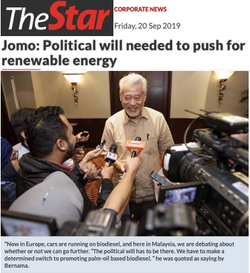
The Star 20 Sept 2019

The Star 20 Sept 2019

Political will needed to push for renewable energy

The Star 10July 2019

The Star 10July 2019

Malaysian businesses need boost

The Star 9 Oct 2019

The Star 9 Oct 2019

Subsidise public transport for bottom 40%

The Edge 26 Sept 2019

The Edge 26 Sept 2019

Call for measures to counteract global headwinds

The Edge 9 Oct 2019

The Edge 9 Oct 2019

Subsidise public transportation, not fuel

The Star 8 Oct 2019

The Star 8 Oct 2019

Subsidise public transportation for bottom 70%

TheEdge 2Oct 2019

TheEdge 2Oct 2019

"We need to counteract downward forces"

Fake News

PLEASE BEWARE OF MISREPRESENTATIONS OF IMAGES OF JOMO

Commercial and political misrepresentation of his image attributing to him to things which he never said or misrepresenting things he may have said is being circulated on websites such as those posted here. 


You should also be warned, in case you are not already aware, of ‘click bait’ i.e. using such images simply to attract your interest, and then to download your online information for abuse for a variety of ends.

Please inform us and provide a screenshot and weblink to enable further action, which is incredibly difficult. 

Thank you for reading this and for your help and cooperation.

This has also been flagged on his official Facebook page


JKS image ad2.jpg
JKS image Bitcoin ad on  Facebook.jpg
JKS - Fake News 2.jpg
Contact Me
JKS - Fake News 3.jpg
JKS fake news 1.jpg

Contact Me

  • Facebook Social Icon
  • Twitter Social Icon

Thank you for reaching out!

bottom of page