top of page

Follow on Social Media

  • Facebook
  • Twitter
  • Screenshot 2022-09-18 at 5.20.40 PM

M'sia Developments
[on SubStack]

  • Screenshot 2022-09-18 at 5.20.40 PM

Anis Chowdhury and Jomo Kwame Sundaram


SYDNEY and KUALA LUMPUR, Sep 13 2022 (IPS) – After a quarter century of economic stagnation, African economic recovery early in the 21st century was under great pressure even before the pandemic, due to new trade arrangements, falling commodity prices and severe environmental stress.

Elizabeth II dancing with Nkrumah, 1961


European scramble for Africa

Africa’s borders were drawn up by European powers, especially following their ‘Scramble for Africa’ from 1881 ending by World War One. Various culturally, linguistically and religiously different ‘ethnic’ groups were forced together into colonies, to later become post-colonial ‘nations’.

Europeans came to Africa seeking slaves and minerals, later building colonial empires. The US attended the 1884 Berlin Congress, dividing Africa among European powers. Colony-less ‘latecomer’ Germany got Southwest Africa and Tanganyika, now Namibia and mainland Tanzania respectively.

Namibia’s Herero and Nama peoples revolted unsuccessfully against German occupation in 1904. General Lothar von Trotha then ordered “every Herero … shot”. Four-fifths of the Herero and half the Nama died!

Communities were surrounded, with many killed. Others were held, with many dying in concentration camps, or driven into the desert to die of starvation. In 1984, the UN Whitaker Report concluded the atrocities were among the worst 20th century genocides.


Asymmetric interdependence?

Europe’s post-Second World War recovery benefited immensely from their primary commodity exporting colonies. After the wartime devastation, European imperial powers relied on colonial currency arrangements for precious foreign exchange.

Imperial power also ensured captive colonial markets for uncompetitive post-war European manufactures. Recovery and competition brought down commodity prices, especially after the Korean War boom. For well over a century, such prices have declined against those for manufactures.

As decolonization became inevitable, French politicians promoted the notion of ‘Eurafrica’, mimicking the US Monroe Doctrine’s claim to Latin America. French elite discourse insisted African independence should be defined by (asymmetric) ‘interdependence’, not ‘sovereignty’.

Although Germany lost its few colonies in Africa after losing the First World War, the influential West German Die Welt wondered wistfully in 1960, “Is Africa getting away from Europe?”


From decolonization to Cold War

The US was the first nation to recognize Belgian King Leopold II’s personal claim to the Congo River basin in 1884. When Leopold’s brutal atrocities and exploitation of his private Congo Free State domain, killing millions, could no longer be denied, other European powers forced Belgium to directly colonize the country!

Since then, the US has shaped the Congo’s destiny. The US has been keenly interested in its massive mineral resources. Congolese uranium, the richest in the world, was used in the Hiroshima and Nagasaki nuclear bombs. But Washington would not allow Africans control of their own strategic materials.

Patrice Lumumba became the first elected prime minister of the Democratic Republic of the Congo (DRC). An advocate of pan-African economic independence, his wish for genuine independence and sovereign control of DRC resources threatened powerful interests.

Lumumba was brutally humiliated, tortured and murdered in January 1961. The shameful assassination involved both US and Belgian governments which collaborated with Lumumba’s Congolese rivals.


Struggling to stand up

Pan-Africanist leader Kwame Nkrumah wanted independent Ghana to chart an ‘anti-imperialist’ path, staying non-aligned in the Cold War. He wanted hydroelectric dams to power Ghana’s industrial progress, beginning by smelting its bauxite to develop an aluminium value chain.

The US, UK and World Bank agreed to finance the Akosombo Dam, on condition it provided cheap energy to a Kaiser Aluminium subsidiary to process alumina for export to Kaiser. This arrangement was only rescinded decades later, early this century.

Ghana made technical cooperation agreements with the Czechs and Soviets to build two otherdams. But both were ended after Nkrumah was overthrown in a military coup abetted by Washingtonin February 1966. Thus, Nkrumah’s development ambitions for Ghana were killed.

A scaled-down Bui dam was finally built by Chinese contractors decades later. Nkrumah’s 1965 book, Neo-colonialism: The Last Stage of Imperialism, was probably the final straw in embarrassing the West.

Elsewhere, Tanzania’s Julius Nyerere’s Ujamaa ‘African socialism’ focused on developing villages and food security. Western antagonism ensured Ujamaa’s failure, while his efforts were harshly condemned to deter other Africans from trying to chart their own paths.

Meanwhile, Nyerere’s pro-Western contemporaries were supported by the West. Such countries, e.g., neighbouring Kenya and Uganda, received much more Western aid although their development records have not been much better.


A luta continua

At independence, Zambia had no universities, with only 0.5% completing primary education. The country’s copper mines were mostly in British hands. Most people survived on limited land for the villagers, without electricity and other amenities.

Hemmed in by Western-supported racist states, President Kenneth Kaunda – a devout Christian – sought foreign help to bypass hostile South Africa and Rhodesia (now Zimbabwe) to change the landlocked nation’s fate.

After the US and World Bank refused to help, he reached out to the Soviet bloc and China.China built a $500 million railway linking Zambia to the Indian Ocean through Tanzania.

Côte d’Ivoire has long been a major producer of cocoa and coffee. But three decades of misrule by its pro-Western founding father, Felix Houphouet-Boigny, ensured endemic poverty and stark inequalities, culminating in civil war.

In 2020, almost 40% of its people lived in ‘extreme poverty’. In 2019, the middle-income country’s human development index score was a low 0.538, which dropped to 0.346, when adjusted for inequality.

Both Kaunda and Houphouet-Boigny later abandoned their early, more neo-colonial policies. Zambia nationalized copper mines, hoping to improve living conditions, instead of enriching foreign investors.

Meanwhile, Ivorian cocoa was withheld to secure better prices. But both efforts failed, as copperand cocoa prices collapsed. Thus, both nations were severely punished for trying to better their fates.


Non-alignment best

During the first Cold War, Western hostility to African aspirations forced many to turn to the ‘socialist camp’ to build infrastructure and develop human resources. Washington then was as concerned with economic gain as countering ‘Reds’.

The Kennedy administration had increased foreign aid, urging allies to do likewise. But instead of supporting African aspirations, the West pursued its own economic interests while claiming to support post-colonial aspirations.

Increasing African government indebtedness over the 1970s forced many to accept structural adjustment programme policy conditions imposed by international financial institutions from the 1980s. Of course, developing countries following International Monetary Fund (IMF) and World Bank prescriptions became Western darlings.

Nyerere observed: “The IMF … makes conditions and says, ‘if you follow these examples, your economy will improve’. But where are the examples of economies booming in the Third World because they accepted the conditions of the IMF?”

Cold War considerations have also meant US interest in Africa has waxed and waned. Now, the West warns of imminent Chinese ‘take-overs’ and nefarious Russian designs. China seems more interested in financing and building infrastructure, while Putin promotes Russian exports.

Neglected by the US after the first Cold War until its 21st century African initiatives, including Africom, African nations have increasingly welcomed alternatives to the West, albeit somewhat warily.

Together, the world can help Africa progress. But if support for the long cruelly exploited continent remains hostage to new Cold War considerations, Africans will choose accordingly. Non-alignment is now the pan-African choice.


Related IPS commentaries

How France Underdevelops Africa. 30 Aug 2022. https://www.ipsnews.net/2022/08/france-underdevelops-africa/

How NOT to Win Friends and Influence People. 23 Aug 2022. https://www.ipsnews.net/2022/08/not-win-friends-influence-people/

Neo-Colonial Currency Enables French Exploitation. 2 Aug 2022. https://www.ipsnews.net/2022/08/neo-colonial-currency-enables-french-exploitation/

Africa Taken for ‘Neo-Colonial’ Ride. 26 Jul 2022. https://www.ipsnews.net/2022/07/africa-taken-neo-colonial-ride/

Racism, Shitholes and Re-election. 23 Jun 2020. http://www.ipsnews.net/2020/06/racism-shitholes-re-election/

Hunger in Africa, Land of Plenty. 14 Oct 2017. http://www.ipsnews.net/2017/10/hunger-africa-land-plenty/


1980s’ redux? New context, old threats

Anis Chowdhury and Jomo Kwame Sundaram

SYDNEY and KUALA LUMPUR, Sep 6, 2022 (IPS) - As rich countries raise interest rates in double-edged efforts to address inflation, developing countries are struggling to cope with slowdowns, inflation, higher interest rates and other costs, plus growing debt distress. 

Rich countries’ interest rate hikes have triggered capital outflows, currency depreciations and higher debt servicing costs. Developing country woes have been worsened by commodity price volatility, trade disruptions and less foreign exchange earnings.

Rising debt risks 

Almost 60% of the poorest countries were already in, or at high risk of debt distress, even before the Ukraine crisis. Debt service burdens in middle-income countries have reached 30-year highs, as interest rates rise with food, fertilizer and fuel prices.

Developing countries’ external debt has risen since the 2008-09 global financial crisis (GFC) – from $2 trillion (tn) in 2000 to $3.4tn in 2007 and $9.6tn in 2019! External debt’s share of GDP fell from 33.1% in 2000 to 22.8% in 2008. But with sluggish growth since the GFC, it rose to 30% in 2019, before the pandemic.

The pandemic pushed up developing countries’ external debt to $10.6tn, or 33% of GDP in 2020, the highest level on record. The external debt/GDP ratio of developing countries other than China was 44% in 2020. 

Borrowing from international capital markets accelerated after the GFC as interest rates fell. But commercial debt is generally of shorter duration, typically less than ten years. Private lenders also rarely offer restructuring or refinancing options.

Lenders in international capital markets charge developing countries much higher interest rates, ostensibly for greater risk. But changes in public-private debt composition and associated costs have made such debt riskier

Private short-term debt’s share rose from 16% of total external debt in 2000 to 26% in 2020. Meanwhile, international capital markets’ share of public external debt rose from 43% to 62%. Also, much corporate debt, especially of state-owned enterprises, is government-guaranteed.

Meanwhile, unguaranteed private debt now exceeds public debt. Although private debt may not be government-guaranteed, states often have to take them on in case of default. Hence, such debt needs to be seen as potential contingent government liabilities. 

Sri Lankan international capital market borrowings grew from 2.5% of foreign debt in 2004 to 56.8% in 2019! Its dollar denominated debt share rose from 36% in 2012 to 65% in 2019, while China accounted for 10% of its external borrowings.

Private borrowings for less than ten years were 60% of Lankan debt in April 2021. The average interest rate on commercial loans in January 2022 was 6.6% – more than double the Chinese rate. In 2021, Lankan interest payments alone came to 95.4% of its declining government revenue!

Commercial debt – mostly Eurobonds – made up 30% of all African external borrowings with debt to China at 17%. Zambian commercial debt rose from 1.6% of foreign borrowings in 2010 to 30% in 2018; 57% of Ghana’s foreign debt payments went to private lenders, with Eurobonds getting 60% of Nigeria’s and over 40% of Kenya’s

More commercial borrowing

Thus, external debt increasingly involved more speculative risk. Public bond finance, foreign debt’s most volatile component, rose relative to commercial bank loans and other private credit. Meanwhile, more stable and less onerous official credit has declined in significance.

    Various factors have made things worse. First, most rich countries have failed to make their promised annual aid disbursements of 0.7% of their gross national income, made more than half a century ago. 

Worse, actual disbursements have actually declined from 0.54% in 1961 to 0.33% in recent years. Only five nations have consistently met their 0.7% promise. In the five decades since promising, rich economies have failed to deliver $5.7tn in aid! 

Second, the World Bank and donors have promoted private finance, urging ‘public-private partnerships’ and ‘blended finance’ in “From billions to trillions: converting billions of official assistance to trillions in total financing”. 

Sustainable development outcomes of such private financing – especially in promoting poverty reduction, equity and health – have been mixed at best. But private finance has nonetheless imposed heavy burdens on government budgets. 

Third, since the GFC, developed economies have resorted to unconventional monetary policies – ‘quantitative easing’, with very low or even negative real interest rates. With access to cheap funds, managers seeking higher returns invested lucratively in emerging markets before the recent turnaround. 

Large investment funds and their collaborators, e.g., credit rating agencies, have profitably created new means to get developing countries to float more bonds to raise funds in international capital markets. 

Making things worse

Policy advice from donors and multilateral development banks (MDBs), rating agencies’ biases and the lack of an orderly and fair sovereign debt restructuring mechanism have shaped commercial lending practices.

    Favouring private market solutions, donors, MDBs and the IMF have discouraged pro-active development initiatives for over four decades. Hence, many developing countries remain primary producers with narrow export bases and volatile earnings. 

They have urged debilitating reforms, e.g., arguing tax cuts are necessary to attract foreign direct investment (FDI). Meanwhile, corporate tax evasion and avoidance have worsened developing countries’ revenue losses. Thus, net revenue has fallen as such reforms fail to generate enough growth and revenue.

    Credit rating agencies often assess developing countries unfavourably, raising their borrowing costs. Quick to downgrade emerging markets, they make it costlier to get financing, even if economic fundamentals are sound.

The absence of orderly and fair debt restructuring mechanisms has not helped. Commercial lenders charge higher interest rates, ostensibly for default risks. But then, they refuse to refinance, restructure or provide relief, regardless of the cause of default.

When will we learn?

Following the 1970s’ oil price hikes, western, especially US banks were swimming in liquidity as oil exporters’ dollar reserves swelled. These banks pushed debt, getting developing country governments to borrow at low real interest rates.

    After the US Fed began raising interest rates from 1977 to fight inflation, other major central banks followed, raising countries’ debt service burdens. Ensuing economic slowdowns cut commodity exporters’ earnings.

In the past, the IMF and World Bank imposed ‘one-size-fits-all’ ‘stabilization’ and ‘structural adjustment’ measures, impairing development. Developing countries had to implement severe austerity measures, liberalization and privatization. As real incomes declined, progress was set back.

With the pandemic, developing countries have seen massive capital outflows, more than in 2008. Meanwhile, surging food, fertilizer and fuel prices are draining developing countries’ foreign exchange earnings and reserves. 

As the US Fed raises interest rates, capital flight to Wall Street is depreciating other currencies, raising import costs and debt burdens. Thus, many countries need financial help. 

Debt-distressed countries once again seek support from the Washington-based lenders of last resort. But without enough debt relief, a temporary liquidity crisis threatens to become a debt sustainability, and hence, a solvency crisis, as in the 1980s.

Related IPS commentaries

Stagflation: From tragedy to farce. 16 Aug 2022. https://www.ipsnews.net/2022/08/stagflation-tragedy-farce/

Deepening Stagflation: Out of the frying pan into the fire. 5 Apr 2022. https://www.ipsnews.net/2022/04/deepening-stagflation-frying-pan-fire/

Covid-19 compounds developing country debt burdens. 23 July 2020. https://www.ipsnews.net/2020/07/covid-19-compounds-developing-country-debt-burdens/ 

Developing countries desperately need Covid-19 financing. 25 Mar 2021. https://www.ipsnews.net/2021/05/developing-countries-desperately-need-covid-19-financing/

IMF, World Bank must urgently help finance developing countries. 30 Mar 2021. https://www.ipsnews.net/2021/03/imf-world-bank-must-urgently-help-finance-developing-countries/

Neoliberal finance undermines poor countries’ recovery. 2 Mar 2021. https://www.ipsnews.net/2021/03/neoliberal-finance-undermines-poor-countries-recovery/

Can private finance really serve humanity? 14 Jul 2020. http://www.ipsnews.net/2020/07/can-private-finance-really-serve-humanity/

Multilateral bank intermediation must help developing countries’ recovery. 7 Aug 2020. https://www.ipsnews.net/2020/08/multilateral-bank-intermediation-must-help-developing-countries-recovery/

Inflation targeting constrains development. 8 Mar 2022. https://www.ipsnews.net/2022/03/inflation-targeting-constrains-development/ 

World Bank’s ‘Mobilizing finance for development’ not financing development. 25 Aug 2020. https://www.ipsnews.net/2020/08/world-banks-mobilizing-finance-development-not-financing-development/ 


  • Aug 30, 2022
  • 5 min read

How France underdevelops Africa

Anis Chowdhury and Jomo Kwame Sundaram

SYDNEY and KUALA LUMPUR, Aug 30 2022 (IPS) - Most sub-Saharan African French colonies got formal independence in the 1960s. But their economies have progressed little, leaving most people in poverty, and generally worse off than in other post-colonial African economies. 

Decolonization?

Pre-Second World War colonial monetary arrangements were consolidated into the Colonies Françaises d’Afrique (CFA) franc zone set up on 26 December 1945. Decolonization became inevitable after France’s defeat at Dien Bien Phu in 1954 and withdrawal from Algeria less than a decade later. 

France insisted decolonization must involve ‘interdependence’ – presumably asymmetric, instead of between equals – not true ‘sovereignty’. For colonies to get ‘independence’, France required membership of Communauté Française d’Afrique (still CFA) – created in 1958, replacing Colonies with Communauté.

CFA countries are now in two currency unions. Benin, Burkina Faso, Côte d’Ivoire, Guinea-Bissau, Mali, Niger, Senegal and Togo belong to UEMOA, the French acronym for the West African Economic and Monetary Union. 

Its counterpart CEMAC is the Economic and Monetary Community of Central Africa, comprising Cameroon, the Central African Republic, the Republic of the Congo, Gabon, Equatorial Guinea and Chad. 

Both UEMOA and CEMAC use the CFA franc (FCFA). Ex-Spanish colony, Equatorial Guinea, joined in 1985, one of two non-French colonies. In 1997, former Portuguese colony, Guinea-Bissau was the last to join.

Such requirements have ensured France’s continued exploitation. Eleven of the 14 former French West and Central African colonies remain least developed countries (LDCs), at the bottom of UNDP’s Human Development Index (HDI). 

French African colonies

Guinea was the first to leave the CFA in 1960. Before fellow Guineans, President Sékou Touré told President Charles de Gaulle, “We prefer poverty in freedom to wealth in slavery”. 

    Guinea soon faced French destabilization efforts. Counterfeit banknotes were printed and circulated for use in Guinea – with predictable consequences. This massive fraud brought down the Guinean economy.

France withdrew more than 4,000 civil servants, judges, teachers, doctors and technicians, telling them to sabotage everything left behind: “un divorce sans pension alimentaire” – a divorce without alimony. 

    Togo independence leader, President Sylvanus Olympio was assassinated in front of the US embassy on 13 January 1963. This happened a month after he established a central bank, issuing the Togolese franc as legal tender. Of course, Togo remained in the CFA.

Mali left the CFA in 1962, replacing the FCFA with the Malian franc. But a 1968 coup removed its first president, radical independence leader Modibo Keita. Unsurprisingly, Mali later re-joined the CFA in 1984.


Resource-rich

The eight UEMOA economies are all oil importers, exporting agricultural commodities, such as cotton and cocoa, besides gold. By contrast, the six CEMAC economies, except the Central African Republic, rely heavily on oil exports.

CFA apologists claim pegging the FCFA to the French franc, and later, the euro, has kept inflation low. But lower inflation has also meant “slower per capita growth and diminished poverty reduction” than in other African countries. 

The CFA has “traded decreased inflation for fiscal restraint and limited macroeconomic options”. Unsurprisingly, CFA members’ growth rates have been lower, on average, than in non-CFA countries. 

With one of Africa’s highest incomes, petroleum producer Equatorial Guinea is the only CFA country to have ‘graduated’ out of LDC status, in 2017, after only meeting the income ‘graduation’ criterion

Its oil boom ensured growth averaging 23.4% annually during 2000–08. But growth has fallen sharply since, contracting by -5% yearly during 2013–21! Its 2019 HDI of 0.592 ranked 145 of 189 countries, below the 0.631 mean for middle-ranking countries.

Poor people

With over 70% of its population poor, and over 40% in ‘extreme poverty’, inequality is extremely high in Equatorial Guinea. The top 1% got over 17% of pre-tax national income in 2021, while the bottom half got 11.5%!

Four of ten 6–12 year old children in Equatorial Guinea were not in school in 2012, many more than in much poorer African countries. Half the children starting primary school did not finish, while less than a quarter went on to middle school. 

CFA member Gabon, the fifth largest African oil producer, is an upper middle-income country. With petroleum making up 80% of exports, 45% of GDP, and 60% of fiscal revenue, Gabon is very vulnerable to oil price volatility. 

One in three Gabonese lived in poverty, while one in ten were in extreme poverty in 2017. More than half its rural residents were poor, with poverty three times more there than in urban areas.

Côte d’Ivoire, a non-LDC CFA member, enjoyed high growth, peaking at 10.8% in 2013. With lower cocoa prices and Covid-19, growth fell to 2% in 2020. About 46% of Ivorians lived on less than 750 FCFA (about $1.30) daily, with its HDI ranked 162 of 189 in 2019.

CFA’s neo-colonial role

Clearly, the CFA “promotes inertia and underdevelopment among its member states”. Worse, it also limits credit available for fiscal policy initiatives, including promoting industrialization. 

Credit-GDP ratios in CFA countries have been low at 10–25% – against over 60% in other Sub-Saharan African countries! Low credit-GDP ratios also suggest poor finance and banking facilities, not effectively funding investments. 

By surrendering exchange rate and monetary policy, CFA members have less policy flexibility and space for development initiatives. They also cannot cope well with commodity price and other challenges. 

The CFA’s institutional requirements – especially keeping 70% of their foreign exchange with the French Treasury – limit members’ ability to use their forex earnings for development. 

More recent fiscal rules limiting government deficits and debt – for UEMOA from 2000 and CEMAC in 2002 – have also constrained policy space, particularly for public investment.

The CFA has also not promoted trade among members. After six decades, trade among CEMAC and UEMOA members averaged 4.7% and 12% of their total commerce respectively. Worse, pegged exchange rates have exacerbated balance of payments volatility

Unrestricted transfers to France have enabled capital flight. The FCFA’s unlimited euro convertibility is supposed to reduce foreign investment risk in the CFA. However, foreign investment is lower than in other developing countries. 

Total net capital outflows from CFA countries during 1970–2010 came to $83.5 billion – 117% of combined GDP! Capital flight from CFA economies was much more than from other African countries during 1970–2015

Related IPS commentaries

Neo-colonial currency enables French exploitation. 2 Aug 2022. https://www.ipsnews.net/2022/08/neo-colonial-currency-enables-french-exploitation/

Africa taken for ‘neo-colonial’ ride. 26 Jul 2022. https://www.ipsnews.net/2022/07/africa-taken-neo-colonial-ride/

Hunger in Africa, land of plenty. 14 Oct 2017. http://www.ipsnews.net/2017/10/hunger-africa-land-plenty/


Latest Videos

All Videos

All Videos

AN URGENT CALL: A PEOPLE"S VACCINE AGAINST COVID-19

00:00
9 June 2020: IHD-ILO-ISLE Virtual Conference - Day 2

9 June 2020: IHD-ILO-ISLE Virtual Conference - Day 2

05:08:34
Learning in Governance in times of COVID-19

Learning in Governance in times of COVID-19

46:30
Beyond the Lockdown: Towards the ‘New Normal’

Beyond the Lockdown: Towards the ‘New Normal’

59:10

About Jomo

Jomo Kwame Sundaram is Research Adviser, Khazanah Research Institute, Fellow, Academy of Science, Malaysia, and Emeritus Professor, University of Malaya. Previously, he was UN Assistant Secretary-General for Economic Development, Assistant Director General, Food and Agriculture Organization (FAO), Founder-Chair, International Development Economics Associates (IDEAs) and President, Malaysian Social Science Association. 

In The Media

TheStar 26 June 2020

TheStar 26 June 2020

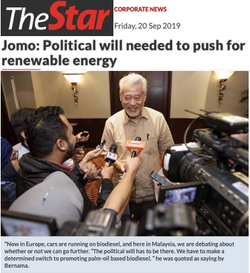
The Star 20 Sept 2019

The Star 20 Sept 2019

Political will needed to push for renewable energy

The Star 10July 2019

The Star 10July 2019

Malaysian businesses need boost

The Star 9 Oct 2019

The Star 9 Oct 2019

Subsidise public transport for bottom 40%

The Edge 26 Sept 2019

The Edge 26 Sept 2019

Call for measures to counteract global headwinds

The Edge 9 Oct 2019

The Edge 9 Oct 2019

Subsidise public transportation, not fuel

The Star 8 Oct 2019

The Star 8 Oct 2019

Subsidise public transportation for bottom 70%

TheEdge 2Oct 2019

TheEdge 2Oct 2019

"We need to counteract downward forces"

Fake News

PLEASE BEWARE OF MISREPRESENTATIONS OF IMAGES OF JOMO

Commercial and political misrepresentation of his image attributing to him to things which he never said or misrepresenting things he may have said is being circulated on websites such as those posted here. 


You should also be warned, in case you are not already aware, of ‘click bait’ i.e. using such images simply to attract your interest, and then to download your online information for abuse for a variety of ends.

Please inform us and provide a screenshot and weblink to enable further action, which is incredibly difficult. 

Thank you for reading this and for your help and cooperation.

This has also been flagged on his official Facebook page


JKS image ad2.jpg
JKS image Bitcoin ad on  Facebook.jpg
JKS - Fake News 2.jpg
Contact Me
JKS - Fake News 3.jpg
JKS fake news 1.jpg

Nadi Insan by the People's History Centre

Read all editions of #NadiInsan from 1979 to 1983 free of charge at the Peoples History Center website.


Containing writings on socio-political issues, film and cultural commentary, as well as in-depth interviews, Nadi Insan is motivated by community activists and intellectuals in Malaysia.

Happy reading!

Dapatkan kesemua siri majalah #NadiInsan dari tahun 1979 hingga 1983 secara percuma di laman Pusat Sejarah Rakyat.


Berisi tulisan memperihal sosio-politik, ulasan filem dan budaya sehinggalah wawancara yang rencam, Nadi Insan digerakkan oleh aktivis masyarakat dan intelektual di Malaysia.


Selamat membaca!

Contact Me

  • Facebook Social Icon
  • Twitter Social Icon

Thank you for reaching out!

bottom of page