top of page

Follow on Social Media

  • Facebook
  • Twitter
  • Screenshot 2022-09-18 at 5.20.40 PM

M'sia Developments
[on SubStack]

  • Screenshot 2022-09-18 at 5.20.40 PM

Updated: May 27, 2020

Jomo Kwame Sundaram, Anis Chowdhury SYDNEY and KUALA LUMPUR, Apr 28 (IPS)  - The Covid-19 pandemic is now widely considered more threatening than any other recent viral epidemic. Most believe that many more have been infected or even died than officially confirmed. Despite available information, some national leaders believed that the epidemic would not affect them. Others believed that promoting ‘herd immunity' would protect populations by exposing them to the virus, triggering human immune systems to produce antibodies. Flattening the curve? The principal strategy adopted by most governments is to ‘flatten the curve', so that countries' health systems can cope with new infections by tracing, testing, isolating and treating those infected until such time that an approved vaccine or ‘cure' is available to all. But this is easier said than done. Vulnerability to infection and capacity to respond depend on many factors including healthcare system preparedness, experience and ability in managing viral outbreaks besides the specific challenges raised by Covid-19. Government capacity to respond depends crucially on system capacity and capabilities -- e.g., authorities' ability to speedily trace, isolate and treat the infected -- and available fiscal resources -- e.g., to quickly enhance testing capacity and secure personal protective equipment. But funding cuts, privatization and other types of rent-seeking in recent decades -- in the face of rising costs, not least for medicines -- have constrained and undermined most public health systems, albeit on various different pretexts. Early action without lockdowns Physical distancing, mask use and other precautionary measures as well as mass testing, tracing, isolation and treatment have checked the epidemic without lockdowns. Such measures have been quite successful so far in much of East Asia, Vietnam and the Indian state of Kerala. Physical distancing and other precautionary measures, such as wearing masks in public areas, will be critically necessary until a vaccine is affordably available to all. Even the availability of a cure will not obviate the need for prevention offered by a vaccine. Precautionary measures must be appropriate and affordable. To minimize the risk of infection, authorities can encourage and enable, if not require, changes in social interactions, including work and other public space arrangements, including offices, factories, shops, public transportation and classrooms. Lockdowns: enforced, extended physical distancing Since Wuhan, many governments have resorted to various types of ‘stay-in-shelter' ‘lockdowns' to enforce physical distancing for protracted periods to try to ‘circuit-break' transmission. They buy precious time, for complementary interventions, allowing health authorities to check and reverse the spread of infections. Besides enforcing extended physical distancing through lockdowns, appropriate complementary measures are needed for lockdowns to work. Testing, treating and quarantining the infected need to be complemented by tracing to identify those more likely to be infected. But it has to be acknowledged that lockdowns are only part of an array of measures available to authorities to deal with the Covid-19 pandemic. Lockdowns are blunt measures of last resort, often due to the failure, inadequacy or delay of precautionary ‘early actions'. And ‘if you only have a hammer, every problem begins to look like a nail'. A lockdown was deemed necessary to deal with the Covid-19 outbreak in Wuhan, and the surrounding three provinces, after other measures to deal with the novel epidemic seemed ‘too little, too late'. But in most other situations, adequate appropriate early precautionary measures may well have proved enough. Lockdowns should not be economic knockouts Depending on context, lockdowns have many other effects as well. Good planning, implementation and enforcement of movement restrictions and provisioning for all adversely affected are crucial, not only for efficacy, but also for transitions before, during and after. Nonetheless, lockdowns typically incur huge economic costs, distributed unevenly in economies and societies. Governments must therefore be mindful of the costs, including of disruptions, and also of how policies affect various people differently.

The effectiveness of a lockdown has to be judged primarily by its ability to quickly ‘flatten the curve' and ensure no resurgence of infections. Success should not be measured by duration, enforcement stringency or even by unsustainable declines in new cases. Most ‘casual' labourers, petty businesses reliant on daily cash turnover and others in the ‘informal' economy will find it especially difficult to survive extended lockdowns. Although they need more relief support than most, they are often difficult for governments to reach. Those living in cramped conditions, e.g., urban slums, cannot realistically be expected to practice consistent physical distancing, but will nonetheless need to be enabled to sustainably practice other precautionary measures within their modest means, e.g., using washable masks. Governance, mobilization, leadership To enhance efficacy and minimize disruptions, an ‘all of government' approach at all levels needs to be developed, involving much more than public health and police enforcement authorities. Human resource, social protection, transport, education, media, industry, fiscal and other relevant authorities need to be appropriately engaged to develop the various required transitions and to plan for the post-lockdown ‘new normal'. Another condition for success is ‘whole of society' mobilization and support. Government transparency and explanations for various measures undertaken are important for public understanding, cooperation, support and legitimacy. The authorities must also realize how measures will be seen. Singapore's apparent early success, for example, was not what it seemed as it had overlooked official disincentives for possibly infected migrant workers to cooperate. Appropriate enhanced public health and other relevant communications and education will often need to be quickly developed to succeed. The efficacy and consequences of a ‘lockdown' and related measures are contingent on public appreciation of the challenges and the ability of societies to respond appropriately with socio-economic, cultural and behavioural changes. While the Covid-19 crisis is undoubtedly exceptional and full social mobilization is needed, such special ‘wartime' measures must not be abused, e.g., by the temptation to bias implementation of measures for political advantage. Success can thus be greatly enabled by legitimate, credible and exemplary leadership, government and otherwise. --------------------------------------- Excerpt: Related Links + East Asian Lessons for Controlling Covid-19' (http://www.ipsnews.net/2020/03/east-asian-lessons-controlling-covid-19/) + Vietnam Winning New War Against Invisible Enemy (http://www.ipsnews.net/2020/04/vietnam-winning-new-war-invisible-enemy/) + Kerala Covid-19 Response Model for Emulation (Kerala Covid-19 Response Model for Emulation) Visit this story at http://ipsnews.net/2020/04/government-whole-society-involvement-needed-fight-virus


Updated: May 27, 2020

Jomo Kwame Sundaram, Anis Chowdhury SYDNEY and KUALA LUMPUR, Apr 21 (IPS)  - Brazil's President Jair Bolsonaro appointed medical entrepreneur Nelson Teich his new health minister on 17 April. The businessman quickly echoed his boss' desire to resume business as usual regardless of its potentially lethal consequences. Bolsonaro had fired his previous health minister, displeased by Luiz Henrique Mandetta's public remarks on the need for lockdowns and physical distancing. Mandetta's firing was met with outrage across Brazil. Locked-down citizens banged pots and pans, shouting "Bolsonaro Murder". In his final briefing as minister, Mandetta urged staff to challenge "denialism" and mount an "unyielding defence of life and science". "Don't be afraid", he said, "Science is light … and it is through science that we will find a way out of this." Covid-19 apocalypse Meanwhile, Brazil has begun digging large graveyards ahead of an anticipated peak of the national Covid-19 epidemic. In Sao Paulo's Vila Formosa cemetery, the largest in Latin America, about 20 excavators are digging graves around the clock. In an impassioned interview, popular former President Lula da Silva accused Bolsonaro of leading Brazilians "to the slaughterhouse" with his irresponsible handling of the crisis. Officially confirmed cases have soared to over 38,000, with close to 2,500 deaths as of April 19. But these figures likely understate the gravity of the situation as Brazil's states have no standardized testing method, and mainly test those hospitalized. A Brazilian research group estimates actual infections at 15 times the official number. Lula's successor, Dilma Rousseff has asked: "Why is there no testing? What are they trying to conceal?" Another study projects that without any action to stem the pandemic, Brazil could face more than 1.15 million deaths, and 529779 with only ‘enhanced social distancing' for the elderly over 70. Even with extreme lockdown measures and widespread testing, the death toll would still be 44,200 due to late action. Bolsonaro vs state governors Despite the life-threatening risks, Bolsonaro has compared the C-19 threat to a "little flu" or "cold", dismissing it as a media-hyped "fantasy". He has dismissed preventive measures as "hysterical" and has repeatedly demanded that state governors withdraw their social distancing orders. On March 24, Bolsonaro emulated US President Donald Trump, claiming "those under 40 rarely die of coronavirus and that even he, at 65, shouldn't be worried because he was ‘an athlete' in the past". On April 8, Bolsonaro passed the buck, "Each family has to protect its elderly people, not to throw that responsibility to the state." Bolsonaro has disregarded social distancing recommendations, urging others to also defy them. At a pro-government rally he called on March 15, he shook hands with the crowd while supposed to be in quarantine after 24 people who had travelled with him to the United States had tested positive for the virus! The Brazilian president has also lashed out at Brazil's state governors, who have ordered shops and schools closed to slow the spread of the pandemic that threatens to overwhelm the health system in Latin America's largest nation. Nevertheless, Brazil's 27 state governors have defiantly maintained restrictions

Sao Paulo has been the epicentre of the outbreak in Brazil. Without offering a shred of evidence, Bolsonaro accused the state of exaggerating its Covid-19 deaths. Its governor Joao Doria has accused Bolsonaro of unleashing an "uncontrolled attack" against him for his strict measures in the economically crucial industrial state. Bolsonaro vs courts, congress The President's March 20 executive order, stripping states of authority to restrict people's movements, was revoked by Brazil's Supreme Court four days later. On March 23, Bolsonaro issued a presidential order suspending deadlines for government agencies to respond to public information requests, including his policies to address the health emergency. Brazil's Congress rejected the decree. On March 27, a federal court suspended Bolsonaro's presidential decree the previous day exempting churches and lottery houses from state and municipal health regulations by classifying them as essential services, also barring the federal government from over-ruling social distancing measures enacted by states. On March 28, a federal judge ordered the federal government to stop a publicity campaign urging Brazilians to flout social distancing recommendations, initiated by the president's own communications office and his son, Senator Flavio Bolsonaro. On April 1, Bolsonaro posted a video claiming shortages of food and other essential products because of Minas Gerais state government measures, which his own agriculture minister later admitted was false. Military is back Meanwhile, the Brazilian elite is losing faith in Bolsonaro as his handling of the crisis threatens to call into question the entire status quo. In response, Bolsonaro has appointed his Chief of Staff Gen. Walter Braga Netto to head a new crisis committee.    Braga Netto was praised by Vice President Gen. Hamilton Mourão for "doing what we (the military) know, putting the house in order", less than a week after Mourão celebrated the 1964 US-backed military coup that led to a 21-year military dictatorship, tweeting "56 years ago, the Armed Forces intervened to face the disorder, subversion and corruption that ravaged institutions and scared the population". Meanwhile, Army Commander Gen. Edson Leal Pujol issued a March 24 statement, warning: "The Strong Arm will act if necessary, and the Friendly Hand will be more extended than ever to our Brazilian brothers", concluding "WE WILL FIGHT WITHOUT FEAR!" It has been suggested that Braga Netto is now "operational president", with Army support, at least for the duration of the Covid-19 crisis. On April 19, Bolsonaro joined demonstrations in Brasilia protesting coronavirus-related lockdowns, calling for a military coup outside Army headquarters! The main objective of enhancing federal executive powers is expected to be preventing, and, if necessary, repressing an increasingly likely social explosion. *** For links, see http://ipsnews.net/2020/04/covid-19-brazils-bolsonaro-trumps-trump


Latest Videos

All Videos

All Videos

AN URGENT CALL: A PEOPLE"S VACCINE AGAINST COVID-19

00:00
9 June 2020: IHD-ILO-ISLE Virtual Conference - Day 2

9 June 2020: IHD-ILO-ISLE Virtual Conference - Day 2

05:08:34
Learning in Governance in times of COVID-19

Learning in Governance in times of COVID-19

46:30
Beyond the Lockdown: Towards the ‘New Normal’

Beyond the Lockdown: Towards the ‘New Normal’

59:10

About Jomo

Jomo Kwame Sundaram is Research Adviser, Khazanah Research Institute, Fellow, Academy of Science, Malaysia, and Emeritus Professor, University of Malaya. Previously, he was UN Assistant Secretary-General for Economic Development, Assistant Director General, Food and Agriculture Organization (FAO), Founder-Chair, International Development Economics Associates (IDEAs) and President, Malaysian Social Science Association. 

In The Media

TheStar 26 June 2020

TheStar 26 June 2020

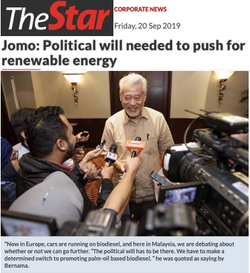
The Star 20 Sept 2019

The Star 20 Sept 2019

Political will needed to push for renewable energy

The Star 10July 2019

The Star 10July 2019

Malaysian businesses need boost

The Star 9 Oct 2019

The Star 9 Oct 2019

Subsidise public transport for bottom 40%

The Edge 26 Sept 2019

The Edge 26 Sept 2019

Call for measures to counteract global headwinds

The Edge 9 Oct 2019

The Edge 9 Oct 2019

Subsidise public transportation, not fuel

The Star 8 Oct 2019

The Star 8 Oct 2019

Subsidise public transportation for bottom 70%

TheEdge 2Oct 2019

TheEdge 2Oct 2019

"We need to counteract downward forces"

Fake News

PLEASE BEWARE OF MISREPRESENTATIONS OF IMAGES OF JOMO

Commercial and political misrepresentation of his image attributing to him to things which he never said or misrepresenting things he may have said is being circulated on websites such as those posted here. 


You should also be warned, in case you are not already aware, of ‘click bait’ i.e. using such images simply to attract your interest, and then to download your online information for abuse for a variety of ends.

Please inform us and provide a screenshot and weblink to enable further action, which is incredibly difficult. 

Thank you for reading this and for your help and cooperation.

This has also been flagged on his official Facebook page


JKS image ad2.jpg
JKS image Bitcoin ad on  Facebook.jpg
JKS - Fake News 2.jpg
Contact Me
JKS - Fake News 3.jpg
JKS fake news 1.jpg

Nadi Insan by the People's History Centre

Read all editions of #NadiInsan from 1979 to 1983 free of charge at the Peoples History Center website.


Containing writings on socio-political issues, film and cultural commentary, as well as in-depth interviews, Nadi Insan is motivated by community activists and intellectuals in Malaysia.

Happy reading!

Dapatkan kesemua siri majalah #NadiInsan dari tahun 1979 hingga 1983 secara percuma di laman Pusat Sejarah Rakyat.


Berisi tulisan memperihal sosio-politik, ulasan filem dan budaya sehinggalah wawancara yang rencam, Nadi Insan digerakkan oleh aktivis masyarakat dan intelektual di Malaysia.


Selamat membaca!

Contact Me

  • Facebook Social Icon
  • Twitter Social Icon

Thank you for reaching out!

bottom of page