top of page

Follow on Social Media

  • Facebook
  • Twitter
  • Screenshot 2022-09-18 at 5.20.40 PM

M'sia Developments
[on SubStack]

  • Screenshot 2022-09-18 at 5.20.40 PM

KUALA LUMPUR, Malaysia, Dec 6 2023 (IPS) - Greater government reliance on consulting companies has greatly enriched them while also undermining state capacities, capabilities, national economies, progress, governance and legitimacy.


The Big ConOver recent decades, policy consultancy has gradually gained more public attention. With the COVID-19 pandemic, consultancies were paid billions, with meagre results, leaving even less for millions of others desperately struggling to cope.


In The Big Con: How the Consulting Industry Weakens our Businesses, Infantilizes our Governments and Warps our Economies, Mariana Mazzucato and Rosie Collington explain how consultancies persuade governments and corporations to use their services, with problematic consequences.


Many argue that governments and corporations need such expertise as they cannot be expected to be good at everything, let alone familiar with the latest trends and challenges. Others argue consultancies provide much-needed second opinions, especially when organisations have lost their capacities and capabilities.


The Big Con argues their clients rarely get what they most need. Heavy dependence on consultancies also compromises accountability and retards needed innovation. Consequently, governments allow their capacities and capabilities to deteriorate, with consultancy firms profitably filling the gap.


‘Voluntary’ dependencyThe Big Con provides many examples of problems arising from becoming “overly reliant on expensive contracts”. These include McKinsey’s role in France’s bungled vaccine programme, and Deloitte’s in the UK’s botched Test and Trace programme.


Consultancy firms have taken over many public services in France. The trend began in 2007 when Nicolas Sarkozy became president, promising to “make the French state cost-efficient”. His government gave 250 million euros ($269m) in contracts to management consultancies like McKinsey, Deloitte and the Boston Consultancy Group (BCG).


Under Emmanuel Macron, consultancy firms received 2.4 billion euros ($2.6bn) in government contracts in 2018. They have become involved in various public services, including France’s COVID-19 vaccine rollout and controversial pension reforms.


The UK spends more on consultants than all countries other than the US. Rather than have its National Health Service involved in its test-and-trace programme, ministers and civil servants turned to consultancies. At one point, over £1m was spent on consultants daily, with some ‘senior’ advisers billing over £6,000 per diem!


One consultant confessed, “It just seemed like every project had loads of wandering Deloitte people … the sheer volume of them that were around created the situation of these zombie emails just arriving all the time … taking our attention away from actual work.”


As its bankruptcy proceedings started in 2016, Puerto Rico hired McKinsey to advise a US federal oversight board. The team, led by recent US Ivy League graduates, was to prepare an ‘aspirational vision’ for the US island territory. Its recommendations included privatising state-owned enterprises, ‘rightsizing’ job cuts, and reducing social, especially labour protection.


While consultancies are often touted as involving experienced experts, most client governments, especially from developing countries, often host young graduates of reputable institutions, mainly adept at using the latest jargon and making impressive presentations.


Losing capacities and capabilitiesMost governments have not tried hard to enhance their capacities and capabilities, e.g., to develop their public information and communications (ICT) or digital technology expertise. Instead, they ‘outsource’, depending on consultancies, even for sensitive strategic policy matters.


A book review suggests, “One also cannot help but gain the impression of the big consultancies as vultures, feasting on calamitous challenges like Covid-19, Brexit and climate change. Meanwhile, they pose as disinterested and expert helping hands.”


Management consultants are increasingly widely used by both governments and corporations, giving the impression of expert authority for mooted reforms. As a British minister noted, governments have been ‘infantilised’ by relying on management consultants.


The Big Con notes, “The more governments and businesses outsource, the less they know how to do.” Consultancies have eroded government and business capacities and capabilities. The presumption seems to be that clever young consultants, coming from abroad, know much better than experienced employees, and “knowledge can be purchased, as if off a shelf”.


So why have governments accepted all this? As the book’s title implies, successful consulting requires gaining customers’ confidence, e.g., persuading them that consultants have the answers, regardless of whether this is true.

Some decision-makers also simply want to be able to pass on responsibility for policy solutions, as it is generally politically easier to blame an external party, e.g., consultants, than to take responsibility. This is especially useful if policy recommendations are likely to be unpopular, e.g., involving downsizing or cuts.


Growing conThe Big Con notes that a con gains momentum with seeming success. The authors argue the bigger the consultancies and their scope of work, the weaker governments become. As governments lose confidence in their own abilities, consultancies become the default solution.


Some governments have become so taken with consulting that they have set up ‘internal’ consultancy arms, e.g., Malaysia set up PEMANDU, PADU and other entities for this purpose. This is part of a wider trend of increasing corporatisation of public institutions to pursue ‘efficiency’.


Perhaps urged by major donors, the United Nations Development Programme (UNDP) has championed ‘entrepreneurship’, ‘impact investing’ and ‘accelerating social enterprises’ in recent years. It now has labs, team leads, and strategic innovation units, all spouting corporate buzzwords.


This turn reflects growing faith in what Daniel Greene terms the ‘access doctrine’, i.e., the belief that poverty and other social problems can be simply overcome by new technologies and technical skills, regardless of their complexities. Policymakers increasingly embrace and proselytise such technical fixes, ensuring consultants’ status as the cult’s new high priests.


Threatened by fiscal austerity and criticisms of being obsolete, public institutions increasingly embrace the access doctrine. They shift resources to foster ‘startups’ or ‘accelerating innovation’ to retrieve legitimacy and secure much-needed resources as public spending is threatened by fiscal austerity.


By redefining poverty as a problem of technology access, consultants reframe problems as seemingly more manageable for staff, politicians, other decision-makers, donors and others. The technological fix fetish has provided a powerful rationale for cutting social protections, replacing them with upskilling programmes and entrepreneurship ‘boot camps’.


Neoliberal consultanciesWith the counter-revolution against Keynesian macroeconomics and development economics, policymakers embraced ostensibly market and private solutions from the 1980s.


As state-owned enterprises were privatised, the public sector was expected to function like businesses. Governments embraced ‘performance-related pay’ and cost-benefit analyses to promote private sector values in the public realm.


After Margaret Thatcher became UK prime minister in 1979, her party chairman declared: “The management ethos must run right through our national life – private and public companies, civil service, nationalised industries, local government, the National Health Service.”


Such policies were mimicked in many developing countries, either for access to concessional finance or voluntarily, as the Washington Consensus gained hegemony in policymaking circles. The consultancy cult’s osmosis into public institutions in recent decades as well as its more novel recent iterations are their consequences.


The book ends with a call to change the role of consultancies, arguing they have caused the public sector to become less capable and innovative. Investing in public sector expertise will be necessary to retrieve the space ‘voluntarily’ ceded to ‘the big con’.


KUALA LUMPUR, Malaysia, Nov 29 2023 (IPS) - Many in the wealthy West have misrepresented the causes of global warming, offering false solutions while claiming the high moral ground. This distracts attention from how they became wealthy while emitting greenhouse gases.


Tragedy or farce?


Growing greenhouse gas (GHG) emissions in the industrial age have caused global warming, with their accumulation continuing to accelerate despite being close to exceeding 1.5°C warming and its associated tipping points.


This is sometimes depicted as due to the failure to sustainably manage the atmosphere as a shared resource. The ‘tragedy of the commons’ refers to a community’s inability to manage a common resource sustainably.


One popular example is of individual herders benefiting by grazing more of their own animals on a limited piece of commonly shared land. Such selfish behaviour will eventually exhaust the grazing pasture, the shared common resource.


To address ‘tragedy of the commons’ claims, mainstream economists have advocated assigning property rights to more directly experience the negative ‘externalities’ or consequences due to excessive use of the limited resources owned.

Developed countries have long exhausted their ‘fair share’ of the world’s ‘carbon budget’. Climate scientists identified 350 parts per million (ppm) of carbon dioxide as the upper limit to stabilise the climate to prevent disastrous climate change.


Apportioning this carbon budget as quotas among the world’s countries has been described as allocating emission ‘rights’. The global North used up this quota in 1969, then overshot its 1.5ºC quota in 1986, and 2.0ºC quota in 1995!

Such quotas refer to the maximum accumulated carbon emissions, fairly shared among all countries, to ensure world temperatures do not rise over the pre-industrial age average by more than 1.5°C or 2.0°C in 2100 respectively.


Even if the global North achieves ‘net-zero’, their cumulative emissions alone would still be thrice their 1.5°C ‘fair share’. By contrast, at ‘net-zero’, the global South’s accumulated emissions would only use half its 1.5°C fair share.


Hence, the claim that developing countries lack ‘ambition’, compared to the global North, by not pursuing the same climate policies – such as carbon pricing – is misleading.


The European Union’s Carbon Border Adjustment Mechanism (CBAM) makes such claims. It is not only onerous but also profoundly biased. The EU has been the world’s second-largest GHG emitter historically, long exceeding its ‘fair share’ of using the atmosphere as a carbon sink.


European solution, others pay


Likely free riding poses a related problem. If GHG emissions are sufficiently penalised, global warming mitigation costs can be passed to individual greenhouse gas (GHG) emitters.


The European Union (EU) has the world’s oldest and largest Emissions Trading System (ETS). It functions by capping carbon emissions and auctioning GHG emission quotas to companies, who can trade such emission ‘rights’ among themselves.


The ETS claims to be raising costs or penalties for GHG emissions to reduce them by 55% by 2030. Thus penalising emissions especially threatens energy-intensive industries which emit more GHGs.


In response, some industries threatened to move abroad to less environmentally regulated countries. The EU gave free quota allocations to GHG emissions-intensive industries to gain political acceptance by cutting the costs of such transitions.


This is partly why the ETS can only claim credit for a mere 0% to 1.5% in annual GHG emissions reductions, failing spectacularly to reduce emissions rapidly.


Can carbon taxes save us?


To reduce GHG emissions by 55% by 2030, the EU’s new CBAM policy package promises to gradually phase out free ETS allocations.


To protect the profits of the EU’s GHG-emitting industries, importers will be required to pay higher prices. These are supposed to incorporate carbon taxes, to deter high GHG-emitting imports, especially from developing nations.


Developing countries’ exporters are required to pay carbon prices on their exports at rates determined by importing countries. Such measures are said to be fair, ostensibly by ‘levelling the playing field’, but will actually mainly burden developing country exporters.


An UNCTAD study shows how CBAM discriminates against low- and middle-income countries. It found CBAM will only reduce worldwide carbon emissions by 0.1%!


The CBAM will thus get developing countries to pay EU members for their GHG-emitting exports. Such ‘carbon taxes’ may even be used to help finance the EU’s own green transition or for purposes unrelated to climate.


Ostensibly to address global warming, the new rules are very protectionist. The WTO dispute settlement tribunal may not approve them if it is allowed to function after years of being blocked by the US. But the outcome is uncertain as this would be the first time a climate measure would be so tested.


Freeriding?


Historically, rich nations have emitted much more GHGs. On a per capita basis, this is still the case today. Despite such huge differences in GHG emissions, and ignoring developing countries’ limited means, rich nations want to impose the same rules and requirements on them.


As Elinor Ostrom has shown, communities worldwide have avoided the ‘tragedy of the commons’ historically. They governed shared resources to meet current needs while sustaining them for future generations.


Many communities devised arrangements to prevent the exhaustion of common or shared resources. But many of these were subverted by colonialism to favour foreign powers at the expense of those ruled.


CBAM also contradicts the UN Framework Convention on Climate Change (UNFCCC) principle of ‘common but differentiated responsibilities’ (CBDR). CBDR refers to the different responsibilities of developed and developing countries for causing the climate crisis and addressing it.


Recognising CBDR, the UNFCCC’s Kyoto Protocol put the primary burden for mitigation on developed countries. Rich nations rejected and undermined CBDR, delaying climate action by decades. Most Western nations made little effort to meet their obligations while accusing others of freeriding on them.


Of course, this ignores rich nations effectively freeriding on developing countries for centuries through colonialism, domination and exploitation. And the urgent action now needed to address the climate crisis has become the new pretext for rich nations to insist everyone must sacrifice equally.


Self-serving solutions


Most developing countries urgently seek – but cannot get – affordable climate financing. They prioritise climate adaptation, rather than mitigation which is what most of the limited climate finance resources from the global North is earmarked for.


To be sure, claims of ‘carbon leakage’ have been very moot. The transition anxieties of high-emission industries are best addressed by targeted policies to rapidly decarbonise these industrial processes.


Rich country subsidies have bypassed the distributional equity and political problems posed by carbon pricing or taxation. For instance, Biden’s Inflation Reduction Act (IRA) subsidies promote renewable energy and electric vehicles by lowering their costs to consumers.


Surely, by now, the world has learnt how to better cooperate to save ourselves.


YIN Shao Loong is Deputy Director of Research at the Khazanah Research Institute where he focuses on climate change and industrial policy.


Related IPS Articles

·                Insider Exposé of ESG Greenwashing

·                Beware Climate Finance Charade

·                Can Carbon Trading Stop Global Heating?

·                Profiting from the Carbon Offset Distraction

·                Carbon Tax Over-Rated


KUALA LUMPUR, Malaysia, Nov 15 2023 (IPS) - US President Joe Biden’s Indo-Pacific Framework for Prosperity (IPEF) is the economic arm of his administration’s Indo-Pacific Strategy, aimed at countering China’s influence in the region.

Despite its lofty pronounced goals, IPEF’s shortcomings expose a disconcerting lack of political will, inconsistent trade policies, and US inability to match China’s infrastructure initiatives.


Bull in a China shop?Launched in Japan in May 2022, IPEF was widely touted as the Biden administration’s better follow-up to Trump’s withdrawal from Obama’s Trans-Pacific Partnership (TPP).


Many had anticipated a robust reply to China’s growing economic influence in the region, particularly following US depiction of the Regional Comprehensive Economic Partnership (RCEP) as an instrument of Chinese expansion.

China may well stand to benefit most from RCEP by virtue of its size and economic relations with the region. But outside the US echo chamber, RCEP is seen as truly East Asian led. It has involved not only ASEAN leadership, but also Japan, South Korea, Australia, New Zealand and Singapore, all long-term US allies.


In sharp contrast, IPEF has disappointed many. It seems to be little more than a half-hearted economic cooperation appendix to the Biden administration’s Indo-Pacific strategy.


The alternative US infrastructure initiative – coordinated with NATO allies in Europe – is small potatoes compared to the Asian Infrastructure Investment Bank, which – unlike most of its allies – the US has attacked from the outset.

Also, the US has no answer to China’s flagship ‘Belt and Road Initiative’ (BRI) – which succeeded ‘One Belt One Road’ (OBOR) and earlier Chinese Silk Road initiatives. BRI ostensibly focuses on critical transport and communications infrastructure like internet cables, roads, ports and railways.


These projects are seen as directly contributing to economic development, making them highly attractive to developing nations. In contrast, IPEF offerings appear more like diplomatic gestures with little for infrastructure development.

The chasm between IPEF’s lofty rhetoric and its actual content shines light on modest US capacities and commitment. US inability to offer substantial benefits through IPEF not only jeopardizes its standing, but also cedes influence to China.


Domestic quagmires bog down IPEFThe hasty negotiations are seen as catering to the Biden’s re-election campaign. This is a far cry from what US allies were expecting, to signal greater commitment to the region. In its current form, IPEF offers little in tangible benefits.


As a Biden White House initiative without Congressional support, IPEF is dismissed in some circles – especially in the US – as part of Biden’s re-election strategy. It will most certainly be dropped if he does not secure a second term.

The irony is palpable: while there is bipartisan agreement to ‘contain’ China, US politics is so mired in partisan squabbles that it fails to act, even when interests are aligned. This lack of political will is not just a domestic failing; as a result, the international community sees the US as unreliable.


No more trade liberalization?Despite decades of ‘free trade’ rhetoric from the US, its NATO allies, the Bretton Woods institutions and others, US commitment to trade liberalization has long not been taken seriously, especially since the Trump administration.


Before that, the Obama White House had blocked appointments to the World Trade Organization’s dispute settlement panel, effectively rendering the WTO’s most important component dysfunctional.


IPEF’s modest content is largely due to increasingly hostile US public sentiment on trade liberalization. By 2016, most presidential candidates seeking to succeed Obama – from both major parties – opposed the TPP.


While most US voters know nothing about IPEF, ‘outsourcing’ manufactured imports is widely seen as behind the decline of US manufacturing, as well as related ‘good’ jobs and incomes.


While many initially expected a more Obama-like approach from the Biden administration, policy developments so far suggest Trump’s ‘America first’ rhetoric and policies are here to stay.


Unsurprisingly, the White House has promised IPEF would “ensure American workers, small businesses, and ranchers can compete in the Indo-Pacific”. US domestic re-industrialization efforts have already triggered more blatant protectionism since Trump.


Biden’s Inflation Reduction Act denies Hyundai, the Korean industrial conglomerate, as well as other foreign automotive brands, the significant tax credits available to domestic electric vehicle manufacturers.


Outdoing Trump, the Biden administration has broadened technology bans and restrictions, e.g., in its ‘microchip war’ with China. US allies – notably the Netherlands and South Korea – have largely agreed to restrict chip technology exports to Chinese companies.


Ceding regional hegemonyWhile initially welcomed despite qualms, IPEF has not been attractive to the region, especially to developing countries, including India. It does not even offer US market access, a staple of earlier free trade agreements. Instead, it mainly seeks to impose new standards associated with the new US protectionism.


IPEF’s lack of tangible benefits is unlikely to be of much interest to member governments and prospective members, let alone their publics. Worse for the US, IPEF’s modest offer may unwittingly strengthen longer term concerns about US hegemony and leadership, instead of restoring confidence in it.


The largely cool and ambivalent reception to IPEF reflects a divide. On one side, the US and its allies seek to strengthen their hegemony in the region. On the other are the mixed interests and ambivalent attitudes of others, mainly developing countries, coping with US-China rivalry.


IPEF’s fate is compounded by domestic political constraints on US foreign policy, which have reduced its room for manoeuvre. To be attractive to the region, IPEF needs to offer more tangible benefits to current and prospective members, especially developing countries.


Thus far, it has appealed to fears of Chinese expansionism and its alleged ‘debt traps’. For all but the staunchest US allies, however, concerns about privacy, surveillance or sovereignty are secondary to the need for finance and economic development.


China understands this, often sweetening its infrastructure deals, and making them more attractive to developing countries. Without a more generous response, it will be difficult to overcome IPEF’s current reputation as a low-cost means to enhance US dominance of the region.


Currently, the US is imposing itself on, rather than trying to be supportive of the region. Hence, the IPS and IPEF run the risk of simply being the latest in a series of US hegemonic initiatives from the first Cold War’s Southeast Asian Treaty Organization (SEATO) in the 1950s to Obama’s TPP.


Ong Kar Jin is an independent researcher and writer focusing on the socio-political dimensions of technology.


Latest Videos

All Videos

All Videos

AN URGENT CALL: A PEOPLE"S VACCINE AGAINST COVID-19

00:00
9 June 2020: IHD-ILO-ISLE Virtual Conference - Day 2

9 June 2020: IHD-ILO-ISLE Virtual Conference - Day 2

05:08:34
Learning in Governance in times of COVID-19

Learning in Governance in times of COVID-19

46:30
Beyond the Lockdown: Towards the ‘New Normal’

Beyond the Lockdown: Towards the ‘New Normal’

59:10

About Jomo

Jomo Kwame Sundaram is Research Adviser, Khazanah Research Institute, Fellow, Academy of Science, Malaysia, and Emeritus Professor, University of Malaya. Previously, he was UN Assistant Secretary-General for Economic Development, Assistant Director General, Food and Agriculture Organization (FAO), Founder-Chair, International Development Economics Associates (IDEAs) and President, Malaysian Social Science Association. 

In The Media

TheStar 26 June 2020

TheStar 26 June 2020

The Star 20 Sept 2019

The Star 20 Sept 2019

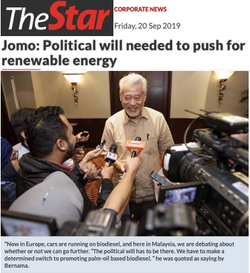
Political will needed to push for renewable energy

The Star 10July 2019

The Star 10July 2019

Malaysian businesses need boost

The Star 9 Oct 2019

The Star 9 Oct 2019

Subsidise public transport for bottom 40%

The Edge 26 Sept 2019

The Edge 26 Sept 2019

Call for measures to counteract global headwinds

The Edge 9 Oct 2019

The Edge 9 Oct 2019

Subsidise public transportation, not fuel

The Star 8 Oct 2019

The Star 8 Oct 2019

Subsidise public transportation for bottom 70%

TheEdge 2Oct 2019

TheEdge 2Oct 2019

"We need to counteract downward forces"

Fake News

PLEASE BEWARE OF MISREPRESENTATIONS OF IMAGES OF JOMO

Commercial and political misrepresentation of his image attributing to him to things which he never said or misrepresenting things he may have said is being circulated on websites such as those posted here. 


You should also be warned, in case you are not already aware, of ‘click bait’ i.e. using such images simply to attract your interest, and then to download your online information for abuse for a variety of ends.

Please inform us and provide a screenshot and weblink to enable further action, which is incredibly difficult. 

Thank you for reading this and for your help and cooperation.

This has also been flagged on his official Facebook page


JKS image ad2.jpg
JKS image Bitcoin ad on  Facebook.jpg
JKS - Fake News 2.jpg
Contact Me
JKS - Fake News 3.jpg
JKS fake news 1.jpg

Nadi Insan by the People's History Centre

Read all editions of #NadiInsan from 1979 to 1983 free of charge at the Peoples History Center website.


Containing writings on socio-political issues, film and cultural commentary, as well as in-depth interviews, Nadi Insan is motivated by community activists and intellectuals in Malaysia.

Happy reading!

Dapatkan kesemua siri majalah #NadiInsan dari tahun 1979 hingga 1983 secara percuma di laman Pusat Sejarah Rakyat.


Berisi tulisan memperihal sosio-politik, ulasan filem dan budaya sehinggalah wawancara yang rencam, Nadi Insan digerakkan oleh aktivis masyarakat dan intelektual di Malaysia.


Selamat membaca!

Contact Me

  • Facebook Social Icon
  • Twitter Social Icon

Thank you for reaching out!

bottom of page