top of page

Follow on Social Media

  • Facebook
  • Twitter
  • Screenshot 2022-09-18 at 5.20.40 PM

M'sia Developments
[on SubStack]

  • Screenshot 2022-09-18 at 5.20.40 PM

Jomo Kwame Sundaram


NEEMRANA, Rajasthan, India. March 20, 2024 (IPS). Developing countries wanting to pursue industrial policy were severely reprimanded by advocates of the ‘neoliberal’ Washington Consensus. Now, it is being deployed as a weapon in the new Cold War.


Industrial policy vs colonialism

Industrial policy is often seen as pioneered by Friedrich List. But List was inspired by George Washington’s first Treasury Secretary, Alexander Hamilton. He advocated promoting manufacturing as the Industrial Revolution was beginning in England.

For List, post-colonial national development required tariffs. Despite a title deceptively similar to his earlier Principles of the Natural Economy, List’s Principles of the National Economy was quite different, clearly inspired by Hamilton.

The Meiji Restoration started in 1868, after a quarter millennium of Tokugawa shogunate military rule. Meiji emperor rule was no mere palace coup but involved industrial policy to catch up with the already industrialising West.

Meanwhile, public intellectuals like Dadabhai Naoroji and Sayyid Jamaluddin al-Afghani rejected Western imperialism. They criticised how parts of the global South were being transformed – and ruined– by Western imperialism.

Half a century later, Harvard’s Josef Schumpeter rejected the idea that capitalism had become imperialistic. The Austrian economist insisted imperialism was a pre-capitalist atavism that capitalism’s ascendance would wipe out.


Weaponising industrial policy

Today’s geopolitics has seen a renewed Western interest in industrial policy as a weapon in the new Cold War. US President Joe Biden’s National Security Adviser, Jake Sullivan, is widely credited with articulating its use as an economic weapon.

This contrasts significantly with longstanding interest in industrial policy in the global South over several decades. For many, industrial policy has long been associated with post-colonial development efforts.

Meanwhile, strong stagnation tendencies in the West after the 2008 global financial crisis underscored the failure of purported neoliberalism. Advocacy of transformative, including green industrial policies by Mariana Mazzucato and others in Europe, was well received by desperate governments keen to resume growth.


Developmental, industrial policy

However, in developing countries, there has long been interest in developmental industrial policy. Neoliberal economists and the many influential financial institutions they control have long frowned upon this.

Alfred Marshall, Petrus Johannes Verdoorn, Nicholas Kaldor and others urged Europe to industrialise. Selective industrial policy has been even more controversial, with the government favouring some manufacturing activities over others, e.g., due to increasing returns to scale.

Typically facing resource, including fiscal constraints, developing countries have had little choice but to be selective. However, with such powers associated with governments, there was understandable concern about the potential for abuse, arbitrariness and error.

Instead, the market was supposed to decide in the best interests of society without recognising its own inherent biases and ‘failures’, especially in highly unequal post-colonial societies. Neoliberal economists were quick to caricature industrial policy with dismissive metaphors (e.g., picking winners) rather than rigorous analysis.


Asian miracles?

The East Asian Miracle was simplistically caricatured due to the abandonment of import-substituting industrialisation in favour of export-orientation. A more nuanced alternative narrative of ‘effective protection conditional on export promotion’ in Northeast Asia was thus ignored.

Industrial policy is much more than trade policy, involving a range of policy instruments. Recognising the variegated aspects, dimensions and tools of industrial policy is essential. Besides investment, finance, and technology, human resource development is also significant.

For instance, the Indian Institutes of Technology (IITs) were an important initiative to support its industry. However, with India’s gradual neglect of industrial policy, IITs have probably contributed more to the development of US hi-tech.


Evaluating industrial policy

For years, economists working on India have criticised industrial policy, usually referring to the Nehruvian experience. But rushing to such a conclusion solely referencing that experience requires cherry-picking evidence.

India’s pharmaceutical policy has been crucial to the health and well-being of its population. Affordable, often generic medicines in India have been central to its improved public health outcomes. However, unlike Western pharmaceutical transnational corporations, Indian companies have not been accused of price-gouging.

Bangladesh has since utilised its special dispensation as a least developed country (LDC) to export affordable generic medicines to many other poor countries. However, the West blocked the Indian-South African initiative to suspend patent royalties to address the COVID-19 pandemic for its duration.

Effectively, the West was reneging on its 2001 agreement to the Public Health Exception to Trade-Related Industrial Property Rights (TRIPS). This compromise was needed to restart WTO processes after the African walkout from the 1999 Seattle World Trade Organization (WTO) ministerial meeting.

If not for India and Bangladesh, the costs of medicines would have been much higher, and there would be more ill health in the world today. Defining industrial policy success solely in terms of the financial profitability of investments ignores such gains.

It is, therefore, crucial to build coalitions to create the conditions for sustained and appropriate but adaptive industrial policies. These are needed to accelerate growth and structural transformation to achieve sustainable development in the face of stagnation and regression in much of the world, especially the global South.


Selected IPS readings


KUALA LUMPUR, Malaysia, Mar 13 2024 (IPS) - Much higher interest rates – due to Western central banks – are suffocating developing nations, especially the poorest, causing prolonged debt distress and economic stagnation.


US Fed-induced stagnation

After the greatest US Fed-led surge in international interest rates in more than four decades, developing countries spent $443.5 billion to service their external government and government-guaranteed debt in 2022.

The World Bank’s last International Debt Report showed most of the poorest countries in debt distress as borrowing costs began to surge. The increase has cut into scarce fiscal resources, reducing social spending on health and education.

Debt-servicing costs for all developing countries in 2022 increased by 5% over 2021. The US Fed continued to raise interest rates through 2023, compounding debt distress, while the European Central Bank warns against ‘prematurely’ lowering interest rates.


Poorest worst off

The 75 countries eligible to borrow from the World Bank’s International Development Association (IDA) – which only lends to the world’s poorest – paid $88.9 billion to service debt in 2022.

Over the last decade, the cumulative debt of IDA-eligible countries grew faster than their economies. Their foreign debt stock reached $1.1 trillion in 2022 – more than twice that in 2012. During 2012-22, their external debt rose 134%, over twice the 53% increase in national income.

Interest payments by the poorest countries have quadrupled over the previous decade to $23.6 billion in 2022. The Bank expects debt-servicing by the 24 poorest countries to jump by as much as 39% in 2023 and 2024.


Growing debt distress

Bank Chief Economist cum Senior Vice President Indermit Gill has warned, “Record debt levels and high-interest rates have set many countries on a path to crisis”. “Every quarter that interest rates stay high results in more developing countries becoming distressed…”

Without “quick and coordinated action by debtor governments, private and official creditors, and multilateral financial institutions” and “better debt sustainability … and swifter restructuring” arrangements, “another lost decade’’ seems unavoidable!Higher interest rates have worsened debt distress in most developing countries. There have been 18 government debt defaults in ten developing countries in the last three years – more than in the previous two decades!


Poorest hardest hit

About three-fifths of low-income countries (LICs) are in or at high risk of debt distress. Debt service payments consume an increasingly large share of their export earnings. Over a third of their external debt has variable interest rates, which have risen sharply over the last two years.

The Bank acknowledges, “Many of these countries face an additional burden: the accumulated principal, interest, and fees they incurred for the privilege of debt-service suspension under the G-20’s Debt Service Suspension Initiative (DSSI).”

With higher Fed rates, the stronger US dollar worsens developing countries’ difficulties, raising debt-servicing costs. Besides high interest rates, falling export earnings – due to lower demand – are worsening things.


Where have all the lenders gone?

New financing for the global South has dried up with the flight of capital ‘uphill’ to the North. New borrowing has been made harder by interest rate and debt-servicing cost increases.

New government and government-guaranteed foreign loan commitments to these countries fell by 23% to $371 billion in 2022 – the lowest in a decade.

Private creditors have been avoiding developing countries and got $185 billion more in principal repayments than they loaned in 2022. It was the first year they received more than they loaned to developing countries since 2015.

New bonds issued by developing countries internationally dropped by over half in 2022! New bond issues by IDA-eligible LICs and other countries fell by more than three-quarters to $3.1 billion.

With much less private financing, multilateral development banks, especially the World Bank, loaned much more. Multilateral creditors provided $115 billion in new concessional financing to developing countries in 2022, with half from the Bank.

The Bank provided $16.9 billion more in such financing than it got in principal repayments – nearly thrice the amount a decade before. The Bank also disbursed $6.1 billion in grants to these countries, three times the amount in 2012.


Wrong medicine

As the US Fed continued to hike interest rates through 2023 while the European Central Bank still warns against ‘prematurely’ reversing the rate hikes, the prospects of early relief appear remote, threatening further devastation in the global South.

The excuse for higher interest rates remains inflation above the completely arbitrary two per cent inflation targeting rate now embraced by all too many central bankers as their ‘holy grail’.

But most recent inflation has been due to often deliberate supply-side disruptions in recent years associated with the US-led new Cold War, COVID-19 pandemic disruptions and geopolitically driven economic sanctions, especially since the Russian invasion of Ukraine.

Core inflation has largely receded in much of the world since mid-2022. But meanwhile, imported inflation has been exacerbated by exchange rate depreciation due to financial flow-induced refluxes¬.


No solution on the horizon

The 1980s’ government debt crises caused a ‘lost decade’ in Latin America and a quarter century of stagnation in Sub-Saharan Africa. It took almost a decade for the George H W Bush administration to resolve the Latin American debt crises with compromises around the Brady bonds.

This time, a resolution will be much more difficult owing to the varied creditors and much larger debt involved. Worse, there is little sense of responsibility in the West. Instead of seeking collective solutions, the evolving debt crisis is used to blame and isolate China in the fast-worsening geopolitical new Cold War.


Related IPS Articles

·                North Ignores ‘Perfect Storm’ in Global South

·                Onerous Debt Making Poorest Poorer

·                US Policies Slowing World Economy

·                Stop Worshiping Central Banks

·                Inflation Phobia Hastens Recessions, Debt Crises


KATHMANDU, Nepal, Mar 6, 2024 (IPS) - Viable, popular national economic alternatives require conditions to help build and sustain them. An independent, accountable government can ensure supportive institutions, including laws.


National economies

For the Global South, globalisation has often meant renewed foreign domination. While dating back to the age of empire, foreign domination is less evident in post-colonial times, making it more difficult to organise against it.

National sovereignty and independence are necessary to develop and sustain viable popular economic alternatives. This requires addressing contemporary realities. Some unexpected opportunities may even emerge from the new challenges faced.

Cooperation among significant national social forces must be maintained for an alternative to be popular and sustainable. Negotiating, preserving, strengthening and ‘updating’ such collaboration is necessary to advance popular national interests.

This becomes challenging when those involved are not on a level playing field. After all, we live in a world dominated by powerful private interests, typically working through corporations, with transnational ones being the most influential.

Most people know that such domination is exercised via economic assets. But it has increasingly also involved control of the main means of communication. Global public discourses have thus been reshaped, even in multilateral institutions.

Thus, for example, the unrepresentative corporate-dominated Davos World Economic Forum sets agendas for multilateral conferences in the interest of the ‘lords of the universe’. More than seventy heads of government and state attended the last Davos event, many more than the UN General Debate.

Can developing alternative means of communication better shape our discourses, as our interests rarely coincide with those effectively in control?


Rule by law

Katarina Pistor has shown how law is hardly neutral but instead crucial to capitalism’s functioning. Thus, setting and enforcing rules privileges the interests shaping them.

Law is made by the powerful to legitimise their interests and practices, e.g., by enforcing contracts, property rights, etc. The legal framework defines how we operate, what is considered legal and illegal, and what is licit and illicit.

The African Union-Economic Commission for Africa study, chaired by former South African President Thabo Mbeki, recognised that many illicit practices are not illegal. Such massive illicit financial outflows characterise most of the Global South.

Such haemorrhage has worsened in recent decades as developing countries competed to attract foreign investments. In recent decades, they opened their capital accounts, believing economists who claimed finance would then flow ‘downhill’ into them. Instead, it flows ‘uphill’ from ‘capital-poor’ to ‘capital-rich’ nations.

Finance has transformed economies and communities in recent decades. The growing influence of such interests has increasingly constrained national monetary and financial authorities’ ability to manage interest and exchange rates.

Hence, only governments and multilateral financial institutions can create arrangements enabling preferential access to concessional finance. Inclusion and accountability can help ensure governments better serve the public interest.


Taxation

The Independent Commission for the Reform of International Corporate Taxation recommended a minimum universal corporate income tax rate of 25%.

US Treasury Secretary Janet Yellen later proposed 21%, the current US rate, to minimise political opposition in Washington. However, UK Prime Minister Boris Johnson cut this to 15% at the G7 meeting he hosted.

The OECD-G20 Inclusive Framework for Base Erosion and Profit Shifting (BEPS) seems to share the OECD view that such tax revenue be distributed by the country of sale, not production.

Developing countries lose out as they generally produce much more than they can afford to consume. With foreign advice shaping developing countries’ policies, their tax rates and revenue shares of output have fallen for decades. Hence, indebted nations believe they have to cut government spending.

Unsurprisingly, most developing countries have supported the African group’s resolution to make the UN the sole legitimate body for international tax cooperation, thus undermining the Inclusive Framework’s pretensions.


Trade liberalisation bias

Trade liberalisation is a double-edged sword. It can enhance exports to earn more foreign exchange but also destroys economic capacities, e.g., for industrialisation and food security.

Rich countries – including the US, the world’s biggest agricultural exporter – have sustained food production with government support using protection and subsidies. But while such subsidies are allowed, developing countries have been stopped from using tariffs for food security.

The US subsidises maize production for corn oil to make bioethanol. Corn syrup and chicken feed also get subsidised in the process. Consequently, US chicken exports have wiped out many poultry farmers worldwide.

Food prices increased sharply for some months after the Russian invasion of Ukraine. Jayati Ghosh showed these food price spikes were mainly due to speculation and price manipulation rather than wartime supply disruptions.

Futures markets once reduced commodity price fluctuations but have had significant disruptive effects more recently. This is mainly due to the changed nature of commodity spot, futures and options markets, especially with massive programmed financial speculation using algorithms and artificial intelligence.


* Edited remarks to the World People’s Economic Forum at the World Social Forum in Kathmandu on February 18, 2024.


Related IPS Articles

·                Beware UN Food Systems Summit Trojan Horse

·                The Best Law Capital Can Buy

·                Trade Liberalization for Development?

·                Financialization Promotes Dangerous Speculation


Latest Videos

All Videos

All Videos

AN URGENT CALL: A PEOPLE"S VACCINE AGAINST COVID-19

00:00
9 June 2020: IHD-ILO-ISLE Virtual Conference - Day 2

9 June 2020: IHD-ILO-ISLE Virtual Conference - Day 2

05:08:34
Learning in Governance in times of COVID-19

Learning in Governance in times of COVID-19

46:30
Beyond the Lockdown: Towards the ‘New Normal’

Beyond the Lockdown: Towards the ‘New Normal’

59:10

About Jomo

Jomo Kwame Sundaram is Research Adviser, Khazanah Research Institute, Fellow, Academy of Science, Malaysia, and Emeritus Professor, University of Malaya. Previously, he was UN Assistant Secretary-General for Economic Development, Assistant Director General, Food and Agriculture Organization (FAO), Founder-Chair, International Development Economics Associates (IDEAs) and President, Malaysian Social Science Association. 

In The Media

TheStar 26 June 2020

TheStar 26 June 2020

The Star 20 Sept 2019

The Star 20 Sept 2019

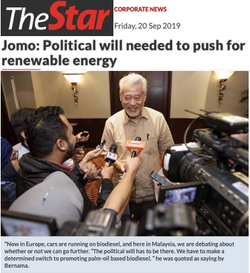
Political will needed to push for renewable energy

The Star 10July 2019

The Star 10July 2019

Malaysian businesses need boost

The Star 9 Oct 2019

The Star 9 Oct 2019

Subsidise public transport for bottom 40%

The Edge 26 Sept 2019

The Edge 26 Sept 2019

Call for measures to counteract global headwinds

The Edge 9 Oct 2019

The Edge 9 Oct 2019

Subsidise public transportation, not fuel

The Star 8 Oct 2019

The Star 8 Oct 2019

Subsidise public transportation for bottom 70%

TheEdge 2Oct 2019

TheEdge 2Oct 2019

"We need to counteract downward forces"

Fake News

PLEASE BEWARE OF MISREPRESENTATIONS OF IMAGES OF JOMO

Commercial and political misrepresentation of his image attributing to him to things which he never said or misrepresenting things he may have said is being circulated on websites such as those posted here. 


You should also be warned, in case you are not already aware, of ‘click bait’ i.e. using such images simply to attract your interest, and then to download your online information for abuse for a variety of ends.

Please inform us and provide a screenshot and weblink to enable further action, which is incredibly difficult. 

Thank you for reading this and for your help and cooperation.

This has also been flagged on his official Facebook page


JKS image ad2.jpg
JKS image Bitcoin ad on  Facebook.jpg
JKS - Fake News 2.jpg
Contact Me
JKS - Fake News 3.jpg
JKS fake news 1.jpg

Nadi Insan by the People's History Centre

Read all editions of #NadiInsan from 1979 to 1983 free of charge at the Peoples History Center website.


Containing writings on socio-political issues, film and cultural commentary, as well as in-depth interviews, Nadi Insan is motivated by community activists and intellectuals in Malaysia.

Happy reading!

Dapatkan kesemua siri majalah #NadiInsan dari tahun 1979 hingga 1983 secara percuma di laman Pusat Sejarah Rakyat.


Berisi tulisan memperihal sosio-politik, ulasan filem dan budaya sehinggalah wawancara yang rencam, Nadi Insan digerakkan oleh aktivis masyarakat dan intelektual di Malaysia.


Selamat membaca!

Contact Me

  • Facebook Social Icon
  • Twitter Social Icon

Thank you for reaching out!

bottom of page