top of page

Follow on Social Media

  • Facebook
  • Twitter
  • Screenshot 2022-09-18 at 5.20.40 PM

M'sia Developments
[on SubStack]

  • Screenshot 2022-09-18 at 5.20.40 PM

Hezri A Adnan and Jomo Kwame Sundaram


KUALA LUMPUR, Nov 08, 2022 (IPS). Ahead of the first United Nations environmental summit in Stockholm in 1972, a group of scientists prepared The Limits to Growth report for the Club of Rome. It showed planet Earth’s finite natural resources cannot support ever-growing human consumption.

Limits used integrated computer modelling to investigate twelve planetary scenarios of economic growth and their long-term consequences for the environment and natural resources.

Emphasizing material limits to growth, it triggered a major debate. Authored by Donella H. Meadows, Dennis L. Meadows, Jørgen Randers, and William W. Behrens III, Limits is arguably even more influential today.


Within limits

Limits considered population, food production, industrialization, pollution and non-renewable resource use trends from 1900 to 2100.

It conceded, “Any human activity that does not require a large flow of irreplaceable resources or produce severe environmental degradation might continue to grow indefinitely”.

Most projected scenarios saw growth ending this century. Ominously, Limits warned of likely ecological and societal collapses if anthropocene challenges are not adequately addressed soon enough.

Failure would mean less food and energy supplies, more pollution, and lower living standards, even triggering population collapses.

But Limits was never meant to be a definitive forecast, and should not be judged as such. Instead, it sought to highlight major resource threats due to growing human consumption.


Off-limits?

Gaya Herrington showed three of Limits’ four major scenarios anticipated subsequent trends. Two lead to major collapses by mid-century. She concluded, “humanity is on a path to having limits to growth imposed on itself rather than consciously choosing its own.”

Limits stressed the urgent need for radical transformation to achieve ‘sustainable development’. The ‘international community’ embraced this, in principle, at the 1992 Earth Summit in Rio de Janeiro, two decades after Stockholm.

With accelerating resource depletion – as current demographic, industrial, pollution and food trends continue – the planet’s growth limits will be reached within the next half-century. The Earth’s ‘carrying capacity’ is unavoidably shrinking.

For Limits, only a “transition from growth to…a desirable, sustainable state of global equilibrium” can save the environment and humanity.

The report maintained it was still possible to create conditions for a much more sustainable future while meeting everyone’s basic material needs. As Gandhi said, “The world has enough for everyone’s need, but not enough for everyone’s greed.”

No other environmental work then, or since, has so directly challenged mainstream growth beliefs. Unsurprisingly, it attracted strong opposition.

The 1972 study was long dismissed by many as neo-Malthusian prophecy of doom, underestimating the potential for human adaptation through technological progress.

Many other criticisms have been made. Limits was faulted for focusing too much on resource limits, but not enough on environmental damage. Economists have criticized it for not explicitly incorporating either prices or socioeconomic dynamics.


Beyond limits

In Beyond the Limits (1993), the two Meadows and Randers argued that resource use had exceeded the world environment’s carrying capacity.

Using climate change data, they highlighted the likelihood of collapse, going well beyond the earlier focus on the rapid carbon dioxide build-up in the atmosphere.

In another sequel, Limits to Growth: The 30-Year Update (2004), they elaborated their original argument with new data, calling for stronger actions to avoid unsustainable excess.

Dennis Meadows stresses other studies confirm and elaborate Limits’ concerns. Various growth trends peak around 2020, suggesting likely slowdowns thereafter, culminating in environmental and economic collapse by mid-century.

Limits’ early 1970s’ computer modelling has been overtaken by enhanced simulation capabilities. Many earlier recommendations need revision, but the main fears have been reaffirmed.


Limitless?

Two key Limits’ arguments deserve reiteration. First, its critique of technological hubris, which has deterred more serious concern about the threats, thus undermining environmental, economic and other mitigation efforts.

As Limits argued, environmental crisis and collapse are due to socioeconomic, technological and environmental transformations for wealth accumulation, now threatening Earth’s resources and ecology.

Conventional profit-prioritizing systems and technologies have changed, e.g., with resource efficiency innovation. Such efforts help postpone the inevitable, but cannot extend the planet’s natural limits.

Of course, innovative new technologies are needed to address old and new problems. But these have to be deployed to enhance sustainability, rather than profit.

The Limits critique is ultimately of ‘growth’ in contemporary society. It goes much further than recent debates over measuring growth, recognizing greater output typically involves more resource use.

While not necessarily increasing exponentially, growth cannot be unlimited, due to its inherent resource and ecological requirements, even with materials-saving innovations.


This Earth for all

Thankfully, Limits’ fourth scenario – involving significant, but realistic transformations – allows widespread increases in human wellbeing within the planet’s resource boundaries.

This scenario has inspired Earth for All – the Club of Rome’s Transformational Economics Commission’s 2022 report – which more than updates Limits after half a century. Its subtitle – A Survival Guide for Humanity – emphasizes the threat’s urgency, scale and scope.

It argues that ensuring the wellbeing of all is still possible, but requires urgent fundamental changes. Major efforts are needed to eradicate poverty, reduce inequality, empower women, and transform food and energy systems.

The comprehensive report proposes specific strategies. All five need significant investments, including much public spending. This requires more progressive taxation, especially of wealth. Curbing wasteful consumption is also necessary.

More liquidity – e.g., via ‘monetary financing’ and International Monetary Fund issue of more special drawing rights – and addressing government debt burdens can ensure more policy and fiscal space for developing country governments.

Many food systems are broken. They currently involve unhealthy and unsustainable production and consumption, generating much waste. All this must be reformed accordingly.

Market regulation for the public good is crucial. Better regulation – of markets for goods (especially food) and services, even technology, finance, labour and land – is necessary to better conserve the environment.


Limited choice

The report includes a modeling exercise for two scenarios. ‘Too Little Too Late’ is the current trajectory, offering too few needed changes.

With growing inequalities, social trust erodes, as people and countries compete more intensely for resources. Without sufficient ‘collective action’, planetary boundaries will be crossed. For the most vulnerable, prospects are grim.

In the second ‘Giant Leap’ scenario, the five needed shifts are achieved, improving wellbeing all around. Everybody can live with dignity, health and security. Ecological deterioration is sufficiently reversed, as institutions serve the common good and ensure justice for all.

Broad-based sustainable gains in wellbeing need pro-active governance reshaping societies and markets. This needs sufficient political will and popular pressure for needed reforms.

But as the world moves ever closer to many limits, the scenario looming is terrifying: ecosystem destruction, gross inequalities and vulnerabilities, social and political tensions.

While regimes tend to bend to public pressure, if only to survive, existing discourses and mobilization are not conducive to generating the popular political demands needed for the changes.


Adnan A Hezri is an environmental policy analyst and Fellow of the Academy of Sciences, Malaysia. He is author of The Sustainability Shift: Reshaping Malaysia’s Future.


Related IPS readings


Anis Chowdhury and Jomo Kwame Sundaram


SYDNEY and DAKAR. Nov 01, 2022 (IPS). Developing countries have long been told to avoid borrowing from central banks (CBs) to finance government spending. Many have even legislated against CB financing of fiscal expenditure.


Central bank fiscal financing

Such laws are supposedly needed to curb inflation – below 5%, if not 2% – to accelerate growth. These arrangements have also constrained a potential CB developmental role and government ability to respond better to crises.

Improved monetary-fiscal policy coordination is also needed to achieve desired structural transformation, especially in decarbonizing economies. But too many developing countries have tied their own hands with restrictive legislation.

A few have pragmatically suspended or otherwise circumvented such self-imposed prohibitions. This allowed them to borrow from CBs to finance pandemic relief and recovery packages.

Such recent changes have re-opened debates over the urgent need for counter-cyclical and developmental fiscal-monetary policy coordination.


Monetary financing rubbished

But financial interests claim this enables national CBs to finance government deficits, i.e., monetary financing (MF). MF is often blamed for enabling public debt, balance of payments deficits, and runaway inflation.

As William Easterly noted, “Fiscal deficits received much of the blame for the assorted economic ills that beset developing countries in the 1980s: over indebtedness and the debt crisis, high inflation, and poor investment performance and growth”.

Hence, calls for MF are typically met with scepticism, if not outright opposition. MF undermines central bank independence (CBI) – hence, the strict segregation of monetary from fiscal authorities – supposedly needed to prevent runaway inflation.

Recent International Monetary Fund (IMF) research insists MF “involves considerable risks”. But it acknowledges MF to cope with the pandemic did not jeopardize price stability. A Bank of International Settlements paper also found MF enabled developing countries to respond countercyclically to the pandemic.

Cases of MF leading to runaway inflation have been very exceptional, e.g., Bolivia in the 1980s or Zimbabwe in 2007-08. These were often associated with the breakdown of political and economic systems, as when the Soviet Union collapsed.

Bolivia suffered major external shocks. These included Volcker’s interest rate spikes in the early 1980s, much reduced access to international capital markets, and commodity price collapses. Political and economic conflicts in Bolivian society hardly helped.

Similarly, Zimbabwe’s hyperinflation was partly due to conflicts over land rights, worsened by government mismanagement of the economy and British-led Western efforts to undermine the Mugabe government.


Indian lessons

Former Reserve Bank of India Governor Y.V. Reddy noted fiscal-monetary coordination had “provided funds for development of industry, agriculture, housing, etc. through development financial institutions” besides enabling borrowing by state owned enterprises (SOEs) in the early decades.

For him, less satisfactory outcomes – e.g., continued “macro imbalances” and “automatic monetization of deficits” – were not due to “fiscal activism per se but the soft-budget constraint” of SOEs, and “persistent inadequate returns” on public investments.

Monetary policy is constrained by large and persistent fiscal deficits. For Reddy, “undoubtedly the nature of interaction between [fiscal and monetary policies] depends on country-specific situation”.

Reddy urged addressing monetary-fiscal policy coordination issues within a broad common macroeconomic framework. Several lessons can be drawn from Indian experience.

First, “there is no ideal level of fiscal deficit, and critical factors are: How is it financed and what is it used for?” There is no alternative to SOE efficiency and public investment project financial viability.

Second, “the management of public debt, in countries like India, plays a critical role in development of domestic financial markets and thus on conduct of monetary policy, especially for effective transmission”.

Third, “harmonious implementation of policies may require that one policy is not unduly burdening the other for too long”.


Lessons from China?

Zhou Xiaochuan, then People’s Bank of China (PBoC) Governor, emphasized CBs’ multiple responsibilities – including financial sector development and stability – in transition and developing economies.

China’s CB head noted, “monetary policy will undoubtedly be affected by balance of international payments and capital flows”. Hence, “macro-prudential and financial regulation are sensitive mandates” for CBs.  

PBoC objectives – long mandated by the Chinese government – include maintaining price stability, boosting economic growth, promoting employment, and addressing balance of payments problems.

Multiple objectives have required more coordination and joint efforts with other government agencies and regulators. Therefore, “the PBoC … works closely with other government agencies”.

Zhou acknowledged, “striking the right balance between multiple objectives and the effectiveness of monetary policy is tricky”. By maintaining close ties with the government, the PBoC has facilitated needed reforms.

He also emphasized the need for policy flexibility as appropriate. “If the central bank only emphasized keeping inflation low and did not tolerate price changes during price reforms, it could have blocked the overall reform and transition”.

During the pandemic, the PBoC developed “structural monetary” policy tools, targeted to help Covid-hit sectors. Structural tools helped keep inter-bank liquidity ample, and supportive of credit growth.

More importantly, its targeted monetary policy tools were increasingly aligned with the government’s long-term strategic goals. These include supporting desired investments, e.g., in renewable energy, while preventing asset price bubbles and ‘overheating’.

In other words, the PBoC coordinates monetary policy with fiscal and industrial policies to achieve desired stable growth, thus boosting market confidence. As a result, inflation in China has remained subdued.

Consumer price inflation has averaged only 2.3% over the past 20 years, according to The Economist. Unlike global trends, China’s consumer price inflation fell to 2.5% in August, and rose to only 2.8% in September, despite its ‘zero-Covid’ policy and measures such as lockdowns.


Needed reforms

Effective fiscal-monetary policy coordination needs appropriate arrangements. An IMF working paper showed, “neither legal independence of central bank nor a balanced budget clause or a rule-based monetary policy framework … are enough to ensure effective monetary and fiscal policy coordination”.

Appropriate institutional and operational arrangements will depend on country-specific circumstances, e.g., level of development and depth of the financial sector, as noted by both Reddy and Zhou.

When the financial sector is shallow and countries need dynamic structural transformation, setting up independent fiscal and monetary authorities is likely to hinder, not improve stability and sustainable development.

Understanding each other’s objectives and operational procedures is crucial for setting up effective coordination mechanisms – at both policy formulation and implementation levels. Such an approach should better achieve the coordination and complementarity needed to mutually reinforce fiscal and monetary policies.

Coherent macroeconomic policies must support needed structural transformation. Without effective coordination between macroeconomic policies and sectoral strategies, MF may worsen payments imbalances and inflation. Macro-prudential regulations should also avoid adverse MF impacts on exchange rates and capital flows.

Poorly accountable governments often take advantage of real, exaggerated and imagined crises to pursue macroeconomic policies for regime survival, and to benefit cronies and financial supporters.

Undoubtedly, much better governance, transparency and accountability are needed to minimize both immediate and longer-term harm due to ‘leakages’ and abuses associated with increased government borrowing and spending.

Citizens and their political representatives must develop more effective means for ‘disciplining’ policy making and implementation. This is needed to ensure public support to create fiscal space for responsible counter-cyclical and development spending.


Related IPS commentaries

Inflation targeting constrains development. 8 Mar 2022. https://www.ipsnews.net/2022/03/inflation-targeting-constrains-development/

Inflation paranoia threatens recovery. 1 Feb 2022. https://www.ipsnews.net/2022/02/inflation-paranoia-threatens-recovery/

Central banks must address pandemic challenges. 3 Aug 2021. http://www.ipsnews.net/2021/08/central-banks-must-address-pandemic-challenges/

Boldly finance recovery to build forward better. 22 Jun 2021. https://www.ipsnews.net/2021/06/boldly-finance-recovery-build-forward-better/

Urgently needed deficit financing no excuse for more fiscal abuse. 8 Dec 2020. https://www.ipsnews.net/2020/12/urgently-needed-deficit-financing-no-excuse-fiscal-abuse/

Pandemic relief policies need more resources, better design. 1 Jun 2021. http://www.ipsnews.net/2021/06/pandemic-relief-policies-need-resources-better-design/


Anis Chowdhury and Jomo Kwame Sundaram


SYDNEY and DAKAR. Oct 25, 2022 (IPS). Widespread adverse reactions to the UK government’s recent ‘mini-budget’ forced new Prime Minister Liz Truss to resign. The episode highlighted problems of macroeconomic policy coordination and the interests involved.


Macro-policy coordination

But macroeconomic, specifically fiscal-monetary policy coordination almost became “taboo” as central bank independence (CBI) became the new orthodoxy. It has been accused of enabling CBs to finance government deficits. Critics claim inflation, even hyperinflation, becomes inevitable.

Government finance ministries and CBs are the two main macroeconomic policy protagonists. Poor ‘macro-policy’ coordination has generated problems, including contradictory policy responses. This has meant more macroeconomic and financial instability, worrying markets and investors.

Fiscal policy – notably variations in government tax and spending – mainly aims to influence long-term growth and distribution. CB monetary policy – e.g., variations in short-term interest rates and credit growth – claims to prioritize price and exchange rate stability.

By the early 1990s, the ‘Washington consensus’ implied the two macro-policy actors should work independently due to their different time horizons. After all, governments are subject to short-term political considerations inimical to monetary stability needed for long-term growth.

Claiming to be “technocratic”, CBs have increasingly set their own goals or targets. CBI has involved both ‘goal’ and ‘instrument’ independence, instead of ‘goal dependence’ with ‘instrument independence’.

CBI was ostensibly to avoid ‘fiscal dominance’ of monetary policy. Meanwhile, government fiscal policy became subordinated to CB inflation targets. For former Reserve Bank of Australia Deputy Governor Guy Debelle, monetary policy became “the only game in town for demand management”.

Debelle noted that except for rare and brief coordinated fiscal stimuli in early 2009, after the onset of the global financial crisis, “demand management continued to be the sole purview of central banks. Fiscal policy was not much in the mix”.


Sub-optimal outcomes

But more than three decades of “divorce” between independent CBs and fiscal authorities have failed to deliver its promised benefits. Instead, monetary policy dominance has worsened financial instability.

Adam Posen found the costs of disinflation, or keeping inflation low, higher in OECD countries with CBI. Carl Walsh found likewise in the European Community.

For Guy Debelle and Stanley Fischer, CBs have sought to enhance their credibility by being tougher on inflation, even at the expense of output and employment losses.

Committed to arbitrary targets, independent CBs have sought credit for keeping inflation low. They deny other contributory factors, e.g., labour’s diminished bargaining power and globalization, particularly cheaper supplies.

John Taylor, author of the ‘Taylor rule’ CB mantra, concluded CB “performance was not associated with de jure [legislated] central bank independence”. De jure CB independence has not prevented them from “deviating from policies that lead to both price and output stability”.

The de facto independent US Fed has also taken “actions that have led to high unemployment and/or high inflation”. As single-minded independent CBs pursued low inflation, they neglected their responsibility for financial stability.

CBs’ indiscriminate monetary expansion during the 2000s’ Great Moderation enabled asset price bubbles and dangerous speculation, culminating in the global financial crisis (GFC).

Since the GFC, “the financial sector has become [increasingly] dependent on easy liquidity... To compensate for quantitative easing (QE)-induced low return…, [holders of safe long-term government bonds] increased the risk profile of their other assets, taking on more leverage, and hedging interest rate risk with derivatives”.

 Independent CBs also never acknowledge the adverse distributional consequences of their policies. This has been true of both conventional policies, involving interest rate adjustments, and unconventional ones, with bond buying, or QE. All have enabled speculation, credit provision and other financial investments.

They have also helped inefficient and uncompetitive ‘zombie’ enterprises survive. Instead of reversing declining long-term productivity growth, the slowdown since the GFC “has been steep and prolonged”.

Workers’ real wages have remained stagnant or even declined, lowering labour’s income share and widening income inequality. As crises hit and monetary policies were tightened, workers lost jobs and incomes. Workers are doubly hit as governments pursue fiscal austerity to keep inflation low.


Dire consequences

The pandemic has seen unprecedented fiscal and monetary responses. But there has been little coordination between fiscal and monetary authorities. Unsurprisingly, greater pandemic-induced fiscal deficits and monetary expansion have raised inflationary pressures, especially with supply disruptions.

This could have been avoided if policymakers had better coordinated fiscal and monetary measures to unlock key supply bottlenecks. War and economic sanctions have made the supply situation even more dire.

Government debt has been rising since the GFC, reaching record levels due to pandemic measures. CBs hiking interest rates to contain inflation have thus worsened public debt burdens, inviting austerity measures.

Thus, countries go through cycles of debt accumulation and output contraction. Supposed to contain inflation, they adversely impact livelihoods. Many more developing countries face debt crises, further setting back progress.


Needed reforms

Sixty years ago, Milton Friedman asserted, “money is too important to be left to the central bankers”. He elaborated, “One economic defect of an independent central bank … is that it almost invariably involves dispersal of responsibility… Another defect … is the extent to which policy is … made highly dependent on personalities… third … defect is that an independent central bank will almost invariably give undue emphasis to the point of view of bankers”.

Thus, government-sceptic Friedman recommended, “either to make the Federal Reserve a bureau in the Treasury under the secretary of the Treasury, or to put the Federal Reserve under direct congressional control.

“Either involves terminating the so-called independence of the system… either would establish a strong incentive for the Fed to produce a stabler monetary environment than we have had”.

Undoubtedly, this is an extreme solution. Friedman also suggested replacing CB discretion with monetary policy rules to resolve the problem of lack of coordination. But, as Alan Blinder has observed, such rules are “unlikely to score highly”.

Effective fiscal-monetary policy coordination requires appropriate supporting institutions and operating arrangements. As IMF research has shown, “neither legal independence of central bank nor a balanced budget clause or a rule-based monetary policy framework … are enough to ensure effective monetary and fiscal policy coordination”.

Although rules-based policies may enhance transparency and strengthen discipline, they cannot create “credibility”, which depends on policy content, not policy frameworks.

For Debelle, a combination of “goal dependence” and “instrument or operational independence” of CBs under strong democratic or parliamentary oversight may be appropriate for developed countries.

There is also a need to broaden membership of CB governing boards to avoid dominance by financial interests and to represent broader national interests.

But macro-policy coordination should involve more than merely an appropriate fiscal-monetary policy mix. A more coherent approach should also incorporate sectoral strategies, e.g., public investment in renewable energy, education & training, healthcare. Such policy coordination should enable sustainable development and reverse declining productivity growth.

As Buiter urges, it is up to governments “to make appropriate use of … fiscal space” created by fiscal-monetary coordination. Democratic checks and balances are needed to prevent “pork-barrelling” and other fiscal abuses and to protect fiscal decision-making from corruption.


Related IPS commentaries

Boldly finance recovery to build forward better. 22 Jun 2021. https://www.ipsnews.net/2021/06/boldly-finance-recovery-build-forward-better/

Central banks must address pandemic challenges. 3 Aug 2021. http://www.ipsnews.net/2021/08/central-banks-must-address-pandemic-challenges/

Stop worshiping central banks. 18 Oct 2022. https://www.ipsnews.net/2022/10/stop-worshiping-central-banks/

Central bank myths drag down world economy. 10 Oct 2022. https://www.ipsnews.net/2022/10/central-bank-myths-drag-world-economy/

Ideology and dogma ensure policy disaster. 4 Oct 2022. https://www.ipsnews.net/2022/10/ideology-dogma-ensure-policy-disaster/

Inflation targeting farce: High costs, moot benefits. 20 Sep 2022. https://www.ipsnews.net/2022/09/inflation-targeting-farce-high-costs-moot-benefits/


Latest Videos

All Videos

All Videos

AN URGENT CALL: A PEOPLE"S VACCINE AGAINST COVID-19

00:00
9 June 2020: IHD-ILO-ISLE Virtual Conference - Day 2

9 June 2020: IHD-ILO-ISLE Virtual Conference - Day 2

05:08:34
Learning in Governance in times of COVID-19

Learning in Governance in times of COVID-19

46:30
Beyond the Lockdown: Towards the ‘New Normal’

Beyond the Lockdown: Towards the ‘New Normal’

59:10

About Jomo

Jomo Kwame Sundaram is Research Adviser, Khazanah Research Institute, Fellow, Academy of Science, Malaysia, and Emeritus Professor, University of Malaya. Previously, he was UN Assistant Secretary-General for Economic Development, Assistant Director General, Food and Agriculture Organization (FAO), Founder-Chair, International Development Economics Associates (IDEAs) and President, Malaysian Social Science Association. 

In The Media

TheStar 26 June 2020

TheStar 26 June 2020

The Star 20 Sept 2019

The Star 20 Sept 2019

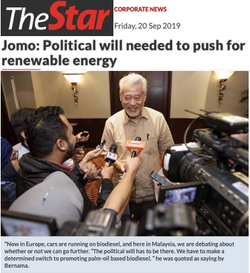
Political will needed to push for renewable energy

The Star 10July 2019

The Star 10July 2019

Malaysian businesses need boost

The Star 9 Oct 2019

The Star 9 Oct 2019

Subsidise public transport for bottom 40%

The Edge 26 Sept 2019

The Edge 26 Sept 2019

Call for measures to counteract global headwinds

The Edge 9 Oct 2019

The Edge 9 Oct 2019

Subsidise public transportation, not fuel

The Star 8 Oct 2019

The Star 8 Oct 2019

Subsidise public transportation for bottom 70%

TheEdge 2Oct 2019

TheEdge 2Oct 2019

"We need to counteract downward forces"

Fake News

PLEASE BEWARE OF MISREPRESENTATIONS OF IMAGES OF JOMO

Commercial and political misrepresentation of his image attributing to him to things which he never said or misrepresenting things he may have said is being circulated on websites such as those posted here. 


You should also be warned, in case you are not already aware, of ‘click bait’ i.e. using such images simply to attract your interest, and then to download your online information for abuse for a variety of ends.

Please inform us and provide a screenshot and weblink to enable further action, which is incredibly difficult. 

Thank you for reading this and for your help and cooperation.

This has also been flagged on his official Facebook page


JKS image ad2.jpg
JKS image Bitcoin ad on  Facebook.jpg
JKS - Fake News 2.jpg
Contact Me
JKS - Fake News 3.jpg
JKS fake news 1.jpg

Nadi Insan by the People's History Centre

Read all editions of #NadiInsan from 1979 to 1983 free of charge at the Peoples History Center website.


Containing writings on socio-political issues, film and cultural commentary, as well as in-depth interviews, Nadi Insan is motivated by community activists and intellectuals in Malaysia.

Happy reading!

Dapatkan kesemua siri majalah #NadiInsan dari tahun 1979 hingga 1983 secara percuma di laman Pusat Sejarah Rakyat.


Berisi tulisan memperihal sosio-politik, ulasan filem dan budaya sehinggalah wawancara yang rencam, Nadi Insan digerakkan oleh aktivis masyarakat dan intelektual di Malaysia.


Selamat membaca!

Contact Me

  • Facebook Social Icon
  • Twitter Social Icon

Thank you for reaching out!

bottom of page