top of page

Follow on Social Media

  • Facebook
  • Twitter
  • Screenshot 2022-09-18 at 5.20.40 PM

M'sia Developments
[on SubStack]

  • Screenshot 2022-09-18 at 5.20.40 PM
  • Nov 28, 2022
  • 5 min read

Timothy A. Wise and Jomo Kwame Sundaram


BOSTON and KUALA LUMPUR, Nov 29, 2022 (IPS). Despite its dismal record, the Gates Foundation-sponsored Alliance for a Green Revolution in Africa (AGRA) announced a new five-year strategy in September after rebranding itself by dropping ‘Green Revolution’ from its name.


Rebranding, not reform

Instead of learning from experience and changing its approach accordingly, AGRA’s new strategy promises more of the same. Ignoring evidence, criticisms and civil society pleas and demands, the Gates Foundation has committed another $200 million to its new five-year plan, bringing its total contribution to around $900 million.

More than two-thirds of AGRA’s funding has come from Gates, with African governments providing much more – as much as a billion dollars yearly – in subsidies for Green Revolution seeds and fertilizers.

Stung by criticism of its poor results, AGRA delayed announcing its new strategy by a year, while its chief executive shepherded the controversial UN Food Systems Summit of 2021. Following this, AGRA has been using more UN Sustainable Development Goals rhetoric.

Hence, AGRA’s new slogan – ‘Sustainably Growing Africa’s Food Systems’. Likewise, the new plan claims to “lay the foundation for a sustainable food systems-led inclusive agricultural transformation”. But beyond such lip service, there is little evidence of any meaningful commitment to sustainable agriculture in the $550 million plan for 2023–27.

Despite heavy government subsidies, AGRA promotion of commercial seeds and fertilizers for just a few cereal crops failed to significantly increase productivity, incomes or even food security. But instead of addressing past shortcomings, the new plan still relies heavily on more of the same despite its failure to “catalyze” a productivity revolution among African farmers.

The supposedly new strategy dashes any hopes that AGRA or the Gates Foundation would acknowledge the harmful social and environmental effects of Green Revolutions in India, Africa and elsewhere. AGRA offered no explanation for why it dropped ‘Green Revolution’ from its name.

The name change suggests the 16-year-old AGRA wants to dissociate itself from past failures, but without acknowledging its own flawed approach. Recently, much higher fertilizer prices – following sanctions against Russia and Belarus after the Ukraine invasion – have worsened the lot of farmers relying on AGRA recommended inputs.

It is time to change course, with policies promoting ecological farming by reducing reliance on synthetic fertilizers as appropriate. But despite its new slogan, AGRA’s new strategy intends otherwise.

Last month, the Alliance for Food Sovereignty in Africa rejected the strategy and name change as “cosmetic”, “an admission of failure” of the Green Revolution project, and “a cynical distraction” from the urgent need to change course.


Productivity gains and losses

Despite spending well over a billion dollars, AGRA’s productivity gains have been modest, and only for a few more heavily subsidized crops such as maize and rice. And from 2015 to 2020, cereal yields have not risen at all.

Meanwhile, traditional food crop production has declined under AGRA, with millet falling over a fifth. Yields actually also fell for cassava, groundnuts and root crops such as sweet potato. Across a basket of staple crops, yields rose only 18% in 12 years.

Farmer incomes have not risen, especially after increased production costs are taken into account. As for halving hunger, which Gates and AGRA originally promised, the number of ‘severely undernourished’ people in AGRA’s 13 focus countries increased by 31%!

A donor-commissioned evaluation confirmed many adverse farmer outcomes. It found the minority of farmers who benefited were mainly better-off men, not smallholder women the programme was ostensibly meant for.

That did not deter the Gates Foundation from committing more to AGRA despite its dismal track record, failed strategy, and poor monitoring to track progress. Judging by the new five-year plan, we can expect even less accountability.

The new plan does not even set measurable goals for yields, incomes or food security. As the saying goes, what you don’t measure you don’t value. Apparently, AGRA does not value agricultural productivity, even though it is still at the core of the organization’s strategy.

Last month, the Rockefeller Foundation, AGRA’s other founding donor and a leader of the first Green Revolution from the 1950s, announced a reduction in its grant to AGRA and a decisive step back from the Green Revolution approach.

Its grant to AGRA supports school feeding initiatives and “alternatives to fossil-fuel derived fertilisers and pesticides through the promotion of regenerative agricultural practices such as cultivation of nitrogen-fixing beans”.


Business in charge

AGRA’s new strategy is built on a series of “business lines”, e.g., the “sustainable farming business line” will coordinate with the “Seed Systems business line” to sell inputs. Private Village Based Advisors are meant to provide training and planting advice in this privatized, commercial reincarnation of the government or quasi-government extension services of an earlier era.

The UN Food and Agriculture Organization successfully promoted peer-learning of agro-ecological practices via Farmer Field Schools after successfully field-testing them. This came about after research showed ‘brown hoppers’ thrived in Asian rice farms after Green Revolution pesticides eliminated the insect’s natural predators.

China lost a fifth of its 2007-08 paddy harvest to the pest, triggering a price spike in the thinly traded world rice market. Seeking help from the International Rice Research Institute, located in the Philippines, a Chinese delegation found its Entomology Department had lost most of its former capacity due to under-funding.

Earlier international agricultural research collaboration associated with the first Green Revolution – especially in wheat, maize and rice – seems to have collapsed, surrendering to corporate and philanthropic interests. This bitter experience encouraged China to step up its agronomic research efforts with a greater agro-ecological emphasis.


Empty promises?

The new strategy promises “AGRA will promote increased crop diversification at the farm level”. But its advisers cum salespeople have a vested interest in selling their wares, rather than good local seeds which do not require repeat purchases every planting season.

AGRA is not strengthening resilience by promoting agroecology or reducing farmer reliance on costly inputs such as fossil fuel fertilizers and other, often toxic, agrochemicals. Despite many proven African agroecological initiatives, support for them remains modest.

The new strategy stresses irrigation, key to most other Green Revolutions, but conspicuously absent from Africa’s Green Revolution. But the plan is deafeningly silent on how fiscally strapped governments are to provide such crucial infrastructure, especially in the face of growing water, fiscal and debt stress, worsened by global warming.

It is often said stupidity is doing the same thing over and over again, expecting different results. Perhaps this is due to the technophile conceit that some favoured innovation is superior to everything else, including scientific knowledge, processes and agro-ecological solutions.


Relevant IPS articles


Ndongo Samba Sylla and Jomo Kwame Sundaram


DAKAR and KUALA LUMPUR, Nov 22, 2022 (IPS). The ongoing plunder of Africa’s natural resources drained by capital flight is holding it back yet again. More African nations face protracted recessions amid mounting debt distress, rubbing salt into deep wounds from the past.

With much less foreign exchange, tax revenue, and policy space to face external shocks, many African governments believe they have little choice but to spend less, or borrow more in foreign currencies.

Most Africans are struggling to cope with food and energy crises, inflation, higher interest rates, adverse climate events, less health and social provisioning. Unrest is mounting due to deteriorating conditions despite some commodity price increases.


Economic haemorrhage

After ‘lost decades’ from the late 1970s, Africa became one of the world’s fastest growing regions early in the 21st century. Debt relief, a commodity boom and other factors seemed to support the deceptive ‘Africa rising’ narrative.

But instead of long overdue economic transformation, Africa has seen jobless growth, rising economic inequalities and more resource transfers abroad. Capital flight – involving looted resources laundered via foreign banks – has been bleeding the continent.

According to the High Level Panel on Illicit Financial Flows from Africa, the continent was losing over $50 billion annually. This was mainly due to ‘trade mis-invoicing’ – under-invoicing exports and over-invoicing imports – and fraudulent commercial arrangements.

Transnational corporations (TNCs) and criminal networks account for much of this African economic surplus drain. Resource-rich countries are more vulnerable to plunder, especially where capital accounts have been liberalized.

Externally imposed structural adjustment programs (SAPs), after the early 1980s’ sovereign debt crises, have forced African economies to be even more open – at great economic cost. SAPs have made them more (food) import-dependent while increasing their vulnerability to commodity price shocks and global liquidity flows.

Leonce Ndikumana and his colleagues estimate over 55% of capital flight – defined as illegally acquired or transferred assets – from Africa is from oil-rich nations, with Nigeria alone losing $467 billion during 1970-2018.

Over the same period, Angola lost $103 billion. Its poverty rate rose from 34% to 52% over the past decade, as the poor more than doubled from 7.5 to 16 million.

Oil proceeds have been embezzled by TNCs and Angola’s elite. Abusing her influence, the former president’s daughter, Isabel dos Santos acquired massive wealth. A report found over 400 companies in her business empire, including many in tax havens.

From 1970 to 2018, Côte d’Ivoire lost $55 billion to capital flight. Growing 40% of the world’s cocoa, it gets only 5–7% of global cocoa profits, with farmers getting little. Most cocoa income goes to TNCs, politicians and their collaborators.

          Mining giant South Africa (SA) has lost $329 billion to capital flight over the last five decades. Mis-invoicing, other modes of embezzling public resources, and tax evasion augment private wealth hidden in offshore financial centres and tax havens.

Fiscal austerity has slowed job growth and poverty reduction in ‘the most unequal country in the world’. In SA, the richest 10% own over half the nation’s wealth, while the poorest 10% have under 1%!


Resource theft and debt

With this pattern of plunder, resource-rich African countries – that could have accelerated development during the commodity boom – now face debt distress, depreciating currencies and imported inflation, as interest rates are pushed up.

Zambia’s default on its foreign debt obligations in late 2020 has made headlines. But foreign capture of most Zambian copper export proceeds is not acknowledged.

During 2000-2020, total foreign direct investment income from Zambia was twice total debt servicing for external government and government-guaranteed loans. In 2021, the deficit in the ‘primary income’ account (mainly returns to capital) of Zambia’s balance of payments was 12.5% of GDP.

As interest payments on public external debt came to ‘only’ 3.5% of GDP, most of this deficit (9% of GDP) was due to profit and dividend remittances, as well as interest payments on private external debt.

For the IMF, World Bank and ‘creditor nations’, debt ‘restructuring’ is conditional on continuing such plunder! African countries’ worsening foreign indebtedness is partly due to lack of control over export earnings controlled by TNCs, with African elite support.

Resource pillage, involving capital flight, inevitably leads to external debt distress. Invariably, the IMF demands government austerity and opening African economies to TNC interests. Thus, we come full circle, and indeed, it is vicious!

Africa’s wealth plunder dates back to colonial times, and even before, with the Atlantic trade of enslaved Africans. Now, this is enabled by transnational interests crafting international rules, loopholes and all.

Such enablers include various bankers, accountants, lawyers, investment managers, auditors and other wheeler dealers. Thus, the origins of the wealth of ‘high net-worth individuals’, corporations and politicians are disguised, and its transfer abroad ‘laundered’.


What can be done?

Capital flight is not mainly due to ‘normal’ portfolio choices by African investors. Hence, raising returns to investment, e.g., with higher interest rates, is unlikely to stem it. Worse, such policy measures discourage needed domestic investments.

Besides enforcing efficient capital controls, strengthening the capabilities of specialized national agencies – such as customs, financial supervision and anti-corruption bodies – is important.

African governments need stronger rules, legal frameworks and institutions to curb corruption and ensure more effective natural resource management, e.g., by revising bilateral investment treaties and investment codes, besides renegotiating oil, gas, mining and infrastructure contracts.

Records of all investments in extractive industries, tax payments by all involved, and public prosecution should be open, transparent and accountable. Punishment of economic crimes should be strictly enforced with deterrent penalties.

The broader public – especially civil society organizations, local authorities and impacted communities – must also know who and what are involved in extractive industries.

Only an informed public who knows how much is extracted and exported, by whom, what revenue governments get, and their social and environmental effects, can keep corporations and governments in check.

Improving international trade and finance transparency is essential. This requires ending banking secrecy and better regulation of TNCs to curb trade mis-invoicing and transfer pricing, still enabling resource theft and pillage.

OECD rhetoric has long blamed capital flight on offshore tax havens on remote tropical islands. But those in rich countries – such as the UK, US, Switzerland, Netherlands, Singapore and others – are the biggest culprits.

Stopping haemorrhage of African resource plunder by denying refuge for illicit transfers should be a rich country obligation. Automatic exchange of tax-related information should become truly universal to stop trade mis-invoicing, transfer pricing abuses and hiding stolen wealth abroad.

 Unitary taxation of transnational corporations can help end tax abuses, including evasion and avoidance. But the OECD’s Inclusive Framework proposals favour their own governments and corporate interests.

Africa is not inherently ‘poor’. Rather, it has been impoverished by fraud and pillage leading to resource transfers abroad. An earnest effort to end this requires recognizing all responsibilities and culpabilities, national and international.

Africa’s veins have been slit open. The centuries-long bleeding must stop.


Dr Ndongo Samba Sylla is a Senegalese development economist working at the Rosa Luxemburg Foundation in Dakar. He authored The Fair Trade Scandal. Marketing Poverty to Benefit the Rich and co-authored Africa’s Last Colonial Currency: The CFA Franc Story. He also edited Economic and Monetary Sovereignty for 21st century AfricaRevolutionary Movements in Africa and Imperialism and the Political Economy of Global South’s Debt. He tweets at @nssylla


Related IPS Articles


  • Nov 15, 2022
  • 4 min read

Hezri A Adnan and Jomo Kwame Sundaram


KUALA LUMPUR, Nov 15, 2022 (IPS). The latest annual climate conference has begun in the face of a worsening climate crisis and further retreats by rich nations following the energy crisis induced by NATO sanctions after the Russian invasion of Ukraine.


Copping out again

The 27th Conference of the Parties (COP 27) to the United Nations Framework Convention on Climate Change (UNFCCC) is now meeting in Sharm-el-Sheikh, Egypt, from 6 to 18 November 2022.

COP27 takes place amidst worsening poverty, hunger and war, and higher prices, exacerbating many interlinked climate, environmental and socio-economic crises.

The looming world economic recession is likely to be deeper than in 2008. The likely spiral into stagflation will make addressing the climate crisis even more difficult.

Invoking the Ukraine war as pretext, governments and corporations are rushing to increase fossil fuel production to offset the deepening energy crisis.

Resources which should be deployed for climate adaptation and mitigation have been diverted for war, fossil fuel extraction and use, including resumption of shale gas ‘fracking’ as well as coal mining and burning.

          War causes huge social and economic damage to people, society and the environment. The wars in Ukraine, Yemen and elsewhere impose high costs on all, disrupting energy and food supplies, and raising prices sharply.

Russia’s Ukraine incursion has provided a convenient smokescreen for a hasty return to fossil fuels, as military-industrial processes alone account for 6% of all greenhouse gases.


The future is already here

All these have worsened crises facing the world’s environment and economy. The most optimistic Intergovernmental Panel on Climate Change (IPCC) scenario expects the 1.5°C rise above pre-industrial levels threshold for climate catastrophe to be breached by 2040.

Crossing it, the world faces risks of far more severe climate change effects on people and ecosystems, especially in the tropics and sub-tropical zone.

But the future is already upon us. Accelerating warming is already causing worse extreme weather events, ravaging economies, communities and ecosystems.

Recent floods in Pakistan displaced 33 million people. Wildfires, extreme heat, ice melt, drought, and extreme weather phenomena are already evident on many continents, causing disasters worldwide.

In 2021, the sea level rose to a record high, and is expected to continue rising. UN reports estimate women and children are 14 times more likely than adult men to die during climate disasters.

Popular sentiment is shifting, even in the US, where ‘climate scepticism’ is strongest. Devastation threatened by Hurricane Ida in 2021 not only revived painful memories of Katrina in 2005, but also heightened awareness of warming-related extreme weather events.


Stronger climate action needed

In international negotiations, rich nations have evaded historical responsibility for ‘climate debt’ by only focusing on current emissions. Hence, there is no recognition of a duty to compensate those most adversely impacted in the global South.

Last year’s COP26 Glasgow Climate Pact was hailed for its call to ‘phase-out’ coal. This has now been quickly abandoned by Europe with the war. And for developing countries, Glasgow failed to deliver any significant progress on climate finance.

At COP27, the Egyptian presidency has proposed an additional ‘loss and damage’ finance facility to compensate for irreparable damage due to climate impacts.

After failing to even meet its modest climate finance promises of 2009, the rich North is dithering, pleading for further talks until 2024 to work out financing details.

Meanwhile, the G7 has muddied the waters by counter-offering its Global Shield Against Climate Risks – a disaster insurance scheme.


Get priorities right

What the world needs, instead, are rapidly promoted and implemented measures as part of a more rapid, just, internationally funded transition for the global South. This should:

·                  replace fossil fuels with renewable energy, including by subsidizing renewable energy generation for energy-deficient poor populations.

·                  promote energy-saving and efficiency measures to reduce its use and greenhouse gas emissions by at least 70% (from 1990) by 2030.

·                  implement a massive global public works programme, creating ‘green jobs’ to replace employment in ‘unsustainable’ industries.

·                  develop needed sustainable technologies, e.g., to replace corporate agricultural practices with ‘agroecological’ farming methods, investment and technology.


Another world is possible

Another world is possible. A massive social and political transformation is needed. But the relentless pursuit of private profit has always been at the expense of people and nature.

Greed cannot be expected to become the basis for a just solution to climate change, let alone environmental degradation, world poverty, hunger and gross inequalities.

The COP27 conference is now taking place in Sharm-al-Sheikh, an isolated, heavily policed tourist resort. Only one major road goes in and out, as if designed to keep out civil society and drown out voices from the global South.

The luxury hotels there are charging rates that have put COP27 beyond the means of many, especially climate justice activists from poorer countries. The rich and powerful arrived in over 400 private jets, making a mockery of decarbonization rhetoric.

Thus, the COP process is increasingly seen as exclusive. Without making real progress on the most important issues, it is increasingly seen as slow, irrelevant and ineffective.

Generating inadequate agreements at best, the illusion of progress thus created is dangerously misleading at worst.

By generating great expectations and false hopes, but actually delivering little, it is failing the world, even when it painstakingly achieves difficult compromises which fall short of what is needed.


Multilateralism at risk

Multilateral platforms, such as the UNFCCC, have long been expected to engage governments to cooperate in developing, implementing and enforcing solutions. With the erosion of multilateralism since the end of the Cold War, these are increasingly being bypassed.

Instead, self-appointed private interests, with means, pretend to speak for world civil society. Strapped for resources, multilateral platforms and other organizations are under pressure to forge partnerships and other forms of collaboration with them.

Thus, inadequate ostensible private solutions increasingly dominate policy discourses. Widespread fiscal deficits have generated interest in them due to the illusory prospect of private funding.

Private interests have thus gained considerable influence. Thus, the new spinmeisters of Davos and others have gained influence, offering seductively attractive, but ultimately false, often misleading and typically biased solutions.

Meanwhile, global warming has gone from bad to worse. UN Member States must stiffen the backs of multilateral organizations to do what is right and urgently needed, rather than simply going with the flow, typically of cash.


Selected IPS readings


Latest Videos

All Videos

All Videos

AN URGENT CALL: A PEOPLE"S VACCINE AGAINST COVID-19

00:00
9 June 2020: IHD-ILO-ISLE Virtual Conference - Day 2

9 June 2020: IHD-ILO-ISLE Virtual Conference - Day 2

05:08:34
Learning in Governance in times of COVID-19

Learning in Governance in times of COVID-19

46:30
Beyond the Lockdown: Towards the ‘New Normal’

Beyond the Lockdown: Towards the ‘New Normal’

59:10

About Jomo

Jomo Kwame Sundaram is Research Adviser, Khazanah Research Institute, Fellow, Academy of Science, Malaysia, and Emeritus Professor, University of Malaya. Previously, he was UN Assistant Secretary-General for Economic Development, Assistant Director General, Food and Agriculture Organization (FAO), Founder-Chair, International Development Economics Associates (IDEAs) and President, Malaysian Social Science Association. 

In The Media

TheStar 26 June 2020

TheStar 26 June 2020

The Star 20 Sept 2019

The Star 20 Sept 2019

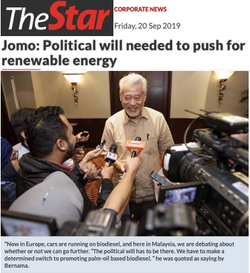
Political will needed to push for renewable energy

The Star 10July 2019

The Star 10July 2019

Malaysian businesses need boost

The Star 9 Oct 2019

The Star 9 Oct 2019

Subsidise public transport for bottom 40%

The Edge 26 Sept 2019

The Edge 26 Sept 2019

Call for measures to counteract global headwinds

The Edge 9 Oct 2019

The Edge 9 Oct 2019

Subsidise public transportation, not fuel

The Star 8 Oct 2019

The Star 8 Oct 2019

Subsidise public transportation for bottom 70%

TheEdge 2Oct 2019

TheEdge 2Oct 2019

"We need to counteract downward forces"

Fake News

PLEASE BEWARE OF MISREPRESENTATIONS OF IMAGES OF JOMO

Commercial and political misrepresentation of his image attributing to him to things which he never said or misrepresenting things he may have said is being circulated on websites such as those posted here. 


You should also be warned, in case you are not already aware, of ‘click bait’ i.e. using such images simply to attract your interest, and then to download your online information for abuse for a variety of ends.

Please inform us and provide a screenshot and weblink to enable further action, which is incredibly difficult. 

Thank you for reading this and for your help and cooperation.

This has also been flagged on his official Facebook page


JKS image ad2.jpg
JKS image Bitcoin ad on  Facebook.jpg
JKS - Fake News 2.jpg
Contact Me
JKS - Fake News 3.jpg
JKS fake news 1.jpg

Nadi Insan by the People's History Centre

Read all editions of #NadiInsan from 1979 to 1983 free of charge at the Peoples History Center website.


Containing writings on socio-political issues, film and cultural commentary, as well as in-depth interviews, Nadi Insan is motivated by community activists and intellectuals in Malaysia.

Happy reading!

Dapatkan kesemua siri majalah #NadiInsan dari tahun 1979 hingga 1983 secara percuma di laman Pusat Sejarah Rakyat.


Berisi tulisan memperihal sosio-politik, ulasan filem dan budaya sehinggalah wawancara yang rencam, Nadi Insan digerakkan oleh aktivis masyarakat dan intelektual di Malaysia.


Selamat membaca!

Contact Me

  • Facebook Social Icon
  • Twitter Social Icon

Thank you for reaching out!

bottom of page