top of page

Follow on Social Media

  • Facebook
  • Twitter
  • Screenshot 2022-09-18 at 5.20.40 PM

M'sia Developments
[on SubStack]

  • Screenshot 2022-09-18 at 5.20.40 PM

Kwame Sundaram Jomo, Asian Economic Policy Review, Volume 18, Issue 1, January 2023, pp 120-121. https://doi.org/10.1111/aepr.12411. First published: 26 September 2022.


Any meaningful assessment of Malaysia's New Economic Policy (NEP) (Lee, 2022) should be historical. One question which arises here is how one does historical political economy. After all, there are many different schools of political economy, even if few have addressed “affirmative action.”

A key question is how one treats normative issues that inevitably come up. How one understands notions such as “social justice” has long been contested. These are often understood and invoked very differently. And how is a term such as “affirmative action”, which arose in response to US civil rights struggles in the middle of the 20th century, to be understood in other contexts?

When first announced to the Malaysian nation in mid-1971, the NEP was presented as being needed for building “national unity” following the divisive events of May 1969. The NEP has often been presented officially and by others as responding to “race riots” following the young nation's third general elections in which the incumbent multi-ethnic Alliance coalition lost its electoral majority. This perspective implies inter-ethnic economic disparities were responsible for “May 1969”.

Anand's (1982) Theil decomposition suggests that less than a tenth of overall income inequality in 1970 (before the NEP) could not be explained by various non-ethnic factors such as education. Anand concludes that, at most, only a corresponding share of income inequality can be attributed to ethnicity. His analysis implies there is limited scope for reducing overall income inequality by reducing inter-ethnic disparities. The NEP's primarily ethnic focus for over half a century is hence unlikely to significantly lower economic inequality in Malaysia. Unsurprisingly, despite over half a century of the NEP, total income inequality remains high, even if underestimated.

Equating “social justice” with efforts to reduce inter-ethnic disparities is problematic. Supported by and responsive to the newly emerging Malay “middle class”, the new Malaysian regime defined “restructuring society” as one of the two NEP targets. This has been mainly understood as “positive discrimination”, or affirmative action, along ethnic lines, to eliminate the identification of “race” with “economic function”.

Defining social justice in terms of achieving affirmative action policy is problematic. Such a definition also effectively rejects other possible interpretations of “social justice”, for example, in terms of “abolishing class exploitation”, or achieving low income or wealth inequality, or reducing disparities among different regions.

Sabah and Sarawak state rights within the Malaysian federation did not preoccupy Prime Minister Razak during 1969–1971. However, this omission in the NEP's ostensible social justice agenda is probably not acceptable to East Malaysians who believe they have not gotten a fair deal from the demographic majority in Peninsular Malaysia. Others might insist that overcoming gender and other inequalities is fundamental to any social justice agenda.

How do we compare other affirmative action policies, such as contemporary Black Economic Empowerment (BEE) in South Africa? What about pro-Afrikaner apartheid policies which also claimed to catch up with the previously dominant “Anglo-white” minority? What are the implications of such policies when introduced and implemented by demographically and politically dominant cultural majorities, as in South Africa, Malaysia, and, arguably, Hindutva India?

And how do we analyze similar policies in different contexts? For example, BEE in South Africa is generally acknowledged as being inspired by Malaysia's NEP. Ironically, BEE has since been re-imported into Malaysia as “Bumiputera economic empowerment”, even using the same BEE acronym.

And how does a society decide on what is a legitimate and acceptable social justice agenda? Who decides and how? Invoking notions of “equality” and “fairness” hardly resolves the difficult issues to be resolved. Affirmative action seems to suggest the acceptability of otherwise unequal societies in which aggrieved groups are proportionately represented.

It also begs the question of affirmative action for other aggrieved groups which are minorities or not politically dominant. What does social justice in India imply, especially for its scheduled castes and tribes? Or for US ethnic minorities, including the descendants of Native Americans or African American slaves? And when does addressing a grievance support “social justice”? After all, apartheid was seen as a means for Afrikaner “ethno-populists” to achieve parity with Anglo-South Africans.

After eloquently exposing the policy cul de sac the NEP is in, it is curious that Lee still insists “Malaysia needs a systematic and comprehensive reset of the NEP's (restructuring) prong”. This precludes a broader, more progressive approach to accelerate development more equitably. After all, in 1971, Razak already envisaged a Malaysian nation with comprehensive and universal social security.


References

Anand S. (1982). Inequality and Poverty in Malaysia: Measurement and Decomposition. Oxford: Oxford University Press.

Lee H.A. (2023). Social justice and affirmative action in Malaysia: the new economic policy after 50 years. Asian Economic Policy Review, 18(1), 97– 119.


Jomo Kwame Sundaram


KUALA LUMPUR, Dec 13, 2022 (IPS) - Calls for more government regulation and intervention are common during crises. But once the crises subside, pressures to reform quickly evaporate and the government is told to withdraw. New financial fads and opportunities are then touted, instead of long needed reforms.


Global financial crisis

The 2007-2009 global financial crisis (GFC) began in the US housing market. Collateralized debt obligations (CDOs), credit default swaps (CDSs) and other related contracts, many quite ‘novel’, spread the risk worldwide, far beyond US mortgage markets.

Transnational financial ‘neural-like’ networks ensured vulnerability quickly spread to other economies and sectors, despite government efforts to limit contagion. As these were only partially successful, deleveraging – reducing the debt level by hastily selling assets – became inevitable, with all its dire consequences.

The GFC also exposed massive resource misallocations due to financial liberalization with minimal regulation of supposedly efficient markets. With growing arbitrage of interest rate differentials, achieving balanced equilibria has become impossible except in mainstream economic models.

Financialization has meant much greater debt and risk exposure as well as vulnerability for many households and firms, e.g., due to ‘term’ (duration) and currency ‘mismatches’, resulting in greater overall financial system fragility.

This has worsened global imbalances, reflected in larger trade and current account deficits and surpluses. In unfavourable circumstances, exposure of firms and households to risky assets and liabilities has been enough to trigger defaults.

Bold fiscal efforts succeeded in inducing modest economic recoveries before they were nipped in the bud soon after the ‘green shoots of recovery’ appeared. Instead, the US Fed initiated ‘unconventional’ monetary policies, offering easy credit with ‘quantitative easing’.


Currencies in flux

The seemingly coordinated rise of various, apparently unconnected asset prices cannot be explained by conventional economics. Thus, speculation in commodity, currency and stock markets has been grudgingly acknowledged as worsening the GFC.

The exchange rates of many currencies have also come under greater pressure as residents borrowed in low interest rate currencies such as the Japanese yen. In turn, they have typically bought financial assets promising higher returns.

Thus, higher interest rates attract capital inflows, raising most domestic asset prices. Exchange rate movements are supposed to reflect comparative national economic strengths, but rarely do so. But conventional monetary responses worsen, rather than mitigate, contractionary tendencies.

Globalization of trade and finance has generated contradictory pressures. All countries are under pressure to generate trade or current account surpluses. But this, of course, is impossible as not all economies can run surpluses simultaneously.

Many try to do so by devaluing their currencies or cutting costs by other means. But only the US can use its ‘exorbitant privilege’ to maintain both budgetary and current account deficits by simply issuing Treasury bonds.

Currency markets can also undermine such efforts by enabling arbitrage on interest rate differentials. International imbalances have worsened, as seen in larger current account deficits and surpluses.

Contrary to mainstream economics, currency speculation does not equilibrate national, let alone international markets. It does not reflect economic fundamentals, ensuring exchange rate volatility, to damaging effect.


Commodity speculation

Thanks to currency mismatches, many companies and households face greater risk. Exchange rate fluctuations, in turn, exacerbate price volatility and its harmful consequences, which vary with circumstances.

Changes in ‘fundamentals’ no longer explain commodity price volatility. Meanwhile, more commodity speculation has resulted in greater price volatility and higher prices for food, oil, metals and other raw materials.

These prices have been driven by much more speculation, often involving indexed funds trading in real assets. The resulting price volatility especially affects everyone, as food consumers, and developing countries’ agricultural producers.

Sharp increases in commodity prices since mid-2007 were largely driven by speculation, mainly involving indexed funds. With the Great Recession following the GFC, most commodity producers in developing countries faced difficulties.

Since then, nearly all commodity prices fell from the mid-2010s as the world economic slowdown showed no sign of abating until economic sanctions in 2022 pushed up food, energy, fertilizer and other prices once again.

Besides hurting export revenues, lower commodity prices and even greater volatility have accelerated depreciation of earlier investments in equipment and infrastructure following the commodity price spikes.


Integrated solutions needed

The uneven financial system meltdown following the GFC raised expectations that ‘finance-as-usual’ would never return. But lasting solutions to threats, such as currency and commodity speculation, require international cooperation and regulation.

Meanwhile, goods and financial markets have become more interconnected. Thus, a truly multilateral and cooperative approach has to be found in the complex interconnections involving international trade and finance.

In this asymmetrically interdependent world, policy reforms are urgently needed. All countries need to be able to pursue appropriate countercyclical macroeconomic policies. Also, small economies should be able to achieve exchange rate stability at affordably low cost.

Although prompt actions were undertaken in response to the GFC, the world economy experienced a protracted slowdown, the ‘Great Recession’. Myopic policymakers in most developed economies focus on perceived national risks, ignoring international ones, especially those affecting developing countries.

Contrary to widespread popular presumption, the Bretton Woods multilateral monetary and financial arrangements did not include a regulatory regime. Nor has such a regime emerged since, even after US President Nixon unilaterally ended the Bretton Woods system in 1971.

With the gagged voice of developing countries in international financial institutions and markets, the United Nations must lead, as it did in the mid-1940s.

It is the only world institution which could legitimately develop a better alternative. Thankfully, the UN Charter assigns it responsibility to lead efforts to do so.


Related IPS articles


Hezri A. Adnan and Jomo Kwame Sundaram


KUALA LUMPUR, Dec 06, 2022 (IPS). Natural flows do not respect national boundaries. The atmosphere and oceans cross international borders with little difficulty, as greenhouse gases (GHGs) and other fluids, including pollutants, easily traverse frontiers.

Yet, in multilateral fora, strategies to address climate change and its effects remain largely national. GHG emissions – typically measured as carbon dioxide equivalents – are the main bases for assessing national climate action commitments.


Assessing national responsibility

Jayati Ghosh, Shouvik Chakraborty and Debamanyu Das have critically considered how national climate responsibilities are assessed. The standard method – used by the UN Framework Convention on Climate Change (UNFCCC) – measures GHG emissions by activities within national boundaries.

This approach attributes GHG emissions to the country where goods are produced. Such carbon accounting focuses blame for global warming on newly industrializing economies. But it ignores who consumes the goods and where, besides diverting attention from those most responsible for historical emissions.

Thus, attention has focused on big national emitters. China, India, Brazil, Russia, South Africa and other large developing economies – especially the ‘late industrializers’ – have become the new climate villains.

China, the United States and India are now the world’s three largest GHG emitters in absolute terms, accounting for over half the total. With more rapid growth in recent decades, China and India have greatly increased emissions.

Undoubtedly, some developing countries have seen rapid GHG emission increases, especially during high growth episodes. In the first two decades of this century, such emissions rose over 3-fold in China, 2.7 times in India, and 4.7-fold in Indonesia.

Meanwhile, most rich economies have seen smaller increases, even declines in emissions, as they ‘outsource’ labour- and energy-intensive activities to the global South. Thus, over the same period, production emissions fell by 12% in the US and Japan, and by nearly 22% in Germany. 


Obscuring inequalities

Only comparing total national emissions is not just one-sided, but also misleading, as countries have very different populations, economic outputs and structures.

But determining responsibility for global warming fairly is necessary to ensure equitable burden sharing for adequate climate action. Most climate change negotiations and discussions typically refer to aggregate national emissions and income measures, rather than per capita levels.

But such framing obscures the underlying inequalities involved. A per capita view comparing average GHG emissions offers a more nuanced, albeit understated perspective on the global disparities involved.

Thus, in spite of recent reductions, rich economies are still the greatest GHG emitters per capita. The US and Australia spew eight times more per head than developing countries like India, Indonesia and Brazil.

Despite its recent emission increases, even China emits less than half US per capita levels. Meanwhile, its annual emissions growth fell from 9.3% in 2002 to 0.6% in 2012. Even The Economist acknowledged China’s per capita emissions in 2019 were comparable to industrializing Western nations in 1885!

Several developments have contributed to recent reductions in rich nations’ emissions. Richer countries can better afford ‘climate-friendly’ improvements, by switching energy sources away from the most harmful fossil fuels to less GHG-emitting options such as natural gas, nuclear and renewables.

Changes in international trade and investment with ‘globalization’ have seen many rich countries shift GHG-intensive production to developing countries.

Thus, rich economies have ‘exported’ production of – and responsibility for – GHG emissions for what they consume. Instead, developed countries make more from ‘high value’ services, many related to finance, requiring far less energy.


Export emissions, shift blame

Thus, rich countries have effectively adopted then World Bank chief economist Larry Summers’ proposal to export toxic waste to the poorest countries where the ‘opportunity cost’ of human life was presumed to be lowest!

His original proposal has since become a development strategy for the age of globalization! Thus, polluting industries – including GHG-emitting production processes – have been relocated – together with labour-intensive industries – to the global South.

Although kept out of the final published version of the Intergovernmental Panel on Climate Change (IPCC) report, over 40% of developing country GHG emissions were due to export production for developed countries.

Such ‘emission exports’ by rich OECD (Organization for Economic Co-operation and Development) countries increased rapidly from 2002, after China joined the World Trade Organization (WTO). These peaked at 2,278 million metric tonnes in 2006, i.e., 17% of emissions from production, before falling to 1,577 million metric tonnes.

For the OECD, the ‘carbon balance’ is determined by deducting the carbon dioxide equivalent of GHG emissions for imports from those for production, including exports. Annual growth of GHG discharges from making exports was 4.3% faster than for all production emissions.

Thus, the US had eight times more per capita GHG production emissions than India’s in 2019. US per capita emissions were more than thrice China’s, although the world’s most populous country still emits more than any other nation.

With high GHG-emitting products increasingly made in developing countries, rich countries have effectively ‘exported’ their emissions. Consuming such imports, rich economies are still responsible for related GHG emissions.


Change is in the air

Industries emitting carbon have been ‘exported’ – relocated abroad – for their products to be imported for consumption. But the UNFCCC approach to assigning GHG emissions responsibility focuses only on production, ignoring consumption of such imports.

Thus, if responsibility for GHG emissions is also due to consumption, per capita differences between the global North and South are even greater.

In contrast, the OECD wants to distribute international corporate income tax revenue according to consumption, not production. Thus, contradictory criteria are used, as convenient, to favour rich economies, shaping both tax and climate discourses and rules.

While domestic investments in China have become much ‘greener’, foreign direct investment by companies from there are developing coal mines and coal-fired powerplants abroad, e.g., in Indonesia and Vietnam.

If not checked, such FDI will put other developing countries on the worst fossil fuel energy pathway, historically emulating the rich economies of the global North. A Global Green New Deal would instead enable a ‘big push’ to ‘front-load’ investments in renewable energy.

This should enable adequate financing of much more equitable development while ensuring sustainability. Such an approach would not only address national-level inequalities, but also international disparities.

China now produces over 70% of photovoltaic solar panels annually, but is effectively blocked from exporting them abroad. In a more cooperative world, developing countries’ lower-cost – more affordable – production of the means to generate renewable energy would be encouraged.

Instead, higher energy costs now – due to supply disruptions following the Ukraine war and Western sanctions – are being used by rich countries to retreat further from their inadequate, modest commitments to decelerate global warming.

This retreat is putting the world at greater risk. Already, the international community is being urged to abandon the maximum allowable temperature increase above pre-industrial levels, thus further extending and deepening already unjust North-South relations.

But change is in the air. Investing in and subsidizing renewable energy technologies in developing countries wanting to electrify, can enable them to develop while mitigating global warming.


Hezri AA is adjunct professor at the Faculty of Sciences, University of Malaya, Kuala Lumpur.


Related IPS articles

Carbon Tax Over-Rated. Nov 09, 2021.


Latest Videos

All Videos

All Videos

AN URGENT CALL: A PEOPLE"S VACCINE AGAINST COVID-19

00:00
9 June 2020: IHD-ILO-ISLE Virtual Conference - Day 2

9 June 2020: IHD-ILO-ISLE Virtual Conference - Day 2

05:08:34
Learning in Governance in times of COVID-19

Learning in Governance in times of COVID-19

46:30
Beyond the Lockdown: Towards the ‘New Normal’

Beyond the Lockdown: Towards the ‘New Normal’

59:10

About Jomo

Jomo Kwame Sundaram is Research Adviser, Khazanah Research Institute, Fellow, Academy of Science, Malaysia, and Emeritus Professor, University of Malaya. Previously, he was UN Assistant Secretary-General for Economic Development, Assistant Director General, Food and Agriculture Organization (FAO), Founder-Chair, International Development Economics Associates (IDEAs) and President, Malaysian Social Science Association. 

In The Media

TheStar 26 June 2020

TheStar 26 June 2020

The Star 20 Sept 2019

The Star 20 Sept 2019

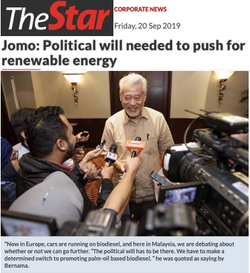
Political will needed to push for renewable energy

The Star 10July 2019

The Star 10July 2019

Malaysian businesses need boost

The Star 9 Oct 2019

The Star 9 Oct 2019

Subsidise public transport for bottom 40%

The Edge 26 Sept 2019

The Edge 26 Sept 2019

Call for measures to counteract global headwinds

The Edge 9 Oct 2019

The Edge 9 Oct 2019

Subsidise public transportation, not fuel

The Star 8 Oct 2019

The Star 8 Oct 2019

Subsidise public transportation for bottom 70%

TheEdge 2Oct 2019

TheEdge 2Oct 2019

"We need to counteract downward forces"

Fake News

PLEASE BEWARE OF MISREPRESENTATIONS OF IMAGES OF JOMO

Commercial and political misrepresentation of his image attributing to him to things which he never said or misrepresenting things he may have said is being circulated on websites such as those posted here. 


You should also be warned, in case you are not already aware, of ‘click bait’ i.e. using such images simply to attract your interest, and then to download your online information for abuse for a variety of ends.

Please inform us and provide a screenshot and weblink to enable further action, which is incredibly difficult. 

Thank you for reading this and for your help and cooperation.

This has also been flagged on his official Facebook page


JKS image ad2.jpg
JKS image Bitcoin ad on  Facebook.jpg
JKS - Fake News 2.jpg
Contact Me
JKS - Fake News 3.jpg
JKS fake news 1.jpg

Nadi Insan by the People's History Centre

Read all editions of #NadiInsan from 1979 to 1983 free of charge at the Peoples History Center website.


Containing writings on socio-political issues, film and cultural commentary, as well as in-depth interviews, Nadi Insan is motivated by community activists and intellectuals in Malaysia.

Happy reading!

Dapatkan kesemua siri majalah #NadiInsan dari tahun 1979 hingga 1983 secara percuma di laman Pusat Sejarah Rakyat.


Berisi tulisan memperihal sosio-politik, ulasan filem dan budaya sehinggalah wawancara yang rencam, Nadi Insan digerakkan oleh aktivis masyarakat dan intelektual di Malaysia.


Selamat membaca!

Contact Me

  • Facebook Social Icon
  • Twitter Social Icon

Thank you for reaching out!

bottom of page