top of page

Follow on Social Media

  • Facebook
  • Twitter
  • Screenshot 2022-09-18 at 5.20.40 PM

M'sia Developments
[on SubStack]

  • Screenshot 2022-09-18 at 5.20.40 PM
  • Oct 5, 2021
  • 0 min read

Jomo Kwame Sundaram


KUALA LUMPUR. As finance ministers and central bank governors gather next week for the IMF-World Bank annual meetings in the US capital, the first shots of a new putsch against multilateralism have been fired. The target: Kristalina Georgieva, Fund Managing Director (MD) since 2019.


Georgieva’s sins

She has tried to enhance multilateral coherence by aligning the Fund with the United Nations, as envisaged by then US President Franklin Delano Roosevelt. Like predecessor Christine Lagarde, the former Bank environmental economist is committed to the Sustainable Development Goals and addressing global warming.

Despite Trump administration opposition, she supported issuing IMF special drawing rights (SDRs) to help members cope with the pandemic. She thus enhanced countries’ scarce foreign exchange resources and seeks to accelerate mass vaccination to enable recovery.

Following the change at the White House in January, new US Treasury Secretary Janet Yellen agreed to issuing US$650 billion of SDRs. From Bulgaria, Georgieva is appreciated by many governments – especially those with little or no clout at the Fund – for expediting efforts to cope with the pandemic.


Gaming the business

The World Bank Group’s annual Doing Business Report (DBR) has long ranked countries by how ‘investment-friendly’ they seem, especially to foreign investors. Unsurprisingly, the DB index appreciates low corporate income tax rates and weak labour protection.

The DBR has long been considered problematic, attracting many criticisms, even from within the Group. But as its most widely read and influential annual publication, it was jealously defended by management for decades with promises of reform over many years.

Middle income country governments the world over now pay consultants well to help game their DB scores and ranking. They hope to thus attract more investments, especially from abroad. With financialisation, real economic criteria declined in significance as financial market indicators became more important.


Prosecution by innuendo

The WilmerHale law firm report about the DBR to the Bank executive board is cited by London’s right-wing Economist to demand Georgieva’s head. It covers improprieties involving the 2018 and 2020 DB indices for Azerbaijan, China and Saudi Arabia.

Her heinous crime: as the senior Bank executive responsible, Georgieva failed to lower China’s already low ranking. Instead, they insist she must resign for maintaining its 2017 rank of 78 in 2018! Her nefarious act was supposedly to get China’s support for the capital increase the Bank was seeking.

But China had long advocated such a capital increase, opposed by successive US administrations before Trump. In fact, while still at the US Treasury in 2018, current Bank President David Malpass had reversed US policy, recommending a capital increase.


The case falls apart

Reporting directly to Georgieva then, now retired Bank economist Shanta Devarajan – who led the Ease of Doing Business team – insists he was never pressured by her to change data or results.

“The changes to China’s score were either correcting coding errors or judgment calls on questions where judgment was required. I was comfortable that China’s score was comparable to previous years’ (and future years’) scores. At no point did I feel I was being pressured.”

“Georgieva’s direction was to verify the China numbers, making sure that China received credit for the reforms they undertook, without compromising the integrity of Doing Business. The Bank’s lawyers left out the latter phrase.” Instead, he complains of tendentious selective reporting of what he told WilmerHale.


Political bias

Former Bank Senior Vice President and Chief Economist, Nobel laureate Joseph Stiglitz has characterised using the report to attack Georgieva as a ‘hatchet job’. Like Stiglitz two decades before, Paul Romer received a Nobel laureate after being forced out as Bank Chief Economist. His sin: questioning DBR’s ‘integrity’.

Center for Global Development (CGD) research showed how supposed methodological tweaking improved Chile’s and India’s DB rankings to bolster rightwing regimes vis-à-vis their centrist rivals. Reacting angrily, another Bulgarian Simeon Djankov, DB index inventor, slandered the mainstream CGD as reformed Marxist”.

A year after Jamal Khashoggi’s brutal murder in October 2018, the Bank announced Saudi Arabia’s DB rank had risen 30 places. Malpass cited this upgrade at a well-attended Riyadh investment conference. Unsurprisingly, the WilmerHale report concludes the Bank leadership’s innocence in achieving this stunning progress.


Suppressing China’s rising ranking

After Georgieva left the Bank in 2019, China’s ranking did not fall, but instead rose sharply. With Trump appointee Malpass at the helm from 2019, China rose from 78 in both 2017 and 2018, to 31 in 2019 for DBR 2020, and to 25 the following year!

Malpass himself tried to change DB methodology to suppress China’s ranking. Apparently alarmed by China’s rapidly rising ranking, he cancelled release of the next report. Thus, in August 2020, the Bank “paused” publication of DBR 2021!

Over a year later, on 16 September, the Bank cleverly killed two birds with one stone. Terminating its long controversial DBR, it secured a public relations victory with civil society organisations without acknowledging their longstanding criticisms.


New China syndrome

Influential US economist Jeffrey Sachs has suggested that growing US anti-China hysteria is behind the campaign. Three Republican Congressmen want Georgieva sacked for not being anti-Beijing enough. They blame China for the US$650bn SDR issue besides making other allegations reflecting rising US paranoia about China.

The trio claim that her alleged bias shows “how the Chinese Communist party, in pursuing its self-interest, undermines multilateral institutions such as the fund, the World Health Organization, and the United Nations”.

US political influence in the Bank is widely presumed, with Washington’s approval believed to be decisive. Hence, it surprises no one that US$5.3bn went to the last Afghan regime led by a former Bank employee.

The charges against Georgieva are seen by much of the rest of the world as hypocritical. Firing Georgieva as IMF MD would thus further set back multilateralism, already undermined for decades, ironically, especially since the end of the Cold War.


Washington rules

For many since the end of the Cold War, the US either dominates or opposes multilateralism. For ‘sovereigntists’, the US must either control multilateral organizations or undermine them. Thus, under Trump, the US left the Paris climate agreement, World Health Organization, UNESCO and UN Human Rights Council.

Prioritising its domestic political agenda in a divided and partisan US Congress, the White House prefers to avoid unnecessary conflicts with Republicans and anti-China Democrats. Thus, the anti-Georgieva forces still hope to force her ouster.

If the White House sacrifices Georgieva in a cynical gambit to secure political support for its domestic agenda, it will also lose the chance of regaining ‘soft power’, international trust and multilateral leadership.


Relevant IPS readings


Jomo Kwame Sundaram


KUALA LUMPUR: US President Biden’s earlier support for a vaccine patent waiver raised hopes for his summit last week. However, it proved disappointing, not only for efforts to end the pandemic, but also for US leadership in these challenging times.

Most rich countries have opposed most developing countries’ request to temporarily suspend World Trade Organization (WTO) intellectual property (IP) rules to more quickly contain the COVID-19 pandemic. Expectations were high as Biden had supported a patent waiver, albeit only for vaccines.

With their IP, suppliers control production, supplies and prices. The industry claims it can meet all pandemic-related needs. But although it has no intention of meeting these needs, it insists the waiver is unnecessary. Hence, unless rich country governments stop opposing it, forthcoming WTO meetings will not achieve much.


Rich defend mRNA vaccine duopoly

COVID-19 vaccine supplies and prices are controlled by a few companies. Although BioNTech developed one of the two approved mRNA vaccines, it is now largely manufactured and marketed by Pfizer outside Europe.

BioNTech’s relationship to Pfizer is complementary, but not one between equals. By contrast, Moderna is a vaccine development start-up, with limited marketing and other capacities, especially outside the USA.

Meanwhile, able to pay more, rich countries have taken most vaccines, far, far more than enough. The duopoly initially sold more than 90% of their vaccines to rich countries, charging up to 24 times actual production costs.

Then, more vaccines started reaching MICs before recent efforts to push booster shots. Meanwhile, only 2.2% in low-income countries (LICs) have received at least one dose. Without drastic improvements, most in LICs will not be fully vaccinated before 2023.

Millions are dying as more dangerous variants emerge, confirming no one is safe until everyone is. Meanwhile, the October 2020 WTO waiver request to temporarily suspend IP rights for COVID-19 tests, treatments, equipment and vaccines has garnered broad support.


Vaccine technology not for sharing

Most global initiatives to make vaccines less unaffordable to MICs, such as COVAX, do not address the massive supply shortfall and high prices. Meanwhile, vaccine suppliers jealously protect their monopolies, claiming nobody else can safely produce them.

While at least 80 developing countries have been producing generic medicines and vaccines for decades, not all can produce the novel mRNA vaccines without access to new technical knowledge and materials. Yet, MSF has identified ‘mRNA vaccine-capable’ manufacturers in developing countries, including four in Africa alone.

MSF estimates such manufacturers can establish the capacity to produce up to 100 million doses annually within ten months for between US$127–270 million. But they would still need access to mRNA vaccine technology and reliable supplies.

But Pfizer and Moderna have both refused to share the needed. Now, instead of transferring technology or increasing vaccine supplies to developing countries, they have only contracted to supply vaccine ingredients to companies in rich countries and China.

State-subsidised super-profits Despite benefiting from taxpayer funds, legally enforced patent monopolies and low taxes, People’s Vaccine Alliance research shows the three have used their mRNA vaccine duopoly to secure super profits. Their vaccines sell for US$41 billion over production costs estimated at US$1.20 per dose.

As a charity has noted, “Instead of partnering … to make sure that we have enough vaccine doses for everyone, these pharmaceutical companies prioritize their own profits by enforcing their monopolies and selling to the highest bidder”.

Moderna and Pfizer pay little in taxes despite making many times more than the pre-pandemic average profit rate of 8% for Fortune 500 companies in 2019. In the first half of 2021, Moderna – which had never made a profit before – paid a 7% US tax rate while Pfizer paid 15%, still well under the US statutory rate of 21%.


Perverse incentives

This new situation has created various perverse incentives prolonging the pandemic. Suppliers can make a great deal more in the medium term from tests, treatments, protective, other equipment and booster shots, supposedly for new, more dangerous variants.

Pfizer – already a large, diversified pharmaceutical conglomerate – has recently been growing by taking over businesses selling COVID-19 needs. With the prospect of more profitable booster sales, vaccine suppliers have little incentive to rapidly end the pandemic.

With COVID-19 now endemic, they continue to limit access to their vaccine technology to ensure scarcity and set prices to maximise profits. Hence, despite not having developed its own vaccine, Pfizer is now dominant.


What Biden must now do

Meanwhile, Biden has been under growing pressure to do much more. Probably more than anyone else, economist Dean Baker has long shown how the US can lead international cooperation to fight the COVID-19 pandemic, making the case for an inclusive international vaccine summit half a year ago.

Baker has argued how existing patent arrangements are not only inequitable, but also inefficient and wasteful. He has shown patent advocates as not only self-interested, but also dishonest. Instead, direct public funding would better incentivise new drug development.

US law – specifically Section 1498 of its commercial code – allows the government to require patent licensing in emergencies. Moderna, Pfizer and their scientific personnel can thus be induced to help rapidly scale up production internationally to vaccinate the world.

Also, the waiver proposal must be swiftly approved by the WTO to quickly enable more affordable access to tests, treatments, equipment and other materials urgently needed to better fight the pandemic until it can be ended altogether.

At his summit, Biden vowed to expand vaccine output in Africa and Asia. He can still do the right thing. This could well open a new era of multilateral cooperation instead of the dog-eat-dog new Cold War we are lurching towards. Perhaps there is still hope.


Relevant IPS readings


Jomo Kwame Sundaram


KUALA LUMPUR: As developing countries struggle to cope with the pandemic, they risk being set back further by restrictive fiscal policies. These were imposed by rich countries who no longer practice them if they ever did. Instead, the global South urgently needs bold policies to ensure adequate relief, recovery and reform.


Bold fiscal responses needed

Governments must mobilise and deploy resources sustainably and fairly, consistent with the Sustainable Development Goals (SDGs). With rich countries’ refusal to help more, adequate government financing is crucial.

Taxation is typically a more sustainable, effective and accountable way of raising government fiscal resources. But the pandemic has imposed extraordinary demands requiring massive urgent spending.

National authorities can generate fiscal resources in two main ways, by collecting revenue or borrowing. Government borrowing is generally needed as revenue has been hit by the slowdown.

Massive fiscal resource mobilization and appropriate spending are needed to contain the contagion and prevent temporary recessions – e.g., due to lockdowns – from becoming debilitating protracted depressions.

Fiscal policy involves both government resource generation and spending. But developing countries have been far more conservative in spending compared to the rich. The latter have introduced much bolder relief and recovery packages.

In the short, medium and long term, both government spending and taxation must be progressive. Much depends on how revenue is raised and spent. Hence, both taxation and expenditure need to be considered.


Taxes less progressive now

Governments must quickly develop progressive ways to finance massive spending needed to protect both lives and livelihoods. Over the last four decades, many governments reduced progressive direct taxation, instead embracing regressive indirect taxes.

Higher tax rates on the wealthy made direct taxation progressive. The regression was mainly due to lobbying by powerful elites, including foreign investors. The influential Washington-based Bretton Woods international financial institutions led such advocacy.

Incomes of the wealthy are mainly from assets, rather than wages, salaries or payments for goods or services. But tax rates on the highly paid, as well as property, inheritance and corporate incomes have declined in most countries.

Wealth is often untaxed, or only lightly taxed at lower rates. New rules now allow assets to be moved and hidden abroad. Depending on how one estimates, between US$8–35 trillion is held offshore, obscuring wealth concentration and inequality.

Taxation can reduce existing inequalities, but rarely does so despite the widespread presumption that taxes are progressive overall. Worse, most state spending is regressive, little mitigated by highly publicised social spending.

Difficult to measure, pandemic impacts on various inequalities vary considerably. Nevertheless, the vicious cycle connecting economic disadvantage with vulnerability has worsened disparities.


Ensure progressive taxation

To be equitable, taxation must be progressive. More equitable tax systems should get more revenue from those most able to pay while reducing the burden on the needy. Wealth taxes are the most progressive way to raise revenue while also reducing inequalities.

Direct taxes on wealth and incomes are potentially progressive. Progressively higher rates and exemptions for the poor can ensure this. Low rates on investment income and assets – such as property, wealth and inheritance – can be increased. Besides reducing inequalities, these can finance progressive spending.

Taxing windfall and excess profits is not only publicly acceptable, but can also raise considerable funds. Some corporations and individuals have benefited greatly during the pandemic, e.g., US billionaires have reportedly become over a trillion dollars richer over the last year and a half.

In the longer term, progressive taxation means less reliance on indirect taxes – such as sales or consumption taxes, including value-added, or goods and services tax – which burden those with lower incomes much more.

Tax evasion by the wealthy must also be deterred. Companies using tax havens to pay less can be penalised, e.g., by disqualifying them from all government and state-owned enterprise contracts. Tax systems can thus be made more progressive by improving design and with strict, equitable enforcement.


Equitable recovery?

Ensuring equitable recovery requires urgent systemic reforms. Although unlikely to yield much more revenue in the near term due to the economic slowdown, introducing such reforms now will be politically much easier.

Taxation can transfer fiscal resources from the wealthy to the needy. Those living precariously, including those now at risk due to the pandemic and its broad impacts, urgently need help. But financing relief and recovery provides liquidity, averting protracted economic contraction and stagnation.

Some pandemic relief spending in many countries has been ‘captured’ by the politically well-connected, as political elites and their cronies seize the lucrative new opportunities. These compromise not only relief and recovery, but also reform efforts.

When relief and recovery are treated as temporary ‘one-off’ measures, they are unlikely to address pre-pandemic problems, including inequities. Governments should instead use the crisis to advance SDG solutions for both the medium and long-term.


Multilateral cooperation needed

International cooperation can help, but the rich countries’ Organization for Economic Cooperation and Development (OECD) has long focused on addressing offshore tax evasion to secure more revenue for themselves.

A decade ago, it broadened its attention, but continued to insist on its own leadership at the expense of developing countries. It has thus effectively blocked multilateral tax cooperation for decades, ignoring the UN’s strong mandate from various Financing for Development and other summits.

Equitable international tax reforms remain urgent. But these have been undermined by earlier reforms encouraging cross-border flows of funds, enabling illicit financial flows from developing countries.

Although unlikely to yield much revenue for some time, US Treasury Secretary Janet Yellen’s global minimum corporate income tax proposal deserves strong qualified support.

Developing countries need to ensure that transnational companies are better taxed, instead of the current G7 proposal for a low rate. Revenue should be distributed according to where both production and consumption take place instead of just where sales occur.

Effectively checking tax abuses also requires access to financial information and common, equitable and transparent rules, not those imposed by the rich. But such outcomes can only be achieved through UN-led multilateralism with developing country governments participating as equals.


Related IPS commentaries

‘Populist’ macroeconomic policy

Regressive taxation must be reversed


Latest Videos

All Videos

All Videos

AN URGENT CALL: A PEOPLE"S VACCINE AGAINST COVID-19

00:00
9 June 2020: IHD-ILO-ISLE Virtual Conference - Day 2

9 June 2020: IHD-ILO-ISLE Virtual Conference - Day 2

05:08:34
Learning in Governance in times of COVID-19

Learning in Governance in times of COVID-19

46:30
Beyond the Lockdown: Towards the ‘New Normal’

Beyond the Lockdown: Towards the ‘New Normal’

59:10

About Jomo

Jomo Kwame Sundaram is Research Adviser, Khazanah Research Institute, Fellow, Academy of Science, Malaysia, and Emeritus Professor, University of Malaya. Previously, he was UN Assistant Secretary-General for Economic Development, Assistant Director General, Food and Agriculture Organization (FAO), Founder-Chair, International Development Economics Associates (IDEAs) and President, Malaysian Social Science Association. 

In The Media

TheStar 26 June 2020

TheStar 26 June 2020

The Star 20 Sept 2019

The Star 20 Sept 2019

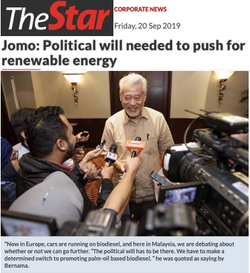
Political will needed to push for renewable energy

The Star 10July 2019

The Star 10July 2019

Malaysian businesses need boost

The Star 9 Oct 2019

The Star 9 Oct 2019

Subsidise public transport for bottom 40%

The Edge 26 Sept 2019

The Edge 26 Sept 2019

Call for measures to counteract global headwinds

The Edge 9 Oct 2019

The Edge 9 Oct 2019

Subsidise public transportation, not fuel

The Star 8 Oct 2019

The Star 8 Oct 2019

Subsidise public transportation for bottom 70%

TheEdge 2Oct 2019

TheEdge 2Oct 2019

"We need to counteract downward forces"

Fake News

PLEASE BEWARE OF MISREPRESENTATIONS OF IMAGES OF JOMO

Commercial and political misrepresentation of his image attributing to him to things which he never said or misrepresenting things he may have said is being circulated on websites such as those posted here. 


You should also be warned, in case you are not already aware, of ‘click bait’ i.e. using such images simply to attract your interest, and then to download your online information for abuse for a variety of ends.

Please inform us and provide a screenshot and weblink to enable further action, which is incredibly difficult. 

Thank you for reading this and for your help and cooperation.

This has also been flagged on his official Facebook page


JKS image ad2.jpg
JKS image Bitcoin ad on  Facebook.jpg
JKS - Fake News 2.jpg
Contact Me
JKS - Fake News 3.jpg
JKS fake news 1.jpg

Nadi Insan by the People's History Centre

Read all editions of #NadiInsan from 1979 to 1983 free of charge at the Peoples History Center website.


Containing writings on socio-political issues, film and cultural commentary, as well as in-depth interviews, Nadi Insan is motivated by community activists and intellectuals in Malaysia.

Happy reading!

Dapatkan kesemua siri majalah #NadiInsan dari tahun 1979 hingga 1983 secara percuma di laman Pusat Sejarah Rakyat.


Berisi tulisan memperihal sosio-politik, ulasan filem dan budaya sehinggalah wawancara yang rencam, Nadi Insan digerakkan oleh aktivis masyarakat dan intelektual di Malaysia.


Selamat membaca!

Contact Me

  • Facebook Social Icon
  • Twitter Social Icon

Thank you for reaching out!

bottom of page