top of page

Follow on Social Media

  • Facebook
  • Twitter
  • Screenshot 2022-09-18 at 5.20.40 PM

M'sia Developments
[on SubStack]

  • Screenshot 2022-09-18 at 5.20.40 PM

Anis Chowdhury and Jomo Kwame Sundaram


SYDNEY and KUALA LUMPUR: “The outlook for LDCs is grim”. The latest United Nations (UN) assessment of prospects for the least developed countries (LDCs) notes recent setbacks without finding any silver lining on the horizon.


Promises unkept

Half a century ago, LDCs were first officially recognised by a UN General Assembly resolution. It built on research, analysis and advocacy by the UN Conference on Trade and Development (UNCTAD).

The landmark 1971 declaration drew attention to LDCs’ unique challenges and pledged support from the international community. The UN has convened four LDC conferences since, with each adopting a 10-year programme of action for national governments and ‘development partners’.

But actual progress has been disappointing, with only seven countries ‘graduating’. The list of LDCs has grown to 46 as more ‘qualify’ to ‘join’. With the fifth conference due in Doha in January 2022, some critical soul-searching is urgently needed for efforts not to disappoint yet again.

The failure of development partners to meet their commitments has been a major long-standing problem. Only 6 of 29 Organization for Economic Cooperation and Development (OECD) partners have kept their promise to give at least 0.15% of their national incomes as aid to LDCs.

As the 1969 UN definition of official development assistance (ODA) has been compromised, the UN report unsurprisingly laments declining aid ‘concessionality’. New OECD aid reporting rules mean its numbers do not reliably measure additional sustainable development finance.


Systemic incoherence

The UN uses three criteria – income, human assets and vulnerability – to classify LDCs. Although nominally part of the UN system, the World Bank and International Monetary Fund do not recognise LDCs.

Instead, the Bank only uses income to classify countries, with only low-income countries eligible for concessional loans from both Bank and Fund. Thus, ‘middle-income’ LDCs – so classified due to poor human assets and/or high vulnerability – are left out.

When the Agreement on Trade-Related Aspects of Intellectual Property Rights (TRIPS) was adopted in 1995, LDCs were given more time to comply: first, until November 2005, extended to July 2013, then July 2021, and most recently, July 2034. But such ad-hoc postponements undermine LDCs’ long-term planning.

Instead of the current ‘case-by-case’ approach, LDCs need more predictability. The grace period should be while a country remains an LDC, say, plus a further 12 years after graduation, as proposed by Chad. The 12-year ‘grace period’ should also apply to other “international support measures”, including all types of special and differential treatment.


Limited market access

LDCs account for only 0.13% of global trade. But despite touting trade liberalisation as necessary for development, OECD countries have not given LDCs much access to their own markets. Allowing more meaningful ‘duty-free, quota-free’ (DFQF) access is thus crucial to LDCs.

Helpful 97% DFQF access for LDCs to developed country markets was agreed to at the 2005 World Trade Organization (WTO) ministerial in Hong Kong. But most LDC exports are concentrated in a few tariff lines, such as agricultural products and textiles, still subject to constant re-negotiation.

Tariff reduction alone is no panacea, as non-tariff measures have posed barriers to LDC exports. Regulatory standards – e.g., ‘sanitary and phyto-sanitary’ requirements – and ‘Rules of Origin’ clauses limit LDC eligibility for preferences. Even when requirements are met, onerous procedures can still frustrate access.

Also, preferential arrangementslike the European Union’s ‘Everything But Arms’ initiative and the US ‘Generalised System of Preferences’ (GSP) – have often been arbitrarily implemented.

Needing frequent Congressional approval makes GSP unpredictable, ever subject to capricious new conditions. Thus, some US lawmakers are demanding that GSP renewal – which expired on 31 December 2020 – should be subject to conditions such as particular human rights, rule of law, labour or environmental regulation priorities.


Trade concessions?

Despite the lofty 2000 Millennium Declaration, OECD countries have conceded little since. After the African walkout at the 1999 Seattle WTO ministerial, the promise of a ‘Development Round’ brought developing countries back to the negotiating table. Launched in Doha after 9/11, “with much rhetoric about… global unity”, there was little enthusiasm among rich countries.

Still pushing developing countries to open their markets more, rich countries demanded they lower tariffs to nearly zero in sectors never previously covered by multilateral trade agreements, including agriculture and services.

Refusing to recognise tariffs as poor countries’ means to protect their farmers and ensure food security, OECD demands ignore their own heavy subsidisation of food agriculture. Also, LDC protection of their modern services – still in ‘infancy’ – is deemed necessary to withstand transnational competition.

OECD countries became more protectionist after the 2008-2009 global financial crisis, later pursuing bilateral, regional and plurilateral ‘free trade’ agreements. In December 2015, the Financial Times gleefully proclaimed “the Doha Round had finally died a merciful death” after long being comatose.


Preferential trade?

Despite DFQF market access, ‘margins of preference’ (MoP) for LDC products have been squeezed by other developing countries’ exports. MoP refer to the difference between preferential rates for LDCs and other rates. These may refer to ‘Most Favoured Nation’ (MFN) rates available to all countries, or preferential rates available to some.

Meanwhile, tariffs have fallen with MFN liberalisation, in some cases to zero. Tariff cuts have deprived LDCs of important revenue. ‘Aid for Trade’ (A4T) – purportedly to promote exports – has never tried to compensate developing countries for lost tariff revenue.

Moreover, A4T conditionalities make them less developmental. A4T is often used for trade policy capacity building – typically focused on encouraging LDCs to open their markets more, as desired by rich countries – rather than enhancing LDCs’ productive capacities and capabilities.

Even if market barriers are reduced, most LDCs still lack the infrastructure and support services to export much more. OECD countries demand LDC trade liberalisation even before they have developed sufficient productive capacities. Hence, even ‘graduate’ LDCs fail to become internationally competitive.


International solidarity critical

While LDCs’ lot remains dismal, new challenges have emerged. For many LDCs, global warming poses an existential threat. The pandemic has also worsened their lot. Inadequate international fiscal support and the high costs of containing the pandemic meant 2020 saw LDCs’ worst growth since the 1980s’ lost decade.

The UN report acknowledges even the meagre progress “painstakingly achieved on several dimensions of development, notably on the fronts of poverty, hunger, education and health” has been reversed. Besides emerging challenges, the LDCs conference must also address the roots of their condition.

LDCs’ development trajectories and options are shaped by the global environment. Besides foreign trade, concessional international financing is key to LDC progress. The latest UN LDCs report proposes new “international support measures”, but recent trends suggest they are unlikely to materialise.


Related IPS commentaries

Allow Least Developed Countries to Develop. 31 August 2021. https://www.ipsnews.net/2021/08/allow-least-developed-countries-develop/

End Vaccine Apartheid. 7 September 2021. http://www.ipsnews.net/2021/09/end-vaccine-apartheid/

Paltry International Support for Spending Needs Sets South Further Back. 8 June 2021. https://www.ipsnews.net/2021/06/paltry-international-support-spending-needs-sets-south-back/


  • Oct 19, 2021
  • 5 min read

Anis Chowdhury and Jomo Kwame Sundaram


SYDNEY and KUALA LUMPUR: The bogey of inflation has been revived. Dubious pre-pandemic economic progress, fiscal constraints and vaccine apartheid were bad enough. Now, ostensibly anti-inflationary measures also threaten recovery and sustainable development.

The International Monetary Fund (IMF) has revised downwards its latest global growth forecast. Its latest World Economic Outlook (WEO) warns of a “dangerous divergence” between richer and poorer countries. This has been exacerbated by, but has also worsened national fiscal disparities and the ‘great vaccine divide’.


Inflation bogey revived

Meanwhile, there is growing talk of ‘stagflation’ – of rising inflation with slow growth and high unemployment, as in the 1970s. Meanwhile, The Economist warns of harmful “wage-price spirals” aggravating vicious circles of rising inflation and wage demands.

But over 70%, or 152 of 209 economists polled believe rising inflation worldwide is due to temporary supply chain disruptions. Heads of major central banks – such as the US Federal Reserve, Bank of England and European Central Bank – concur.

Although the IMF agrees, it also urges policymakers to “be on the lookout and be prepared to act, especially if…prolonged supply disruptions, rising commodity and housing prices, permanent and unfunded fiscal commitments, a de-anchoring of expectations, combined with mismeasurement of output gaps [materialise]”.

The IMF’s October 2021 Fiscal Monitor urges governments to take all steps necessary to regain capital markets’ and lenders’ confidence, including by reducing budget deficits. But it also warns against ‘self-defeating’, premature phasing-out of needed recovery measures. Thus, the ‘two-handed’ IMF economists offer contradictory policy guidance.


Wrong diagnosis

But inflation is unlikely to persist. First, labour market deregulation since the 1980s has long eroded workers’ bargaining power. Hence, workers are now more worried about job security, badly eroded in recent decades.

Second, ‘decent’ job creation remains weak in most rich countries after decades of ‘off-shoring’ and labour-saving innovation. Unsurprisingly then, labour shares of national income have been falling since the mid-1970s.

While jobs typically trail recovery, the current lag is “more severe” than before, notes the IMF. Across the world, labour force participation and employment remain well below pre-pandemic levels, particularly for youth.

The WEO notes private investment fell in 2021’s second quarter, with several new uncertainties responsible. Slower investment and growth also mean less tax revenue and higher debt-GDP ratios. Cutting spending will only make things worse.

Correct diagnosis should be the basis for choice of medication. Contrary to monetarist faith, inflation is not only due to excess money supply. But if supplies are blocked – e.g., due to disasters, conflicts, curfews or transport restrictions – demand easily becomes ‘excessive’.

Inflation is often also due to big suppliers abusing their market power, with powerful firms raising prices with higher ‘mark-ups’. Privatization and deregulation over the last four decades have strengthened these monopolies or oligopolies.


Blunt instrument

The WEO seems more concerned with inflation than employment as financial markets demand monetary tightening, interest rate hikes and fiscal austerity. Bloomberg has urged emerging economies to “brace for rate hikes”, with Mexico, Brazil, Peru, Russia and others obliging, as The Economist anticipated.

The interest rate is a blunt tool. Inflation is reduced by raising interest rates, cutting growth and increasing unemployment – “tough medicine” indeed. Hawks emphasize how inflation erodes the poor’s purchasing power, but deny their prescriptions do worse.

One must also wonder how interest rate hikes are supposed to address actual problems. For example, in September 2021, global food prices shot up nearly 33% year-on-year, due to extreme weather and pandemic restrictions. Higher rates also certainly could not help when a severe drought hit hydroelectric power generation in Brazil.

Higher interest rates squeeze both private and government spending. Thus, rate hikes will likely trigger a vicious circle of further rate increases and general austerity, slowing recovery and raising debt-GDP ratios.

Raising interest rates in rich countries will also see more capital flight from developing countries and exchange rate depreciations. Already handicapped by vaccine inequity and constrained fiscal space, worsened by modest debt relief and pandemic support from rich countries, raising interest rates will set them further back.


Debt misconstrued

Rising debt levels have understandably been an on-going concern. In 2019, the World Bank warned that post-2008 global financial crisis (GFC) indebtedness was dangerous, noting all previous debt waves had ended in crises.

With the pandemic, fears have been “looming” again of “catastrophic” debt crises in developing countries. As if governments had much choice, the Wall Street Journal warned, “Governments world-wide gorge on record debt, testing new limits”.

The IMF’s October Fiscal Monitor acknowledges, “there is no magic number for the debt target. Macroeconomic theory does not prescribe a specific debt target; nor is there a clear threshold above which debt might become particularly harmful to economic growth”. This confirms earlier IMF and World Bank findings suggesting exaggeration of debt constraints.

Rather, the focus should be on “the likely growth effects of the level, composition and efficiency of public spending and taxation”. Instead of fixating on overall debt levels, its composition – domestic vs external, public vs publicly guaranteed – deserves more attention.

In fact, debt-financed infrastructure, education, skill development and retraining programmes all enhance growth. IMF research found such infrastructure investment had large growth effects without even raising the debt-GDP ratio.


Deep-seated challenges

Financialization in recent decades has encouraged more speculation, share buybacks, real property, mergers and acquisitions. Consequently, the real economy has suffered, with inflation rising as productivity growth falters.

But inflation was kept in check by cheap imports and cheaper labour, even as profit margins and executive salaries rose. But neoliberals have not hesitated to claim credit for taming inflation during the Great Moderation via fiscal austerity, debt ceilings and inflation targeting.

Despite fiscal austerity, debt has risen, especially since the GFC. Slower growth has also meant less revenue, further reducing fiscal space. Public investment cuts – particularly for services, infrastructure, research and development – have also hurt productivity growth.


Build forward, not backwards

Every economic crisis is different in its own way. The COVID-19 recession involves both supply and demand shocks. Output has fallen due to lockdowns and value chain disruptions. Demand has also declined with lower incomes, less spending, more jobs lost and greater uncertainty.

When provided, relief measures have sustained some demand. Pandemic restrictions have accelerated digitalization, but other changes are also needed. Reforms must build on COVID-19 transformations for a better future , e.g., by promoting job-intensive green investments, worker reskilling and retraining.

The COVID recession thus offers an unexpected opportunity to ‘build forward better’ to address deep-seated problems to build a better world. This must necessarily involve shedding biased and dysfunctional arrangements, managing markets, guiding private investments, workforce retraining and investing in education, health and social protection.


Related IPS commentaries

Fight Pandemic, Not Windmills of the Mind. 28 July 2020. https://www.ipsnews.net/2020/07/fight-pandemic-not-windmills-mind/

Central Banks Must Address Pandemic Challenges. 3 August 2021. http://www.ipsnews.net/2021/08/central-banks-must-address-pandemic-challenges/

Boldly Finance Recovery to Build Forward Better. 22 June 2021. https://www.ipsnews.net/2021/06/boldly-finance-recovery-build-forward-better/

Pandemic Relief Policies Need More Resources, Better Design. 1 June 2021. http://www.ipsnews.net/2021/06/pandemic-relief-policies-need-resources-better-design/


Jomo Kwame Sundaram


KUALA LUMPUR: The world should now be more aware of likely COVID-19 devastation unless urgently checked. Last week, the World Health Organization (WHO) announced an US$8 billion plan to quickly vaccinate many more people to expedite ending the pandemic.


New WHO plan

Perhaps frustrated after being ignored by rich country governments and major vaccine producers, the new WHO plan is relatively modest, but hopefully more realisable. Supported by UN Secretary-General Antonio Guterres, the Vaccination Strategy seeks to reduce vaccine apartheid by inoculating 40% in all countries before year’s end, and 70% by mid-2022.

WHO had urged governments to vaccinate at least 10% of their populations by September 2021. With almost 6.5 billion inoculations by then, almost a third of the world’s people were fully vaccinated. As noted by WHO Director General (DG) Tedros, “High and upper-middle income countries have used 75 per cent of all vaccines produced so far”.

Worldwide vaccination will also stem emerging new variants. But less than 0.5% of doses have gone to low-income countries, with less than 5% in Africa fully vaccinated. Thus, more than 55, mainly African countries have been largely left out in this ‘two-track’ vaccination effort.

Globally, about 1.5 billion vaccine doses are being produced monthly. The WHO Strategy deems this enough to achieve its targets, “provided they are distributed equitably”. Although more financing is still needed, it implies enough to procure most vaccines needed for poorer countries via COVAX and the African Vaccine Acquisition Trust (AVAT).

Despite the past, the DG believes the Strategy can succeed if countries and companies supplying vaccines prioritise delivery and donations to COVAX and AVAT. He also urges sharing know-how and non-exclusive licences to spread increased manufacturing capacity.


Intellectual property impediment

Intellectual property rights (IPRs) underlie the world pandemic divide today. Undoubtedly, those who innovate should be rewarded for their achievement. But US law does not prevent price gouging by IP owners. Worse, there are no strong incentives for commercial vaccine suppliers to eradicate the disease.

Unsurprisingly, Pfizer has already revised its business strategy for its main revenue stream to be from selling ‘boosters’ and other COVID-19 needs. WHO and other initiatives to encourage voluntary technology and knowledge sharing have gone nowhere as major companies refuse to share knowledge.

Nevertheless, genome sequencing in China in early January 2020 and the almost free use of crucial techniques to produce mRNA vaccines – such as NIH-owned patents and CRISPR technology – have expedited such vaccine development.

Earlier claims that developing countries are not capable of producing the new mRNA vaccines are no longer credible. South Africa and Brazil have already made them under licence. Independent assessments suggest many more – including others in Africa – can do so.

The October 2020 TRIPS waiver request by South Africa and India goes beyond the 2001 WTO approval of public health flexibilities. This allows production using patent compulsory licensing (CL) in extenuating situations during public health emergencies. But the waiver has been blocked, mainly by rich European governments.

The waiver was not mainly about vaccines. When the request was first made, the only vaccine available was Russian. The waiver request for temporary IPR suspensiononly for the pandemic’s duration – is for COVID-19 tests, treatments, equipment, vaccines and other needs, subject to strict conditions.

In the face of a global crisis demanding urgent action, the European Commission position – even a year later – is that TRIPS voluntary licensing (VL) is enough. It insists the waiver – and even CLare not needed even though both VL and CL require country by country, patent by patent negotiations and licensing.

As affordable COVID-19 supplies are still desperately needed, the scale and scope of the current challenge still need the waiver. But no developing country – or for that matter, patent holder – has either the means or time to negotiate to meet all the needed VLs urgently.


Achieving Global Vaccine Equity

For Boston University’s Global Development Policy Center, adequately addressing vaccine equity requires raising output, deemed necessary for a more equitable response. The BU proposal calls for a simultaneous 3-pronged approach to quickly scale up vaccine supplies via:

- the TRIPS waiver to surmount IP constraints to more production;

- requiring vaccine developers to share relevant technology and know-how;

- adequately financing efforts to produce and distribute much more.

The TRIPS waiver would also eliminate all IP barriers to meeting other COVID-19 related needs. By contrast, CL would still require many separate, often lengthy negotiations and licensing for every patent involved in making needed items.

Massively increasing donations – especially from vaccine-hoarding and producing countries – can get many more doses to the under-vaccinated. Big rich G7 countries are still very far from meeting their own modest billion dose donation target.

COVAX, ostensibly for more equitable access to vaccines, has achieved about 10% of its promise, far less than the two billion doses pledged by year’s end. The proposed WHO moratorium on booster shots should continue until equitable vaccine access has been achieved.

Socio-economic inequalities among and within countries have also frustrated pandemic containment. Unsurprisingly, worldwide vaccine inequalities have exacerbated adverse effects. Sadly, the international community has the means, but not the political will to do the needed.


US missing leadership chance

Half a year ago, President Biden announced the US would support a vaccine patent waiver. His vaccine summit before the UN General Assembly was promising, but again did not deliver much. He can still make a world of difference, uniting the world to defeat the pandemic.

Without White House leadership, urgently needed technology sharing will not occur. As Moderna received federal government funding, the US President is legally empowered to ramp up its output and supplies, e.g., on a cost-plus basis. He could also get Moderna to enable others to quickly make vaccines needed.

Washington can thus ensure Moderna does the needed. If Biden wants to lead the world, he still has a small window of opportunity to lead and win the war against COVID-19. Not doing so will mean millions more avoidable deaths. Only together can we rise to the greatest challenge of our times.


Latest Videos

All Videos

All Videos

AN URGENT CALL: A PEOPLE"S VACCINE AGAINST COVID-19

00:00
9 June 2020: IHD-ILO-ISLE Virtual Conference - Day 2

9 June 2020: IHD-ILO-ISLE Virtual Conference - Day 2

05:08:34
Learning in Governance in times of COVID-19

Learning in Governance in times of COVID-19

46:30
Beyond the Lockdown: Towards the ‘New Normal’

Beyond the Lockdown: Towards the ‘New Normal’

59:10

About Jomo

Jomo Kwame Sundaram is Research Adviser, Khazanah Research Institute, Fellow, Academy of Science, Malaysia, and Emeritus Professor, University of Malaya. Previously, he was UN Assistant Secretary-General for Economic Development, Assistant Director General, Food and Agriculture Organization (FAO), Founder-Chair, International Development Economics Associates (IDEAs) and President, Malaysian Social Science Association. 

In The Media

TheStar 26 June 2020

TheStar 26 June 2020

The Star 20 Sept 2019

The Star 20 Sept 2019

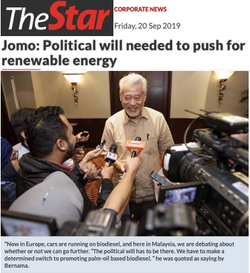
Political will needed to push for renewable energy

The Star 10July 2019

The Star 10July 2019

Malaysian businesses need boost

The Star 9 Oct 2019

The Star 9 Oct 2019

Subsidise public transport for bottom 40%

The Edge 26 Sept 2019

The Edge 26 Sept 2019

Call for measures to counteract global headwinds

The Edge 9 Oct 2019

The Edge 9 Oct 2019

Subsidise public transportation, not fuel

The Star 8 Oct 2019

The Star 8 Oct 2019

Subsidise public transportation for bottom 70%

TheEdge 2Oct 2019

TheEdge 2Oct 2019

"We need to counteract downward forces"

Fake News

PLEASE BEWARE OF MISREPRESENTATIONS OF IMAGES OF JOMO

Commercial and political misrepresentation of his image attributing to him to things which he never said or misrepresenting things he may have said is being circulated on websites such as those posted here. 


You should also be warned, in case you are not already aware, of ‘click bait’ i.e. using such images simply to attract your interest, and then to download your online information for abuse for a variety of ends.

Please inform us and provide a screenshot and weblink to enable further action, which is incredibly difficult. 

Thank you for reading this and for your help and cooperation.

This has also been flagged on his official Facebook page


JKS image ad2.jpg
JKS image Bitcoin ad on  Facebook.jpg
JKS - Fake News 2.jpg
Contact Me
JKS - Fake News 3.jpg
JKS fake news 1.jpg

Nadi Insan by the People's History Centre

Read all editions of #NadiInsan from 1979 to 1983 free of charge at the Peoples History Center website.


Containing writings on socio-political issues, film and cultural commentary, as well as in-depth interviews, Nadi Insan is motivated by community activists and intellectuals in Malaysia.

Happy reading!

Dapatkan kesemua siri majalah #NadiInsan dari tahun 1979 hingga 1983 secara percuma di laman Pusat Sejarah Rakyat.


Berisi tulisan memperihal sosio-politik, ulasan filem dan budaya sehinggalah wawancara yang rencam, Nadi Insan digerakkan oleh aktivis masyarakat dan intelektual di Malaysia.


Selamat membaca!

Contact Me

  • Facebook Social Icon
  • Twitter Social Icon

Thank you for reaching out!

bottom of page