top of page

Follow on Social Media

  • Facebook
  • Twitter
  • Screenshot 2022-09-18 at 5.20.40 PM

M'sia Developments
[on SubStack]

  • Screenshot 2022-09-18 at 5.20.40 PM
  • Nov 16, 2021
  • 4 min read

Jomo Kwame Sundaram and Anis Chowdhury


KUALA LUMPUR and SYDNEY: Quickly enabling greater and more affordable production of and access to COVID-19 medical needs is urgently needed in the South. Such progress will also foster much needed goodwill for international cooperation, multilateralism and sustainable development.

The World Trade Organization (WTO) will soon decide on a conditional temporary waiver of Trade-Related Intellectual Property Rights (TRIPS). The waiver was proposed by South Africa and India on 2 October 2020. Two-thirds of the 164 WTO members – mainly developing countries – support it.

But sustained European efforts – of Switzerland, the UK and the EU, led by Germany – have blocked progress ahead of the WTO ministerial starting 30 November. Meanwhile, ongoing text-based discussions seem to be leading nowhere.


IP not needed for innovation Affordable vaccines and drugs have been crucial for eliminating infectious diseases such as tuberculosis, HIV-AIDS, polio and smallpox. But despite strong evidence to the contrary, advocates insist intellectual property rights (IPRs) are needed to incentivize innovation.

Development of COVID-19 vaccines and other therapeutics have been accelerated by considerable government financing. Only six major vaccine developers received over US$12 billion in public funding. Projected revenue from their IP monopolies will exceed tens of billions.

Supply shortages have disrupted vaccine supplies. IP monopolies block competition, making it hard to quickly increase supplies. Thanks to patent protection, for example, only four companies produce plastic bioreactor bags needed to make vaccines.

Cross-border IP enforcement has been enhanced by TRIPS in 1995. The African walkout from the 1999 Seattle ministerial highlighted the WTO’s rich country bias. As part of the compromise to revive WTO talks, TRIPS has included a ‘public health exception’ since 2001.

Subject to onerous conditions and paying fair compensation, ‘compulsory licensing’ allows making patented products using processes without patentholder consent. Yet, European negotiators still insist that voluntary licensing provisions are enough.

All licensing requires case-by-case, patentholder-by-patentholder, country-by-country negotiations. But licensing is only limited to patents, without requiring sharing ‘industrial secrets’ needed to make complex biochemical compounds.

Time consuming, onerous and costly, such negotiations are beyond the means of most poor countries. Worse, some high-income country (HIC) governments have blocked such licensing, even when agreed to by companies.


IP deepens inequalities

The World Health Organization Director-General has noted four-fifths of vaccine doses went to HICs or upper middle-income countries (MICs). Rich countries – with a seventh of the world’s population – had bought over half the first 7.5 billion vaccine doses by November 2020.

Meanwhile, only 1.5% in low-income countries (LICs) were vaccinated by August 2021. Much of the variation in infection and death rates is due to unequal access, not only to vaccines, but also diagnostic tests, medical therapies, protective equipment, devices, equipment and other needs.

The private-public COVAX facility had promised to deliver two billion vaccine doses by end-2021, and to reach a fifth of the people in 92 LICs. But less than half a billion doses have been delivered so far.

Australian academic Deborah Gleeson warns that even as promising new treatments become available, they will be too costly for most in LICs and many MICs. Diagnostic tests are unequally distributed, with HICs averaging over a hundred times more than LICs.

And even when governments and companies are willing to license others to supply small LICs with low-cost generics, most MICs are excluded. Worse, some high-income country (HIC) governments have blocked such licensing, even when agreed to by companies.

Some HICs have been embarrassed into sharing millions of their unused excess vaccine doses. But of the 1.8 billion doses promised so far, only 14% has gone to LICs. Such donations of funds and other needs undoubtedly help.

But such unpredictable acts of charity – e.g., by HICs who bought far more than they needed – are hardly enough. Manufacturing capacity in the developing world must still be enhanced to meet overall needs. This requires the waiver.

Contrary to the claim that the South lacks manufacturing capacity, vaccines have long been made in over eighty developing countries. Although novel, mRNA vaccine manufacture involves less steps, ingredients and physical capacity than traditional vaccines. MSF has identified many capable producers in the South.


TRIPS waiver urgently needed

TRIPS provides 20-year monopolies for patents. These have often been ‘evergreened’, i.e., extended, sometimes indefinitely, ostensibly to reward additional innovation. Thus, most developing countries have been prevented from meeting their health needs more affordably.

The temporary waiver would allow companies everywhere to produce the required items and use patented technologies without infringing IP. Supplies would increase and prices fall. Currently, access to COVID-19 needs is very inequitable, deepening the yawning gap between HICs and LICs.

The revised 21 May text clarifies the proposed waiver is for at least three years from the decision date, subject to annual review. It would cover products and technologies – including vaccines, therapeutics, diagnostics, devices, protective equipment, materials, components, methods and means of manufacture.

The proposal also covers the application, implementation and enforcement of TRIPS provisions on patents, copyrights, designs and other protected information, e.g., undisclosed manufacturing blueprints and industrial secrets.

Thus, the waiver has long been urgently needed to contain the pandemic worldwide. But rich countries have successfully blocked progress thus far despite the heavy human and economic toll it has taken.


Game changer

Unlike the more flexible arrangements of the General Agreement on Tariffs and Trade, the WTO framework and negotiating priorities have undermined developmental aspirations.

The South has been undermined by rich countries’ betrayal of the 2001 Doha compromise. After ‘softly’ killing the ‘Development Round’ promised then, rich countries can now redeem themselves by supporting the waiver.

Almost two years after COVID-19 was first recognized, the pandemic continues to threaten the world, with poor countries and people now worse affected. The devastation could be partly mitigated if developing countries could meet their pandemic needs without fear of litigation for IP infringement.

A TRIPS Council meeting is scheduled for 16 November, before the four-day WTO Ministerial Council meeting from 30 November. The waiver would also encourage renewed international cooperation, long undermined by destructive rivalry and competition.

By refusing to make concessions, rich countries would not only jeopardize the WTO, but also the world’s ability to urgently contain the pandemic. With complementary financial resource transfers, they can restore the goodwill urgently needed for international cooperation and to revive multilateralism.


Related IPS commentaries

End Vaccine Apartheid. 7 Sep. 2021. http://www.ipsnews.net/2021/09/end-vaccine-apartheid/

End Vaccine Apartheid Before Millions More Die. 23 Mar. 2021. https://www.ipsnews.net/2021/03/end-vaccine-apartheid-millions-die/

IP, Vaccine Imperialism Cause Death and Suffering, Delay Recovery. 16 Feb. 2021. https://www.ipsnews.net/2021/02/ip-vaccine-imperialism-cause-death-suffering-delay-recovery/

Intellectual Property Cause of Death, Genocide. 9 Feb. 2021. https://www.ipsnews.net/2021/02/intellectual-property-cause-death-genocide/

Intellectual Property Monopolies Block Vaccine Access. 15 Dec. 2020. https://www.ipsnews.net/2020/12/intellectual-property-monopolies-block-vaccine-access/


  • Nov 9, 2021
  • 4 min read

Anis Chowdhury and Jomo Kwame Sundaram


SYDNEY and KUALA LUMPUR: Addressing global warming requires cutting carbon emissions by almost half by 2030! For the Intergovernmental Panel on Climate Change, emissions must fall by 45% below 2010 levels by 2030 to limit warming to 1.5°C, instead of the 2.7°C now expected.

Instead, countries are mainly under pressure to commit to ‘net-zero’ carbon (dioxide, CO2) emissions by 2050 under that deal. Meanwhile, global carbon emissions – now already close to pre-pandemic levels – are rising rapidly despite higher fossil fuel prices

Emissions from burning coal and gas are already greater now than in 2019. Global oil use is expected to rise as transport recovers from pandemic restrictions. In short, carbon emissions are far from trending towards net-zero by 2050.


False promise

At the annual climate meetings in Glasgow, carbon pricing is being touted as the main means to cut CO2 and other greenhouse gas (GHG) emissions. The European Union President urged, “Put a price on carbon”, while Canadian Prime Minister Justin Trudeau advocates a global minimum carbon tax.

Businesses are also rallying behind one-size-fits-all CO2 pricing, claiming it is “effective and fair”. But there is little discussion of how revenues thus raised should be distributed among countries, let alone to support poorer countries’ adaptation and mitigation efforts.

Carbon pricing supposedly penalizes CO2 emitters for economic losses due to global warming. The public bears the costs of global warming, e.g., damage due to rising sea levels, extreme weather events, changing rainfall, droughts or higher health care and other expenses.

But there is little effort at or evidence of compensation to those adversely affected. Therefore, poorer countries are understandably sceptical, especially as rich countries have failed to fulfil their promise of US$100bn yearly climate finance support.

The CO2 price market solution is said to be “the most powerful tool” in the climate policy arsenal. It claims to deter and thus reduce GHG emissions, while incentivizing investment shifts from fossil-fuel burning to cleaner energy generating technologies.


No silver bullet

Carbon pricing’s actual impact has, in fact, been marginal – only reducing emissions by under 2% yearly. Such impacts remain small as ‘emitters hardly pay’. Most remain undeterred, still relying on energy from fossil fuel combustion. Also, many easily pass on the carbon tax burden to others whose spending is not price sensitive enough.

Only 22% of GHGs produced globally are subject to carbon pricing, averaging only US$3/ton! Hence, such price incentives alone cannot significantly discourage high GHG emissions, or greatly accelerate widespread use of low-carbon technologies.

Powerful fossil-fuel corporate interests have made sure that carbon prices are not high enough to force users to switch energy sources. Thus, existing CO2 pricing policies are “modest and less ambitious” than they could and should be. Meanwhile, several factors have undermined carbon taxation’s ability to speed up ‘decarbonization’.

First, carbon taxes have never actually provided much climate finance. Second, CO2 taxes misrepresent climate change as due to ‘market failure’, not as a fundamental systemic problem. Third, it seeks efficiency, not efficacy! Thus, it does not treat global warming as an urgent threat.

Fourth, market signals from carbon taxation seek to ‘optimize’ the status quo, rather than to transform systems responsible for global warming. Fifth, it offers a deceptively simplistic ‘universal’ solution, rather than a policy approach sensitive to circumstances. Sixth, it ignores political realities, especially differences in key stakeholders’ power and influence.


Unfair to poor

Even if introduced gradually, the flat carbon tax will burden poorer countries more. Worse, carbon pricing is regressive, hurting the poor more. Thus, the burden of CO2 taxes is heavier on average consumers in poor countries than on poor consumers in ‘average’ countries.

A UN survey showed a seemingly fair, uniform global carbon tax would burden – as a share of GDP – developing countries much more than developed countries. Thus, although per capita emissions in poorer countries are far less than in rich ones, a flat CO2 tax burdens developing countries much more.

Also, a standard carbon tax burdens low-income groups more, by raising not only energy costs directly, but also those of all goods and services requiring energy use. With this seemingly fair, one-size-fits-all tax, low income households and countries pay much more relatively.

Analytically, such distributional effects can be avoided by differentiated pricing, e.g., by increasing prices to reflect the amount of energy used. Also, compensatory mechanisms – such as subsidies or cash transfers to low-income groups – can help.

But these are administratively difficult, particularly for poor countries, with limited taxation and social assistance systems. Furthermore, effectively targeting vulnerable populations is hugely problematic in practice.


Mission impossible?

Selective investment and technology promotion policies are much more effective in encouraging clean energy and reducing GHG emissions. Huge investments in solar, hydro and wind energy as well as public transport are required, typically involving high initial costs and low returns. Hence, public investment often has to lead.

But most developing countries lack the fiscal capacity for such large public investment programmes. Large increases in compensatory financing, official development assistance and concessional lending are urgently needed, but have not been forthcoming despite much talk.

Climate finance initiatives generally need to improve incentives for mitigation, while funding much more climate adaptation in developing countries. Potentially, a CO2 tax could yield significantly more resources to cover such international funding requirements, but this requires appropriate redistributive measures which have never been seriously negotiated.


Carbon taxes can help

Even without an ostensibly market-determined CO2 price, taxing GHG emissions would make renewable energy more price competitive. The UN advocated a ‘global green new deal’ in response to the 2008-2009 global financial crisis. It noted a US$50/ton tax would make more renewables commercially competitive, besides mobilizing US$500bn annually for climate finance.

A mid-2021 International Monetary Fund (IMF) staff note has proposed an international carbon price floor. This would “jump-start” emissions reductions by requiring G20 governments to enforce minimum carbon prices. Involving the largest emitting countries would be very consequential while bypassing collective action difficulties among the 195 UN Member States.

The scheme could be pragmatically designed to be more equitable, and for all types of GHGs, not just CO2 emissions. But even a global carbon price of US$75/ton would only cut enough emissions to keep global warming below 2°C – not the needed 1.5°C, the Paris Agreement goal!


Related IPS commentaries

Much more climate finance now! 12 Sep 2017. http://www.ipsnews.net/2017/09/much-climate-finance-now/

Big Business Capturing UN SDG Agenda? 11 Dec 2018. http://www.ipsnews.net/2018/12/big-business-capturing-un-sdg-agenda/


Anis Chowdhury and Jomo Kwame Sundaram


SYDNEY and KUALA LUMPUR: Current climate mitigation plans will result in a catastrophic 2.7°C world temperature rise. US$1.6–3.8 trillion is needed annually to avoid global warming exceeding 1.5°C.

Creative accounting

Rich countries have long broken their 2009 Copenhagen COP16 pledge to mobilize “US$100 billion per year by 2020 to address the needs of developing countries”. The pandemic has worsened the situation, reducing available finance. Poor countries – many already caught in debt traps – struggle to cope.

While minuscule compared to the finance needed to adequately address climate change, it was considered a good start. The number includes both public and private finance, with sources – public/private, grants/loans, etc. – unspecified.

Such ambiguity has enabled double-counting, poor transparency and creative accounting, noted the UN Independent Expert Group on Climate Finance. Thus, the rich countries’ Organisation for Economic Co-operation and Development (OECD) reported US$80bn in climate finance for developing countries in 2019.


Fudging numbers

But OECD climate finance numbers include non-concessional commercial loans, ‘rolled-over’ loans and private finance. Some donor governments count most development aid, even when not primarily for ‘climate action’.

Also, the dispute over which funds are to be considered ‘new and additional’ has not been resolved since the 1992 adoption of the UN Framework Convention on Climate Change (UNFCCC) at the Rio Earth Summit.

Official development assistance redesignated as climate finance should be categorized as ‘reallocated’, rather than ‘additional’ funding. Consequently, poor countries are losing aid for education, health and other public goods.

India has disputed the OECD claim of US$57bn climate finance in 2013-14, suggesting a paltry US$2.2bn instead! Other developing countries have also challenged such creative accounting and ‘greenwashing’.


Climate finance anarchy

Developing countries expected the promised US$100bn yearly to be largely public grants disbursed via the then new UNFCCC Green Climate Fund. Oxfam estimates public climate financing at only US$19–22.5bn in 2017-18, with little effective coordination of public finance.

Developing countries believed their representatives would help decide disbursement, ensuring equity, efficacy and efficiency. But little is actually managed by developing countries themselves. Instead, climate finance is disbursed via many channels, including rich countries’ aid and export promotion agencies, private banks, equity funds and multilateral institutions’ loans and grants.

Several UN programmes also support climate action, including the UN Environment Programme, UN Development Programme and Global Environment Facility. But all are underfunded, requiring frequent replenishment. Uncertain financing and developing countries’ lack of meaningful involvement in disbursements make planning all the more difficult.

Financialization has meant that climate funding increasingly involves private financial interests. Claims of private climate finance from rich to poor countries are much contested. Even the OECD estimate has not been rising steadily, instead fluctuating directionless from US$16.7bn in 2014 to US$10.1bn in 2016 and US$14.6bn in 2018.

The actual role and impact of private finance are also much disputed. Unsurprisingly, private funding is unlikely to help countries most in need, address policy priorities, or compensate for damages beyond repair. Instead, ‘blended finance’ often uses public finance to ‘de-risk’ private investments.


Putting profits first

The poorest countries desperately need to rebuild resilience and adapt human environments and livelihoods. Adaptation funds are required to better cope with the new circumstances created by global warming. Needed ‘adaptation’such as improving drainage, water catchment and infrastructureis costly, but nonetheless desperately necessary.

But ‘donors’ prefer publicizable ‘easy wins’ from climate mitigation, especially as they increasingly gave loans, rather than grants. Thus, although the Paris COP21 Agreement sought to balance mitigation with adaptation, most climate finance still seeks to cut greenhouse gas (GHG) emissions.

As climate adaptation is rarely lucrative, it is of less interest to private investors. Rather, private finance favours mitigation investments generating higher returns. Thus, only US$20bn was for adaptation in 2019 – less than half the sum for mitigation. Unsurprisingly, the OECD report acknowledges only 3% of private climate finance has been for adaptation.

Chasing profits, most climate finance goes to middle-income countries, not the poorest or most vulnerable. Only US$5.9bnless than a fifth of total adaptation finance – has gone to the UN’s 46 ‘least developed countries’ (LDCs) during 2014-18! This is “less than 3% of [poorly] estimated LDCs annual adaptation finance needs between 2020-2030”.


Cruel ironies

The International Monetary Fund recognizes the “unequal burden of rising temperatures”. It is indeed a “cruel irony” that those far less responsible for global warming bear the brunt of its costs. Meanwhile, providing climate finance via loans is pushing poor countries deeper into debt.

Increasingly frequent extreme weather disasters are often followed by much more borrowing due to poor countries’ limited fiscal space. But loans for low-income countries (LICs) cost much more than for high-income ones. Hence, LICs spend five times more on debt than on coping with climate change and cutting GHG emissions.

Four-fifths of the most damaging disasters since 2000 have been due to tropical storms. The worst disasters have raised government debt in 90% of cases within two years with no prospect of debt relief.

As many LICs are already heavily indebted, climate disasters have been truly catastrophic – as in Belize, Grenada and Mozambique. Little has trickled down to the worst affected, and other vulnerable, needy and poor communities.

Funding gap

Based on countries’ own long-term goals for mitigation and adaptation, the UNFCCC’s Standing Committee on Finance estimated that developing countries need US$5.8-5.9 trillion in all until 2030. The UN estimates developing countries currently need US$70bn yearly for adaptation, rising to US$140–300bn by 2030.

In July, the ‘V20’ of finance ministers from 48 climate-vulnerable countries urged delivery of the 2009 US$100bn vow to affirm a commitment to improve climate finance. This should include increased funds, more in grants, and with at least half for adaptation – but the UNFCCC chief has noted lack of progress since.

Only strong enforcement of rigorous climate finance criteria can stop rich countries abusing currently ambiguous reporting requirements. Currently fragmented climate financing urgently needs more coherence and strategic prioritization of support to those most distressed and vulnerable.

This month’s UNFCCC COP26 in Glasgow, Scotland, can and must set things right before it is too late. Will the new Cold War drive the North to do the unexpected to win the rest of the world to its side instead of further militarizing tensions?


Relevant IPS readings

Much more climate finance now! 12 Sep 2017.

Can Private Finance Really Serve Humanity? 14 Jul 2020.

Blending Finance Not SDG Financing Silver Bullet. 30 Apr 2018. http://www.ipsnews.net/2018/04/blending-finance-not-sdg-financing-silver-bullet/

Big Business Capturing UN SDG Agenda? 11 Dec 2018.

Developing Countries Struggling To Cope With COVID-19. 23 Feb 2021. https://www.ipsnews.net/2021/02/developing-countries-struggling-cope-covid-19/

Covid-19 Compounds Developing Country Debt Burdens. 23 Jul 2020. https://www.ipsnews.net/2020/07/covid-19-compounds-developing-country-debt-burdens/


Latest Videos

All Videos

All Videos

AN URGENT CALL: A PEOPLE"S VACCINE AGAINST COVID-19

00:00
9 June 2020: IHD-ILO-ISLE Virtual Conference - Day 2

9 June 2020: IHD-ILO-ISLE Virtual Conference - Day 2

05:08:34
Learning in Governance in times of COVID-19

Learning in Governance in times of COVID-19

46:30
Beyond the Lockdown: Towards the ‘New Normal’

Beyond the Lockdown: Towards the ‘New Normal’

59:10

About Jomo

Jomo Kwame Sundaram is Research Adviser, Khazanah Research Institute, Fellow, Academy of Science, Malaysia, and Emeritus Professor, University of Malaya. Previously, he was UN Assistant Secretary-General for Economic Development, Assistant Director General, Food and Agriculture Organization (FAO), Founder-Chair, International Development Economics Associates (IDEAs) and President, Malaysian Social Science Association. 

In The Media

TheStar 26 June 2020

TheStar 26 June 2020

The Star 20 Sept 2019

The Star 20 Sept 2019

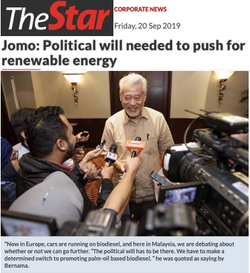
Political will needed to push for renewable energy

The Star 10July 2019

The Star 10July 2019

Malaysian businesses need boost

The Star 9 Oct 2019

The Star 9 Oct 2019

Subsidise public transport for bottom 40%

The Edge 26 Sept 2019

The Edge 26 Sept 2019

Call for measures to counteract global headwinds

The Edge 9 Oct 2019

The Edge 9 Oct 2019

Subsidise public transportation, not fuel

The Star 8 Oct 2019

The Star 8 Oct 2019

Subsidise public transportation for bottom 70%

TheEdge 2Oct 2019

TheEdge 2Oct 2019

"We need to counteract downward forces"

Fake News

PLEASE BEWARE OF MISREPRESENTATIONS OF IMAGES OF JOMO

Commercial and political misrepresentation of his image attributing to him to things which he never said or misrepresenting things he may have said is being circulated on websites such as those posted here. 


You should also be warned, in case you are not already aware, of ‘click bait’ i.e. using such images simply to attract your interest, and then to download your online information for abuse for a variety of ends.

Please inform us and provide a screenshot and weblink to enable further action, which is incredibly difficult. 

Thank you for reading this and for your help and cooperation.

This has also been flagged on his official Facebook page


JKS image ad2.jpg
JKS image Bitcoin ad on  Facebook.jpg
JKS - Fake News 2.jpg
Contact Me
JKS - Fake News 3.jpg
JKS fake news 1.jpg

Nadi Insan by the People's History Centre

Read all editions of #NadiInsan from 1979 to 1983 free of charge at the Peoples History Center website.


Containing writings on socio-political issues, film and cultural commentary, as well as in-depth interviews, Nadi Insan is motivated by community activists and intellectuals in Malaysia.

Happy reading!

Dapatkan kesemua siri majalah #NadiInsan dari tahun 1979 hingga 1983 secara percuma di laman Pusat Sejarah Rakyat.


Berisi tulisan memperihal sosio-politik, ulasan filem dan budaya sehinggalah wawancara yang rencam, Nadi Insan digerakkan oleh aktivis masyarakat dan intelektual di Malaysia.


Selamat membaca!

Contact Me

  • Facebook Social Icon
  • Twitter Social Icon

Thank you for reaching out!

bottom of page