top of page

Follow on Social Media

  • Facebook
  • Twitter
  • Screenshot 2022-09-18 at 5.20.40 PM

M'sia Developments
[on SubStack]

  • Screenshot 2022-09-18 at 5.20.40 PM

Anis Chowdhury and Jomo Kwame Sundaram


SYDNEY and KUALA LUMPUR: Hopes for an inclusive global economic recovery are fast fading. As rich countries have done little to ensure poor countries’ access to vaccines and fiscal resources, North-South “fault lines” will certainly widen.


Enhancing relief, recovery, transformation

While the International Monetary Fund (IMF) has revised rich countries’ recovery prospects upward, the United Nations (UN) notes formidable challenges, especially for developing countries, due to the pandemic.

The UN warns of more setbacks for the Sustainable Development Goals (SDGs), already behind schedule before the pandemic. Grim recovery prospects have been worsened by debt distress and dramatic drops in investment and trade.

Designing appropriate relief, recovery and reforms well is necessary. For the IMF, growth-enhancing reforms could significantly improve growth in emerging market and developing economies over the next decade.

Countries must quickly spend much more to contain the pandemic and offset adverse effects of policy responses. This is needed to protect incomes, jobs and businesses, while paying more attention to the most vulnerable. Also, the SDGs still need more financing.

Policy choices now will determine chances of a greener, more inclusive and resilient future. There have to be better synergies among short, medium and long-term policies through improved coordination.


Macroeconomic policy coordination

Although public debt is already high while tax revenue has shrunk, governments need to spend more. Central banks (CBs) must lend more to governments to create more fiscal space. Better monetary policy support for government spending should strengthen relief, recovery and reform, not enable more corporate debt and asset price bubbles.

In turn, fiscal authorities can create monetary policy space by enabling spending on nationally produced goods and services, investing in productive capabilities, enabling new jobs and occupations, and expanding social protection. Policy design should ensure that more liquidity does not generate excessive inflationary pressures or net imports.

Greater CB independence in recent decades has undermined macroeconomic policy coordination, preventing them from lending directly to governments. Keeping inflation low has become paramount, ignoring other policy goals. Supposedly for CB and monetary policy credibility, such priorities actually serve financial investors, especially speculators.

But with ‘unconventional monetary policies’ after the 2008 global financial crisis, CB lending to governments has become more acceptable. Many rich country governments have since turned to CBs for fiscal space and other finance.

With little affordable finance available from both private and official sources, some developing countries, such as Indonesia, have temporarily suspended laws preventing direct borrowing from CBs. Others, e.g., the Philippines, have amended legislation to allow CBs to directly lend to governments.

Thus, how countries emerge from recessions in the short-term, and transform their economies to achieve progress in the longer term, critically depends on effective cooperation between CBs and governments.


Central banks’ developmental role

Historically, CBs have played a developmental role, e.g., financing public investment. Even though many CB statutes are not explicit about such roles, the two oldest CBs – the Bank of England and Sweden’s Riksbank – are not prohibited from vigorously promoting policy priorities, e.g., the latter’s commitment to housing for all.

The Bank of England has even pioneered creating specialised development institutions, e.g., the Industrial and Commercial Finance Corporation, the Finance Corporation for Industry, and the Bankers’ Industrial Development Company.

The US Federal Reserve Act is committed to realise “the economy’s long run potential to increase production, so as to promote effectively the goals of maximum employment, stable prices, and moderate long-term interest rates…in furtherance of the purposes of the Full Employment and Balanced Growth Act of 1948.”

CBs of Italy, Germany, Japan and the Netherlands have used various means to finance activities underserved by credit markets. These include lowering bank reserve requirements and lending for priorities such as housing, agriculture, exports, small business and underdeveloped regions.

Well before independence, the Reserve Bank of India observed, “it may be desirable for Central Bank credit to be made available in a larger number of ways and with less restrictions”. Hence, development objectives are explicit in many developing countries’ CB statutes.

The statutes of some CBs established in the 1970s and 1980s with IMF technical assistance also have specific provisions for developmental roles, e.g., in Bhutan, Botswana, Fiji, Maldives, Solomon Islands, Swaziland and Vanuatu.

This is consistent with IMF Article of Agreement IV, “each member shall endeavor to direct its economic and financial policies toward the objective of fostering orderly economic growth with reasonable price stability, with due regard to its circumstances”.

The Bangladesh CB, a financial inclusion pioneer, also adopted a sustainable finance policy in 2011 to promote green investment and sustainable agriculture. Ninety developing country CBs have since signed the Maya Declaration to advance financial inclusion.


Supporting transformation

Borrowing to finance recovery and reform has to promote desirable changes, creating new productive capacities, accelerating digitalisation, revitalising rural and regional economies, conducting business and work in new ways, and making economies more sustainable.

The European Central Bank (ECB) has aligned ‘quantitative easing’ with the European Commission (EC)’s pandemic response. By indicating it would buy newly issued government bonds in the secondary market, the ECB has effectively financed government borrowing despite the ban on directly lending to the government.

Thus, considerable ECB purchase of government bonds has lowered borrowing costs for member States’ pandemic responses. These include the EC’s Next Generation package,including the European Green Deal and its ‘digitalization transition’.

The Bank of Japan is also supporting government efforts for relief, recovery, economic growth, structural change, disaster management and global warming mitigation. It is also encouraging companies to invest in digitalisation and green technologies.

The South Korean CB has also purchased more government bonds. Several measures have provided monetary support for the ‘Korean New Deal’, including pandemic relief, recovery, digital and green investments, and employment safety nets.

China’s CB’s targeted monetary policy tools are also increasingly aligned with the government’s long-term strategic goals. These include supporting key sectors while preventing asset price bubbles and ‘overheating’.


Bolder actions needed

Over the last year, poorer countries have been condemned to protracted recessions and delayed recoveries. Vaccine imperialism and apartheid mean that their vaccination efforts will be delayed and limited, if not worse.

Extended slowdowns not only threaten to become depressions, but also to further set back the modest progress achieved in recent decades. The North-South gap between rich and poor countries is certain to grow again.

Recovery prospects have been set back by poor countries’ lack of ‘fiscal space’. The IMF must help them use monetary policy much more creatively, not only to enhance fiscal space, but also to complement other policies for relief, recovery and transformation.


Related IPS commentaries

Boldly Finance Recovery to Build Forward Better. 22 June 2021. https://www.ipsnews.net/2021/06/boldly-finance-recovery-build-forward-better/

Paltry International Support for Spending Needs Sets South Further Back. 8 June 2021. https://www.ipsnews.net/2021/06/paltry-international-support-spending-needs-sets-south-back/

Pandemic Relief Policies Need More Resources, Better Design. 1 June 2021. http://www.ipsnews.net/2021/06/pandemic-relief-policies-need-resources-better-design/

IMF, World Bank Must Support Developing Countries’ Recovery. 6 April 2021. http://www.ipsnews.net/2021/04/imf-world-bank-must-support-developing-countries-recovery/

Neoliberal Finance Undermines Poor Countries’ Recovery. 2 March 2021. https://www.ipsnews.net/2021/03/neoliberal-finance-undermines-poor-countries-recovery/

Urgently Needed Deficit Financing No Excuse for More Fiscal Abuse. 8 December 2020. https://www.ipsnews.net/2020/12/urgently-needed-deficit-financing-no-excuse-fiscal-abuse/


Jomo Kwame Sundaram


KUALA LUMPUR: Undoubtedly, the world needs to reform existing food systems to better serve humanity and sustainable development. But the United Nations World Food Systems Summit(UNFSS) must be consistent with UN-led multilateralism.

For the first time ever, the World Economic Forum (WEF), a partnership of some of the world’s most powerful corporations, is partnering the UN in launching the Summit, now scheduled for September, with its ‘Pre-Summit’ beginning today.

Food insecurity is primarily due to inequalities and deprivations as victims lack the means to obtain the food they need. The UN should not serve those who cynically use hunger, starvation and deprivation to advance private commercial interests.


UN-led multilateralism threatened

The collapse of the Soviet Union, the end of the Cold War and seemingly unchallenged US dominance in the 1990s posed new threats to UN-led multilateralism. The World Trade Organization was set up in 1995 outside the UN system. Later, ‘recalcitrant’ Secretary-General (SG) Boutros-Ghali was blocked from a second term.

The four UN Development Decades from the 1960s ended with the lofty, Secretariat-drafted Millennium Declaration, bypassing Member State involvement. The Millennium Development Goals (MDGs) were then elaborated by the UN Development Programme with scant Member State consultation.

Growing corporate sway in the UN system got a big boost with the UN Global Compact. Such influences have affected governance of UN agencies, now better known as the World Health Organization struggles to contain the pandemic.

Difficult negotiations followed growing developing country disappointment with the MDGs, not delivering on climate finance as promised in 2009, and failure to better address the 2008 global financial crisis and its aftermath.

Hence, the negotiated Sustainable Development Goals (SDGs) compromise enjoys greater legitimacy than the MDGs. However, achieving Agenda 2030 was undermined from the outset as rich countries blocked needed funding at the third UN Financing for Development summit in mid-2015.


Summit bypasses UN processes

In the last dozen years after the 2008 world food price spike, the UN Committee on World Food Security (CFS) has become an inclusive forum for civil society and corporate interests to debate how best to advance food security. Unsurprisingly, CFS has long addressed food systems.

CFS’s High-Level Panel of Experts (HLPE) is widely acknowledged as competent, having prepared balanced and comprehensive reports on matters of current and likely future concern. In the UN system, CFS is now seen as a ‘multistakeholder’ engagement model for emulation. Yet, the Summit bypassed CFS from the outset.

Nominally answering to the UNSG, Summit processes have been largely set by a small, largely unaccountable coterie. UNFSS organisers initially moved ahead without representative stakeholder participation until his intervention led to some consultative processes.

Mainly funded by the WEF and some major partners, they remain mindful of who pays the piper. Hence, they mainly promote supposedly ‘game-changing’, ‘scalable’ and investment-inducing solutions claiming to offer technological fixes.


Agroecology innovation

An HLPE report has approvingly considered agroecology or ‘nature-based solutions’. Many scientists have been working with food producers for decades to increase food productivity, output, diversity and resilience through better agroecological practices, thus cutting costs and enhancing sustainability.

The evidence is unambiguous that agroecology has delivered far better results than ‘Green Revolution’ innovations. A survey of almost 300 large ecological agriculture projects in more than fifty poor countries reported rising farmer incomes due to lower costs and a 79% average productivity increase.

This contrasts with the record of the Alliance for a Green Revolution in Africa (AGRA) launched in 2006. With funding from the Gates and Rockefeller Foundations, it promised to double yields and incomes for 30 million smallholder farm households by 2020. Despite much government spending, yields hardly rose as rural poverty grew.

Agroecological innovations have proved effective against infestations. Thus, safer, more effective biopesticides that do not kill useful insects and microbes, and non-toxic alternatives to agrochemical pesticides have been created.

The UN Food and Agriculture Organization (FAO) hosted its first International Agroecology Symposium in 2014, before committing to ‘Scaling Up Agroecology’. But for Kip Tom, President Trump’s representative, FAO was no longer “science-based”.


Demonising agroecology

The Gates Foundation has been funding the Cornell Alliance for Science, ostensibly to “depolarize the GMO debates” by providing training in “advanced agricultural biotechnology communications”. Why traditional agricultural practices can’t transform African agriculture is only one instance of such sponsored propaganda masquerading as science.

Well-resourced lobbyists are using the UNFSS to secure support and legitimacy for commercial agendas. With abundant means, their advocacy routinely invokes ‘public-private partnerships’ and ‘science, technology and innovation’ rhetoric.

Forced to be more inclusive, Summit organisers are now using ‘solution clusters’ for advocacy. They then build broad ‘multi-stakeholder’ coalitions to advance purported solutions with the UNFSS mark of approval.

With strong and growing evidence of agroecology’s progress and potential, propaganda against it has grown in recent years. Agroecology advocates are caricatured as ‘Luddite eco-imperialists’, ‘Keeping Africa on the Brink of Starvation’, and condemning farmers to ‘poverty, malnutrition and death’.

A public relations consultant has accused agroecology advocates of being “the face of a ‘green’ neocolonialism” “idealizing peasant labour and retrograde subsistence farming” and denying “the Green Revolution’s successes”.

Agroecology solutions are the main, if not only ones consistent with the UN’s overarching commitment to sustainable development. But the propagandists portray them as uninformed barriers to agricultural and social progress. Such deliberate deceptions block needed food system reforms.

UN Special Rapporteur on the Right to Food Michael Fakhri alerted UNFSS Special Envoy Agnes Kalibata that agroecology is being dismissed as backward when it should be central to the Summit. Concurrently President of AGRA, with its particular commitment to needed food system reform, she is in an impossible position.


Best Summit money can buy?

Investing in the Summit is securing legitimacy and more resources from governments, the UN system, private philanthropy and others to further their commercial agendas. Meanwhile, many are working in good faith to make the most of the UN Summit.

Nevertheless, it is setting a dangerous precedent for the UN system. It has rashly opened a back door, allowing corporate-led ‘multi-stakeholderism’ to undermine well-tested, inclusive ‘multi-stakeholder’ arrangements developed over decades under multilateral Member State oversight.

UNFSS Science Days on 8 and 9 July indicated the Summit is being used to push for a new food science panel. This will undercut the HLPE, and ultimately, the CFS. Hence, the UNFSS seems like a Trojan Horse to advance particular corporate interests, inadvertently undermining what UN-led multilateralism has come to mean.

As both CFS and HLPE are successful UN institutions, the Summit will inevitably undermine its own achievements. Hence, for many Member States and civil society, UNFSS represents a step backward, rather than forward.


Related IPS Articles


Updated: Jul 20, 2021

Anis Chowdhury and Jomo Kwame Sundaram


SYDNEY and KUALA LUMPUR: Despite facing the world’s worst pandemic of the last century, rich countries in the World Trade Organization (WTO) have blocked efforts to enable more affordable access to the means to fight the pandemic.

Everyone knows access for all to the means for testing, treatment and prevention – including diagnostic tests, therapeutic medicines, personal protective equipment and vaccines – is crucial.


European deceit

In October 2020, South Africa and India requested the WTO to temporarily suspend relevant provisions of its Agreement on Trade Related Aspects of Intellectual Property Rights (TRIPS). By May 2021, the proposal had 62 co-sponsors and support from more than two-thirds of WTO member States.

Despite overwhelming support from low- and middle-income countries, Western governments, Big Pharma and other industry officials dismiss this waiver request as not only unnecessary, but also undermining future technological innovation.

Although most European Parliament members support the waiver proposal, it is actively opposed by European governments and the European Commission (EC), the European Union (EU) executive.

It is also resisted by Brazil and other rich countries, such as the UK, Norway, Switzerland, Australia, Canada and Japan. However, the Biden administration now supports a temporary waiver for vaccines, but is silent on the other items urgently needed.

Misleadingly, European leaders insist that the temporary waiver request is unnecessary, but IP rights (IPRs) are essential for innovation. “IPR regimes have, at best, second-order effects upon the rates of innovation”. In fact, “when patent rights have been too broad or strong, they have actually discouraged innovation”.

They misleadingly claim access can be achieved by existing provisions for voluntary licensing (VL), technology transfer, COVAX bulk purchasing and existing TRIPS flexibilities, especially compulsory licensing (CL). But these purported solutions are known to be grossly inadequate.

COVAX is struggling due to poor funding, supply shortages and inadequate donations. Hence, many poor countries have not even applied. With IPRs strengthened internationally since 1995, TNCs find technology transfer agreements less profitable.


Big Pharma law

Strict international enforcement of patent protection is recent. Pfizer’s then chairman, Edmund Pratt successfully pushed IP onto the agenda of the Uruguay Round of the General Agreement on Tariffs and Trade (GATT), which created the WTO and TRIPS in 1995.

Fearing stronger IP rights would enhance corporate power and reduce affordable access to life-saving medicines, many developing countries resisted TRIPS. But rich countries pushed TRIPS through, using carrots and sticks to divide developing countries.

TRIPS includes CL, first introduced in the 1883 Paris Convention for the Protection of Industrial Property. A government can thus allow a third party to make or use a patented product or process without the patent owner’s consent. But this can only be for domestic use, subject to other conditions, e.g., paying “the right holder … adequate remuneration”.

Despite great efforts, rich country governments failed to increase members’ TRIPS obligations at the 1997 Singapore WTO ministerial. Nevertheless, US President Clinton tried again at the 1999 Seattle ministerial, triggering an African walkout.

After 9/11, some concessions were made before the 2001 Doha ministerial, including a new ‘Development Round’ of WTO talks. Two decades later, no conclusion is in sight as rich countries see little chance of getting what they want.

With the HIV/AIDS crisis, campaigning against TRIPS was boosted by President Mandela’s leadership. The Doha Ministerial Declaration included ‘public health exceptions’ to TRIPS. Now, there is no need to first negotiate VLs during health emergencies. Also, countries without manufacturing capacity can use CLs to import cheaper versions.


European deceptions

By insisting that existing TRIPS flexibilities are sufficient, European leaders deny all actual problems in practice. Ignoring decades of experience, they used to insist VL provisions are enough to expand output and share expertise.

In reality, VLs are often shrouded in secrecy, with patent holders choosing beneficiaries and even distributors. Thus, the AstraZeneca VL to the Serum Institute of India limits what it can produce, and prevents it from meeting Indian and other needs.

They concede when “voluntary cooperation fails, compulsory licences… are a legitimate tool in the context of a pandemic”. But CLs are only relevant for patents, not new vaccines which have not been patented, and deny other IP barriers.

EC arguments protect Big Pharma, but effectively reject the World Health Organization’s COVID-19 Technology Access Pool (C-TAP) initiative. C-TAP seeks to enable equitable access to technologies for approved COVID-19 vaccines and therapies. But industry and government officials dismiss technology sharing as unnecessary, and worse, dangerous for future innovation.

Inflexible ‘flexibilities’

For a long time, Big Pharma and their governments, including the EC, pressured developing countries not to use the very CLs they now tout as the solution. The US Trade Representative routinely threatened sanctions against countries using CLs for medicines, only recognising others’ right to use them this year.

CLs are very difficult to actually use, especially by countries with limited negotiating capacities or relevant manufacturing capabilities. Existing provisions require complicated country-by-country, company-by-company and patent-by-patent negotiations, also raising massive coordination problems.

The CL provision may be enough for some, but certainly not all needed equipment, tests and medicines. Many products need several CLs, implying “a harrowing number of CL must be coordinated and granted in multiple countries”.

Also, CL does not require sharing industrial secrets, confidential information, industrial design and other relevant knowledge necessary for viable production. These can be critical, e.g., for mRNA vaccines using new technologies.

Those countries unable to produce themselves have to find others willing to issue CLs to produce cheap generics for export. Yet more hurdles are contained in the fine print of TRIPS and the 2001 ‘flexibilities’.


Bogus claims

In fact, sharing such confidential information not only spurs competition, but also enhances innovation. Thus, Shantha Biotechnics in India developed a low-cost hepatitis B vaccine, the basis for UNICEF’s lauded global vaccination drive.

Contrary to industry and political leaders’ claims that circumscribing patents would kill pharmaceutical innovation, “a host of new drugs and improved HIV treatments” followed “the agreement on Public Health exception to TRIPS”. These new and improved treatments effectively ended that deadly pandemic.

After inventing the polio vaccine, Jonas Salk was asked, “Who owns this patent?”. He famously replied, “Well, the people I would say. There is no patent. Could you patent the sun?”


Related IPS commentaries

Rich Country Hypocrisy Exposed by Vaccine Inequities. 13 Jul. 2021. https://www.ipsnews.net/2021/07/rich-country-hypocrisy-exposed-vaccine-inequities/

End Vaccine Apartheid Before Millions More Die. 23 Mar. 2021. https://www.ipsnews.net/2021/03/end-vaccine-apartheid-millions-die/

IP, Vaccine Imperialism Cause Death and Suffering, Delay Recovery. 16 Feb. 2021. https://www.ipsnews.net/2021/02/ip-vaccine-imperialism-cause-death-suffering-delay-recovery/

Intellectual Property Cause of Death, Genocide. 9 Feb. 2021. https://www.ipsnews.net/2021/02/intellectual-property-cause-death-genocide/

Intellectual Property Monopolies Block Vaccine Access. 15 Dec. 2020. https://www.ipsnews.net/2020/12/intellectual-property-monopolies-block-vaccine-access/

Politics, Profits Undermine Public Interest in Covid-19 Vaccine Race. 26 May 2020. https://www.ipsnews.net/2020/05/politics-profits-undermine-public-interest-covid-19-vaccine-race/

West First Policies Expose Myths. 31 Mar. 2020. https://www.ipsnews.net/2020/03/west-first-policies-expose-myths/


Latest Videos

All Videos

All Videos

AN URGENT CALL: A PEOPLE"S VACCINE AGAINST COVID-19

00:00
9 June 2020: IHD-ILO-ISLE Virtual Conference - Day 2

9 June 2020: IHD-ILO-ISLE Virtual Conference - Day 2

05:08:34
Learning in Governance in times of COVID-19

Learning in Governance in times of COVID-19

46:30
Beyond the Lockdown: Towards the ‘New Normal’

Beyond the Lockdown: Towards the ‘New Normal’

59:10

About Jomo

Jomo Kwame Sundaram is Research Adviser, Khazanah Research Institute, Fellow, Academy of Science, Malaysia, and Emeritus Professor, University of Malaya. Previously, he was UN Assistant Secretary-General for Economic Development, Assistant Director General, Food and Agriculture Organization (FAO), Founder-Chair, International Development Economics Associates (IDEAs) and President, Malaysian Social Science Association. 

In The Media

TheStar 26 June 2020

TheStar 26 June 2020

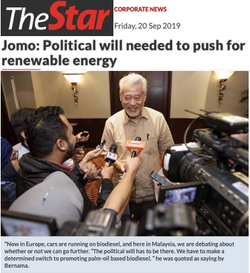
The Star 20 Sept 2019

The Star 20 Sept 2019

Political will needed to push for renewable energy

The Star 10July 2019

The Star 10July 2019

Malaysian businesses need boost

The Star 9 Oct 2019

The Star 9 Oct 2019

Subsidise public transport for bottom 40%

The Edge 26 Sept 2019

The Edge 26 Sept 2019

Call for measures to counteract global headwinds

The Edge 9 Oct 2019

The Edge 9 Oct 2019

Subsidise public transportation, not fuel

The Star 8 Oct 2019

The Star 8 Oct 2019

Subsidise public transportation for bottom 70%

TheEdge 2Oct 2019

TheEdge 2Oct 2019

"We need to counteract downward forces"

Fake News

PLEASE BEWARE OF MISREPRESENTATIONS OF IMAGES OF JOMO

Commercial and political misrepresentation of his image attributing to him to things which he never said or misrepresenting things he may have said is being circulated on websites such as those posted here. 


You should also be warned, in case you are not already aware, of ‘click bait’ i.e. using such images simply to attract your interest, and then to download your online information for abuse for a variety of ends.

Please inform us and provide a screenshot and weblink to enable further action, which is incredibly difficult. 

Thank you for reading this and for your help and cooperation.

This has also been flagged on his official Facebook page


JKS image ad2.jpg
JKS image Bitcoin ad on  Facebook.jpg
JKS - Fake News 2.jpg
Contact Me
JKS - Fake News 3.jpg
JKS fake news 1.jpg

Nadi Insan by the People's History Centre

Read all editions of #NadiInsan from 1979 to 1983 free of charge at the Peoples History Center website.


Containing writings on socio-political issues, film and cultural commentary, as well as in-depth interviews, Nadi Insan is motivated by community activists and intellectuals in Malaysia.

Happy reading!

Dapatkan kesemua siri majalah #NadiInsan dari tahun 1979 hingga 1983 secara percuma di laman Pusat Sejarah Rakyat.


Berisi tulisan memperihal sosio-politik, ulasan filem dan budaya sehinggalah wawancara yang rencam, Nadi Insan digerakkan oleh aktivis masyarakat dan intelektual di Malaysia.


Selamat membaca!

Contact Me

  • Facebook Social Icon
  • Twitter Social Icon

Thank you for reaching out!

bottom of page