top of page

Follow on Social Media

  • Facebook
  • Twitter
  • Screenshot 2022-09-18 at 5.20.40 PM

M'sia Developments
[on SubStack]

  • Screenshot 2022-09-18 at 5.20.40 PM

Anis Chowdhury and Jomo Kwame Sundaram


SYDNEY and KUALA LUMPUR: COVID-19 has become a “developing country pandemic”, retreating from the North’s mass vaccination. With developing countries heavily handicapped, the International Monetary Fund (IMF) warns of a “dangerous [new] divergence”.


Renewed North-South divide

The Economist believes death rates in developing countries are much higher than officially reported – 12 times more in low- and middle-income countries (LMICs), and 35 times greater in low-income countries (LICs)!

Rich countries’ ‘vaccine nationalism’ and protection of patent monopolies have only made things worse. After “passing round the begging bowl”, recent G7 promises by the world’s largest rich countries – including a billion vaccine doses – are “too little, too late”, as emerging details confirm.

Rich countries’ aid cuts during the pandemic have only rubbed salt into an open wound. Without meaningful debt relief by lenders, developing countries are falling further behind once again.


Borrow domestically

Now, developing countries must mobilise funds domestically for relief and recovery as foreign exchange is only needed to finance imports. Central bank governors have long agreed that “the scope for relying more on domestic markets, and less on international markets, is considerable”.

Government bonds issued for domestic borrowing are widely considered safe savings instruments. They thus also support and develop domestic capital markets, although limited incomes and savings ensured thin markets in most developing countries.

Hence, governments have to borrow from central banks to meet their financing needs. As government debt is denominated in the domestic currency, repayment is manageable. With borrowing from central banks contributing to a country’s money supply, governments can borrow as needed.


Central banks lend

Central bank financing of government borrowing for development expenditure is nothing new. It was widespread until restrained in recent decades by pressure from donors, financial markets and institutions, including the IMF and World Bank.

Instead, the new policy advice has promoted ‘central bank independence’, ‘inflation targeting’, ‘debt limits’, ‘balanced budgets’ and prohibiting direct borrowing from central banks.

After the 2008-2009 global financial crisis, rich countries pursued ‘unconventional’ monetary policies, with central banks buying government and corporate bonds. But few developing country governments have resorted to borrowing from central banks.

Even talk of such policies evokes fears of ‘runaway inflation’, unsustainable ‘debt build-up’, balance of payments crises and ‘crowding out’ the private sector. These concerns have limited such borrowing, unnecessarily constraining government spending.


Inflation bogeyman

Undoubtedly, ‘hyper-inflation’ – exceeding 35% to 40%, usually due to rare events such as war or state collapsehas adversely affected growth historically. But Indonesia and South Korea both grew at 7-8% annually for over two decades with double-digit inflation rates exceeding 10%.

Government spending is not the only alleged cause of inflation. Inflation may also be attributed to shortages, e.g., the pandemic has disrupted much production and supply.

Inflation is typically unavoidable in fast-growing economies experiencing rapid structural change as some sectors expand faster than others, with some even contracting.

Such inflation is likely to decline as economic imbalances, frictions and disruptions ease. Inflation, it should be remembered, is double-edged, also reducing debt burdens while encouraging spending, rather than saving.


Crowding-out or in?

Government spending is needed to keep economies ticking, especially as contemporary recessions are partly due to government policies to contain the pandemic. State inaction would only worsen mass unemployment, bankruptcies, etc.

When a government spends, the central bank credits the commercial bank accounts of recipients. Thus, expansionary fiscal policy augments private banks’ cash reserves.

This, in turn, increases market liquidity unless the authorities offset or ‘sterilise’ such effects, e.g., by selling government or central bank or short-term securities, or associated derivatives such as ‘re-purchase’ agreements.

Then, instead of pushing up interest rates, the central bank discount rate declines, exerting downward pressure on retail interest rates. Hence, claims that government spending ‘crowds out’ private investments tend to exaggerate.

And if a government borrows for infrastructure investment or skill development, overall productivity increases, and business costs decline. Hence, debt-financed infrastructure and public social investment would crowd-in, rather than crowd-out private investment.

Public expenditure can thus break the vicious circle of reduced spending and greater uncertainty. Also, government spending on healthcare, education, housing, infrastructure and the environment enhances sustainable development.

Balance of payments fears

Expansionary fiscal measures, thus financed by domestic borrowing, are said to worsen balance of payments problems in several ways. First, higher interest rates attract more capital inflows, causing the exchange rate to appreciate, making the country less export competitive.

Second, higher domestic demand implies more imports for both consumption and production. Third, rising inflationary pressures make domestic products more expensive and imports more attractive.

But such arguments against domestic debt-financed fiscal expansion contradict crowding-out claims. If such government expenditure reduces private spending, then excess demand will shrink, reducing inflation and balance of payments problems.

Governments can also use countervailing measures, such as restricting luxury imports and managing capital flows, to maintain a competitive exchange rate and promote exports.


Fighting windmills of the mind

Debt-GDP thresholds recommended by ‘international finance’ are not based on optimality or financial stability criteria. An IMF study emphasised that the so-called ‘debt limit’ “is not an absolute and immutable barrier ... Nor should the limit be interpreted as being the optimal level of public debt”.

The 60% limit for developed countries was arbitrarily set. Presented as the upper bound for European Community countries, it was actually only the average debt-ratio for some powerful members, but not Italy and others!

The IMF’s 40% debt-GDP ratio limit for developing and emerging market economies is only for external, not domestic debt, and certainly not for total government debt, as often implied.

The Fund has acknowledged, “it bears emphasizing that a debt ratio above 40 percent of GDP by no means necessarily implies a crisis – indeed … there is an 80 percent probability of not having a crisis (even when the debt ratio exceeds 40 percent of GDP)”.

In fact, debt is deemed sustainable as long as national economic growth is greater than the interest rate. For international finance, debt sustainability concerns focus on external debt, typically denominated in foreign currencies.

Governments can more easily ‘roll over’ domestic currency debt, although interest costs may be higher. But borrowing in domestic currency should not enable fiscal irresponsibility.

Hence, the key challenge is to ensure the most effective and productive use of such borrowed funds. Pragmatism requires considering capacities, capabilities and checks against abuse and wastage.


Build forward better

Instead of ‘building back’ the unsustainable and unfair status quo ante before the pandemic, developing country governments should now selectively target government expenditure to ‘build forward better’, emphasising measures to achieve sustainable development.

Borrowing to finance recovery and reform should incorporate desirable changes, e.g., workingin new ways, creating new activities, accelerating digitalisation, revitalising neglected sectors and enhancing sustainability.

Developing country governments must use appropriate measures to finance recovery programmes to fully realise the transformative potential of pandemic-induced recessions to build more resilient and inclusive economies.

All this requires policy and fiscal space. To progress, governments must reject the received policy wisdom that has kept them enthralled for decades.


Related IPS commentaries

“Neoliberal Finance Undermines Poor Countries’ Recovery”. 2 Mar. 2021. https://www.ipsnews.net/2021/03/neoliberal-finance-undermines-poor-countries-recovery/

“Urgently Needed Deficit Financing No Excuse for More Fiscal Abuse”. 8 Dec. 2020. https://www.ipsnews.net/2020/12/urgently-needed-deficit-financing-no-excuse-fiscal-abuse/

“Fight Pandemic, Not Windmills of the Mind”. 28 July 2020. https://www.ipsnews.net/2020/07/fight-pandemic-not-windmills-mind/

“Use Stimulus Packages for Longer Term Progress”. 18 Mar. 2020. https://www.ipsnews.net/2020/03/use-stimulus-packages-longer-term-progress/


Anis Chowdhury and Jomo Kwame Sundaram


SYDNEY and KUALA LUMPUR: Last week, the largest rich countries, home to most major transnational corporations (TNCs), agreed to a global minimum corporate income tax (GMCIT) rate. But the low rate proposed and other features will deprive developing countries of their just due yet again.


New race to bottom

On 5 June, the Group of Seven largest rich countries (G7) agreed that TNCs should all pay GMCIT of at least 15%. This rate is just over half President Biden’s promise of a 28% US CIT rate during last year’s election campaign.

The G7’s 15% GMCIT rate is also almost 30% less than US Treasury Secretary Janet Yellen’s 21% proposal. Her proposal was aligned with Trump’s much reduced CIT rate, rather than Biden’s 28% vow.

Unbelievably, this cut rate has been hailed as a “game changer” by the new Australian Organization for Economic Co-operation and Development (OECD) chief and the UK Chancellor of the Exchequer, among others.

Many have called for a GMCIT, especially those long concerned with reduced fiscal means. Notably, the Independent Commission for the Reform of International Corporate Taxation (ICRICT) called for a 25% GMCIT to enhance development finance.

On average, official CIT rates have fallen by twenty percentage points since 1980. In high-income countries, they fell from 38% in 1990 to 23% in 2018. Meanwhile, they fell from 40% to 25% in middle-income countries (MICs), and from over 45% to 30% in low-income countries (LICs). Despite such lowered rates, TNCs still minimise paying tax.


Fiscal crises force tax reform

Contemporary fiscal crises have been decades in the making. The tax counter-revolution of recent decades cut not only public spending, but also tax revenue. Developments in the last dozen years have forced an ongoing fiscal policy turn.

The 2008 global financial crisis was met by massive financial bailouts and recovery measures. Declining tax revenue in earlier decades and its sharp decline during the Great Recession compelled related policy rethinking.

Meanwhile, debilitating inter-country tax competition remains unaddressed. Now, the pandemic has enhanced efforts to boost fiscal means to finance contagion containment as well as economic relief and recovery.

TNCs’ ‘base erosion and profit shifting’ (BEPS) practices are hardly new, having long adverselyaffected developing countries. To be sure, all countries have lost much tax revenue to such practices.

TNCs use ‘trade mis-invoicing’ – i.e., ‘paper transactions’ among linked companies – and ‘tax havens’ to minimise overall tax liability on their profits and income. Thus, effective tax rates are even lower, with many paying little in fact.

In 2013, the OECD launched its BEPS project, at the behest of the Group of Twenty (G20) largest economies, to reform taxation of TNC digital commerce (Pillar 1) and propose a GMCIT rate (Pillar 2).

ICRICT estimated yearly global revenue losses at minimally US$240bn, or 10% of global CIT revenue. Despite falling rates, CIT is still significant for government revenue, at 13-14% of global tax revenue, and 9.3% in OECD countries.


Between devil and deep blue sea

The OECD has long limited international tax cooperation to arrangements for its wealthy country members. Its BEPS proposal’s 12.5% minimum rate would raise no more than US$81bn in additional revenue yearly. Unsurprisingly, about 75% of the additional tax revenue envisaged would go to its rich member states.

The G7 proposal’s main attraction is that it seems simpler than the OECD blueprints. If more TNCs are taxed, than just a few large TNCs with profit rates over 10%, CIT revenue would rise significantly. For Yellen, a minimal Pillar 2 CIT rate on about 8,000 TNCs would yield much more.

For the G7, host countries will only have the right to tax 20% of ‘excess profits’ (over 10%) from the largest, most profitable firms. In the OECD draft, ‘residual’ profit untaxed by home – headquarters or ‘source’ – countries may be taxed by host countries.

Calculating and apportioning excess profit will always be moot. As home countries have the right to tax the ‘residual’, or balance untaxed by host countries, developing countries will have no more reason to offer tax incentives to attract foreign direct investment.

Both OECD and G7 proposals favour TNC home countries, even when host countries are the main profit source. Also, mechanisms to distribute ‘extra’ tax revenue would mainly benefit the richest countries, home to most large TNCs.

Incredibly, location of TNC production or employment, often in developing countries, is irrelevant for defining host countries. With generally lower incomes, developing countries are relatively less significant as sales jurisdictions except for affordable, mass-consumed goods and services.


Tax injustice rules

Some governments are expected to seek – and gain – exemptions to protect special interests, further eroding the already modest G7 proposal, e.g., the UK reportedly wants to exclude financial services. Also, some low tax countries are among those sowing doubts about the G7 proposal.

Meanwhile, tax justice campaigners have noted the painfully obvious: the G7’s 15% minimum is too low – much lower than average rates in most MICs and LICs, and closer to rates in tax havens like Singapore, Switzerland and Ireland. The rate is seen as reflecting G7 interests and preferences.

Instead, the G24 inter-governmental group of developing countries at the IMF and World Bank urges greater priority for host countries. The G24 and African Tax Administration Forum have also proposed various practical measures. These include distributing TNCs’ global profits among countries on a formulaic basis, considering factors such as production and employment, not just sales.

An IMF policy paper also argues for greater priority for LIC interests. It urges a simpler system, given their capacity constraints, and the critical need for “securing the tax base on inward investment”.

But achieving a fair and effective outcome is difficult. According to the Tax Justice Network, a 21% minimum rate would yield US$640bn more annually. Tax equity campaigners’ other proposalsare also generally fairer to developing countries.


Reverse race to bottom

The G7 has lowered the GMCIT to 15%, close to the OECD’s 12.5% proposal, and much lower than Yellen’s 21%, Biden’s 28% and the ICRICT’s 25%. But the G20 could still reverse this downward trend as it can decisively influence the OECD BEPS Inclusive Framework outcome.

A related option is to begin implementation as soon as possible at a certain lower rate, with an irrevocably scheduled commitment to quickly raise the GMCIT rate according to a pre-set timetable to, say, 25%.

Much more remains to be done, much of it urgently. Developing countries can only seek tax justice on more neutral ground provided by truly multilateral forum, namely at the United Nations with the IMF providing needed technical support.

For the time being, however, the participation of many developing countries, mainly MICs, in the skewed OECD BEPS IF has to be urgently addressed to ensure its outcome is not detrimental to their medium- and long-term interests.


Related IPS commentaries

“Will the New Fiscal Crises Improve International Tax Cooperation?”. 1 Dec. 2020. https://www.ipsnews.net/2020/12/will-new-fiscal-crises-improve-international-tax-cooperation/

“OECD Tax Reform Proposal Could Be Better”. 15 Oct. 2019. http://www.ipsnews.net/2019/10/oecd-tax-reform-proposal-better/

“Ensuring Fairer International Corporate Taxation”. 3 Sept. 2019. http://www.ipsnews.net/2019/09/ensuring-fairer-international-corporate-taxation/

“South Must Also Set International Tax Rules”. 20 August 2019. http://www.ipsnews.net/2019/08/south-must-also-set-international-tax-rules/


Anis Chowdhury and Jomo Kwame Sundaram


SYDNEY and KUALA LUMPUR. With the pandemic setting back past, modest and uneven progress, huge disparities in containing COVID-19 and financing government efforts are widening the North-South gap and other inequalities once again.


Developing country pandemic

Developing countries are struggling to cope with their generally feeble health systems. These had been weakened by funding cuts and privatisation policies prescribed by both Bretton Woods institutions (BWIs): the International Monetary Fund (IMF) and the World Bank. Unsurprisingly, COVID-19 has become a “developing-country pandemic”.

Developing countriesespecially lower middle-income countries (MICs) and low-income countries (LICs) unable to afford diagnostic tests, personal protective and other equipment, medical treatments and vaccines – now account for much more and still fast rising shares of worldwide deaths and infections.

With grossly uneven vaccination, death and infection rates in high-income countries (HICs) have dropped as LIC and MIC (LMIC) shares have spiked. The Economist estimates much higher mortality rates in developing countries than suggested by official data: 12 times more in LMICs, and 35 times greater in LICs!


Greater global divergence

The COVID-19 pandemic and policy responses have further set back Agenda 2030 for global sustainable development. UNCTAD estimates developing country output fell by 2.1% in 2020. To make matters worse, progress towards achieving the Sustainable Development Goals (SDGs) was poor even before the pandemic.

The world now faces greater divergence, as developing countries fall further behind due to the pandemic and disparate responses to it. The IMF management proposes US$50bn can accelerate vaccination to end the pandemic worldwide, with benefits worth US$9 trillion!

The IMF estimates average LIC growth declined sharply to 0.3% in 2020 from over 5% in the previous three years. It also projects 33 developing countries – including 15 in Sub-Saharan Africa (SSA) and nine small island developing states – will still have lower per capita incomes in 2026 than in 2019.


Constrained fiscal space

Most developing countries faced constrained ‘fiscal space’ even before the pandemic. The average tax/GDP ratio in 2018 was 12% in lower MICs and 13% in LMICs, compared to 25% in developed countries.

Developing countries’ poorer fiscal means are often due to weaker revenue collection, lower incomes and larger informal sectors. They also lose between US$49bn and US$194bn yearly to illicit transfers, e.g., to corporations’ ‘trade mis-invoicing’ or ‘transfer pricing’.

Africa loses about US$89bn, around 3.7% of African output, to illicit capital flight yearly. This revenue loss is almost equivalent to the total inflow of official development assistance (ODA) and foreign direct investment African countries received during 2013-2015.

Developing countries are typically caught in harmful tax competition in a ‘race to the bottom’ following ‘neoliberal’ advice from the BWIs and others. Thus, statutory corporate tax rates declined from 39% in MICs and 46% in LICs in 1990 to 24% and 29% in 2019 respectively.


From frying pan into fire

Developing countries have long faced limited fiscal capacity and policy space or choice, worsened by decades of neoliberal policy conditionalities and advice. Donors and the BWIs have also urged LMICs to borrow from international capital markets rather than official sources.

Meanwhile, ODA increasingly supports private businesses. Such new mechanisms, e.g., ‘blended finance’, promised to turn aid ‘billions into trillions’ of private finance for Agenda 2030. The promise has failed spectacularly, depriving countries relying on declining ODA while advancing the interests of private finance.

Thus, LMIC debt surged before the pandemic. Total (public and private) debt reached over 170% of emerging market and developing economies’ output and 65% of LIC GDP in 2019. The increase in EMEs involved almost equal shares of both external and domestic debt.

This bad situation has worsened – with less tax revenue, reduced exports and ODA cuts – due to the pandemic as government spending needs rise sharply. In April 2020, UNCTAD called for US$1tn in debt relief of developing country obligations – estimated at between US$2.6tn and US$3.4tn in 2020 and 2021.


Donor support unlikely

However, rich countries, especially G20 members, have responded frugally to this call, while private commercial lenders have rejected all debt relief initiatives so far. This poor country predicament has been worsened by World Bank refusal to supplement IMF debt service cancellation for the most vulnerable LICs.

Meanwhile, ODA has remained below half the donor aid commitment, made half a century ago, of 0.7% of their gross national income (GNI). The aggregate ODA/GNI ratio fell from 0.31% in 2017 to 0.29% in 2019.

The IMF estimates LICs need around US$200bn for relief and recovery up to 2025, and another US$250bn to resume development progress. It projects another US$100bn will be enough to cover ‘downside risks’, e.g., due to delayed vaccination and more lockdown measures.

However, some major donors have already cut their already modest aid budget allocations. Meanwhile, no rich country has yet pledged to transfer its unused new IMF special drawing rights (SDRs) to provide more recovery finance for developing countries through the 15 designated multilateral financial institutions which can so use SDRs.


Financing relief, recovery, reform

Fiscal measures of around US$16tn have already been rolled out globally, with HICs accounting for more than 80%. In contrast, fearing the macroeconomic consequences of borrowing and spending much more, developing countries have committed much less.

While developed countries have deployed 28% of their much higher national incomes, the ratios are only 7% for EMEs, 3% for SSA and 2% for LICs. Besides urgently containing the pandemic and its consequences, developing countries must quickly, effectively and adequately finance relief and recovery from COVID-19 recessions.

Cooperative efforts to secure much more tests, equipment, treatments and vaccines must be quickly stepped up. Meanwhile, the UN system, including the BWIs, needs to urgently expand developing countries’ means to finance measures to ‘build forward better’.


Related IPS articles

“Pandemic relief policies need more resources, better design”. 1 Jun. 2021. http://www.ipsnews.net/2021/06/pandemic-relief-policies-need-resources-better-design/

“Developing countries desperately need COVID-19 financing”. 25 Mar. 2021. https://www.ipsnews.net/2021/05/developing-countries-desperately-need-covid-19-financing/

“IMF, World Bank must support developing countries’ recovery”. 6 Apr. 2021. http://www.ipsnews.net/2021/04/imf-world-bank-must-support-developing-countries-recovery/

“IMF, World Bank must urgently help finance developing countries”. 30 Mar. 2021. https://www.ipsnews.net/2021/03/imf-world-bank-must-urgently-help-finance-developing-countries/

“Neoliberal finance undermines poor countries’ recovery”. 2 Mar. 2021. https://www.ipsnews.net/2021/03/neoliberal-finance-undermines-poor-countries-recovery/


Latest Videos

All Videos

All Videos

AN URGENT CALL: A PEOPLE"S VACCINE AGAINST COVID-19

00:00
9 June 2020: IHD-ILO-ISLE Virtual Conference - Day 2

9 June 2020: IHD-ILO-ISLE Virtual Conference - Day 2

05:08:34
Learning in Governance in times of COVID-19

Learning in Governance in times of COVID-19

46:30
Beyond the Lockdown: Towards the ‘New Normal’

Beyond the Lockdown: Towards the ‘New Normal’

59:10

About Jomo

Jomo Kwame Sundaram is Research Adviser, Khazanah Research Institute, Fellow, Academy of Science, Malaysia, and Emeritus Professor, University of Malaya. Previously, he was UN Assistant Secretary-General for Economic Development, Assistant Director General, Food and Agriculture Organization (FAO), Founder-Chair, International Development Economics Associates (IDEAs) and President, Malaysian Social Science Association. 

In The Media

TheStar 26 June 2020

TheStar 26 June 2020

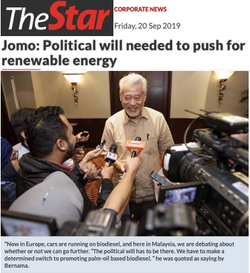
The Star 20 Sept 2019

The Star 20 Sept 2019

Political will needed to push for renewable energy

The Star 10July 2019

The Star 10July 2019

Malaysian businesses need boost

The Star 9 Oct 2019

The Star 9 Oct 2019

Subsidise public transport for bottom 40%

The Edge 26 Sept 2019

The Edge 26 Sept 2019

Call for measures to counteract global headwinds

The Edge 9 Oct 2019

The Edge 9 Oct 2019

Subsidise public transportation, not fuel

The Star 8 Oct 2019

The Star 8 Oct 2019

Subsidise public transportation for bottom 70%

TheEdge 2Oct 2019

TheEdge 2Oct 2019

"We need to counteract downward forces"

Fake News

PLEASE BEWARE OF MISREPRESENTATIONS OF IMAGES OF JOMO

Commercial and political misrepresentation of his image attributing to him to things which he never said or misrepresenting things he may have said is being circulated on websites such as those posted here. 


You should also be warned, in case you are not already aware, of ‘click bait’ i.e. using such images simply to attract your interest, and then to download your online information for abuse for a variety of ends.

Please inform us and provide a screenshot and weblink to enable further action, which is incredibly difficult. 

Thank you for reading this and for your help and cooperation.

This has also been flagged on his official Facebook page


JKS image ad2.jpg
JKS image Bitcoin ad on  Facebook.jpg
JKS - Fake News 2.jpg
Contact Me
JKS - Fake News 3.jpg
JKS fake news 1.jpg

Nadi Insan by the People's History Centre

Read all editions of #NadiInsan from 1979 to 1983 free of charge at the Peoples History Center website.


Containing writings on socio-political issues, film and cultural commentary, as well as in-depth interviews, Nadi Insan is motivated by community activists and intellectuals in Malaysia.

Happy reading!

Dapatkan kesemua siri majalah #NadiInsan dari tahun 1979 hingga 1983 secara percuma di laman Pusat Sejarah Rakyat.


Berisi tulisan memperihal sosio-politik, ulasan filem dan budaya sehinggalah wawancara yang rencam, Nadi Insan digerakkan oleh aktivis masyarakat dan intelektual di Malaysia.


Selamat membaca!

Contact Me

  • Facebook Social Icon
  • Twitter Social Icon

Thank you for reaching out!

bottom of page