top of page

Follow on Social Media

  • Facebook
  • Twitter
  • Screenshot 2022-09-18 at 5.20.40 PM

M'sia Developments
[on SubStack]

  • Screenshot 2022-09-18 at 5.20.40 PM

Anis Chowdhury and Jomo Kwame Sundaram


SYDNEY and KUALA LUMPUR: ‘No one is protected from the global pandemic until everyone is’ has become a popular mantra. But vaccine apartheid worldwide, due to rich countries’ policies, has made COVID-19 a developing country pandemic, delaying its end and global economic recovery.


Systemic inequities

Most rich countries have been blocking the developing country proposal to temporarily suspend relevant provisions of the World Trade Organization (WTO) Agreement on Trade Related Aspects of Intellectual Property Rights (TRIPS) for the duration of the pandemic to more affordably and effectively contain it.

Needed to quickly scale up production and affordable access to relevant diagnostic tests, medical treatments, personal protective equipment and prophylactic vaccines, the proposal – by South Africa and India in late 2020 – is now supported by more than two-thirds of WTO members.

The Biden administration has reversed Trump’s opposition to the proposal, albeit only for vaccines. Without necessary complementary measures, and with continued opposition from European governments, the US partial policy reversal has not had any real impact so far.

As the World Health Organization Director-General notes, the pandemic is being prolonged by the “scandalous inequity” in vaccinations. “The global failure to share vaccines equitably is fuelling a two-track pandemic that is now taking its toll on some of the world’s poorest and most vulnerable people”.

With new, more infectious, even lethal variants spreading rapidly, experts fear the worst for poor countries is yet to come. Meanwhile, vaccines will generate astronomical profits. Soaring vaccine earnings have created at least nine new billionaires, with executives becoming very rich as share prices shoot up.


Leftovers now charity

Rich countries have been hoarding far more vaccine doses than they need. The European Union (EU) secured three billion doses, or 6.6 per person, while the US got 1.3 billion, or five each. Canada got 450 million for 38 million, or twelve each, the UK over 500 million, i.e., eight each, and Australia 170 million for 25 million, or seven each!

With mainly adults vaccinated, the actual ratios are even more obscene. UNICEF found most high-income countries had acquired at least 350% of doses needed. Agreements for vaccine delivery to low- and middle-income countries up to 2023 will only cover half their populations, at most.

The headline grabbing G7 promise of a billion doses actually involves 870 million doses, far short of the 11 billion needed. Some of this involves double-counting: 130 million was previously pledged to COVAX, the arrangement to supposedly ensure equitable vaccine access.

Supplies will not begin until year’s end, i.e., after their domestic vaccination programs are largely done. Most are doses ordered well in excess of needs. Clearly, the G7 does not have a serious plan, let alone commitment to vaccinate the world.


European hypocrisy

Although most EU parliamentarians support the TRIPS waiver proposal, the European Commission (EC), the EU executive, adamantly opposes it, offering half-truths as excuses. European leaders block progress by claiming that increased production and exports are more urgent, and require patent protection.

EC President Ursula von der Leyen sees the pandemic as a chance for vaccine-producing countries to export more, while dismissively asserting that waivers will “not bring a single dose of vaccine in the short and medium term”.

Although world-class facilities in the global South have long produced medicines and vaccines, French President Macron added insult to injury. “Can we really entrust laboratories that don’t know how to produce [vaccines] with this intellectual property and expect them to be producing tomorrow?”.

Now, the EC has legalised world vaccine apartheid by only recognising four vaccines – AstraZeneca (only if produced in Europe), Pfizer, Moderna and Johnson & Johnson. Hundreds of millions in the global South vaccinated with AZ manufactured in India and many others will thus be banned from Europe!


New North-South divide

By 7 July, more than 3.32 billion vaccine doses had been administered worldwide, with 85% going to high- and upper middle-income countries, and only 0.3% to low-income countries. Africa’s vaccination rate (4% so far) is the slowest of all the continents, with some countries yet to start, while infection rates are rising fast.

Thanks to much higher vaccination rates, deaths in rich countries fell from 59% of the official world total in January to 15% in May 2021! The developing country share of pandemic deaths are underestimated at 85%, but nonetheless increasing rapidly.

The United Nations Secretary-General has warned, “Vaccine equity is the greatest immediate moral test of our times. It is also a practical necessity. Until everyone is vaccinated, everyone is under threat”.

The International Monetary Fund (IMF) has proposed investing US$50bn to help immunise at least 40% of the world population by the end of 2021 and the balance by mid-2022.

Ending the pandemic would accelerate economic recovery and generate US$9tn more in global output plus US$1tn in tax revenue by 2025. Yet, last weekend’s G20 Finance meeting refused to endorse it.


Reject new apartheid, cooperate

Outraged former UK Prime Minister Gordon Brown has rhetorically asked, “vaccines for all or vaccine apartheid?”. Scaling up vaccine production to immunise the world quickly requires unprecedented international cooperation.

Suspending patents can help contain the pandemic, but the selfish policies of the global North have made COVID-19 a pandemic of the South. This is also impeding its end and recovery for all, besides deepening the North-South divide, and inevitably, associated resentments.

Meanwhile, the IMF warns of a ‘dangerous divergence’ in economic recovery between rich and poor countries. With their limited fiscal resources, high debt burdens and weak health systems, countries in the global South must urgently reconsider their options to address the escalating catastrophe.


Related IPS commentaries

End Vaccine Apartheid Before Millions More Die. 23 Mar. 2021. https://www.ipsnews.net/2021/03/end-vaccine-apartheid-millions-die/

IP, Vaccine Imperialism Cause Death and Suffering, Delay Recovery. 16 Feb. 2021. https://www.ipsnews.net/2021/02/ip-vaccine-imperialism-cause-death-suffering-delay-recovery/

Intellectual Property Cause of Death, Genocide. 9 Feb. 2021. https://www.ipsnews.net/2021/02/intellectual-property-cause-death-genocide/

Caught in Tangled Web of Vaccine Nationalism. 2 Feb. 2021. https://www.ipsnews.net/2021/02/caught-tangled-web-vaccine-nationalism/

Intellectual Property Monopolies Block Vaccine Access. 15 Dec. 2020. https://www.ipsnews.net/2020/12/intellectual-property-monopolies-block-vaccine-access/


Jomo Kwame Sundaram and Anis Chowdhury


KUALA LUMPUR and SYDNEY: As rich countries have delayed contagion containment, including mass vaccination, in developing countries, much weaker fiscal efforts in the South have worsened the growing world pandemic apartheid.


Lessons from first wave

Despite limited fiscal resources and modest external support, government efforts also need to address unsustainability, inequality and other problems due to extant economic, social and environmental arrangements.

Early relief and recovery measures assumed that the pandemic would be short-lived and reversible. Hence, such measures were rarely sustained, let alone expanded in developing countries despite the growing need for them.

Appropriate social protection measures are needed for the longer term beyond those deemed temporarily necessary. The adverse effects of livelihood disruptions should be mitigated with income maintenance for employees and the self-employed whose livelihoods have been severely jeopardised.

Governments must try to maintain family incomes, enabling them to spend to survive, thus keeping the economy ticking and businesses afloat. With effective contagion containment, such programmes enable earlier resumption of economic activities, i.e., recovery.


Sustaining businesses, nurturing economies

A few, mainly developed countries have tried to minimise business destruction, worker layoffs and welfare losses. Developing country governments must also help revive and sustain economies and livelihoods to prevent pandemic recessions from becoming protracted depressions.

Few businesses and sectors can survive without adapting. Business survival options could include redeployment, infrastructure and facility repurposing, and staff retraining. Other options include additional credit to businesses, tax payment deferrals and even social protection.

Many businesses, especially those with less reserves, need help avoiding liquidation and paying employees. Governments may need to consider adapting American bankruptcy law to enable businesses to continue operating to work themselves out of temporary pandemic predicaments.

As early as April 2020, the pandemic had hit many businesses in over 130 countries, particularly small and medium-sized enterprises. Two of three were hard hit globally as well as in Africa, with a fifth expecting to close within a quarter!

Of course, more lending and tax breaks mainly benefit the better-off, rather than those in greatest need, most vulnerable or adversely affected.

Although policymakers typically insist on targeting and means-testing for the poor, they rarely demand the same for businesses. But some ‘easy’ targeting is desirable to identify needy, but salvageable businesses.


One size cannot fit all

Business disruption has broader implications, threatening national economies. If relations necessary for viable economic transactionssuch as trust among entrepreneurs, workers and customers – are disrupted, they will need to be rebuilt, typically requiring much time and expense.

Such ‘transactions costs’ incurred in building trust, seeking and keeping clients and customers, obtaining credit, recruiting workers and sustaining other longer-term relations are typically ignored. Hence, conventional economics is considered a poor guide to understanding the economy and designing policy.

Keynesian economists typically saw governments as the ‘employer-of-last-resort’ in response to economic downturns. But governments can also help by becoming ‘payers-of-last-resort’, enabling businesses to remain solvent, e.g., on condition of keeping, instead of firing involuntarily idle workers.

Conditions for access to policy support should be strict enough to deter abuse, but not participation. Strict verification and correction can wait, even until after the worse is over.

Disbursed state grants or subsidies, later found excessive, can be converted low interest loans. Governments can recover these later, rather than treat beneficiaries as fraudulent criminals.

Economies are certainly not homogeneous, monolithic or unchanging. And COVID-19 slowdowns are unlike previous recessions. As these are invariably uneven in impact, various sectors, industries and businesses are affected differently.

Hence, no single policy can possibly be suitable for all countries, at all times. Much has to be learnt quickly ‘by doing’, i.e., from experience, including those of others. Lessons may be both positive and negative, and rapid learning is crucial for improving policy design and implementation.


Who can we count on?

Without both effective contagion containment and mass vaccination, it will be impossible to control the pandemic. And with little external support, containment, relief and recovery measures in low- and middle-income countries (LMICs) will be all the more difficult.

Thus, the worst is yet to come in the global South, which must now brace itself for the dire consequences of delayed pandemic suppression and limited fiscal efforts. Meanwhile, the North seems unmoved by the International Monetary Fund’s warning of a dangerous new economic divergence globally.

The 870 million vaccines that the world’s seven richest large nations (G7) pledged to poor countries last month will immunise half that number, from late 2021. This is only eight percent of the 11 billion doses needed, noted former UK Prime Minister Gordon Brown.

But despite ungenerous rich Western countries, the Fund has called for US$50bn to accelerate vaccination worldwide. It expects this to end the pandemic, enhance global output by US$9 trillion, and yield a trillion in additional tax revenue.

LMICs need to urgently respond to fast spreading pandemic surges. They also need to do so effectively, feasibly and equitably, expecting little help from the North. Domestic borrowing – enabled by central banks, sound policy design and South-South cooperation – will be crucial to success in these circumstances.


Relief, recovery, reform

With delays, new, more dangerous COVID-19 variants will threaten developing countries, as more effective contagion containment and fiscal efforts are slowed by the North. These will exacerbate avoidable tragedies and old inequalities.

Developing countries have no choice but to get the economy going despite reduced fiscal and monetary space and more debt. Greater government spending to address the pandemic can be financed with more domestic borrowing from central banks.

Foreign exchange is mainly needed to service foreign debt and pay import bills. Forex requirements can also be reduced by swap arrangements and restricting non-essential imports. Greater South-South cooperation can also enhance resilience and rebuilding for the future.

Recovery should not simply mean a return to the status quo ante. The decade before the pandemic left much to be desired, and there is little reason to restore it. The unsustainable, financialised and unequal pre-pandemic economy should be transformed to achieve more equitable and sustainable development.

After all, the North now undermines the very globalisation it once imposed on the South. Hence, it is imperative to instead establish new, more equitable, pacifist and principled international relations, under multilateral auspices, promoting cooperation.


Related IPS commentaries

Paltry International Support for Spending Needs Sets South Further Back. 8 June 2021. https://www.ipsnews.net/2021/06/paltry-international-support-spending-needs-sets-south-back/

Pandemic Relief Policies Need More Resources, Better Design. 1 June 2021. http://www.ipsnews.net/2021/06/pandemic-relief-policies-need-resources-better-design/

IMF, World Bank Must Support Developing Countries’ Recovery. 6 April 2021. http://www.ipsnews.net/2021/04/imf-world-bank-must-support-developing-countries-recovery/

IMF, World Bank Must Urgently Help Finance Developing Countries. 30 March 2021. https://www.ipsnews.net/2021/03/imf-world-bank-must-urgently-help-finance-developing-countries/

Developing Countries Desperately Need COVID-19 Financing. 25 March 2021. https://www.ipsnews.net/2021/05/developing-countries-desperately-need-covid-19-financing/

End Vaccine Apartheid Before Millions More Die. 23 March 2021. https://www.ipsnews.net/2021/03/end-vaccine-apartheid-millions-die/


Anis Chowdhury and Jomo Kwame Sundaram


SYDNEY and KUALA LUMPUR: Too many have swallowed the myth that lowering corporate income tax (CIT) is necessary to attract foreign direct investment (FDI) for growth. Although contradicted by their own research, this lie has long been promoted by influential international economic institutions.


‘Beggar-thy-neighbour’ policies

The early 1980s’ economics ‘counter-revolution’ impacted the ‘Washington Consensus’ of the US federal government and the two Washington-based Bretton Woods institutions (BWIs) – the International Monetary Fund (IMF) and the World Bank.

Thus, the rise of ‘supply side’ economics in the US – advocating lower direct taxes on income and wealth – influenced the world. Without evidence, IMF researchers justified its policy advice thus: “The complete abolition of CIT would be the most direct application of the theoretical result that small open economies should not tax capital income.”

Noting that capital is highly mobile, and can more easily evade taxes than labour, IMF economists even recommended that “small countries should not levy source-based taxes on capital income”. Meanwhile, the Bank’s highly influential, but dubious Doing Business Report has recommended tax incentives without evidence.

To get BWI approval, developing country governments have undertaken tax reforms, reducing progressive direct taxation. Instead, they have favoured more regressive indirect taxes, such as the value-added tax (VAT), sometimes dubbed the goods and services tax.

Consequently, IMF tax policy recommendations to Sub-Saharan African (SSA) countries during 1998-2008 reduced corporate and personal income tax rates while promoting VAT. And following Bank advice, Tanzania – Africa’s third largest gold producer – ended up subsidising, not taxing foreign mining companies!

Evidence contradicts advice

World Bank research and surveys have long found that tax incentives do not really attract FDI inflows. A Bank report found no strong evidence that tax incentives attracted non-resource ‘greenfield’ or additional new FDI.

It also found “tax incentives impose significant costs on the countries using them”, including fiscal losses, rent-seeking, tax evasion, administrative costs, economic distortions and “retaliation against new or more generous incentives” by competitors.

An earlier Bank brief noted “tax incentives are not the most influential factor for multinationals in selecting investment locations. More important are factors such as basic infrastructure, political stability, and the cost and availability of labor”.

It also argued that tax incentives do not compensate well “for negative factors in a country’s investment climate”. Meanwhile, the “race to the bottom…may end up in a bidding war, favoring multinational firms at the expense of the state and the welfare of its citizens”.

Researchers have unearthed no strong evidence that tax incentives are beneficial. While some incentives may attract FDI, they crowd out other investments; hence, overall investment and growth do not improve.

An IMF report noted, “Tax incentives generally rank low in investment climate surveys in low-income countries, …investment would have been undertaken even without them. And their fiscal cost can be high, reducing opportunities for much-needed public spending…, or requiring higher taxes on other activities.”

Even Organisation for Economic Cooperation and Development (OECD) research confirmed BWI findings that tax incentives hardly attracted FDI. The Economist also found a weak relationship between tax rates and business investment as well as growth rates.

A UK government report cast more doubt: “effectively attracting FDI needs public spending, so narrowing the tax base works with tax incentives for low-income countries could be contra-productive”.


Race to bottom hurts all

IMF findings confirm that ‘beggar-thy-neighbour’ tax competition worsened avoidable revenue losses. Such ill-advised efforts to attract investment inevitably accelerated CIT rates’ ‘race to the bottom’.

BWI advice to governments has undoubtedly lowered CIT rates. But despite lower CIT rates, transnational corporations (TNCs) still minimise paying tax, e.g., by shifting profits to tax havens and exploiting loopholes.

CIT rate averages for high-income countries (HICs) have dropped twenty percentage points since 1980, falling from 38% in 1990 to 23% in 2018. Meanwhile, they fell from 40% to 25% in middle-income countries, and from over 45% to 30% in low-income countries (LICs).

Cut-throat competition has especially hurt developing countries, which rely much more on CIT than developed economies. IMF research found a one-point average CIT rate cut in other countries reduces a developing country’s CIT revenue by two-thirds of a point.

Such tax cuts induce other concessions, further eroding the base for corporate taxation. Thus, tax revenue is doubly lost by both rate and base cuts. Fund staff estimated revenue loss at 1.3% of GDP in developing countries, due to base erosion and rate reductions – much worse than in developed countries.

The UK government estimated global revenue loss due to TNC tax minimisation at US$500-650bn annually. Such adverse effects were two to three times higher in LICs than in HICs. SSA countries lost the most revenue relative to GDP, followed by Latin America and the Caribbean, and South Asia.

A third of global revenue loss – US$167-200bn – is from low and middle-income countries (LMICs), costing them 1.0-1.5% of national income. With better tax administrations and larger formal sectors, HICs can replace such losses more easily than LMICs with generally weaker tax systems and larger informal sectors.


Tax breakthrough

The IMF and others now agree that an international minimum CIT rate can stop this race to the bottom and TNC profit shifting. The group of seven largest rich countries (G7) recently agreed to a minimum 15% rate, rejecting US Treasury Secretary Janet Yellen’s proposed 21%. Even The Economist agrees the G7 proposal favours rich countries.

Earlier, the Independent Commission for the Reform of International Corporate Taxation (ICRICT) had recommended a 25% minimum and fairer revenue distribution to developing countries.

Finance ministers from Indonesia, Mexico, South Africa and Germany joined Yellen in welcoming the recent G7 agreement for a minimum global CIT rate, while expressing confidence “that the rate can ultimately be pushed higher than 15 percent”.

An influential piece has claimed ‘A Global Minimum Corporate Tax Is a Bad Idea’, again citing the myth that low taxes will attract FDI. Invoking new Cold War fears, it claimed China and Russia would also gain an unfair advantage in luring “even more” FDI.

Trump-appointed Bank President David Malpass opposes the agreement, claiming it would undermine poor countries’ ability to attract investment despite Bank research showing otherwise. Pro-Trump governments in Hungary and Poland also object to the G7 deal. Developing countries cannot allow such tax-cutters to speak for them.

Developing country members of the G20 must insist on a higher minimum and fairer revenue distribution at its forthcoming finance ministers meeting. If the G7 refuses to start with anything more than 15%, an agreed rate increase schedule of an additional one percent annually would get to 25% in a decade.

International tax rules are currently set by rich countries through the OECD. Developing countries participate at a disadvantage. Instead of allowing it to control the process, they must urgently insist on an inclusive, balanced and fair multilateral process for international tax cooperation.


Related IPS commentaries

Powerful States Push Tax Race to the Bottom. 15 June 2021. http://www.ipsnews.net/2021/06/powerful-states-push-tax-race-bottom/

Will the New Fiscal Crises Improve International Tax Cooperation?. 1 December 2020. https://www.ipsnews.net/2020/12/will-new-fiscal-crises-improve-international-tax-cooperation/

OECD Tax Reform Proposal Could Be Better. 15 October 2019. http://www.ipsnews.net/2019/10/oecd-tax-reform-proposal-better/

Ensuring Fairer International Corporate Taxation. 3 September 2019. http://www.ipsnews.net/2019/09/ensuring-fairer-international-corporate-taxation/

South Must Also Set International Tax Rules. 20 August 2019. http://www.ipsnews.net/2019/08/south-must-also-set-international-tax-rules/

‘Beggar Thy Neighbour’ Policy Advice. 12 August 2019. http://www.ipsnews.net/2019/08/beggar-thy-neighbour-policy-advice/


Latest Videos

All Videos

All Videos

AN URGENT CALL: A PEOPLE"S VACCINE AGAINST COVID-19

00:00
9 June 2020: IHD-ILO-ISLE Virtual Conference - Day 2

9 June 2020: IHD-ILO-ISLE Virtual Conference - Day 2

05:08:34
Learning in Governance in times of COVID-19

Learning in Governance in times of COVID-19

46:30
Beyond the Lockdown: Towards the ‘New Normal’

Beyond the Lockdown: Towards the ‘New Normal’

59:10

About Jomo

Jomo Kwame Sundaram is Research Adviser, Khazanah Research Institute, Fellow, Academy of Science, Malaysia, and Emeritus Professor, University of Malaya. Previously, he was UN Assistant Secretary-General for Economic Development, Assistant Director General, Food and Agriculture Organization (FAO), Founder-Chair, International Development Economics Associates (IDEAs) and President, Malaysian Social Science Association. 

In The Media

TheStar 26 June 2020

TheStar 26 June 2020

The Star 20 Sept 2019

The Star 20 Sept 2019

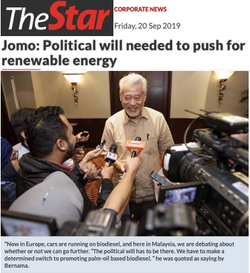
Political will needed to push for renewable energy

The Star 10July 2019

The Star 10July 2019

Malaysian businesses need boost

The Star 9 Oct 2019

The Star 9 Oct 2019

Subsidise public transport for bottom 40%

The Edge 26 Sept 2019

The Edge 26 Sept 2019

Call for measures to counteract global headwinds

The Edge 9 Oct 2019

The Edge 9 Oct 2019

Subsidise public transportation, not fuel

The Star 8 Oct 2019

The Star 8 Oct 2019

Subsidise public transportation for bottom 70%

TheEdge 2Oct 2019

TheEdge 2Oct 2019

"We need to counteract downward forces"

Fake News

PLEASE BEWARE OF MISREPRESENTATIONS OF IMAGES OF JOMO

Commercial and political misrepresentation of his image attributing to him to things which he never said or misrepresenting things he may have said is being circulated on websites such as those posted here. 


You should also be warned, in case you are not already aware, of ‘click bait’ i.e. using such images simply to attract your interest, and then to download your online information for abuse for a variety of ends.

Please inform us and provide a screenshot and weblink to enable further action, which is incredibly difficult. 

Thank you for reading this and for your help and cooperation.

This has also been flagged on his official Facebook page


JKS image ad2.jpg
JKS image Bitcoin ad on  Facebook.jpg
JKS - Fake News 2.jpg
Contact Me
JKS - Fake News 3.jpg
JKS fake news 1.jpg

Nadi Insan by the People's History Centre

Read all editions of #NadiInsan from 1979 to 1983 free of charge at the Peoples History Center website.


Containing writings on socio-political issues, film and cultural commentary, as well as in-depth interviews, Nadi Insan is motivated by community activists and intellectuals in Malaysia.

Happy reading!

Dapatkan kesemua siri majalah #NadiInsan dari tahun 1979 hingga 1983 secara percuma di laman Pusat Sejarah Rakyat.


Berisi tulisan memperihal sosio-politik, ulasan filem dan budaya sehinggalah wawancara yang rencam, Nadi Insan digerakkan oleh aktivis masyarakat dan intelektual di Malaysia.


Selamat membaca!

Contact Me

  • Facebook Social Icon
  • Twitter Social Icon

Thank you for reaching out!

bottom of page