top of page

Follow on Social Media

  • Facebook
  • Twitter
  • Screenshot 2022-09-18 at 5.20.40 PM

M'sia Developments
[on SubStack]

  • Screenshot 2022-09-18 at 5.20.40 PM

Anis Chowdhury and Jomo Kwame Sundaram


SYDNEY and KUALA LUMPUR. Pandemic relief measures in developing countries have been limited by modest resources, fear of financial market discipline and policy mimicry. COVID-19 has triggered not only an international public health emergency, but also a global economic crisis, setting back decades of uneven progress, especially in developing countries.


Struggling to cope

The pandemic’s economic and social impacts weigh more heavily on low- and middle-income countries (LMICs). The World Bank estimated that the pandemic pushed 119 to 124 million more people into extreme poverty in 2020.

The Bank also reported disproportionately larger business impacts in terms of closures, drops in sales, greater corporate debt and financial fragility. Meanwhile, households in poorer countries saw greater food insecurity as well as income and educational losses.

It also found public debt surging in many developing economies as a rising number of LMICs had greater difficulties servicing official debt. Facing sharp falls in tourism and export earnings, access to foreign credit for many has deteriorated.


Urgent financing needs

LMICs must address various urgent needs and other short-term problems. They need to finance emergency contagion containment and relief measures for those most adversely hit by the pandemic.

These would minimally include the costs of diagnostic testing, personal protective equipment for ‘frontline’ personnel, medical treatments for those infected, and urgent vaccination to mitigate further infections.

Liquidity supporte.g., low-interest loans and wage subsidies – can also be vital for the survival of businesses and workers. But in most countries, such credit facilities have mainly benefited more influential larger enterprises.

Policy and fiscal space as well as policy design are key elements influencing implementation of economic measures to cope with COVID-19 recessions. These require understanding the specific nature of recessions and options available, as distinct from simply following what others have done or recommend.


COVID-19 recessions different

What makes the pandemic economic shocks different? First, SARS-COV2 is a highly contagious aerosol-borne virus with variants and mutations rapidly evolving, with mixed, uneven, even deadly effects. COVID-19 has affected most countries, albeit with varying and unequal economic consequences.

Second, both supply and demand shocks have had mainly negative effects. The pandemic directly affected the ability to work, earn and spend. Containment measures have also hit production, supplies and incomes. In turn, these have lowered demand, spending and incentives for firms to invest.

Third, the shocks have worsened existing disparities and other inequalities. Fourth, they especially hurt LMICs, typically lacking fiscal resources and relevant governance capacities to better cope with the pandemic.


Government as ‘payer-of-last-resort’

Misreading the COVID-19 shocks and expecting brief V-shaped recessions, some novel fiscal and monetary measures were hastily introduced to assist businesses and workers. These typically emulated measures in developed economies including temporary tax relief, low interest loans, cash transfers and wage subsidies.

Many high- and upper middle-income governments have served as ‘payers-of-last-resort’, helping ‘suspended’ businesses to continue paying their involuntarily idle employees, instead of firing them.

Large firms have also been able to get governments to help settle some of their unavoidable bills, to cover their overheads and maintenance costs – such as rent, utility and other payments – during ‘stay in shelter’ lockdowns.

Such ‘payer-of-last-resort’ programmes have successfully complemented effective contagion containment measures, enabling early resumption of economic activity. While high, such costs can remain manageable if governments can secure sufficient fiscal resources and space.


Policy blind spots

There has not been enough consideration of country specific circumstances, or social, economic, cultural and institutional circumstances. Thus, large informal sectors, crowded slums and limited social protection in developing countries have been largely overlooked, or worse, ignored.

Unsurprisingly, most financing disbursed via various official channels have not reached most in the informal sector. These resources have not provided much relief to small and micro-enterprises, let alone the self-employed.

However, much of what was offered to large firms were not used due to uncertainty and reduced domestic spending options. Meanwhile, significant resources have ‘leaked out’ of many developing countries, including via corruption as well as tax and other incentives for foreign investors.

Such failures in policy responses and poor design have greatly impaired prospects for quick and equitable COVID-19 containment and recovery. They have also exacerbated various inequalities within and among countries.


Diverging recoveries

The International Monetary Fund (IMF) projects divergent so-called k-shaped recoveries, leaving many LMICs and the vast majorities in most societies further behind. With ongoing vaccine apartheid and nationalism, early hopes of quickly addressing the crises in LMICs have faded.

Vaccinations in these countries have been much delayed, while donor countries, such as the UK, have significantly cut aid. Thus, economic crises in LMICs are far from over, delaying recovery with often disastrous consequences.

IMF Managing Director Kristalina Georgieva has even warned that uneven global recovery would ‘ricochet’ as “poorer countries are faced with the risk of interest rates increasing while their economies aren’t growing, and may find themselves ‘really strangled’ to service debt, especially if it’s dollar-denominated”.


Appropriate relief measures

All governments must try their best to prevent protracted recessions becoming extended depressions. Relatedly, policymakers need to ensure that temporary short-term liquidity problems do not become full-blown solvency crises.

Measures are needed to change contracts and other obligations to enable firms to better cope with involuntary suspension of business operations. Much more is needed to address specific challenges facing small family businesses.

Income maintenance policies can help those losing some, if not all their incomes. Often unable to earn their livelihoods from home, lowly paid and casual workers are more likely to be displaced by lockdowns. Typically, they have much less in savings to ride out temporary earnings losses.

Social protection has been poorly, if at all institutionalised in most developing countries. Instead, temporary ‘social safety nets’, in response to crises, have been recommended and deemed adequate by influential foreign agencies.

Such ‘one-off’ relief measures, typically involving targeting, usually miss many of the deserving as they strive, often at great cost, to prevent opportunistic ‘undeserving free-riders’ abusing such chances to secure benefits.


Recoveries threatened

Appropriate design and efficient implementation of adequate relief measures are also vital for enabling robust and equitable recovery. These can be crucial to the survival of businesses – especially micro- and small ones – and vulnerable people.

The absence of sufficient relief measures can strengthen vicious circles of business failures, job and income losses. Declining aid inflows, more capital flight and inadequate relief for high government debt even before the pandemic have prevented most developing countries from deploying the bolder measures needed.

Facing financing constraints, many low-income countries have even cut spending! Fearing punitive market responses and longer-term problems, many developing country governments have been reluctant to borrow more. The urgent challenge now, however, is to enable them to wisely and equitably spend more.

Related IPS commentaries

“Developing Countries Desperately Need COVID-19 Financing”. 25 Mar. 2021. .https://www.ipsnews.net/2021/05/developing-countries-desperately-need-covid-19-financing/

“Developing Countries Struggling To Cope With COVID-19”. 23 Feb. 2021. https://www.ipsnews.net/2021/02/developing-countries-struggling-cope-covid-19/


Anis Chowdhury and Jomo Kwame Sundaram


SYDNEY and KUALA LUMPUR. Failure to sufficiently accelerate comprehensive efforts to contain COVID-19 contagion has greatly worsened the catastrophe in developing countries. Grossly inadequate financing of relief, recovery and reform efforts has also further set back progress, including sustainable development.


Uncertain and unequal recovery

After over a year, “Poor countries are facing severe setbacks on their development paths, encumbered by ballooning debts, high risks of default and limited ability to inject desperately needed liquidity”, observed participants at a recent UN Forum.

International Monetary Fund (IMF) chief economist, Gita Gopinath, estimates US$9 trillion in economic benefits from adequately accelerating affordable mass vaccination, testing, tracing and treatment at a cost of US$50bn.

Overall global projections obscure disparities among and within countries. With vaccine apartheid and developing countries’ constraints, uneven pandemic containment and recovery have been worsening prior inequalities, further setting back poor countries and people.


Global disparities

Government responses have been much constrained by macroeconomic policy space, especially access to finance. ‘Unconventional’ monetary policies since the 2008 global financial crisis, especially low interest rates, have helped.

Thus, high-income countries (HICs) have borrowed and spent much more on relief and recovery. While rich countries have been able to borrow and spend massively, developing countries have very limited fiscal space due to diminished borrowing capacity.

Often with poorer credit histories and ratings, developing countries generally face much higher interest rates on foreign borrowing. Their foreign debt burdens as shares of national income were already relatively higher before the pandemic. All these have constrained them from adopting bolder expansionary efforts.

Unsurprisingly, developed countries have accounted for nearly 80% of all fiscal efforts. Compared to 16% of their national incomes, least developed countries have only increased government expenditure by 2.6% on average. Facing financing constraints, many low-income countries (LICs) have even cut spending!


Insufficient international support

Total resource flows to developing countries have fallen as official development assistance (ODA) and foreign direct investment (FDI) have declined. FDI in developing economies fell by 12% in 2020: by 37% in Latin America and the Caribbean, 18% in Africa and 4% in Asia.

While donors cut bilateral aid commitments by 36% in 2020, net ODA from 13 OECD Development Assistance Committee (DAC) rich member countries declined by US$4.7bn – led by a 10% UK cut – as “DAC donors prioritized their national responses towards COVID at the expense of international aid”.

International support for developing countries at this time of great need has been woefully inadequate. Despite acknowledging that “Debt service suspension is a powerful, fast acting measure that can bring real benefits to people in poor countries”, the World Bank has refused debt service cancellations.

The Bank claims these would adversely impact its credit rating, reducing its ability to borrow at low preferential rates for lending to middle-income countries (MICs) and to LICs on concessional terms. Unsurprisingly, debt cancellation has not been envisaged by the Bank.

From April 2020, the IMF’s Catastrophe Containment and Relief Trust has provided debt service relief of about US$500m, or 0.2% of GDP for 28 highly indebted LICs, its poorest and most vulnerable members. This relief has been extended twice – for half a year each time – to cover all eligible debt service payments due to the Fund estimated at US$238 million in the latest round.

The G20’s Debt Service Suspension Initiative (DSSI) is even worse, merely delaying repayments. Interest continues to accumulate to be repaid later. Despite two extensions, borrowing countries’ lack of enthusiasm for DSSI is hardly surprising. As private creditors have not joined, DSSI only covered 2% of total debt service payments due in 2020.


Leveraging the new SDRs

With Biden administration support, US$650bn in new IMF special drawing rights (SDRs) should be approved by August. But this is barely half of the trillion in SDRs (worth US$1.37tn) that The Financial Times deemed necessary.

SDR allocations are proportionate to countries’ shareholdings and voting rights, mainly benefiting developed, especially European countries. Allocations for the Group of Seven (G7) largest developed economies amount to US$272bn, with Africa getting only US$33.6bn! Nonetheless, the new SDRs should provide some welcome relief for many countries.

Developed countries which do not need to use their new SDRs should transfer their new allocations to the 15 ‘eligible’ multilateral financial institutions, including the IMF, World Bank and regional development banks. These should be used to expand their lending to developing countries on preferential terms.

Calling for massive multilateral development bank recapitalization for a ten-fold increase in official funding for poor countries, Jeffrey Sachs has called for much more official financing, by ‘recycling’ at least US$100bn of HIC SDRs.


Financing options for developing countries

Most developing country governments were already heavily indebted to varying degrees before the pandemic. Much greater debt forbearance is urgently needed as well as longer-term development financing are also needed.

While MICs may have more borrowing options, enabling them to minimise the burden of past government debt, domestic or foreign, is urgent. Already, the financial community and media frequently warn that their credit ratings will be adversely affected if they borrow more.

World Bank chief economist Carmen Reinhart – once reputed for her aversion to high indebtedness – now urges countries to borrow to fight the economic impact of the pandemic. She has rightly opposed putting “resources into zombie loans”.

Increasing non-performing loans and financial fragility to enable unviable firms to survive would slow recovery efforts. Instead, Reinhart has stressed the need to “expediently restructure and write down bad debts”.

However, there is no ‘one size fits all’ approach to financing needed measures to contain the pandemic and for macroeconomic expansion. Meanwhile, poor countries’ financing conditions are worsening as the pandemic drags on much longer than expected.

Facing economic slowdown, most governments need to spend much more domestically to prevent temporary recessions becoming depressions. Developing countries should not incur foreign debt except on preferential terms as necessary to import essentials such as medicines and food.

International cooperation must ensure significantly more official foreign exchange financing to supplement innovative domestic financing for urgently needed spending for relief, recovery and reform.


Related IPS commentaries

1. “IMF, World Bank Must Support Developing Countries’ Recovery”. 6 Apr. 2021. http://www.ipsnews.net/2021/04/imf-world-bank-must-support-developing-countries-recovery/

2. “IMF, World Bank Must Urgently Help Finance Developing Countries”. 30 Mar. 2021. https://www.ipsnews.net/2021/03/imf-world-bank-must-urgently-help-finance-developing-countries/

3. “Prioritise Pandemic Relief, Recovery: No Time for Debt Buybacks”. 9 Mar. 2021. https://www.ipsnews.net/2021/03/prioritise-pandemic-relief-recovery-no-time-debt-buybacks/

4. “Neoliberal Finance Undermines Poor Countries’ Recovery”. 2 Mar. 2021. https://www.ipsnews.net/2021/03/neoliberal-finance-undermines-poor-countries-recovery/

5. “Developing Countries Struggling to Cope with COVID-19”. 23 Feb. 2021. https://www.ipsnews.net/2021/02/developing-countries-struggling-cope-covid-19/

6. “Urgently Needed Deficit Financing No Excuse for More Fiscal Abuse”. 8 Dec. 2020. https://www.ipsnews.net/2020/12/urgently-needed-deficit-financing-no-excuse-fiscal-abuse/


Jomo Kwame Sundaram


KUALA LUMPURMillions of people are expected to die due to delayed and unaffordable access to COVID-19 tests, treatment, personal protective equipment and vaccines. Urgent cooperation is desperately needed to save lives and livelihoods for all.


Vaccine apartheid

Thus far, rich countries have bought up most available vaccine supplies. By mid-April, rich countries had received more than 87 percent of the more than 700 million vaccine doses dispensed worldwide, while poor countries had received only 0.2 percent.

A quarter of the former’s population had been vaccinated compared to one in 500 of the latter’s! By mid-May, less than a twelfth of the world’s population had been vaccinated, with ten rich countries getting four-fifths of all vaccines. The Pfizer vaccine is mainly reaching the world’s rich.

Despite CEO Alberto Bourla’s promise to ensure that poorer countries “have the same access as the rest of the world”, World Health Organization (WHO) data confirm that Pfizer has actually done little for the world’s poor.

After promising earlier not to profit from the pandemic, Moderna – which has never made a profit after a decade and no other revenue – has decided to profit from its vaccine. Johnson & Johnson and AstraZeneca have both vowed not to profit from vaccine sales during the pandemic.


Pfizer profits

According to a New York Times article, US pharmaceutical giant Pfizer chose early to profit from COVID-19 vaccines, rejecting rival developers’ decisions not to profit from them during the pandemic.

In the first quarter of 2021, Pfizer sold vaccines worth US$3.5 billion, its greatest revenue source. Vaccine sales are fast overtaking Pfizer’s cholesterol medicine, Lipitor, which sold about US$125 billion over the last 15 years.

But profits from vaccine sales have been deliberately obscured. The US pays US$19.50 for each Pfizer dose, while Israel paid over 50% more to accelerate vaccinating its citizens. Last week, the European Union agreed to pay more than before for its vaccines.

Pfizer made US$9.6 billion in profits in 2020, before vaccine revenue was significant. Already highly profitable, Pfizer did not need or take US federal funds under Operation Warp Speed. But its vaccine development partner BioNTech received much support from the German government.

CEO Bourla signed the 2019 Business Roundtable pledge to serve a range of ‘stakeholders’, not only shareholders. Pfizer even joined Covax in January 2021. Selling mainly to rich countries, by April, Pfizer had earned around US$900 million in pre-tax profits from vaccine sales.

Pfizer now expects US$26 billion in such revenue vaccine sales this year, instead of its earlier projection of US$15 billion. It now expects a massive revenue stream with COVID-19 becoming endemic, requiring booster shots. The company is changing business strategy accordingly.


What the pandemic demands

With the COVID-19 virus rapidly mutating, almost exponentially, this is not only of concern to poor people and nations, left far behind. Containing the pandemic requires vaccinating the whole world as soon as possible.

Several virus mutations are more contagious, with some deadlier than the original, and some more resistant to existing treatments or vaccines. Although mRNA vaccine developers believe they can be quickly modified against new mutations, there is little disagreement over the urgent need to stem the contagion.

Since 1995, patents have been enforced internationally via the WTO Trade-Related Aspects of Intellectual Property Rights (TRIPS) agreement. TRIPS prevents governments giving compulsory licences allowing “someone else to produce a patented product or process without the consent of the patent owner”.

But now, most WTO members support a temporary waiver for COVID-19 tests, treatments, vaccines, diagnostics and other technologies. Although the waiver has become all the more urgent as the pandemic toll rises rapidly, it remains blocked in the WTO.


Technology transfer needed

The waiver is legally necessary for progress, but hardly sufficient. Much more is needed to urgently vaccinate the world. Vaccine production has also been constrained by companies refusing to share knowledge and technology.

Even when companies have benefited from government subsidies and public research, private monopolies have little incentive to quickly supply many more vaccines affordably. Enabling and, if needed, requiring knowledge and technology transfer are clearly necessary.

Not a single major vaccine or pharmaceutical company has joined the WHO COVID-19 Technology Access Pool (C-TAP) initiative to share such knowledge. Licences and technical know-how to produce vaccines have been denied to many potential manufacturers, even those with the necessary facilities.

Taxpayer-funded basic and applied research has been essential for COVID-19 vaccine development. For example, US National Institutes of Health (NIH) patented technology is necessary to make mRNA vaccines, with Pfizer using BioNTech’s licence.

Noting that “the Biden administration has already persuaded Johnson & Johnson to share its technology with Merck to boost domestic production of its single-dose vaccine”, Jayati Ghosh suggests that “other companies that have benefited from public support could be pressed to do the same”.

“Moderna… has already declared that it will not enforce its patent. But its… vaccine uses some knowledge that it has licensed (and paid for) from other companies, which could in turn sue any other producer using the same technology.” The TRIPS waiver would eliminate such legal threats, allowing production to be rapidly scaled up.


What the world needs now

The current generation of COVID-19 vaccines only mitigates the severity of infections, rather than eradicates the disease, as with polio or smallpox. Thus, our world is now trapped in a seemingly endless spiral of ‘catch-up’ vaccine development with new boosters to mitigate perceived new threats.

To achieve real progress, the world desperately needs cooperation, not only among researchers working for competing vaccine developers, but also among governments who can – and must – end the protracted genocide and greater catastrophe the world is now in.

Warning “that private vaccine producers have little financial incentive to meet current global needs”, Ghosh also makes the case for public production in the US and elsewhere.

Citing a health advocacy organisation report, she argues that “the US government can build a facility to produce enough mRNA vaccine manufacturing capacity to vaccinate the entire world in one year, with each dose costing only $2”.

Sharing knowledge and working together are clearly needed to accelerate innovation. As governments have paid, directly and indirectly, for vaccine development, they can now quickly accelerate further progress needed. Previously, I suggested using the 1980 Bayh-Dole law, but in fact, this is specifically excluded by the US government contract with Moderna.

Instead, Dean Baker has noted that Section 1498 of the US commercial code provides the necessary legal authority. Thus, needed technological expertise, including trade or industrial secrets, can be either bought or otherwise secured by government authorities.


Related IPS articles


Latest Videos

All Videos

All Videos

AN URGENT CALL: A PEOPLE"S VACCINE AGAINST COVID-19

00:00
9 June 2020: IHD-ILO-ISLE Virtual Conference - Day 2

9 June 2020: IHD-ILO-ISLE Virtual Conference - Day 2

05:08:34
Learning in Governance in times of COVID-19

Learning in Governance in times of COVID-19

46:30
Beyond the Lockdown: Towards the ‘New Normal’

Beyond the Lockdown: Towards the ‘New Normal’

59:10

About Jomo

Jomo Kwame Sundaram is Research Adviser, Khazanah Research Institute, Fellow, Academy of Science, Malaysia, and Emeritus Professor, University of Malaya. Previously, he was UN Assistant Secretary-General for Economic Development, Assistant Director General, Food and Agriculture Organization (FAO), Founder-Chair, International Development Economics Associates (IDEAs) and President, Malaysian Social Science Association. 

In The Media

TheStar 26 June 2020

TheStar 26 June 2020

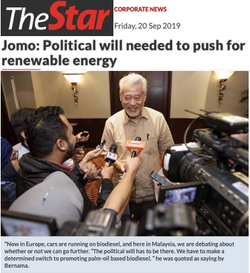
The Star 20 Sept 2019

The Star 20 Sept 2019

Political will needed to push for renewable energy

The Star 10July 2019

The Star 10July 2019

Malaysian businesses need boost

The Star 9 Oct 2019

The Star 9 Oct 2019

Subsidise public transport for bottom 40%

The Edge 26 Sept 2019

The Edge 26 Sept 2019

Call for measures to counteract global headwinds

The Edge 9 Oct 2019

The Edge 9 Oct 2019

Subsidise public transportation, not fuel

The Star 8 Oct 2019

The Star 8 Oct 2019

Subsidise public transportation for bottom 70%

TheEdge 2Oct 2019

TheEdge 2Oct 2019

"We need to counteract downward forces"

Fake News

PLEASE BEWARE OF MISREPRESENTATIONS OF IMAGES OF JOMO

Commercial and political misrepresentation of his image attributing to him to things which he never said or misrepresenting things he may have said is being circulated on websites such as those posted here. 


You should also be warned, in case you are not already aware, of ‘click bait’ i.e. using such images simply to attract your interest, and then to download your online information for abuse for a variety of ends.

Please inform us and provide a screenshot and weblink to enable further action, which is incredibly difficult. 

Thank you for reading this and for your help and cooperation.

This has also been flagged on his official Facebook page


JKS image ad2.jpg
JKS image Bitcoin ad on  Facebook.jpg
JKS - Fake News 2.jpg
Contact Me
JKS - Fake News 3.jpg
JKS fake news 1.jpg

Nadi Insan by the People's History Centre

Read all editions of #NadiInsan from 1979 to 1983 free of charge at the Peoples History Center website.


Containing writings on socio-political issues, film and cultural commentary, as well as in-depth interviews, Nadi Insan is motivated by community activists and intellectuals in Malaysia.

Happy reading!

Dapatkan kesemua siri majalah #NadiInsan dari tahun 1979 hingga 1983 secara percuma di laman Pusat Sejarah Rakyat.


Berisi tulisan memperihal sosio-politik, ulasan filem dan budaya sehinggalah wawancara yang rencam, Nadi Insan digerakkan oleh aktivis masyarakat dan intelektual di Malaysia.


Selamat membaca!

Contact Me

  • Facebook Social Icon
  • Twitter Social Icon

Thank you for reaching out!

bottom of page