top of page

Follow on Social Media

  • Facebook
  • Twitter
  • Screenshot 2022-09-18 at 5.20.40 PM

M'sia Developments
[on SubStack]

  • Screenshot 2022-09-18 at 5.20.40 PM

Updated: May 11, 2021

Jomo Kwame Sundaram


KUALA LUMPUR: Have you ever heard of a workers’ strike or similar labour action for press freedom? And how long do you think it lasted? A day? A week? A month? And where and when do you think this happened?


Workers strike for press freedom

Six decades ago, in 1961, Said Zahari, the editor of the Malay language daily, Utusan Melayu, led a strike of journalists and other employees. The protracted strike, in both Malaysia and Singapore today, was for press freedom rather than employee welfare.

Against all odds, the strike lasted over a hundred days! It also marked the end of the ‘honeymoon’ for the post-colonial government after independence. The historic strike was remarkable for many reasons, with two deserving special mention.

First, it involved ethnic Malay workers where such industrial actions had mainly been associated with ethnic Chinese and Indian workers, first brought to Malaya as indentured labour in colonial times.

Second, and perhaps uniquely, the strike tried to resist the imminent takeover of the previously independent anti-colonial newspaper to serve the propaganda needs of the ruling United Malays National Organisation (UMNO). UMNO was the dominant partner of the governing coalition after the first Malayan elections in 1955 under colonial rule.

In 1957, the Federation of Malaya became independent, but without Singapore with which it was closely integrated, economically, politically and even socially and culturally before the Japanese invasion in 1941-1942.

With the Borneo states of Sabah and Sarawak, Singapore joined the expanded Malaysian confederation of British possessions in the region in 1963 before seceding less than two years later.

UMNO-led ruling coalitions ruled Malaysia until 2018 when it lost the general election despite great gerrymandering in its favour. But after a ‘palace coup’ in March 2020, UMNO joined the current ruling coalition.


Out of the frying pan into the fire

To break the strike, Singapore-born Said was banished by Prime Minister Tunku Abdul Rahman from re-entering peninsular Malaya after visiting striking colleagues on the island.

In early February 1963, Said was arrested by Lee Kuan Yew’s government of Singapore, then still under British tutelage. This happened hours after he agreed to lead the left populist Parti Rakyat Singapura (Singapore People’s Party) when PRS allies were still very influential in the region.

Arrested with over a hundred other political dissidents in Operation Coldstore, he was incarcerated without trial for 17 years. In the early 1970s, Said’s poems were smuggled out of prison and published in Malaysia. Said’s resolute determination despite his ordeal inspired countless others.


Inspiration

Said’s memoirs, published at the start of the new millennium, reveal how he came to make heroic sacrifices for a better, more just and democratic post-colonial Malaya with no thought of personal gain or advantage.

His memoirs are not just political, but also personal, candidly sharing reminiscences, but without the cosmetic editing that ‘great men’ typically demand for their biographical narratives.

Born on 17th May 1928 in a rustic Singapore which no longer exists, the young Muslim Malay youth came of age under British colonialism, interrupted by the 1942-1945 Japanese Occupation. His working life began at the Utusan headquarters in Singapore.

The newspaper was published by Yusof Ishak, later Singapore’s first president, and edited by A. Samad Ismail, the doyen of Malaysian journalism. As independence for Malaya without Singapore became imminent, Said was sent north in 1955 to head the Kuala Lumpur office.

He arrived in time to cover the historic Baling peace talks between the electorally victorious Alliance and the communist-led guerrilla movement driven underground in mid-1948. Then Chief Minister Tunku confided to Said that he never wanted the talks to succeed, but had agreed to have them to gain political advantage.


Generosity of spirit

After his release in late 1979, Said remained humble and modest, always affable, even avuncular and generous in his dealings with all. Other Utusan comrades too came out of the strike with so much of their dignity and humanity intact despite losing their livelihoods and much else.

Despite his prolonged incarceration, his magnanimity and generosity of spirit contrast with so much contemporary political hypocrisy and petty vindictiveness. Some who had caused him much grief later sought to redeem themselves with him, often to the chagrin of comrades.

Yet, he always remained principled, defiant and uncompromising when it counted. Although he said little about it until his passing five years ago, despite his modest means, he sought to compensate his family for its ordeal. This must surely be one of the heaviest burdens he had to bear.

Many partook of his love for humanity, truth, freedom and other cherished universal values. His was truly a life of much sacrifice for values and principles which still move many, so many decades later.

One cannot but be inspired by the Utusan strike, for over a hundred days, for press freedom. Those of us who cherish freedom of the press owe the strikers a debt which can never be repaid.

The name Said Zahari deserves to be immortalised worldwide as symbolising the now universal struggle for press freedom. Today, on the occasion of World Press Freedom Day, let us all salute Said Zahari and his Utusan comrades of 1961.


  • Apr 26, 2021
  • 3 min read

Jomo Kwame Sundaram


KUALA LUMPUR. Producers and consumers seem helpless as food all over the world comes under fast growing corporate control. Such changes have also been worsening environmental collapse, social dislocation and the human condition.


Longer term perspective

The recent joint report – by the International Panel of Experts on Sustainable Food Systems (IPES-Food) and the ETC Action Group on Erosion, Technology and Concentration – is ominous, to say the least.

A Long Food Movement, principally authored by Pat Mooney with a team including IPES-Food Director Nick Jacobs, analyses how food systems are likely to evolve over the next quarter century with technological and other changes.

The report notes that ‘hi-tech’, data processing and asset management corporations have joined established agribusinesses in reshaping world food supply chains.

If current trends continue, the food system will be increasingly controlled by large transnational corporations (TNCs) at the expense of billions of farmers and consumers.


Big Ag weds Big Data

The Davos World Economic Forum’s (WEF) much touted ‘Fourth Industrial Revolution’ (IR4.0), promoting digitisation, is transforming food systems, accelerating concentration in corporate hands.

New apps enable better tracking across supply chains, while ‘precision farming’ now includes using drones to spray pesticides on targeted crops, reducing inputs and, potentially, farming costs. Agriculture is now second only to the military in drone use.

Digital giants are working with other TNCs to extend enabling ‘cloud computing’ infrastructure. Spreading as quickly as the infrastructure allows, new ‘digital ag’ technologies have been displacing farm labour.

Meanwhile, food data have become more commercially valuable, e.g., to meet consumer demand, Big Ag profits have also grown by creating ‘new needs’. Big data are already being used to manipulate consumer preferences.

With the pandemic, e-retail and food delivery services have grown even faster. Thus, e-commerce platforms have quickly become the world’s top retailers.

New ‘digital ag’ technologies are also undermining diverse, ecologically more appropriate food agriculture in favour of unsustainable monocropping. The threat is great as family farms still feed more than two-thirds of the world’s population.


IR4.0 not benign

Meanwhile, hi-tech and asset management firms have acquired significant shareholdings in food giants. Powerful conglomerates are integrating different business lines, increasing concentration while invoking competition and ‘creative disruption’.

The IPES-ETC study highlights new threats to farming and food security as IR4.0 proponents exert increasing influence. The report warns that giving Big Ag the ‘keys of the food system’ worsens food insecurity and other existential threats.

Powerful corporations will increase control of most world food supplies. Big Ag controlled supply chains will also be more vulnerable as great power rivalry and competition continue to displace multilateral cooperation.


There is no alternative?

But the report also presents a more optimistic vision for the next quarter century. In this alternative scenario, collaborative efforts, from the grassroots to the global level, empower social movements and civil society to resist.

New technologies are part of this vision, from small-scale drones for field monitoring to consumer apps for food safety and nutrient verification. But they would be cooperatively owned, open access and well regulated.

The report includes pragmatic strategies to cut three quarters of agriculture’s greenhouse gas emissions and shift US$4 trillion from Big Ag to agroecology and food sovereignty. These include “$720 billion in subsidies” and “$1.6 trillion in healthcare savings” due to malnutrition.

IPES-ETC also recommends taxing junk food, toxins, carbon emissions and TNC profits. It also urges criminal prosecution of those responsible for famine, malnutrition and environmental degradation.

Food security protocols are needed to supercede trade and intellectual property law, and not only for emergencies. But with food systems under growing stress, Big Ag solutions have proved attractive to worried policymakers who see no other way out.


Last chance to change course

Historically, natural resources were commonly or publicly shared. Water and land have long been sustainably used by farmers, fisherfolk and pastoralists. But market value has grown with ‘property rights’, especially with corporate acquisition.

Touted as the best means to achieve food security, corporate investments in recent decades have instead undermined remaining ‘traditional’ agrarian ecosystems.

Big Ag claims that the food, ecological and climate crises has to be addressed with its superior new technologies harnessing the finance, entrepreneurship and innovation only they can offer.

But in fact, they have failed, instead triggering more problems in their pursuit of profit. As the new food system and corporate trends consolidate, it will become increasingly difficult to change course.

Proposed by the WEF, the UN Secretary-General’s Food Systems Summit later this year clearly seeks to promote corporate ‘solutions’. Very timely, A Long Food Movement is an urgent call to action for the long haul.

With so much at stake, representatives of food producers and consumers need to act urgently to prevent governments from allowing a UN sanctioned corporate takeover of global governance of food systems.


Related IPS articles:


Updated: Apr 20, 2021

Timothy A. Wise and Jomo Kwame Sundaram


BOSTON and KUALA LUMPUR: Since the Alliance for a Green Revolution in Africa (AGRA) was launched in 2006, yields have barely risen, while rural poverty remains endemic, and would have increased more if not for out-migration.

AGRA was started, with funding from the Bill and Melinda Gates Foundation and the Rockefeller Foundation, to double yields and incomes for 30 million smallholder farm households while halving food insecurity by 2020.

There are no signs of significant productivity and income boosts from promoted commercial seeds and agrochemicals in AGRA’s 13 focus countries. Meanwhile, the number of undernourished in these nations increased by 30%!


When will we ever learn?

What went wrong? The continuing Indian farmer protests, despite the COVID-19 resurgence, highlight the problematic legacy of its Green Revolution (GR) in frustrating progress to sustainable food security.

Many studies have already punctured some myths of India’s GR. Looking back, its flaws and their dire consequences should have warned policymakers of the likely disappointing results of the GR in Africa.

Hagiographic accounts of the GR cite ‘high‐yielding’ and ‘fast-growing’ dwarf wheat and rice spreading through Asia, particularly India, saving lives, modernising agriculture, and ‘freeing’ labour for better off-farm employment.

Many recent historical studies challenge key claims of this supposed success, including allegedly widespread yield improvements and even the number of lives actually saved by increased food production.

Environmental degradation and other public health threats due to the toxic chemicals used are now widely recognized. Meanwhile, water management has become increasingly challenging and unreliable due to global warming and other factors.


Ersatz GR2.0 for Africa

Half a century later, the technology fetishizing, even deifying AGRA initiative seemed oblivious of Asian lessons as if there is nothing to learn from actual experiences, research and analyses.

Worse, AGRA has ignored many crucial features of India’s GR. Importantly, the post-colonial Indian government had quickly developed capacities to promote economic development.

Few African countries have such ‘developmental’ capacities, let alone comparable capabilities. Their already modest government capacities were decimated from the 1980s by structural adjustment programmes demanded by international financial institutions and bilateral ‘donors’.


Ignoring lessons of history

India’s ten-point Intensive Agricultural Development Programme was more than just about seed, fertilizer and pesticide inputs. Its GR also provided credit, assured prices, improved marketing, extension services, village-level planning, analysis and evaluation.

These and other crucial elements are missing or not developed appropriately in recent AGRA initiatives. Sponsors of the ersatz GR in Africa have largely ignored such requirements.

Instead, the technophile AGRA initiative has been enamoured with novel technical innovations while not sufficiently appreciating indigenous and other ‘old’ knowledge, science and technology, or even basic infrastructure.

The Asian GR relied crucially on improving cultivation conditions, including better water management. There has been little such investment by AGRA or others, even when the crop promoted requires such improvements.


From tragedy to farce

Unsurprisingly, Africa’s GR has reproduced many of India’s problems:

· As in India, overall staple crop productivity has not grown significantly faster despite costly investments in GR technologies. These poor productivity growth rates have remained well below population growth rates.

· Moderate success in one priority crop (e.g., wheat in Punjab, India, or maize in Africa) has typically been at the expense of sustained productivity growth for other crops.

· Crop and dietary diversity has been reduced, adversely affecting cultivation sustainability, nutrition, health and wellbeing.

· Subsidies and other incentives have meant more land devoted to priority crops, not just intensification, with adverse land use and nutrition impacts.

· Soil health and fertility have suffered from ‘nutrient-mining’ due to priority crop monocropping, requiring more inorganic fertilizer purchases.

· Higher input costs often exceed additional earnings from modest yield increases using new seeds and agrochemicals, increasing farmer debt.


Paths not taken

AGRA and other African GR proponents have had 14 years, plus billions of dollars, to show that input-intensive agriculture can raise productivity, net incomes and food security. They have clearly failed.

Africans -- farmers, consumers and governments -- have many good reasons to be wary, especially considering AGRA’s track record after a decade and a half. India’s experience and the ongoing farmer protests there should make them more so.

Selling Africa’s GR as innovation requiring unavoidable ‘creative destruction’ is grossly misleading. Alternatively, many agroecology initiatives, which technophiles decry as backward, are bringing cutting-edge science and technology to farmers, with impressive results.

A 2006 University of Essex survey, of nearly 300 large ecological agriculture projects in more than fifty poor countries, documented an average 79% productivity increase, with declining costs and rising incomes.

Published when AGRA was launched, these results far surpass those of GRs thus far. Sadly, they remind us of the high opportunity costs of paths not taken due to well-financed technophile dogma.


Related IPS Articles

Africa at the Crossroads: Time to Abandon Failing Green Revolution”. Million Belay and Timothy A. Wise, IPS News, Sept. 23, 2020.


Latest Videos

All Videos

All Videos

AN URGENT CALL: A PEOPLE"S VACCINE AGAINST COVID-19

00:00
9 June 2020: IHD-ILO-ISLE Virtual Conference - Day 2

9 June 2020: IHD-ILO-ISLE Virtual Conference - Day 2

05:08:34
Learning in Governance in times of COVID-19

Learning in Governance in times of COVID-19

46:30
Beyond the Lockdown: Towards the ‘New Normal’

Beyond the Lockdown: Towards the ‘New Normal’

59:10

About Jomo

Jomo Kwame Sundaram is Research Adviser, Khazanah Research Institute, Fellow, Academy of Science, Malaysia, and Emeritus Professor, University of Malaya. Previously, he was UN Assistant Secretary-General for Economic Development, Assistant Director General, Food and Agriculture Organization (FAO), Founder-Chair, International Development Economics Associates (IDEAs) and President, Malaysian Social Science Association. 

In The Media

TheStar 26 June 2020

TheStar 26 June 2020

The Star 20 Sept 2019

The Star 20 Sept 2019

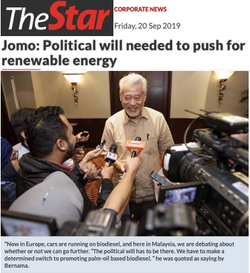
Political will needed to push for renewable energy

The Star 10July 2019

The Star 10July 2019

Malaysian businesses need boost

The Star 9 Oct 2019

The Star 9 Oct 2019

Subsidise public transport for bottom 40%

The Edge 26 Sept 2019

The Edge 26 Sept 2019

Call for measures to counteract global headwinds

The Edge 9 Oct 2019

The Edge 9 Oct 2019

Subsidise public transportation, not fuel

The Star 8 Oct 2019

The Star 8 Oct 2019

Subsidise public transportation for bottom 70%

TheEdge 2Oct 2019

TheEdge 2Oct 2019

"We need to counteract downward forces"

Fake News

PLEASE BEWARE OF MISREPRESENTATIONS OF IMAGES OF JOMO

Commercial and political misrepresentation of his image attributing to him to things which he never said or misrepresenting things he may have said is being circulated on websites such as those posted here. 


You should also be warned, in case you are not already aware, of ‘click bait’ i.e. using such images simply to attract your interest, and then to download your online information for abuse for a variety of ends.

Please inform us and provide a screenshot and weblink to enable further action, which is incredibly difficult. 

Thank you for reading this and for your help and cooperation.

This has also been flagged on his official Facebook page


JKS image ad2.jpg
JKS image Bitcoin ad on  Facebook.jpg
JKS - Fake News 2.jpg
Contact Me
JKS - Fake News 3.jpg
JKS fake news 1.jpg

Nadi Insan by the People's History Centre

Read all editions of #NadiInsan from 1979 to 1983 free of charge at the Peoples History Center website.


Containing writings on socio-political issues, film and cultural commentary, as well as in-depth interviews, Nadi Insan is motivated by community activists and intellectuals in Malaysia.

Happy reading!

Dapatkan kesemua siri majalah #NadiInsan dari tahun 1979 hingga 1983 secara percuma di laman Pusat Sejarah Rakyat.


Berisi tulisan memperihal sosio-politik, ulasan filem dan budaya sehinggalah wawancara yang rencam, Nadi Insan digerakkan oleh aktivis masyarakat dan intelektual di Malaysia.


Selamat membaca!

Contact Me

  • Facebook Social Icon
  • Twitter Social Icon

Thank you for reaching out!

bottom of page