top of page

Follow on Social Media

  • Facebook
  • Twitter
  • Screenshot 2022-09-18 at 5.20.40 PM

M'sia Developments
[on SubStack]

  • Screenshot 2022-09-18 at 5.20.40 PM

Anis Chowdhury and Jomo Kwame Sundaram


SYDNEY and KUALA LUMPUR. US Treasury Secretary Janet Yellen has urged all governments to support a global minimum corporate tax rate of at least 21%. The US is working with other G20 nations to get other countries to end the “thirty-year race to the bottom on corporate tax rates”.


Corporate tax vital

For Yellen, “governments [should] have stable tax systems that raise sufficient revenue to invest in essential public goods and respond to crises, and that all citizens fairly share the burden of financing government”.

The Biden administration has unveiled a plan to reverse Trump’s tax cuts and raise US corporate tax rates from 21% to 28%. Crucially, it wants to increase tax rates on US firms’ overseas profits – global intangible low-tax income (GILTI) – from 10.5% to at least 21%. This should be calculated on a country-by-country basis including all tax havens, i.e., low- or no-tax locations, to minimise evasion.

The US Treasury is also keen to reach international agreement over a digital tax for online giants such as Amazon and Facebook. This sharply contrasts with Trump’s threat of retaliation against countries attempting to tax US-based tech giants.

The Economist estimates that in the past decade, the ‘big five’Facebook, Amazon, Apple, Microsoft, Google – paid only 16% of their profits in tax.


Race to the bottom

The Bretton Woods institutions (BWIs) – the International Monetary Fund (IMF) and the World Bank – promoted Reaganite ‘supply side economicsfrom the 1980s, claiming excessive tax rates discourage labour supply and entrepreneurship.

However, contrary to proponents’ claims, most tax cuts have resulted in net revenue losses, with Trump’s cuts resulting in a shortfall of US$275 billion, or 7.6% of previously expected revenue.

As countries raced to the bottom, offering increasingly generous tax incentives to attract investments by transnational corporations (TNCs), the average worldwide statutory corporate tax rate fell from 40% in 1980 to 24% in 2020.

Countries also lose revenue as TNCs use legal loopholes to minimise tax payments, e.g., by abusing differences between national tax rules and bilateral double taxation agreements. They strive for ‘double non-taxation’ to avoid paying tax in all jurisdictions.

Thus, US$500–600bn, or around 10–15% of annual global corporate tax revenue, is lost yearly to TNCs shifting profits to tax havens, using base erosion and profit shifting (BEPS) book-keeping.


Harming developing countries

Corporate income taxation is much more important for developing countries, e.g., comprising 18.6% of tax revenue in Africa, 15.5% in Latin America and Caribbean, and 9.3% in OECD countries in 2017. Clearly, tax competition and TNC tax avoidance hurt developing countries more. As share of GDP, Sub‐Saharan Africa has lost most, followed by Latin America and the Caribbean, and South Asia.


Tax reforms

Developing country governments undertook reforms reducing often progressive direct income tax systems in favour of supposedly neutral, but actually regressive indirect taxation on consumption.

Senior IMF Fiscal Affairs Department staff recommended taxing labour instead of capital, considered too mobile to tax. An IMF paper even endorsed complete abolition of corporate income tax!

Encouraged by the World Bank’s now discredited Doing Business Report, developing countries competed to cut corporate tax rates, falling by a fifth from 1980. Consequently, low and middle-income countries have lost US$167–200bn annually, around 1–1.5% of GDP.

The Economist observed weak links between tax rates and investment as well as growth rates. OECD research showed that tax incentives hardly attracted foreign direct investment, while IMF research found ‘beggar-thy-neighbour’ tax competition cost unnecessary revenue losses to many developing countries.

A G20 report found the fiscal cost of tax incentives in low-income countries “can be high, reducing opportunities for much-needed public spending …, or requiring higher taxes on other activities”.


Tax avoidance

Estimated annual revenue losses to rich OECD countries due to tax havens range from 0.15% to 0.7% of GDP. Low-income countries (LICs) and even lower middle-income countries lose relatively more corporate tax revenue than high-income countries (HICs).

LICs account for some US$200bn of such lost revenue, typically a higher GDP share than for HICs. This is much more than the US$150bn or so that LICs receive annually in official development assistance.


Digitisation

Digitisation and changing business models are making it more difficult to determine the actual location of economic activities. Thus, digitisation enables BEPS, reducing revenue due to under-reported taxable income.

Consequently, in 2017, developing countries lost US$10bn in revenue from e-commerce compared to HICs’ US$289 million loss. Least developed countries lost US$1.5bn while sub-Saharan African countries lost US$2.6bn.

UNCTAD’s Trade and Development Report 2019 noted, “Foregone fiscal revenues from digitisation are particularly high for developing countries because they are less likely to host digital businesses but tend to be net importers of digital goods and services”.


Developing countries’ voice

Supported by the G20, the OECD has been working on BEPS since 2013. The OECD BEPS initiative seeks to check tax base erosion by setting a global minimum corporate income tax rate and taxing TNCs selling cross-border digital services. OECD and G20 countries now aim to reach consensus on both by mid-2021.

However, despite being hurt more, developing countries have long been shut out from discussions of international tax norms, policy and regulatory design. The OECD BEPS Inclusive Framework (IF) now includes developing countries which agree to enforce it despite being excluded from its design.

Thus, while IF developing country associates supposedly participate on an ‘equal footing’, they have no decision-making role, reminiscent of their earlier colonial status! Apparently, ‘equal footing’ only refers to BEPS 4 Minimum Standards enforcement.

Unsurprisingly, although raised during IF consultations, developing country concernssuch as allocating tax rights between ‘source’ and ‘residence’ states, taxing the informal economy and taking account of their different needs and circumstancesremain largely unaddressed and unresolved.

With such failures implying legitimacy deficits, BEPS measures are unlikely to benefit developing countries very much. It is increasingly clear that the BEPS project and IF were never intended to help developing countries.


UN must act now

So far, the European Commission (EC) and other powerful countries have responded positively to Yellen. Her proposal has also been endorsed by the IMF and the UN High-Level Panel for International Financial Accountability, Transparency and Integrity for Achieving the 2030 Agenda (FACTI).

Corporate tax rules currently favour rich countries where most TNCs are based, regardless of domicile for tax purposes. Countries must work together to accelerate more inclusive, equitable and progressive multilateral tax coordination.

The OECD’s tenuous monopoly on international tax cooperation discussions has so far failed the world. Creating fairer international tax arrangements requires inclusive multilateral consultations well beyond current processes. These should be led by the UN, the only forum where all countries are represented fairly.

A UN Tax Convention, with universal participation and IMF technical support, can help countries come together to find lasting comprehensive solutions. This must happen soon to pre-empt the OECD from further abusing its exclusive approach, inadvertently jeopardising lasting progress.


Related IPS commentaries

“UN Leadership Necessary for Fairer Tax Cooperation”. 1 Apr. 2021. https://www.ipsnews.net/2021/04/un-leadership-necessary-fairer-tax-cooperation/

“Will the New Fiscal Crises Improve International Tax Cooperation?”. 1 December 2020. https://www.ipsnews.net/2020/12/will-new-fiscal-crises-improve-international-tax-cooperation/

“South Must Also Set International Tax Rules”. 20 August 2019. http://www.ipsnews.net/2019/08/south-must-also-set-international-tax-rules/

“Ensuring Fairer International Corporate Taxation”. 3 September 2019. http://www.ipsnews.net/2019/09/ensuring-fairer-international-corporate-taxation/

“OECD Tax Reform Proposal Could Be Better”. 15 October 2019. http://www.ipsnews.net/2019/10/oecd-tax-reform-proposal-better/

“‘Beggar Thy Neighbour’ Policy Advice”. 12 August 2019. http://www.ipsnews.net/2019/08/beggar-thy-neighbour-policy-advice/


Updated: Apr 6, 2021

Anis Chowdhury and Jomo Kwame Sundaram


SYDNEY and KUALA LUMPUR: The COVID-19 pandemic continues to take an unprecedented human and economic toll, wiping away years of modest and uneven progress towards the Sustainable Development Goals (SDGs). Developing countries now need much more support as progress towards the SDGs was ‘not on track’ even before the pandemic.

By end-2022, average incomes are expected to be 18% below pre-crisis levels in low-income countries (LICs) and 22% less in emerging and developing countries excluding China – compared to 13% lower for developed economies.

These lower incomes will push hundreds of millions into extreme poverty and hunger, surviving on incomes under US$1.90/day. The World Bank estimates the poor increased by 119–124 million in 2020, and by 143–163 million more this year.


Fiscal gap growing fast

As the UN Secretary-General has noted, “richer countries have benefited from an unprecedented $16 trillion of emergency support measures,… the least developed countries have spent 580 times less in per capita terms on their COVID-19 response”!

Last year, the International Monetary Fund (IMF) and UNCTAD estimated that developing countries need about US$2.5 trillion for relief to affected families and businesses, and to expedite economic recovery.

IMF Managing Director Kristalina Georgieva later acknowledged that developing countries need much more. The IMF’s April 2021 Fiscal Monitor estimates that only achieving access to basic services by 2030 in 121 developing countries would require US$3tn, up to half in LICs.

Most developing countries cannot do more due to financing constraints. As public spending needs shoot up, the pandemic has significantly cut their revenue. Recent IMF research found “larger output losses are experienced by countries with lower GDP per capita”, partly due to “lower fiscal stimulus”.

With limited tax and other revenue, developing countries will need to borrow more, increasing their already high public debt. As the IMF notes, “the international community [needs] to provide additional support through grants, concessional financing, and, in some cases, debt relief”.


Too little, too late?

The Bretton Woods institutions (BWIs) – the IMF and the World Bank – must mitigate the new setbacks, by enabling relief, recovery and reform. The Fund and also the Bank have responded, sometimes innovatively, but far too slowly. Most importantly, actual support from both BWIs so far is far short of needs.

The Fund used its Catastrophe Containment and Relief Trust fund to provide relief for six months of IMF debt payments owed by 29 LICs. But last October, the IMF board rejected a new Pandemic Support Facility with easier conditions than usual.

Although the Fund has committed about US$250 billion, a quarter of its US$1 trillion lending capacity, it has only deployed a tenth of its capacity so far, according to former senior official, Ousmène Mandeng. He argues the Fund should instead offer much more support that countries need and want.

According to The Economist, since March 2020, the IMF has only disbursed US$32bn in emergency financing while offering US$74bn via other facilities, both “with more strings attached”.

The 85 countries now receiving funds from the IMF account for only around 5% of global GDP. None of them could access the Fund’s new “short-term liquidity line” due to its stringent conditions.


BWIs must rise to the challenge

In April 2020, the Bank announced a new multi-donor trust fund, the Health Emergency Preparedness and Response Multi-Donor Fund. This is supposed to complement the US$160bn the World Bank Group had pledged to deploy by mid-2021.

Bank disbursements have been slow despite the urgency, with actual disbursements to needy countries totalling only US$79bn by June 2021, under half what was pledged. The Bank also dropped its Pandemic Emergency Financing Facility, criticised for being too small and too slow.

However, fast-disbursing budget support during the much deeper and more extensive pandemic crisis is actually less than during the GFC. The Bank is no longer offering more emergency budget support.

Just as the Fund lent more in 2009 during the global financial crisis (GFC) than since the pandemic began, new Bank loan disbursements rose less in the first half-year of the pandemic than during the GFC.

The Bank committed US$19.5bn to finance the G-20’s grossly inadequate April-December 2020 Debt Service Suspension Initiative (DSSI). Meanwhile, it has refused any debt standstill for loans owed to it, arguing this would jeopardise its credit rating and consequent ability to borrow cheap.


BWIs must become part of solution

Blocked by the Trump administration, the likely issue of US$650bn IMF special drawing rights (SDRs) is still only half the SDR1tn (US$1.37tn) The Financial Times deemed necessary.

SDRs do not need to be repaid, and incur a very low interest rate (currently 0.05%), costing less than loans. They are often more attractive than grants, typically tied to conditions.

While the 75 LICs should get about US$62bn in SDRs, poor countries could benefit much more if rich countries transferred their unused SDRs to the BWIs. Besides providing debt relief, the Bank could then intermediate more long-term development finance at the lowest possible cost to borrowing countries.

As UNCTAD has also argued, the multilateral system needs to lend much more to developing countries at lower cost. In 2019, the average interest rate on multilateral debt to LICs was 1.7%, compared to 2.5% for bilateral loans.

Private creditor rates are much higher. With ‘preferred creditor’ status (i.e., getting repaid before others), the Bank can borrow – and lend – at the lowest rates. This is most easily done by expanding Bank lending and guarantees.


Bank for recovery and development?

Loans worth US$500bn, mostly for poorer countries, are likely to be announced this week at the IMF and World Bank Spring meetings. As the BWIs can offer much better terms, this will certainly help, but much more is urgently needed.

Borrowing at the International Bank for Reconstruction and Development’s current 1.75% rate on a 20-year loan, total debt service in 2021 and 2022 would fall from US$90bn to US$65bn, e.g., saving US$25bn for the G20-DSSI eligible LICs.

If all developing countries benefit, savings would be much higher, around US$285bn. But to do so, both the Fund and the Bank would need to expand their lending capacities with additional resources.

Currently, all too many developing countries are being forced to adjust by cutting social and environmental programmes. By lowering lending costs and other demands, the BWIs can become part of the solution, rather than the problem.


Related IPS commentaries

“IMF, World Bank Must Urgently Help Finance Developing Countries”. 30 Mar. 2021. https://www.ipsnews.net/2021/03/imf-world-bank-must-urgently-help-finance-developing-countries/

“Neoliberal Finance Undermines Poor Countries’ Recovery”. 2 Mar. 2021. https://www.ipsnews.net/2021/03/neoliberal-finance-undermines-poor-countries-recovery/

“Developing Countries Struggling To Cope With COVID-19”. 23 Feb. 2021. https://www.ipsnews.net/2021/02/developing-countries-struggling-cope-covid-19/

“World Bank’s ‘Mobilizing Finance for Development’ Not Financing Development”. 25 Aug. 2020. https://www.ipsnews.net/2020/08/world-banks-mobilizing-finance-development-not-financing-development/

“Multilateral Bank Intermediation Must Help Developing Countries’ Recovery”. 7 Aug. 2020. https://www.ipsnews.net/2020/08/multilateral-bank-intermediation-must-help-developing-countries-recovery/

“Covid-19 Compounds Developing Country Debt Burdens”. 23 July 2020. https://www.ipsnews.net/2020/07/covid-19-compounds-developing-country-debt-burdens/


Updated: Apr 6, 2021

Anis Chowdhury and Jomo Kwame Sundaram


SYDNEY and KUALA LUMPUR: Illicit financial flows (IFFs) hurt all countries, both developed and developing. But poor countries suffer relatively more, accounting for nearly half the loss of world tax revenue.

IFFs refer to cross-border movements of money and other financial assets obtained illegally at source, e.g., by corruption, smuggling, tax evasion, etc. This often involves trade mis-invoicing and transnational corporations’ (TNCs) transfer pricing via ‘creative’ accounting or book-keeping.


Staggering revenue losses

About US$500–600 billion in corporate tax revenue is lost yearly to TNCs shifting profits to low-, or no-tax ‘havens’. These often involve fictitious ‘paper’ transactions at inflated prices among subsidiaries to ‘move’ profits out of the country where a TNC actually does business and makes profits, to tax havens where they pay much less, often little or no tax.

Low-income economies account for some US$200 billion of such lost revenue, typically involving much higher shares of their national incomes than in advanced economies. This is much more than the US$150 billion or so they receive annually in official development assistance.

About US$7 trillion of private wealth is hidden in tax haven countries, such as Singapore, Panama or Switzerland; about 10% of world income may be secretly held offshore in tax havens. US Fortune 500 companies alone held about US$2.6 trillion offshore in 2017.

Various studies in 2016–2017 estimated rich individuals had stashed a staggering U$8.7–36trillion in tax havens, depriving national authorities of personal income tax of around US$200 billion yearly worldwide. Annually, about US$20–40 billion is used for bribery, while around 2.7% of global GDP is criminally laundered.

“These abuses threaten Governments’ ability to provide basic goods and services, and drain resources from sustainable development”. This warning in last year’s interim report of the FACTI Panel, or High-Level Panel on International Financial Accountability, Transparency and Integrity for Achieving the 2030 Agenda, has been largely ignored.

Thus, IFFs involve massive wealth theft from developing countries, typically ending up hidden in tax havens, depriving governments of revenue. The fiscal shortfall has become more dire with the huge new challenges of COVID-19 pandemic relief, recovery and reform needed to build a more sustainable future for all, leaving no one, or country, behind.


Illicit flows condoned

IFFs have long existed, but are still growing. Practices enabling them have long been condoned by authorities in many rich countries. Most major tax havens are in a few such economies or their territories.

The top three havens for TNCs – the British Virgin Islands, Bermuda and the Cayman Islands – are all British overseas territories, while Switzerland, the US and the Cayman Islands are the three favourites of rich individuals.

Offshore tax havens drain ever more resources from poor countries as opportunities have grown. When one jurisdiction crafts a new tax loophole or secret facility to attract mobile money, others try to outdo them in an inevitable race to the bottom.

Meanwhile, poor countries have been encouraged to provide more generous tax benefits to corporations and wealthy individuals, e.g., by the World Bank’s Doing Business Report (DBR), now discredited for selective data manipulation and political bias.

Before the 2008-2009 global financial crisis (GFC), the OECD rich countries’ club made little serious effort to check tax evasion except for ‘offshore’ tax havens. With the GFC, it came under pressure to enhance members’ ‘fiscal space’ by limiting such massive revenue losses. It has since focused on Base Erosion and Profit Shifting (BEPS).

But developing countries have long been excluded from discussions of policy and regulatory design, even those affecting them. They are only allowed to join the OECD’s BEPS Inclusive Framework (IF) if they first commit to implement measures designed without their participation.

However, the US has refused to join any initiative allowing others to tax US digital platforms such as Google, Facebook and Amazon. These tech giants have avoided paying taxes abroad, with the Trump administration even threatening retaliation against countries trying to tax them.


UN inclusion initiative

The 74th President of the UN General Assembly and the 75th President of the UN Economic and Social Council jointly appointed the FACTI Panel to identify gaps, impediments and vulnerabilities in the international economic system allowing, if not enabling abuses and related IFFs.

Its interim report recognised many international initiatives and instruments for financial accountability, transparency and integrity, but stressed that implementation has been wanting. Lack of coordination, trust and inclusion undermines enforcement of existing rules while preventing better ones from being made.

FACTI’s February 2021 final report reiterates that low income countries face tax rules and practices developed without their involvement. The OECD still calls the shots, with the G20 inconsistently chiming in. Instead, developing countries should be enabled to enhance revenue by really participating in efforts to tackle tax avoidance and evasion.

A more coherent, nuanced and equitable approach to international tax cooperation is urgently needed. But efforts to improve tax information sharing have been impeded by the absence of an authoritative multilateral body to collate and analyse tax data.

The Panel recommends a UN Tax Convention with universal participation enabling countries to come together to find comprehensive solutions. The co-chairs emphasise, “The issues at hand are global. They call for global cooperation and engagement by all stakeholders, including non-state actors as well as governments.”


UN should lead

The COVID-19 pandemic has put developed and developing countries into the same boat as all need massive fiscal resources to finance relief, recovery and reform measures. Hence, it is in the interest of all to avoid ‘beggar thy neighbour’ policies to better combat IFFs.

The exclusive OECD is not the right forum to design a multilateral tax framework to combat IFFs. It does not include, and cannot claim to represent poor countries, while its track record hardly inspires confidence to the contrary.

The IMF has near-universal membership, enabling a more inclusive and balanced approach. Currently, it provides technical support on tax issues to over a hundred countries annually. But with the Fund’s governance arrangements and track record stacked against developing countries, it lacks their support and trust.

The UN is the only forum where all countries are represented on par. Hence, international tax cooperation consultations should be in the UN, with the IMF providing fair and balanced technical support. This is the only way to ensure that developing country interests get due recognition in creating a fairer international tax architecture.


Related IPS commentaries

· “Will the New Fiscal Crises Improve International Tax Cooperation?”. 1 Dec. 2020. https://www.ipsnews.net/2020/12/will-new-fiscal-crises-improve-international-tax-cooperation/

· “OECD Tax Reform Proposal Could Be Better”. 15 Oct. 2019.http://www.ipsnews.net/2019/10/oecd-tax-reform-proposal-better/

· “Ensuring Fairer International Corporate Taxation”. 3 Sept. 2019. http://www.ipsnews.net/2019/09/ensuring-fairer-international-corporate-taxation/

· “South Must Also Set International Tax Rules”. 20 August 2019. http://www.ipsnews.net/2019/08/south-must-also-set-international-tax-rules/


Latest Videos

All Videos

All Videos

AN URGENT CALL: A PEOPLE"S VACCINE AGAINST COVID-19

00:00
9 June 2020: IHD-ILO-ISLE Virtual Conference - Day 2

9 June 2020: IHD-ILO-ISLE Virtual Conference - Day 2

05:08:34
Learning in Governance in times of COVID-19

Learning in Governance in times of COVID-19

46:30
Beyond the Lockdown: Towards the ‘New Normal’

Beyond the Lockdown: Towards the ‘New Normal’

59:10

About Jomo

Jomo Kwame Sundaram is Research Adviser, Khazanah Research Institute, Fellow, Academy of Science, Malaysia, and Emeritus Professor, University of Malaya. Previously, he was UN Assistant Secretary-General for Economic Development, Assistant Director General, Food and Agriculture Organization (FAO), Founder-Chair, International Development Economics Associates (IDEAs) and President, Malaysian Social Science Association. 

In The Media

TheStar 26 June 2020

TheStar 26 June 2020

The Star 20 Sept 2019

The Star 20 Sept 2019

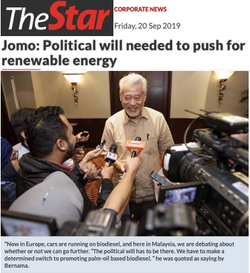
Political will needed to push for renewable energy

The Star 10July 2019

The Star 10July 2019

Malaysian businesses need boost

The Star 9 Oct 2019

The Star 9 Oct 2019

Subsidise public transport for bottom 40%

The Edge 26 Sept 2019

The Edge 26 Sept 2019

Call for measures to counteract global headwinds

The Edge 9 Oct 2019

The Edge 9 Oct 2019

Subsidise public transportation, not fuel

The Star 8 Oct 2019

The Star 8 Oct 2019

Subsidise public transportation for bottom 70%

TheEdge 2Oct 2019

TheEdge 2Oct 2019

"We need to counteract downward forces"

Fake News

PLEASE BEWARE OF MISREPRESENTATIONS OF IMAGES OF JOMO

Commercial and political misrepresentation of his image attributing to him to things which he never said or misrepresenting things he may have said is being circulated on websites such as those posted here. 


You should also be warned, in case you are not already aware, of ‘click bait’ i.e. using such images simply to attract your interest, and then to download your online information for abuse for a variety of ends.

Please inform us and provide a screenshot and weblink to enable further action, which is incredibly difficult. 

Thank you for reading this and for your help and cooperation.

This has also been flagged on his official Facebook page


JKS image ad2.jpg
JKS image Bitcoin ad on  Facebook.jpg
JKS - Fake News 2.jpg
Contact Me
JKS - Fake News 3.jpg
JKS fake news 1.jpg

Nadi Insan by the People's History Centre

Read all editions of #NadiInsan from 1979 to 1983 free of charge at the Peoples History Center website.


Containing writings on socio-political issues, film and cultural commentary, as well as in-depth interviews, Nadi Insan is motivated by community activists and intellectuals in Malaysia.

Happy reading!

Dapatkan kesemua siri majalah #NadiInsan dari tahun 1979 hingga 1983 secara percuma di laman Pusat Sejarah Rakyat.


Berisi tulisan memperihal sosio-politik, ulasan filem dan budaya sehinggalah wawancara yang rencam, Nadi Insan digerakkan oleh aktivis masyarakat dan intelektual di Malaysia.


Selamat membaca!

Contact Me

  • Facebook Social Icon
  • Twitter Social Icon

Thank you for reaching out!

bottom of page