top of page

Follow on Social Media

  • Facebook
  • Twitter
  • Screenshot 2022-09-18 at 5.20.40 PM

M'sia Developments
[on SubStack]

  • Screenshot 2022-09-18 at 5.20.40 PM

Jomo Kwame Sundaram and Anis Chowdhury


KUALA LUMPUR and SYDNEY: Refusal to temporarily suspend several World Trade Organization (WTO) intellectual property (IP) provisions to enable much faster and broader progress in addressing the COVID-19 pandemic should be grounds for International Criminal Court prosecution for genocide.

Making life-saving vaccines, medicines and equipment available, freely or affordably, has been crucial for containing the spread of many infectious diseases such as tuberculosis, HIV-AIDS, polio and smallpox.

Jonas Salk, who developed the polio vaccine, insisted that it remain patent free. Asked who owned the patent 65 years ago, he replied, “The people I would say. There is no patent. You might as well ask, could you patent the sun?”


Intellectual property induced scarcity

However, cross-border enforcement of intellectual property rights (IPRs) is relatively recent. The 1994 WTO Agreement on Trade Related Aspects of Intellectual Property Rights (TRIPS) greatly strengthened and extended IP transnationally. IPRs have effectively denied access to patented formulas and processes except to the highest bidders.

Recognising the extent of the pandemic threat, vaccine developers expect to be very profitable, thanks to national and transnational IP laws. Thus, IP has distorted research priorities and discouraged cooperation and knowledge sharing, so essential to progress.

As COVID-19 infections and deaths continue to rise alarmingly, rich countries are falling out among themselves, fighting for access to vaccine supplies, as IP profits take precedence over lives and livelihoods.

Vaccine nationalism’ involves cut-throat contests responding to scarcity due to limited output. Facing vaccine wars, multilateral arrangements, such as Covax, have not adequately addressed current challenges.

Vaccine nationalism has also meant that among the rich, the powerfulTrump’s US came first. Consequently, most developing countries and most of their people will have to wait longer than necessary for vaccines, while the powerful and better off secure prior access, regardless of need or urgency.


Lethal combination

This lethal combination of IP and vaccine warfare is responsible for more avoidable losses of both lives and livelihoods. Developing nations, especially the poorest and most vulnerable, have been left far behind, even in most programmes for COVID-19 prevention, containment, treatment and vaccination.

The deadly duo are unnecessarily delaying the end of the pandemic, causing avoidable infections, deaths and related setbacks. World Health Organization (WHO) Director-General (DG) Tedros warns “the world is on the brink of a catastrophic moral failure…the price of this failure will be paid with lives and livelihoods in the world’s poorest countries”.

He advises that “the international community cannot allow a handful of companies to dictate the terms or the timeframe for ending the pandemic”; “vaccine nationalism combined with a restrictive approach to vaccine production is in fact more likely to prolong the pandemic … tantamount to medical malpractice on a global scale”.

While over 39 million vaccine doses had been given in 49 richer countries, only 25 doses had reached one poor country! At current rates, more than 85 poor countries will not have significant access before the end of 2023! In 70 lower income countries, only one in ten will be vaccinated.

Of the 7.2 billion confirmed sales of COVID-19 vaccine doses, 4.2 billion have gone to the wealthiest nations. With only 16% of the world’s population, high income countries have secured 60% of available doses. Meanwhile, the African Union has only procured 670 million for the continent’s 1.3 billion people.


Public health exception

Following strong advocacy led by South African President Mandela, a 2001 WTO Declaration on TRIPS and Public Health affirmed countries’ right to protect public health by enabling access to medicines, even without a health emergency.

Although TRIPS now allows such government public health efforts, developing countries remain constrained by compulsory licensing’s complex rules, procedures and conditions. Threats and inducements by transnational corporations and their governments limit its use.

Hence, use of compulsory licensing by developing countries has been largely limited to several more independent middle-income countries and HIV/AIDS medicines.


TRIPS waiver

The TRIPS waiver proposal to the WTO – led by South Africa and India – seeks temporary suspension of several TRIPS provisions to greatly scale up production of and access to COVID-19 vaccines, medicines and equipment to contain the contagion.

The Trump administration, the European Union (EU) and their allies have so far blocked the waiver proposal, although its measures are allowed by their own national laws. Some rich countries even increased such provisions with the pandemic.

South African TRIPS negotiator Mustaqeem Da Gama has debunked the waiver opponents’ claim that even if “approved tomorrow, there are no companies in the developing world that can produce any number of products relevant to COVID-19, including mRNA vaccines”.

In fact, the Serum Institute of India is acknowledged as the only facility in the world with the mass vaccine production capacity to rapidly greatly scale up output. Furthermore, 72 of the 154 vaccines ‘pre-qualified’ by the WHO are already being manufactured in developing countries.

Such production in developing countries is subject to very restrictive IP regulations and licensing agreements with stringent conditions. Hence, existing capacity in India, China, Brazil, Cuba, Thailand, Senegal and Indonesia, among others, remains underutilised, primarily due to such legal barriers.


IP main barrier

Despite growing support for the waiver, the proposal was rejected by the TRIPS Council on 4th February. The EU insists that IP will “ensure the publication and dissemination of research results, when otherwise they will remain secret”.

But everyone knows the IP system discourages, rather than encourages cooperation and sharing, both essential for accelerating progress. Although IP requires sharing research results, no vaccine developer has done so yet. Nonetheless, waiver opponents insist the system is working well.

Rich countries opposing the waiver have quietly, even secretly bought up vaccines. Even as the EU has lost vaccine wars despite furthering pharmaceutical company interests, it has claimed the moral high ground as a major Covax donor. The recent EU export authorisation scheme, restricting exports, is bound to trigger retaliatory restrictions by others.

Incredibly, rich countries opposed to the TRIPS waiver proposal, particularly the EU, now want WTO members to instead accept its trade and health initiative for further trade liberalisation and removal of export restrictions –to address a problem of its own making!


Biden can still lead

The Biden administration has shown renewed commitment to multilateralism by rejoining the WHO, but still needs to offer leadership beyond funding the ineffective Covax scheme and lifting Trump’s embargo on exports of vaccines, vital medicines and equipment.

One ‘people’s vaccine’ proposal involves sharing research results in return for public financing. This can affordably, quickly and greatly scale up generic production, enabling ‘vaccines for all’ in the world at little additional cost.

As rich country governments have already spent to accelerate vaccine development, they can make this happen. As vaccine developers do not expect to profit much from the poor, this will benefit many at little added expense.

Depriving and delaying vaccines for those with less means has to be seen for what it is. Such avoidable behaviour is, frankly, nothing less than genocidal, for causing many people to die needlessly for IP profit.

At the forthcoming 23 February TRIPS Council meeting, US President Biden can secure consensus support for the waiver proposal, thus providing the Rooseveltian leadership internationally that he seems to be emulating in the US.


Related IPS commentaries:

“Intellectual Property Monopolies Block Vaccine Access”. 15 Dec. 2020. https://www.ipsnews.net/2020/12/intellectual-property-monopolies-block-vaccine-access/

“Caught in Tangled Web of Vaccine Nationalism”. 2 Feb. 2021. https://www.ipsnews.net/2021/02/caught-tangled-web-vaccine-nationalism/

“Road to Hell Paved with Good Intentions”. 3 Feb. 2021. https://www.ipsnews.net/2021/02/road-hell-paved-good-intentions/

“West First Policies Expose Myths”. 31 Mar. 2020. https://www.ipsnews.net/2020/03/west-first-policies-expose-myths/


Jomo Kwame Sundaram


KUALA LUMPUR: Access to COVID-19 vaccines for many developing countries and most of their people will have to wait as the powerful and better off secure earlier access regardless of need or urgency. More profits, by manufacturing scarcity, will surely cause even more loss of both lives and livelihoods.


Good intentions not enough

To induce private efforts to develop and distribute vaccines, the WHO initiated COVAX to ensure more equitable access to COVID-19 vaccines. However, interest by vaccine companies has been limited, while some governments – especially from better-off upper middle-income countries – pursue other options.

COVAX has been co-led with GAVI, the Vaccine Alliance, and the Coalition for Epidemic Preparedness Innovations (CEPI). Buoyed by their earlier success with advance market commitments (AMC), they have extended the same approach in very different circumstances.

AMC was originally conceived to induce the development of vaccines for ‘neglected diseases’. Such infectious diseases remain threats in poor countries and among poor people. Hence, prospective sales revenue was believed to be too small for needed investments by profit-seeking vaccine companies.

By guaranteeing and subsidising sales, the AMC effectively promises the vaccine developer to make the research and development effort profitable, typically with early payments and subsidies to enhance the inducement.


No one size fits all

In the Covid-19 pandemic context, however, the COVAX AMC is not a ‘white knight’ coming to the rescue of an orphaned, typically tropical disease. Instead, it competes with other buyers, mostly of greater means.

To put it bluntly, the Covid-19 pandemic context is quite different from the ‘neglected diseases’ problem which the AMC was conceived to address, i.e., contemporary Western R&D efforts presumed to be driven primarily, if not exclusively by the prospect of profits.

The highly infectious ‘aerosol-borne’ virus quickly achieved a global reach. Apparently more likely to be lethal with advancing age, mass vulnerability to infection ensured a broad, inclusive, international market for Covid-19 vaccines from the outset.

Recognising the extent and impact of the pandemic threat, vaccine developers expect to sell their vaccines very profitably. They made advance sales to many rich-country governments, rather than, or even while committing to COVAX. Unsurprisingly in these circumstances, the COVAX AMC approach has not worked well, let alone equitably.

The companies did not require AMC advance purchases to start their efforts. Expecting the WHO to protect their interests, participating developing country governments, mainly of upper-middle income economies, have generally not worked together to push for further price moderation.


COVAX subverted

Advance Covid-19 vaccine purchases by many rich country governments are not only greatly in excess of their population requirements, but also not made in a transparent manner conducive to improving equity.

Unsure of the efficacy and effectiveness of the often still experimental vaccines, some booked, paid for and now demand far more than needed by their populations. Thus, COVAX has been subverted by rich country government actions.

Ironically, instead of protecting and promoting the interests of the poor, the public interest and the common good, the COVAX AMC has served to set floor prices. Arguably, COVAX has ensured profits for vaccine companies without addressing the ‘only money talks’ problem and competitive ‘vaccine nationalism’.

To ensure a ‘people’s vaccine’ available to all, Acharya and Reddy have proposed public financing to develop or buy over vaccine formulas. This can ensure patentable and other relevant information is freely shared, enabling generic vaccine producers to greatly increase supply at much lower prices.

As rich country governments have already paid much to accelerate vaccine development, they can more easily secure and share the thus far undisclosed information needed to greatly and affordably scale up generic vaccine output.

As vaccine developers do not really expect much revenue from selling vaccines to the poor, such ‘generosity’ would cost them little, while earning them and the enabling governments priceless appreciation and goodwill in the process.


Way out

The best way forward now involves approving the TRIPS waiver at the WTO, which the Trump administration, the EU and some allies, such as Brazil, have stubbornly blocked.

The TRIPS waiver – sought by developing countries led by South Africa, India and Pakistan – seeks to temporarily suspend several TRIPS provisions on patents, design and protection of undisclosed information.

The Biden administration has shown renewed commitment to multilateralism by re-joining the World Health Organization (WHO). It can demonstrate leadership by not only lifting the US embargo on exports of vaccines, vital medicines and equipment, but also advocating strongly for the TRIPS waiver proposal at the WTO.

US taxpayers have already spent many billions to accelerate private vaccine development and distribution. Vaccines for the world can be greatly increased, at little additional cost, by working with the rest of the world, as Chinese researchers did by sharing the virus’ genome sequence with the world within a fortnight of its discovery over a year ago.


Jomo Kwame Sundaram


KUALA LUMPUR: “Oh what a tangled web we weave When first we practice to deceive”. Walter Scott’s lines, already over two centuries old, nicely sum up how pursuit of national advantage and private gain have undermined the public interest and the common good.

As known COVID-19 infections exceed 100 million internationally, with more than two million lives lost, rich countries are now quarrelling publicly over access to limited vaccine supplies. With ‘vaccine nationalism’ widespread, multilateral arrangements have not been able to address current challenges well.

Vaccine nationalism has meant that the rich and powerful come first, not only in societies, but also in the world, making a mockery of the ‘No one left behind’ slogan embraced by the international community.

Many developing countries and most of their people will have to wait for access to vaccines while the powerful and better off secure prior access regardless of need or urgency.

Vaccine nationalism and the prospect of more profits by not scaling up output to induce scarcity may thus cause more losses of both lives and livelihoods, causing economies to slow further.


TRIPS waiver blocked

The 1994 World Trade Organization (WTO) agreement on Trade Related Aspects of Intellectual Property Rights (TRIPS) greatly strengthened and extended intellectual property rights (IPRs)transnationally. It is easy to forget that strict cross-border enforcement of IPRs claims are relatively recent.

While many assume that IPRs are needed to promote research and development for technological progress, this is seriously challenged by most serious histories and historians of technology.

Perhaps more importantly, there is considerable evidence that IPRs may well have inadvertently slowed progress. More generally, IPRs have discouraged research cooperation and knowledge sharing, so essential to progress.

By enabling, and thus encouraging ‘patent trolling’ and hoarding, IPRs have effectively denied access to patented products and processes except to the highest bidders.


Public health exception

Following the pushback to the original TRIPS, boosted by Nelson Mandela after he became South African President in 1994, developing countries have secured legal access to ‘essential medicines’.

A 2001 WTO Declaration on TRIPS and Public Health affirmed the right of countries to protect public health, enable access to medicines, and issue a compulsory license (CL), even without a health emergency.

In return for developing countries extending IP protection, developed countries promised to establish manufacturing capabilities for patented processes in developing countries, and incentivise their transnational corporations (TNCs) to enable technology transfer to developing countries, especially the least developed countries (LDCs).

In 2017, the TRIPS Agreement was amended to confirm developing countries unable to domestically produce certain pharmaceuticals, could issue compulsory licenses to import patented drugs produced abroad under compulsory licensing.

But although TRIPS now allows such use of compulsory licensing, developing countries are still constrained by its complex rules, procedures and conditions as well as constant TNC threats and inducements, supported by their governments.

Hence, use of compulsory licensing by developing countries has been largely limited to several more independent middle-income countries, such as India, Thailand, Indonesia and Malaysia, and to HIV/AIDS medicines.


TRIPS waiver

The TRIPS waiver – proposed by South Africa, India and others to the WTO – seeks temporary suspension of several TRIPS provisions on patents, design and protection of undisclosed information.

The proposed waiver seeks to greatly scale up production of and access to COVID-19 vaccines, medicines and equipment, especially in developing countries, to contain the contagion. But the Trump administration, the European Union (EU) and their allies have stubbornly blocked the waiver.

The EU claims “an [intellectual property] system is…also to ensure the publication and dissemination of research results, when otherwise they will remain secret.” It omits to acknowledge that no vaccine developer has shared research results needed to scale up vaccine output by others, including generic producers.


Vaccine nationalism rules

Although the waiver implies treating vaccine production and distribution as public goods, and the European Commission (EC) President Ursula von der Leyen has spoken about “working together” and “solidarity” for the “public good”, the EU continues to block it.

But after AstraZeneca and Pfizer failed to meet their contractual obligations to deliver vaccines to EU countries, the now embattled EC President has criticised the companies for not meeting their contractual obligations. She did not hesitate to emphasise that EU taxpayers and governments had paid much to accelerate vaccine development and production.

Ironically, the most feasible way forward now involves approving the TRIPS waiver at the WTO. The US and EU governments can make the badly needed breakthrough and thus do much to restore international confidence in their intentions.

With Biden announcing the US re-joining the World Health Organization (WHO), the new administration can not only lift the embargo on exports of vaccines, vital medicines and equipment, but also advocate for the TRIPS waiver, quickly winning appreciation for his commitment to multilateral leadership.

US taxpayers have already spent many billions for Trump’s Operation Warp Speed to accelerate private vaccine development and distribution. Now, both the US and EU are well placed to greatly accelerate vaccine production and distribution for the world at relatively little additional cost.

They can do so by ensuring that relevant information is quickly shared to rapidly scale up vaccine production. For example, mass vaccine production capacity remains limited internationally, but it is the Serum Institute of India, not a developed country facility, which is acknowledged as the world leader by far.


Latest Videos

All Videos

All Videos

AN URGENT CALL: A PEOPLE"S VACCINE AGAINST COVID-19

00:00
9 June 2020: IHD-ILO-ISLE Virtual Conference - Day 2

9 June 2020: IHD-ILO-ISLE Virtual Conference - Day 2

05:08:34
Learning in Governance in times of COVID-19

Learning in Governance in times of COVID-19

46:30
Beyond the Lockdown: Towards the ‘New Normal’

Beyond the Lockdown: Towards the ‘New Normal’

59:10

About Jomo

Jomo Kwame Sundaram is Research Adviser, Khazanah Research Institute, Fellow, Academy of Science, Malaysia, and Emeritus Professor, University of Malaya. Previously, he was UN Assistant Secretary-General for Economic Development, Assistant Director General, Food and Agriculture Organization (FAO), Founder-Chair, International Development Economics Associates (IDEAs) and President, Malaysian Social Science Association. 

In The Media

TheStar 26 June 2020

TheStar 26 June 2020

The Star 20 Sept 2019

The Star 20 Sept 2019

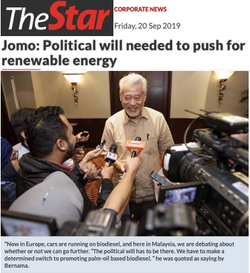
Political will needed to push for renewable energy

The Star 10July 2019

The Star 10July 2019

Malaysian businesses need boost

The Star 9 Oct 2019

The Star 9 Oct 2019

Subsidise public transport for bottom 40%

The Edge 26 Sept 2019

The Edge 26 Sept 2019

Call for measures to counteract global headwinds

The Edge 9 Oct 2019

The Edge 9 Oct 2019

Subsidise public transportation, not fuel

The Star 8 Oct 2019

The Star 8 Oct 2019

Subsidise public transportation for bottom 70%

TheEdge 2Oct 2019

TheEdge 2Oct 2019

"We need to counteract downward forces"

Fake News

PLEASE BEWARE OF MISREPRESENTATIONS OF IMAGES OF JOMO

Commercial and political misrepresentation of his image attributing to him to things which he never said or misrepresenting things he may have said is being circulated on websites such as those posted here. 


You should also be warned, in case you are not already aware, of ‘click bait’ i.e. using such images simply to attract your interest, and then to download your online information for abuse for a variety of ends.

Please inform us and provide a screenshot and weblink to enable further action, which is incredibly difficult. 

Thank you for reading this and for your help and cooperation.

This has also been flagged on his official Facebook page


JKS image ad2.jpg
JKS image Bitcoin ad on  Facebook.jpg
JKS - Fake News 2.jpg
Contact Me
JKS - Fake News 3.jpg
JKS fake news 1.jpg

Nadi Insan by the People's History Centre

Read all editions of #NadiInsan from 1979 to 1983 free of charge at the Peoples History Center website.


Containing writings on socio-political issues, film and cultural commentary, as well as in-depth interviews, Nadi Insan is motivated by community activists and intellectuals in Malaysia.

Happy reading!

Dapatkan kesemua siri majalah #NadiInsan dari tahun 1979 hingga 1983 secara percuma di laman Pusat Sejarah Rakyat.


Berisi tulisan memperihal sosio-politik, ulasan filem dan budaya sehinggalah wawancara yang rencam, Nadi Insan digerakkan oleh aktivis masyarakat dan intelektual di Malaysia.


Selamat membaca!

Contact Me

  • Facebook Social Icon
  • Twitter Social Icon

Thank you for reaching out!

bottom of page