top of page

Follow on Social Media

  • Facebook
  • Twitter
  • Screenshot 2022-09-18 at 5.20.40 PM

M'sia Developments
[on SubStack]

  • Screenshot 2022-09-18 at 5.20.40 PM

Anis Chowdhury and Jomo Kwame Sundaram

SYDNEY and KUALA LUMPUR: In July, the UN Secretary-General warned that a “series of countries in insolvency might trigger a global depression”. Earlier, the United Nations Conference on Trade and Development (UNCTAD) and the International Monetary Fund (IMF) had called for a US$2.5 trillion coronavirus crisis package for developing countries.

Debt distraction


In the face of the world’s worst economic contraction since the Great Depression, a sense of urgency has now spread to most national capitals and the Washington-based Bretton Woods institutions. Unless urgently addressed, the massive economic contractions due to the COVID-19 pandemic and policy responses to contain contagion threaten to become depressions.


Nevertheless, many long preoccupied with developing countries’ debt burdens and excessive debt insist on using scarce fiscal resources, including donor assistance, to reduce government debt, instead of strengthening fiscal measures for adequate and appropriate relief and recovery measures.


Most debt restructuring measures do not address countries’ currently more urgent need to finance adequate and appropriate relief and recovery packages. In the new circumstances, the debt preoccupation, perhaps appropriate previously, has become a problematic distraction, diminishing the ‘fiscal space’ for addressing contagion and its consequences.

Buybacks no solution


One problematic debt distraction is the renewed call for debt buybacks from private creditors, through an IMF-managed Brady Plan-like multilateral bond buyback facility funded by a global consortium of countries. The historical evidence is clear that bond buybacks are no panacea and neither an equitable nor efficient way to reduce sovereign debt.


The contemporary situation is quite different from the one three decades ago when US Treasury Secretary Brady’s plan successfully cut losses for the US commercial banks responsible for most debt to Latin American and other developing country governments. Hence, prospects for a comprehensive arrangement involving all creditors are far more remote now. Unsurprisingly, debt buybacks have been rare since the mid-1990s.


Furthermore, private bond markets have changed significantly from what they were during the Brady era when there was last a comparable effort involving many debtor countries. Importantly, the new creditors largely consist of pension and mutual funds, insurance companies, investment firms and sophisticated individual investors. Also, today’s creditors have less incentive to participate in sovereign debt restructurings.


Many of today’s creditors are now represented by powerful lobbies, most significantly, the International Institute of Finance (IIF). Unlike before, when their efforts focused on OECD developed economies, the IIF now actively works directly with developing country finance ministers and central bank governors.

Voluntary scheme problematic


But the debt buyback proposal, to be underwritten by a multilateral donor consortium, can inadvertently encourage hard bargaining by powerful creditors who know that money is available, while retaining the option of threatening litigation. Hence, resulting buybacks are likely to cost more. The evidence shows that a country’s secondary market debt price is higher when it has a buyback programme than otherwise.


Such an approach can also encourage trading in risky sovereign bonds promising higher returns, inadvertently sowing the seeds for another debt crisis. Private investment funds are more likely to buy such bonds if there is a higher likelihood of selling them off, while still making money from the high interest rates, even when the bonds are sold at large discounts.


The proposal’s voluntary feature also creates incentives for creditors to ‘free-ride’ by ‘holding-out’, thus undermining the likelihood of success. If the scheme is expected to effectively restore creditworthiness, then each existing creditor would hold on to the original claims, expecting market value to rise as new creditors provide relief.


Maintaining a good credit rating undoubtedly enables access to international funds at relatively lower interest rates. But low-income countries typically have poor access to international capital markets, and only get access by paying high risk premia, due to poor credit ratings.


Compared to near zero interest rates in major OECD economies, African governments pay 5~16% on 10-year bonds, while KenyaZambia and others pay more. Borrowing costs for developing countries issuing Eurobonds more than doubled due to high interest rates.


Also, many, if not most contemporary creditors are not primarily involved in lending money. They are therefore unlikely to respond to government requests for new loans needed to grow out of a debt crisis.


New obstacles include the greater variety of powerful creditors, the unintended incentives for free-riding inherent in voluntary debt reduction, problematic precedents as well as perverse incentives for both governments and bondholders. Perhaps most importantly, debt reduction by purely ‘voluntary’ means -- like buybacks, exit bonds, and debt-equity swaps – is unlikely to be adequate to the enormity of the problem.

Successful buybacks?


Only banks definitely gained from the Brady deals. Benefits were unclear for most debtors other than Mexico and Argentina, and particularly ineffective for Uruguay and the Philippines, where gains were paltry, if not negative.


Positive effects for economic growth were very small, as most buybacks failed to improve either market confidence in or the creditworthiness of debtor countries. Hence, even if private creditors participate, there is no guarantee that debtor countries will benefit significantly at the end of the long and complicated processes envisaged.

The 2012 Greek bond buybacks, backed by the European Commission, the European Central Bank and the IMF ‘troika’, effectively bailed out the mostly French and German banks owed money by Greece. Celebrated as a success, it neither restored Greece’s growth nor reduced its debt burden.


While bond buybacks can always be a debt restructuring option for consideration, Ecuador’s in 2008-2009 are probably the only one regarded as favourable to the debtor country. Wall Street observers suggest that Argentina’s recent initiative may also have a positive outcome.


Also, after successfully restructuring its commercial debt, the country is now better able to negotiate with its official creditors, particularly the IMF. These ‘successes’ have been exceptional, led by the countries themselves and ultimately settled on their terms, taking advantage of opportunities presented by global crises for comprehensive national debt restructuring.


Importantly, neither creditor consortia nor multilateral financial institutions were involved in coordinating or underwriting both restructurings, and hence could not impose onerous policy conditionalities. Thus, when able to take advantage of favourable conditions for negotiating strategic buybacks, debtor countries may be better able to benefit from them.

Urgent financing needed


Despite her earlier reputation as a ‘debt hawk’, new World Bank Chief Economist Carmen Reinhart recognizes the gravity of the situation and recently advised countries to borrow more: “First fight the war, then figure out how to pay for it.” Hence, in these COVID-19 times, donor money would be better utilized to finance relief and recovery, rather than debt buybacks.


Multilateral development finance institutions should resume their traditional role of mobilizing funds at minimal cost to finance development, or currently, relief and recovery, by efficiently intermediating on behalf of developing countries. They can borrow at the best available market rates to lend to developing countries which, otherwise, would have to borrow on their own at more onerous rates.


Jomo Kwame Sundaram

KUALA LUMPUR: Limited liability protection for shareholders in joint stock companies was introduced to encourage investments in them. However, it has encouraged irresponsibility, causing much harm while generating profits without responsibility.

Limited liability limits responsibility


Columbia Law School’s Professor Katarina Pistor has extended her critique of the legal system to emphasize the implications of such limited liability. Limited liability encourages shareholders not to pay attention to the harm corporations they invest in may do.


Instead, as emphasized by Milton Friedman, shareholders should focus on returns to investment, and not be distracted by other considerations, especially the notions of corporate social responsibility and stakeholderism.


Chicago University’s Professor Luigi Zingales has emphasized that companies are not just value-neutral institutional or contractual arrangements. Instead, they have obligations to serve the public good or otherwise benefit society, to reciprocate for privileges provided by the state.


“Historically we know that corporations were born as public institutions with a special privilege granted by the state... Even today, ... the privilege of limited liability, especially with respect to tort claims, is an extraordinary privilege granted by the state.”


The limited liability of these companies has allowed them to pursue profits with impunity, and to blatantly violate ethics and moral restraint, with little accountability to other ‘stakeholders’, i.e., with interests in the company’s activities and operations, including their consequences.


Limited liability effectively provides a legal guarantee to prospective shareholders intended to encourage investments in joint stock companies. Legal protection thus exempts shareowners from responsibility for the harm their corporations cause.

Limited liability companies


This amounts to a privileged legal exception granted by the state, effectively tantamount to an economic subsidy. Indeed, limited liability has long lay at the heart of the joint stock company. The corporation itself may face liability, but not shareholders who get to keep the profits they get.


Shareholders can, of course, lose money on their shareholdings, but they also profit without liability even if their companies harm others, cause ecological damage -- e.g., water or air pollution, or greenhouse gas emission -- and deliberately conceal and deny the dangers and costs of corporate practices which may involve corruption or other abuses, whether legal or otherwise.


In effect, shareholders bear virtually ‘no liability’ legally, and have no legal responsibility to other ‘stakeholders’. Unintended beneficial ‘side effects’ or ‘externalities’ for others were acceptable, but corporate governance should not be distracted and undermined by such considerations.


Shareholders are shielded from the consequences of the harm -- or ‘negative externalities’ -- that corporations inflict on others and on nature with the protection of ‘limited liability’. Under this legal dispensation, company shareholders are absolved of liability, regardless of the human and environmental costs caused by their activities, products or services sold.


Hence, limited liability has long been at the very core of their business models. Those running such limited liability companies have been quite aware of at least some of their ‘negative externalities’, or harm they cause, as such externalities are actually at the core of their profit maximizing strategies.


Thus, cost-saving or efficiency considerations typically involve skirting legal regulations, ‘passing on’ or ‘socializing’ costs, minimizing tax exposure, extracting non-renewable valuable resources, otherwise harming the environment, and other ‘socially irresponsible’ conduct.

Off the hook


In case after case of corporate crime, shareholders have been let off the hook: from the 1984 gas leak at the Union Carbide plant in Bhopal, India, which killed hundreds of thousands, to the health consequences of the use of tobacco, asbestos and other toxic and carcinogenic substances.


More recently, shareholders of Boeing, responsible for two airplane crashes in Indonesia and Ethiopia that killed 346 people, made US$43 billion from share repurchases during 2013-2019 when the firm ignored safety standards in order to cut costs. Meanwhile, the families of those who died will be compensated from a US$50 million disaster fund, i.e., about under US$150,000 per victim, much less than 0.2 per cent of the share repurchase gains.


A lawsuit against the Sackler family, which owns Purdue Pharma, the company believed to have profited most from the US opioid epidemic, is trying to hold beneficiaries of corporate misconduct accountable. Apparently, Purdue hired McKinsey as consultants to “turbocharge” opioid sales, willfully encouraging addiction, knowing it would lead to many deaths.


Nevertheless, fearing liability, some family members have reportedly moved much of their money to Switzerland. However, they need not fear as US courts have long protected influential shareholders from the victims of such corporate abuses, a norm unlikely to be reversed by senior judicial appointments in recent years.

Internalising externalities


Limited liability has often been criticised for preventing markets from properly pricing risks posed by corporate activities known to or suspected of causing substantial harm. But this, of course, presumes that assessing and pricing risk and harm by markets is straightforward, unproblematic and uncontroversial.


Property rights, it is claimed, increase efficiency by ensuring that owners bear the costs of the profit-seeking activities their assets are engaged in. Yet, limited liability protects investors from having to bear the full costs of their consequences while retaining profits so generated. Unsurprisingly, shareholders will defend such privileges and resist efforts requiring them to bear such costs.


‘Command and control’ or top-down regulation is dismissed as ineffective, costly and inefficient by the ideology of shareholder market capitalism. Meanwhile, market deterrents, e.g., via taxation, are opposed as governments are dismissed as incapable of setting optimal tax rates.


Shareholders also try to avoid liability by locating assets in safe havens, and by persuading governments to protect them, even threatening sanctions against those seeking to undermine such protection. But laws that allow investors to do harm with impunity also undermine the very legitimacy of the economic and legal system besides the very conditions for humanity’s survival.


Jomo Kwame Sundaram


KUALA LUMPUR: Limited liability protection for shareholders in joint stock companies was introduced to encourage investments in them. However, it has encouraged irresponsibility, causing much harm while generating profits without responsibility.


Limited liability limits responsibility

Columbia Law School’s Professor Katarina Pistor has extended her critique of the legal system to emphasize the implications of such limited liability. Limited liability encourages shareholders not to pay attention to the harm corporations they invest in may do.

Instead, as emphasized by Milton Friedman, shareholders should focus on returns to investment, and not be distracted by other considerations, especially the notions of corporate social responsibility and stakeholderism.

Chicago University’s Professor Luigi Zingales has emphasized that companies are not just value-neutral institutional or contractual arrangements. Instead, they have obligations to serve the public good or otherwise benefit society, to reciprocate for privileges provided by the state.

“Historically we know that corporations were born as public institutions with a special privilege granted by the state... Even today, ... the privilege of limited liability, especially with respect to tort claims, is an extraordinary privilege granted by the state.”

The limited liability of these companies has allowed them to pursue profits with impunity, and to blatantly violate ethics and moral restraint, with little accountability to other ‘stakeholders’, i.e., with interests in the company’s activities and operations, including their consequences.

Limited liability effectively provides a legal guarantee to prospective shareholders intended to encourage investments in joint stock companies. Legal protection thus exempts shareowners from responsibility for the harm their corporations cause.


Limited liability companies

This amounts to a privileged legal exception granted by the state, effectively tantamount to an economic subsidy. Indeed, limited liability has long lay at the heart of the joint stock company. The corporation itself may face liability, but not shareholders who get to keep the profits they get.

Shareholders can, of course, lose money on their shareholdings, but they also profit without liability even if their companies harm others, cause ecological damage -- e.g., water or air pollution, or greenhouse gas emission -- and deliberately conceal and deny the dangers and costs of corporate practices which may involve corruption or other abuses, whether legal or otherwise.

In effect, shareholders bear virtually ‘no liability’ legally, and have no legal responsibility to other ‘stakeholders’. Unintended beneficial ‘side effects’ or ‘externalities’ for others were acceptable, but corporate governance should not be distracted and undermined by such considerations.

Shareholders are shielded from the consequences of the harm -- or ‘negative externalities’ -- that corporations inflict on others and on nature with the protection of ‘limited liability’. Under this legal dispensation, company shareholders are absolved of liability, regardless of the human and environmental costs caused by their activities, products or services sold.

Hence, limited liability has long been at the very core of their business models. Those running such limited liability companies have been quite aware of at least some of their ‘negative externalities’, or harm they cause, as such externalities are actually at the core of their profit maximizing strategies.

Thus, cost-saving or efficiency considerations typically involve skirting legal regulations, ‘passing on’ or ‘socializing’ costs, minimizing tax exposure, extracting non-renewable valuable resources, otherwise harming the environment, and other ‘socially irresponsible’ conduct.


Off the hook

In case after case of corporate crime, shareholders have been let off the hook: from the 1984 gas leak at the Union Carbide plant in Bhopal, India, which killed hundreds of thousands, to the health consequences of the use of tobacco, asbestos and other toxic and carcinogenic substances.

More recently, shareholders of Boeing, responsible for two airplane crashes in Indonesia and Ethiopia that killed 346 people, made US$43 billion from share repurchases during 2013-2019 when the firm ignored safety standards in order to cut costs. Meanwhile, the families of those who died will be compensated from a US$50 million disaster fund, i.e., about under US$150,000 per victim, much less than 0.2 per cent of the share repurchase gains.

A lawsuit against the Sackler family, which owns Purdue Pharma, the company believed to have profited most from the US opioid epidemic, is trying to hold beneficiaries of corporate misconduct accountable. Apparently, Purdue hired McKinsey as consultants to “turbocharge” opioid sales, willfully encouraging addiction, knowing it would lead to many deaths.

Nevertheless, fearing liability, some family members have reportedly moved much of their money to Switzerland. However, they need not fear as US courts have long protected influential shareholders from the victims of such corporate abuses, a norm unlikely to be reversed by senior judicial appointments in recent years.


Internalising externalities

Limited liability has often been criticised for preventing markets from properly pricing risks posed by corporate activities known to or suspected of causing substantial harm. But this, of course, presumes that assessing and pricing risk and harm by markets is straightforward, unproblematic and uncontroversial.

Property rights, it is claimed, increase efficiency by ensuring that owners bear the costs of the profit-seeking activities their assets are engaged in. Yet, limited liability protects investors from having to bear the full costs of their consequences while retaining profits so generated. Unsurprisingly, shareholders will defend such privileges and resist efforts requiring them to bear such costs.

‘Command and control’ or top-down regulation is dismissed as ineffective, costly and inefficient by the ideology of shareholder market capitalism. Meanwhile, market deterrents, e.g., via taxation, are opposed as governments are dismissed as incapable of setting optimal tax rates.

Shareholders also try to avoid liability by locating assets in safe havens, and by persuading governments to protect them, even threatening sanctions against those seeking to undermine such protection. But laws that allow investors to do harm with impunity also undermine the very legitimacy of the economic and legal system besides the very conditions for humanity’s survival.


Latest Videos

All Videos

All Videos

AN URGENT CALL: A PEOPLE"S VACCINE AGAINST COVID-19

00:00
9 June 2020: IHD-ILO-ISLE Virtual Conference - Day 2

9 June 2020: IHD-ILO-ISLE Virtual Conference - Day 2

05:08:34
Learning in Governance in times of COVID-19

Learning in Governance in times of COVID-19

46:30
Beyond the Lockdown: Towards the ‘New Normal’

Beyond the Lockdown: Towards the ‘New Normal’

59:10

About Jomo

Jomo Kwame Sundaram is Research Adviser, Khazanah Research Institute, Fellow, Academy of Science, Malaysia, and Emeritus Professor, University of Malaya. Previously, he was UN Assistant Secretary-General for Economic Development, Assistant Director General, Food and Agriculture Organization (FAO), Founder-Chair, International Development Economics Associates (IDEAs) and President, Malaysian Social Science Association. 

In The Media

TheStar 26 June 2020

TheStar 26 June 2020

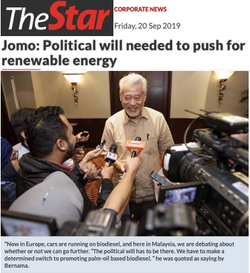
The Star 20 Sept 2019

The Star 20 Sept 2019

Political will needed to push for renewable energy

The Star 10July 2019

The Star 10July 2019

Malaysian businesses need boost

The Star 9 Oct 2019

The Star 9 Oct 2019

Subsidise public transport for bottom 40%

The Edge 26 Sept 2019

The Edge 26 Sept 2019

Call for measures to counteract global headwinds

The Edge 9 Oct 2019

The Edge 9 Oct 2019

Subsidise public transportation, not fuel

The Star 8 Oct 2019

The Star 8 Oct 2019

Subsidise public transportation for bottom 70%

TheEdge 2Oct 2019

TheEdge 2Oct 2019

"We need to counteract downward forces"

Fake News

PLEASE BEWARE OF MISREPRESENTATIONS OF IMAGES OF JOMO

Commercial and political misrepresentation of his image attributing to him to things which he never said or misrepresenting things he may have said is being circulated on websites such as those posted here. 


You should also be warned, in case you are not already aware, of ‘click bait’ i.e. using such images simply to attract your interest, and then to download your online information for abuse for a variety of ends.

Please inform us and provide a screenshot and weblink to enable further action, which is incredibly difficult. 

Thank you for reading this and for your help and cooperation.

This has also been flagged on his official Facebook page


JKS image ad2.jpg
JKS image Bitcoin ad on  Facebook.jpg
JKS - Fake News 2.jpg
Contact Me
JKS - Fake News 3.jpg
JKS fake news 1.jpg

Nadi Insan by the People's History Centre

Read all editions of #NadiInsan from 1979 to 1983 free of charge at the Peoples History Center website.


Containing writings on socio-political issues, film and cultural commentary, as well as in-depth interviews, Nadi Insan is motivated by community activists and intellectuals in Malaysia.

Happy reading!

Dapatkan kesemua siri majalah #NadiInsan dari tahun 1979 hingga 1983 secara percuma di laman Pusat Sejarah Rakyat.


Berisi tulisan memperihal sosio-politik, ulasan filem dan budaya sehinggalah wawancara yang rencam, Nadi Insan digerakkan oleh aktivis masyarakat dan intelektual di Malaysia.


Selamat membaca!

Contact Me

  • Facebook Social Icon
  • Twitter Social Icon

Thank you for reaching out!

bottom of page