top of page

Follow on Social Media

  • Facebook
  • Twitter
  • Screenshot 2022-09-18 at 5.20.40 PM

M'sia Developments
[on SubStack]

  • Screenshot 2022-09-18 at 5.20.40 PM

Anis Chowdhury and Jomo Kwame Sundaram

SYDNEY and KUALA LUMPUR: The World Bank has finally given up defending its controversial, but influential Doing Business Report (DBR). In August, the Bank “paused” publication of the DBR due to a “number of irregularities” after its much criticized ranking system was exposed as fraudulent.


Apparently, data from four countries – China, Azerbaijan, the UAE and Saudi Arabia – was “inappropriately altered”, according to the Wall Street Journal. Exposure of these irregularities was the final straw: now, it is uncertain whether the DBR will return after its suspension.


Exposing the lie


After Chief Economist Paul Romer told the Wall Street Journal two years ago that he had lost faith in the “integrity” of the DBR, and apologized to Chile for possibly politically motivated data manipulation, he was forced to resign. The Economist commented then, “His resignation may not end the controversy”.


Romer later received the so-called Economics Nobel Prize subsequent to his resignation. Almost two decades ago, Joseph Stiglitz also received the Prize after being forced to resign following differences with US Treasury Secretary Larry Summers in the wake of the 1997-1998 Asian financial crisis. later received the so-called Economics Nobel Prize following his resignation.


When Justin Sandefur and Divyanshi Wadhwa of the Center for Global Development (CGD) exposed how ostensibly methodological tweaking changed Chile’s and India’s DBR rankings to bolster “market-friendly” Piñera and Modi vis-à-vis their more centrist opponents. Simeon Djankov, founder of the Bank’s Doing Business index, dismissed the CGD and the two authors as “reformed Marxist”.

Doing Business vs SDGs


Djankov insisted that the DBR is about the costs of doing business, not “the benefits of running a society”. He contemptuously told those who criticised the DBR for failing to consider social or environmental impacts, to create their own “index that says the benefits of …regulation”.


For the DBR, it did not matter if reducing regulations harmed the environment or employment conditions, or if lowering taxes constrained governmental capacity to fund public investment and provide decent public health or social protection as long as such “reforms” lowered the costs of doing business.


Singlehandedly, Djankov exposed the shallowness of the Bank’s commitment to the Sustainable Development Goals (SDGs). By undermining social and environmental dimensions, Djankov exposed the Bank’s actual attitude to sustainable development.


Hence, the Bank had little choice but to ditch the DBR, which has already done enormous damage to development by encouraging harmful tax competition and ‘races to the bottom’ with regard to the protection of the environment and labour rights.

Racing to the bottom for nothing


Governments seek improvements in their country’s DBR ranking believing that it will increase growth via increased investment, especially foreign direct investment (FDI). However, the evidence has been disappointing.


For example, a World Bank Policy Research Working Paper found that, “on average, countries that undertake large-scale reforms relative to other countries do not necessarily attract greater [foreign direct investment] inflows”. For developing countries, it found an insignificant statistical relationship. Another study concluded, “the various studies do not provide guidance on which of the wide range of possible [investment climate (IC)] reforms are most strongly correlated with increased growth”.


Such ranking competition has encouraged debilitating investor-friendly government behaviour. The index has become a tool for governments to formulate, evaluate and legitimize their economic policies. Some now game the system to notch up their countries’ ranking with essentially cosmetic reforms.


Indonesia’s recent “Omnibus Bill” ostensibly for job creation includes many market-friendly reforms that would most certainly boost Indonesia’s DBR ranking. The bill, from a government increasingly influenced by the Bank, is now widely criticised for heavily favouring powerful business interests at the expense of workers, human rights and the environment.

Agrarian counter-revolution


Ditching the DBR may be a good start, but is far from enough. The Bank must also end other similar ‘ideologically driven’ exercises, such as its Enabling the Business of Agriculture (EBA) and Investing Across Borders (IAB) indicators, which prioritise FDI, typically at the expense of some SDGs.


The Bank’s EBA indicators project is an extension of its Benchmarking the Business of Agriculture (BBA) programme, first launched in 2013. BBA, partly based on the DBI methodology, was created after the G8 asked the Bank in 2012 to develop such an index for the G8’s controversial New Alliance for Food Security and Nutrition programme.


The Bank claimed, “The indicators provide a tangible measure of progress and identify regulatory obstacles to market integration and entrepreneurship in agriculture”, leading to a more modern commercial agriculture sector. Private agribusiness investors will be the main beneficiaries of its proposed land policies and environmental protection deregulation.


But the Bank does not bother to explain how farmers, especially smallholder or peasant farmers, will benefit from the proposed reforms or from large-scale commercial agriculture. Our Land; Our Business highlighted that the EBA will encourage corporate land grabs and undermine smallholder farmers who produce 80% of food consumed in the developing world.


In January 2017, over 158 organizations and academics from around the world denounced the EBA to the WB President and its five Western donors (USAID, DFID, DANIDA, the Netherlands, and the Gates Foundation), demanding its immediate end.


In response, the Bank made some cosmetic changes and dropped its controversial land indicator. However, its latest (2019) EBA still reflects its strong bias for commercial agricultural inputs and mono-cropping, undermining food security, sustainability as well as customary land holdings.

Favouring Foreign Direct Investment


The Bank’s International Finance Corporation (IFC) introduced its Investing Across Borders (IAB)indicators in 2010. Heavily influenced by Hernando de Soto, the IAB indicators were designed to complement the Bank’s DB indicators.

The IAB indicators claim to help accelerate economic growth by giving primacy to FDI as a driver for job creation, technology transfer, upgrading skills, fostering competition and fiscal consolidation. In fact, IAB indicators encourage frameworks that limit benefits for host countries besides enhancing the harmful effects of cross-border investment deals.


The indicators also violate the letter and spirit of the IFC’s Performance Standards for Environmental and Social Sustainability; Principles for Responsible Agricultural Investment respecting rights, livelihoods and resources; Voluntary Guidelines on the Responsible Governance of Tenure of Land, Fisheries and Forests; and various other international instruments.

One size never fits all


The rise and fall of the DBR expose the dangers of using and exaggerating the significance of standardised rankings for very different countries and business environments. An IC is typically complex and difficult to reduce to a few key indicators, let alone a meaningful composite index.


Reforming only certain aspects of business regulation because of the influence of Doing Business cannot possibly be optimal, especially when government capacity is constrained. Academic literature reviews conclude, “while there is empirical evidence that institutional reform can promote growth, it is less clear which reforms matter most, how to prioritise possible IC reforms, and what kinds of institutional frameworks and functions are needed”.


Growth drivers and constraints are very context specific, so reform priorities should also be context specific. Therefore, a one-size-fits-all approach to measuring and understanding complex investment environment issues is very problematic, especially one based on the interests and priorities of particular institutions and powers.


The Bank should stop doing harm by concentrating on its original mandate of intermediating finance at the lowest possible cost for sustainable development, relief and recovery in our extraordinary times. It should stop misleading the world, especially developing countries, with its highly biased supposed knowledge products.

Related IPS publications


“World Bank Must Stop Encouraging Harmful Tax Competition”, 10 October 2017. http://www.ipsnews.net/2017/10/world-bank-must-stop-encouraging-harmful-tax-competition-2/


“Stop worrying about ‘Doing Business’ ranking”, 23 December 2016. http://www.ipsnews.net/2016/12/stop-worrying-about-doing-business-ranking/


“More of the Same: World Bank Doing Business Report Continues to Mislead”, 15 December 2016. http://www.ipsnews.net/2016/12/more-of-the-same-world-bank-doing-business-report-continues-to-mislead/


“World Bank Dispossessing Rural Poor”, 18 April 2019. http://www.ipsnews.net/2019/04/world-bank-dispossessing-rural-poor/


Anis Chowdhury with Jomo Kwame Sundaram

SYDNEY and KUALA LUMPUR: US third quarter GDP numbers released two weeks ago delighted stock markets and President Trump. Output had picked up by 7.4%, annualised as 33.1%, the largest quarterly economic growth on record, almost double the old record of 3.9% (annualised as 16.7%) in the first quarter of 1950, seven decades ago.

Spinning numbers


This news could not have come at a better time for Trump, who is struggling for re-election, as his Council of Economic Advisers (CEA) declared that this affirmed Trump’s claim, “we’re coming back, and we’re coming back strong”. The CEA spun the White House press release headline accordingly, “The Great American Recovery: Third Quarter GDP Blows Past Expectations”.


The CEA attributed the record to “the strong foundation of the pre-pandemic economy and the efficacy of the Trump Administration”, portraying it as “a testament to the fortitude and resilience of America’s workers and families”.

Meanwhile, new US COVID-19 cases on the very same day reached a record high, surpassing 90,000 and still rising, with total cases nearing a million, with deaths four times the total American death toll during the two decade long Vietnam War, and fast approaching a quarter million.

Glass half full/empty

As COVID-19 rages unchecked, economic activity remained US$670 billion below its pre-pandemic peak. According to the ‘Back-to-Normal Index’ of Moody’s Analytics and CNN Business, the economy was only 82% of what it was in early March, with 10.7 million jobs lost since February!

Figures released by the Bureau of Labor Statistics in early October show that more than 12.6 million Americans were out of work while lasting job losses rose, with 36% of the jobless deemed permanently unemployed.

Those permanently laid-off ballooned from 1.5 million in March to 3.8 million in September, and the number of long-term unemployed (those jobless for 27 weeks or more) increased by 781,000 to 2.4 million. This number is still rising fast, threatening extreme hardship for many more households.


Prospects for those losing jobs may be bleak as US job recovery appears to be running out of steam. After adding 4.8 million jobs in June, job gains slowed to 1.8 million in July, 1.5 million in August and only 661,000 in September. As time passes and job growth continues to slow, it will take years to bring employment back to pre-pandemic levels.

Exaggerating trends


Annualising a quarterly or monthly rate tells us how much the economy would expand or shrink if the rate of change is maintained for a full year. But this can be misleading, by making mountains out of molehills. Undoubtedly, the second quarter’s massive collapse was followed by a large gain in the third.


But the third quarter recovery of 33% after the second quarter contraction of 33% does not mean the economy is back to where it was. If 100 drops 33% to 67, and then regains 33%, it gets to 89 (from 67) -- still 11 short of the original 100.

Rapid growth in one quarter does not mean the economy has gained strong momentum. The collapse in the previous quarter had set a low baseline. Hence, any rebound from that depressed base would generate a huge growth rate.

Hours worked are often a better proxy for employment and economic recovery. Average hours worked in the first quarter were 5.1 million, dropping to 4.5 million in the second, before recovering to 4.8 million in the third, still below pre-COVID levels.


Other evidence also indicates that the economy has been slowing. For example, consumption growth was slower every month from June to August than in the month before.


Similarly, retail sales slowed over mid-2020, before a slight rebound in September. The Chicago Federal Reserve National Economic Activity Index indicated that August growth was the slowest since recovery began in May.

Disparities widen


The prestigious Lancet has observed, “COVID-19 exacerbating inequalities”, as the pandemic sharpened various US disparities already growing for decades. As 45 million Americans lost their jobs, US billionaires made US$584 billion.

Meanwhile, US Centers for Disease Control and Prevention data show hospitalization rates for Blacks and Latinos 4.5 times that for non-Hispanic whites. A US National Academy of Sciences studyalso found age-adjusted COVID deaths more than 2.5 times higher for Blacks than for Whites.


US income and wealth inequalities have been rising since the early 1970s. The share of total income earned by the top decile (10%) rose from around 31% in the 1970s to about half in 2015, while the top 1% or percentile’s share rose from 8% to 20%.


Much of this increase among the top 10% came at the expense of workers in the bottom half of the distribution whose share of total income halved from 20% in the 1970s as median US workers’ real wages fell from 1973.


Over the past three decades, the wealth share of those in the top decile (10%) of household income rose from 61% to 70%, while that of the top 1% went up from 17% to 26%.


Jobless rates for Asians, Blacks and Hispanics were higher than the national average, even before the pandemic. Disproportionately employed in low paying occupations, they have sufferedmore job losses due to the pandemic.

Women have also suffered much more, e.g., as 617,000 women, compared to 78,000 men, dropped out of the labour force in September. Half of these women were between 35 and 44, the prime working age.

Omitting the important things in life


The pandemic can even augment GDP, which includes all COVID-related expenses, including those for treatments and funerals, plus the trillions that governments – federal, state, municipal – spend to tackle the crisis.

Perhaps, it is fitting to recall Robert Kennedy from over half a century ago:


“Too much and for too long, we seemed to have surrendered personal excellence and community values in the mere accumulation of material things. Our Gross National Product… counts air pollution and cigarette advertising, and ambulances to clear our highways of carnage.


“It counts special locks for our doors and the jails for the people who break them. It counts the destruction of the redwood and the loss of our natural wonder in chaotic sprawl.


“It counts napalm and counts nuclear warheads and armored cars for the police to fight the riots in our cities. It counts Whitman’s rifle and Speck’s knife, and the television programs which glorify violence in order to sell toys to our children.


“Yet the gross national product does not allow for the health of our children, the quality of their education or the joy of their play. It does not include the beauty of our poetry or the strength of our marriages, the intelligence of our public debate or the integrity of our public officials.


“It measures neither our wit nor our courage, neither our wisdom nor our learning, neither our compassion nor our devotion to our country, it measures everything in short, except that which makes life worthwhile.

“And it can tell us everything about America except why we are proud that we are Americans.”


This week is our final push in our campaign, so order the book now for only RM55! 


This promotion runs until October 31st, and we look forward to getting this book to you by mid to late November. Order through our website today!


Latest Videos

All Videos

All Videos

AN URGENT CALL: A PEOPLE"S VACCINE AGAINST COVID-19

00:00
9 June 2020: IHD-ILO-ISLE Virtual Conference - Day 2

9 June 2020: IHD-ILO-ISLE Virtual Conference - Day 2

05:08:34
Learning in Governance in times of COVID-19

Learning in Governance in times of COVID-19

46:30
Beyond the Lockdown: Towards the ‘New Normal’

Beyond the Lockdown: Towards the ‘New Normal’

59:10

About Jomo

Jomo Kwame Sundaram is Research Adviser, Khazanah Research Institute, Fellow, Academy of Science, Malaysia, and Emeritus Professor, University of Malaya. Previously, he was UN Assistant Secretary-General for Economic Development, Assistant Director General, Food and Agriculture Organization (FAO), Founder-Chair, International Development Economics Associates (IDEAs) and President, Malaysian Social Science Association. 

In The Media

TheStar 26 June 2020

TheStar 26 June 2020

The Star 20 Sept 2019

The Star 20 Sept 2019

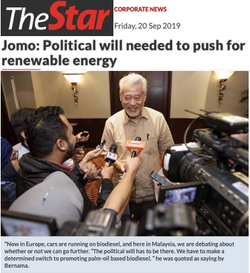
Political will needed to push for renewable energy

The Star 10July 2019

The Star 10July 2019

Malaysian businesses need boost

The Star 9 Oct 2019

The Star 9 Oct 2019

Subsidise public transport for bottom 40%

The Edge 26 Sept 2019

The Edge 26 Sept 2019

Call for measures to counteract global headwinds

The Edge 9 Oct 2019

The Edge 9 Oct 2019

Subsidise public transportation, not fuel

The Star 8 Oct 2019

The Star 8 Oct 2019

Subsidise public transportation for bottom 70%

TheEdge 2Oct 2019

TheEdge 2Oct 2019

"We need to counteract downward forces"

Fake News

PLEASE BEWARE OF MISREPRESENTATIONS OF IMAGES OF JOMO

Commercial and political misrepresentation of his image attributing to him to things which he never said or misrepresenting things he may have said is being circulated on websites such as those posted here. 


You should also be warned, in case you are not already aware, of ‘click bait’ i.e. using such images simply to attract your interest, and then to download your online information for abuse for a variety of ends.

Please inform us and provide a screenshot and weblink to enable further action, which is incredibly difficult. 

Thank you for reading this and for your help and cooperation.

This has also been flagged on his official Facebook page


JKS image ad2.jpg
JKS image Bitcoin ad on  Facebook.jpg
JKS - Fake News 2.jpg
Contact Me
JKS - Fake News 3.jpg
JKS fake news 1.jpg

Nadi Insan by the People's History Centre

Read all editions of #NadiInsan from 1979 to 1983 free of charge at the Peoples History Center website.


Containing writings on socio-political issues, film and cultural commentary, as well as in-depth interviews, Nadi Insan is motivated by community activists and intellectuals in Malaysia.

Happy reading!

Dapatkan kesemua siri majalah #NadiInsan dari tahun 1979 hingga 1983 secara percuma di laman Pusat Sejarah Rakyat.


Berisi tulisan memperihal sosio-politik, ulasan filem dan budaya sehinggalah wawancara yang rencam, Nadi Insan digerakkan oleh aktivis masyarakat dan intelektual di Malaysia.


Selamat membaca!

Contact Me

  • Facebook Social Icon
  • Twitter Social Icon

Thank you for reaching out!

bottom of page