top of page

Follow on Social Media

  • Facebook
  • Twitter
  • Screenshot 2022-09-18 at 5.20.40 PM

M'sia Developments
[on SubStack]

  • Screenshot 2022-09-18 at 5.20.40 PM

Jomo Kwame Sundaram and Anis Chowdhury


KUALA LUMPUR and SYDNEY: The World Bank has been leading other multilateral development banks (MDBs) and international financial institutions to press developing country governments to ‘de-risk’ infrastructure and other private, especially foreign investments.

They promote public-private partnerships (PPPs) supposedly to mobilize more private finance to achieve the Sustainable Development Goals. PPP advocacy has been stepped up after developing countries’ pleas for better international tax cooperation were blocked at the third United Nations’ Financing for Development conference (FfD3) in Addis Ababa in mid-2015.

Official support for infrastructure PPPs seems stronger than ever. The Bank’s Global Infrastructure Facility (GIF) was set up to coordinate MDBs, private investors and governments promoting PPPs. Meanwhile, the G20 has been trying to modify the mandates of national and international development banks to enable them to initiate infrastructure PPPs with the private sector.


De-risking?

The World Bank’s latest Guidance on PPP Contractual Provisions measures progress in terms of “successfully procured PPP transactions”. The Bank explicitly recommends ‘de-risking’ PPPs, effectively involving ‘socializing’ risks and privatizing profits.

But the term ‘de-risking’ is misleading as some risk is inherent in all project investments. After all, projects may encounter problems due to planning mistakes, poor implementation or unexpected developments. Hence, Bank advice does not really seek to reduce, let alone eliminate risk, but simply to make governments bear and absorb it.

Thus, ‘de-risking’ really means shifting risk from private investors to governments for more contingencies, including design, planning or implementation failures by private partners. This ignores the Bank’s Growth Commission’s concern that “In too many cases, the division of labor has put profits in private hands, and risks in the public lap”.


Off the books, out of sight

Both World Bank and International Monetary Fund (IMF) research has found many governments using PPPs and other similar arrangements to keep such projects ‘off the books’ of official central government accounts, effectively reducing transparency and accountability, while compromising governance.

Such project financing typically involves government-guaranteed – rather than direct government – liabilities. Not booked as government development or capital expenditure, it is also not counted as part of sovereign or government debt, e.g., for parliamentary reporting and accountability.

Instead, project costs are supposed to be paid for, over time, by direct user fees or government operational or current expenditure. Hence, most governments do not extend their normal accountability procedures to cover such expenditure and related debt.

The Fund has even warned of likely abuse of such seemingly ‘easy’ or ‘free’ money, emphasising the dangers of taking more government debt and risk ‘off the books’. This is very significant as the IMF rarely criticises Bank recommendations and advice, even indirectly.


Shifting responsibility

PPP financing is typically booked as government-guaranteed liabilities, rather than as sovereign debt per se. Being ‘off the books’, governments face fewer constraints to taking on ever more debt and risk. With such commitments, they also become much more vulnerable to ‘unforeseen’ costs.

Such contractual arrangements, typically set by private partners in most PPPs, do little to improve governance and accountability. To be sure, normal government budgetary accounting and audit procedures for PPPs may not meaningfully improve transparency and accountability.

As such financing arrangements are typically long-term, related government risks are correspondingly long-term, lasting decades in many cases. This tempts ‘short-termist’ governments ‘of the day’ to make long-term commitments they are unlikely to be held personally accountable for in the near to medium-term.


Moral hazard

World Bank guidance is clear that even a private partner who fails to deliver as contracted must be compensated for work done before a government can terminate a contract. Whether private partners actually deliver as promised does not seem to matter to the Bank which provides no guidance for addressing their failures to meet contractual obligations.

The Bank thus contributes to ‘moral hazard’ in PPPs: the less likely the private partner stands to lose from poor performance, the less incentive it has to meet contractual obligations. Guaranteeing cost recovery, revenue and profit erodes the motive to deliver as promised and to consider project risks.

Enthusiastic PPP promotion – by the Bank, other MDBs and donors urging developing country governments to bear more risk – is not only encouraging ‘moral hazard’, but also creating more opportunities for the corruption and abuse they profess to lament.

Instead, private partners have greater incentives to try gouging rents from government partners, e.g., by renegotiating existing contracts to their advantage. Conversely, governments have to choose between bearing the costs of failed projects, and paying even more to save problematic ones in the hope of cutting losses.

Faced with such choices, governments have little choice but to accede to their private partners’ demands. Bank guidance has thus further undermined governments in their dealings with private partners, who are now better able to demand improved contractual conditions for themselves, at the expense of their government partners.


Ignoring evidence

Many governments can undertake large infrastructure projects themselves, or alternatively, make much better procurement arrangements. IMF research has also found, “In many countries, PPPs have not always performed better than public procurement”.

Ironically, Bank research has shown that “well-run public firms tend to match the performance of private firms in regulated sectors”, concluding, “There is no ‘killer’ rationale for public-private partnerships”.

Even the Bank’s Research Observer has published a summary of “some of the most compelling examples of this kind of emerging critique” of infrastructure PPPs in telecoms, transport, water and sanitation, waste management and electricity.

Yet, the Bank continues to promote PPPs as the preferred mode of infrastructure financing, trying to shift more risk to governments, ostensibly to attract more private investment. Meanwhile, Bank guidance typically fails to warn governments of the risks involved and their implications.


Prejudiced guidance

Bank and other PPP advocates dismiss criticisms as ‘ideological’ despite growing empirical evidence. Such damning findings have had little impact on their PPP advocacy. Instead, the new fad is for more ‘blended finance’ to PPPs, using official concessional finance to subsidise and attract more private investment.

However, as The Economist has found, “blended finance has struggled to grow” as MDBs mobilise less than US$1 of private capital for every public dollar. It concluded, “early hopes may simply have been too starry-eyed. A trillion-dollar market seems well out of reach. Even making it to the hundreds of billions a year may be a stretch”.

Unsurprisingly, despite Bank, donor and other efforts, PPPs have only generated 15~20% of developing countries’ infrastructure investments, according to the Bank’s Independent Evaluation Group, while remaining negligible in the poorest countries.


Related IPS commentaries

“World Bank’s ‘Mobilizing Finance for Development’ Not Financing Development”, 25 Aug. 2020. https://www.ipsnews.net/2020/08/world-banks-mobilizing-finance-development-not-financing-development/

“Coping With World Bank-Led Financialization”, 30 Apr. 2019. http://www.ipsnews.net/2019/04/coping-world-bank-led-financialization/

“World Bank Financialization Strategy Serves Big Finance”, 9 Apr. 2019. http://www.ipsnews.net/2019/04/world-bank-financialization-strategy-serves-big-finance/

“World Bank Financializing Development”, 26 Mar. 2019. http://www.ipsnews.net/2019/03/world-bank-financializing-development/

“Blending Finance Not SDG Financing Silver Bullet”, 30 Apr. 2018. http://www.ipsnews.net/2018/04/blending-finance-not-sdg-financing-silver-bullet/

“PPPs Likely to Undermine Public Health Commitments”, 17 Jan. 2018. http://www.ipsnews.net/2018/01/ppps-likely-undermine-public-health-commitments/


Catch this Astro Vizhuthugal interview (in English) with Jomo, conducted on 29 October 2020, about 2 weeks before the Budget was unveiled, where he observes we are simultaneously facing an economic crisis, a Covid-19 crisis and a political crisis.


He refers to many countries and states which did not resort to severe lockdown measures but relied on strong early and appropriate action, involving an All of Government approach.


  • Nov 16, 2020
  • 4 min read

Jomo Kwame Sundaram and Anis Chowdhury

KUALA LUMPUR and SYDNEY: The United Nations’ renamed World Social Report 2020 (WSR 2020) argued that income inequality is rising in most developed countries, and some middle-income countries, including China, the world’s fastest growing economy in recent decades.

Inequality dimensions


While overall inter-country inequalities may have declined owing to the rapid growth of economies like China, India and East Asia, national inequalities have been growing for much of the world’s population, generating resentment.


In 2005, when the focus was on halving poverty, thus ignoring inequality, the UN drew attention to The Inequality Predicament. Secretary-General Kofi Annan warned that growing inequality within and between countries was jeopardizing achievement of the internationally agreed development goals.


“Leave no one behind” has become the rallying cry of the 2030 Agenda for Sustainable Development. Reducing inequality within and among countries is now the tenth of the Sustainable Development Goals (SDGs) adopted in 2015.

Uneven and unequal economic growth over several decades has deepened the divides within and across countries. Thus, growing inequality and exclusion were highlighted in earlier WSRs on Inequality Matters, The Imperative of Inclusive Development and Promoting Inclusion Through Social Protection.


The UNDP’s Human Development Report 2019 (HDR 2019) drew attention to profound education and health inequalities. While disparities in ‘basic capabilities’ (e.g., primary education and life expectancy) are declining, inequalities in ‘enhanced capabilities’ (e.g., higher education) are growing.


Meanwhile, inequalities associated with social characteristics, e.g., ethnicity and gender, have been widening. The January 2020 Oxfam Davos report, Time to Care, highlighted wealth inequalities as the number of billionaires doubled over the last decade to 2,153 billionaires, owning more than the poorest 60% of 4.6 billion.

Drivers of inequalities


WSR 2020 shows that the wealthiest generally increased their income shares during 1990-2015. With large and growing disparities in public social provisioning, prospects for upward social mobility across generations have been declining.


HDR 2019 found that growing inequalities in human development “have little to do with rewarding effort, talent or entrepreneurial risk-taking”, but instead are “driven by factors deeply embedded in societies, economies and political structures”. “Far too often gender, ethnicity or parents’ wealth still determines a person’s place in society”.


Capture of the state by rich elites and commensurate declines in the bargaining power of working people have increased inequality. Real wage rises lag behind productivity growth as executive remuneration sky-rockets and regressive tax trends favour the rich and reduce public provisioning, e.g., healthcare.

Polarising megatrends


HDR 2019 identifies climate change and rapid technological innovation as two megatrends worsening inequalities, with the WSR adding urbanisation and international migration. Technical change not only supports progress, creating more meaningful new jobs, but also displaces workers and increases income inequalities.


Meanwhile, global warming is negatively impacting the lives of many, especially in the world’s poorest countries, worsening inequality. While climate action will cause job losses in carbon-intensive activities, energy saving and renewable energy are likely to increase net employment.


International migration benefits migrants, their countries of origin (due to remittances) and their host countries. But immigrant labour may increase host countries’ inequalities by taking ‘dangerous, dirty, depressed’ and low-skilled work, pushing down wages, especially for all unskilled, while professional migrations are ‘brain drains’, creating new inequalities and worsening existing ones.

COVID-19 and divergence


COVID-19 may worsen divergence among countries owing to its uneven economic impacts due to the different costs and efficacy of containment, relief and recovery measures, influenced by prior health and health care inequalities as well as state capabilities.


Low-income countries have poorer health conditions, weaker health care and social protection systems, as well as less administrative and institutional capacities, including pandemic preparedness and response capabilities. Hence, they are more vulnerable to contagion, while lacking the means to respond effectively.


Rising protectionism and escalating US-China trade tensions have aggravated challenges faced by developing countries which also face declining trade, aid, remittances, export prices and investments. ‘Vaccine nationalism’ will worsen their predicament.

COVID-19 and inequality


The COVID-19 pandemic has highlighted many existing inequalities, and may push 71 million more people into extreme poverty in 2020, the first global rise since 1998, according to the 2020 UN SDGs Report.


As 55% of the world’s population do not have any social protection, lost incomes mean poverty and hunger for many more. Before COVID-19, 690 million were chronically food insecure, or hungry, while 113 million suffered severe acute food insecurity, or near starvation, mainly due to earlier shocks.


While those in the informal sector typically lack decent working conditions and social protection, most of the workforce do not have the means or ability to work from home during ‘stay in shelter lockdowns’ as most work is not readily done remotely, even by those with digital infrastructure.


Most have struggled to survive. Relief measures have not helped many vulnerable households, while recovery policies have not done much for liquidity-constrained small and micro-enterprisesfacing problems accessing capital, credit and liquidity, even in normal times.


Meanwhile, many of the world’s billionaires have done “extremely well” during the coronavirus pandemic, growing their already huge fortunes to a record US$10.2 trillion, according to a UBS-PwC report.


Widespread school closures are not only disrupting the education of the young, but also school feeding and child nutrition. Poor access to health services is making matters worse, as already weak health systems are further overstretched.

Unexpected crossroads


UN and Oxfam reports show that growing inequality is not inevitable. The world saw sustained growth with declining inequality in the Golden Age of the 1950s and 1960s. With the neoliberal counter-revolution against development and Keynesian economics, government commitments to development and tackling inequalities have waned.


A 2020 Oxfam report notes, “only one in six countries ... were spending enough on health, only a third of the global workforce had adequate social protection, and in more than 100 countries at least one in three workers had no labour protection ... As a result, many have faced death and destitution, and inequality is increasing dramatically”.


Governments must adopt bold policies to radically reduce the gap between rich and poor and to avoid a K-shaped recovery. Internationally, improved multilateralism can help check vaccine nationalism, rising jingoist protectionism and debilitating neoliberal trade and investment deals.

Related IPS commentaries

“Meritocracy Legitimizes, Deepens Inequality”, 18 June 2020.

“Coronavirus Exposes Global Economic Vulnerability”, 4 Mar 2020.

“Billionaires Beware”, 7 January 2020.

“Inequality and Its Many Discontents”, 3 December 2019.


Latest Videos

All Videos

All Videos

AN URGENT CALL: A PEOPLE"S VACCINE AGAINST COVID-19

00:00
9 June 2020: IHD-ILO-ISLE Virtual Conference - Day 2

9 June 2020: IHD-ILO-ISLE Virtual Conference - Day 2

05:08:34
Learning in Governance in times of COVID-19

Learning in Governance in times of COVID-19

46:30
Beyond the Lockdown: Towards the ‘New Normal’

Beyond the Lockdown: Towards the ‘New Normal’

59:10

About Jomo

Jomo Kwame Sundaram is Research Adviser, Khazanah Research Institute, Fellow, Academy of Science, Malaysia, and Emeritus Professor, University of Malaya. Previously, he was UN Assistant Secretary-General for Economic Development, Assistant Director General, Food and Agriculture Organization (FAO), Founder-Chair, International Development Economics Associates (IDEAs) and President, Malaysian Social Science Association. 

In The Media

TheStar 26 June 2020

TheStar 26 June 2020

The Star 20 Sept 2019

The Star 20 Sept 2019

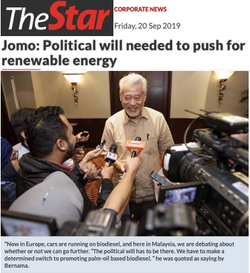
Political will needed to push for renewable energy

The Star 10July 2019

The Star 10July 2019

Malaysian businesses need boost

The Star 9 Oct 2019

The Star 9 Oct 2019

Subsidise public transport for bottom 40%

The Edge 26 Sept 2019

The Edge 26 Sept 2019

Call for measures to counteract global headwinds

The Edge 9 Oct 2019

The Edge 9 Oct 2019

Subsidise public transportation, not fuel

The Star 8 Oct 2019

The Star 8 Oct 2019

Subsidise public transportation for bottom 70%

TheEdge 2Oct 2019

TheEdge 2Oct 2019

"We need to counteract downward forces"

Fake News

PLEASE BEWARE OF MISREPRESENTATIONS OF IMAGES OF JOMO

Commercial and political misrepresentation of his image attributing to him to things which he never said or misrepresenting things he may have said is being circulated on websites such as those posted here. 


You should also be warned, in case you are not already aware, of ‘click bait’ i.e. using such images simply to attract your interest, and then to download your online information for abuse for a variety of ends.

Please inform us and provide a screenshot and weblink to enable further action, which is incredibly difficult. 

Thank you for reading this and for your help and cooperation.

This has also been flagged on his official Facebook page


JKS image ad2.jpg
JKS image Bitcoin ad on  Facebook.jpg
JKS - Fake News 2.jpg
Contact Me
JKS - Fake News 3.jpg
JKS fake news 1.jpg

Nadi Insan by the People's History Centre

Read all editions of #NadiInsan from 1979 to 1983 free of charge at the Peoples History Center website.


Containing writings on socio-political issues, film and cultural commentary, as well as in-depth interviews, Nadi Insan is motivated by community activists and intellectuals in Malaysia.

Happy reading!

Dapatkan kesemua siri majalah #NadiInsan dari tahun 1979 hingga 1983 secara percuma di laman Pusat Sejarah Rakyat.


Berisi tulisan memperihal sosio-politik, ulasan filem dan budaya sehinggalah wawancara yang rencam, Nadi Insan digerakkan oleh aktivis masyarakat dan intelektual di Malaysia.


Selamat membaca!

Contact Me

  • Facebook Social Icon
  • Twitter Social Icon

Thank you for reaching out!

bottom of page