top of page

Follow on Social Media

  • Facebook
  • Twitter
  • Screenshot 2022-09-18 at 5.20.40 PM

M'sia Developments
[on SubStack]

  • Screenshot 2022-09-18 at 5.20.40 PM

Jomo Kwame Sundaram

Competing, contradictory trends


Triumph of Injustice, the recent book by Emmanuel Saez and Gabriel Zucman, both associates of ‘rock-star’ economist Thomas Piketty, calls for a US return to progressive taxation. The duo show that the US had one of the world’s most progressive tax systems, but now, the richest pay a lower tax rate than the poorest.


The two French economists at Berkeley consider the two major competing US ideologies on taxation based on rival claims with contemporary echoes. The socially regressive, ostensibly libertarian tradition has its roots in property, including slaves, who once accounted for 40% of the population of the US South.


Plantation owners and slaveholders opposed property taxes in the name of freedom and liberty. Meanwhile, the myth of the wealthy that low taxes have long been part of US history and tradition has become far more influential.


Another more progressive tax ideology can be traced to more egalitarian traditions, including some involving wealth taxation. The US has actually had some of the highest tax rates on the rich in world history, as taxation became more progressive from the 1930s, especially after the Second World War.

Regressive turn


Those most responsible for the U-turn from the 1980s have been US Presidents Ronald Reagan and Donald Trump. The authors attribute the great recent increase in US economic inequality to the “negative spiral” involving regressive tax reforms over the last four decades.


However, empirical support for their claim is suspect as the ‘primary’ distribution of income before taxation is hardly egalitarian. Besides the traditional division between capital and labour, rentier incomes and much higher executive remuneration have become far more significant in recent decades.


While regressive tax incidence has undoubtedly made things worse, exaggerating the fiscal system’s redistributive impact detracts from a more comprehensive understanding of contemporary inequality.

Avoidance and evasion


Successive US governments have also enabled tax evasion and avoidance by not investing enough to effectively enforce what remains of the US tax code. These have been portrayed by beneficiaries and their propagandists as ‘unavoidable’.


They then claim that the best option to ensure greater compliance is to lower ‘headline’ tax rates. Thus, instead of greater efforts to reduce tax avoidance and evasion, they urge further reduction of tax rates.


Saez and Zucman insist that governments, especially the world’s most powerful one in Washington, DC, must come down hard on tax dodgers, pointing out that not doing so is due to political choices made. They propose a Federal Protection Bureau to enhance capacity against tax evasion and avoidance.

Corporate taxation


The duo show that corporate taxes were crucial in narrowing the gap between rich and poor during the Keynesian Golden Age for a quarter century or so in the mid-20th century after World War Two.


While very high top personal income tax rates, and much more inheritance and property taxes can help, they show that corporate taxation was crucial. The corporate income tax rate then was 50%, taking half of firm profits.


The high tax rate also encouraged re-investing profits, rather than paying dividends and bonuses, encouraging firm growth with higher capital accumulation in the long-term.


Meanwhile, progressive government expenditure complemented progressive taxation, including more direct taxes, for a comprehensively progressive fiscal system, reducing overall economic inequality. 

Proposals to reduce inequalities


Saez and Zucman persuasively offer a comprehensive set of proposals to reverse the downward spiral to rebuild a much more progressive US tax system, with many lessons very relevant elsewhere as well. Importantly, they discuss various options for the US, including many not requiring international cooperation.


They acknowledge that the US has already shown the way with its Foreign Account Tax Compliance Act (FATCA). FATCA compels all US citizens, both at home and abroad, to file annual reports on all their foreign holdings, ensuring greater financial transparency in the age of globalization.


Nevertheless, they insist it is not enough, arguing that “when it comes to regulating the tax industry, the Internal Revenue Service (IRS) brings a knife to a gunfight”, instead of enhancing US tax capacities and capabilities.

‘Tax all incomes equally’


The first principle of taxation for them is that all income should be taxed equally, whether from work or assets. Today, capital income is taxed much less than labour income, increasing inequality contrary to the popular presumption that taxation is progressively redistributive. 


Saez and Zucman also show that the rich can afford to pay 4% of national income, or US$750 billion more in tax. Four sets of taxes would double their current average tax rate from 30% to 60%.


They propose a steeply progressive income tax, arguing that a top rate of 75% is most viable. The duo also recommend strongly enforced corporate tax, doubling inheritance tax revenues, and introducing a wealth tax.

Wealth tax necessary


The duo also insist that it will be impossible to reduce inequality in the contemporary world only by raising corporate, inheritance and income taxes, as important as these are to the overall effort.


At the rates recommended, a wealth tax would raise significant sums, but still would not radically reduce inequality or extreme wealth concentration. Hence, the authors argue for higher rates, not only to raise more government revenue, but also to reduce extreme wealth inequality and concentration.


Saez and Zucman argue that extreme wealth concentration has led to growth benefits being captured by a few. They argue for taxing the rich, not only to enhance revenue, but also to reduce extreme wealth concentration.


For them, “a radical wealth tax would lead to a reduction in the number of multibillionaires. More than collecting revenue, it would deconcentrate wealth”. They suggest a 10% rate on fortunes over US$1 billion.


This would not only make it harder to be a billionaire, but also much harder to become and remain a multi-billionaire. If their proposed wealth tax was in place from 1982, most of the 400 richest Americans would still be billionaires, but worth much less.


Their wealth shares would be closer to what they were in 1982, before the rapid rise of wealth inequality. Mark Zuckerberg would still have US$21 billion, instead of US$61 billion, while Bill Gates would be worth US$4 billion, instead of US$97 billion.

Inequalities linked


Under President Franklin Delano Roosevelt in the 1930s, an income tax top rate of 94% was introduced, apparently not to raise revenue, but rather, to limit high incomes and wealth concentration.


This effectively limited income differentials between the highest and lowest paid to far more reasonable levels. As top tax rates have drastically fallen since, executives now get several hundred times more than their lowest paid employees.


In a recent interview, Gates commented, “I’m all for super-progressive tax systems…I’ve paid over $10bn in taxes. I’ve paid more than anyone in taxes. If I had to pay $20bn, it’s fine. But when you say I should pay $100bn, then I’m starting to do a little math about what I have left over.” 


  • Sep 1, 2020
  • 4 min read

Updated: Sep 7, 2020

Jomo Kwame Sundaram and Anis Chowdhury

KUALA LUMPUR, SYDNEY: After accusing the World Health Organization (WHO) of pro-China bias, President Donald Trump announced US withdrawal from the UN agency. Although the US created the UN system for the post-Second World War new international order, Washington has often had to struggle in recent decades to ensure that it continues to serve changing US interests.

Invisible virus trumps POTUS


In early July, Washington gave the required one-year notice officially advising the UN of its intention to withdraw from the WHO, created by the US as the global counterpart to the now century-old Pan-American Health Organization (PAHO).


However, the White House decision violates US law as it does not have express approval of the US Congress required by the 1948 joint resolution of both US legislative houses enabling US membership of the WHO.


Trump had already refused to meet US financial commitments. This too violates the 1948 resolution requiring the US to fully meet its financial obligations for the current fiscal year before leaving, probably presuming that earlier dues have been fully paid up.


The WHO needs more funding than ever to address the COVID-19 pandemic by increasing cooperation, coordination and awareness, establishing standards and protocols, and securing medical supplies for all, especially needy countries.

The world would have been much worse off without the WHO, e.g., as it tries to ensure that COVID-19 vaccines are affordably accessible to all. By contrast, Trump’s jingoistic policies and actions have even involved piracy.


After concluding a favourable trade deal early in the new year, Trump praised China on 24 January: “China has been working very hard to contain the Coronavirus. The United States greatly appreciates their efforts and transparency”.

As POTUS’s failure to better handle the COVID-19 pandemic has become apparent to most, he has created scapegoats to gloss over his gross mismanagement, demonizing China to also serve larger political purposes. Growing Western paranoia about China’s rise has contributed to collective amnesia.


POTUS has accused the WHO of deference to China and deliberate failure to provide accurate information about COVID-19. Despite disproven and unproven allegations, Trump’s allegations of WHO bias for China have dominated international public opinion.

WHO’s mixed record


WHO policy decisions are made by the World Health Assembly (WHA) with almost 200 Member States. As in other UN bodies, decisions adopted with developing countries in the majority have often not been to Washington’s liking. 

Without the bullying US presence, WHO’s functioning may improve, but the WHO will be weakened by reduced resources and possibly, sabotage. It will increasingly depend on other sources of funding, many private, US-based, which is likely to compromise its policies and practices.


Already, the WHO Secretariat has been widely criticised for favouring US interests, e.g., by procuring from US companies. US and other transnational companies greatly influence WHO policy and management decisions in their own favour.


Halfdan Mahler, a three-term WHO Director-General, warned that the pharmaceutical industry’s “unhealthy influence” was “taking over WHO”. Thus, any balanced inquiry of WHO bias should include the influence of big pharmaceutical corporations, especially as the agency increasingly depends on private funding.


Despite an official inquiry finding “no wrong doing” after a Council of Europe committee alleged possible conflicts of interest in WHO’s declaration of an A/H1N1 swine flu pandemic, criticisms of conflicts of interest remain.


The British Medical Journal found that key WHO influenza pandemic planning scientific advisers had been paid by pharmaceutical firms that stood to gain from the guidance they were preparing, i.e., possibly involving conflicts of interest never publicly declared.

Financial blackmail


UN organizations depend on mandatory annual contributions by Member States, determined according to agreed scales of assessment relative to their wealth and population. When a Member State fails to pay dues for the preceding two years, it loses voting rights.


The US should pay 22% of WHO’s annual budget, and the European Union 30%. Of the total of US$489 million for 2020, the assessed contribution for the US came to US$115 million.


However, the US has regularly defaulted, partially or wholly, on contributions due to the WHO and the UN secretariat among others. For instance, the US only paid a third of its assessed WHO contribution for 2019.


Thus, while low-income countries duly pay their statutory contributions, the world’s largest economy selectively withholds payments due in order to influence UN agencies’ policies, decisions and practices. 


Nonetheless, a larger share of WHO expenditure than the assessed US budgetary contribution ends up in the US to procure medicines, equipment and services.

US threatens UN multilateralism


Washington’s refusal to pay its WHO and other UN dues reflects its attitude to the democratization of the multilateral organizations it once created. US efforts to financially squeeze UN agencies are nothing new, having long refused to pay dues to the UN secretariat on various dubious grounds.


With its veto, the US has been able to ensure that the UN’s most strategic organ, the Security Council, could never undermine its interests despite the nominal ‘one-country-one-vote’ governance of much of the UN system. 

Undoubtedly, like much of the rest of UN system, the WHO needs reform, e.g., to improve accountability in decision-making, but progress has been blocked by various divides, with support for Trump’s accusations and vague reform demands driven primarily by political considerations.


The United Nations Educational, Scientific and Cultural Organization (UNESCO) has also come under US arm-twisting, with the US and Israel pulling out in December 2018 following its overwhelming General Conference decision to admit Palestine as a member.


When Ronald Reagan was president, the US had quit UNESCO in 1984 after claiming that then Senegalese Director-General Amadou-Mahtar M’Bow had been “politicizing” the organization. The US only rejoined in 2003 during the first George W. Bush presidential term, i.e., before the Iraq War.


Meanwhile, the US remains outside many other global multilateral initiatives, including the Convention on Biological Diversity, the Kyoto Protocol, the International Criminal Court and the Basel Convention, and has also withdrawn from the UN Framework Convention on Climate Change (UNFCCC) Paris Agreement and the UN Human Rights Council.


Even if he concedes the presidency in January, Trump’s jingoistic legacy has already irreversibly poisoned US public sentiment and international politics. Multilateralism and the UN system may well suffer irreversible collateral damage until an unlikely new ‘coalition of the willing’ rises to the challenge.


Anis Chowdhury and Jomo Kwame Sundaram

SYDNEY, KUALA LUMPUR: The World Bank leadership must urgently abandon its ‘Maximizing Finance for Development’ (MFD) hoax. Instead, it should resume its traditional multilateral development bank role of mobilizing funds at minimal cost to finance developing countries.


Funding is urgently needed for Covid-19 containment, relief and recovery efforts, to prevent recessions becoming protracted depressions and to achieve the Sustainable Development Goals (SDGs).


Mobilizing funds, maximizing finance


The World Bank’s MFD – a reheated version of its 2015 Billions to Trillions: Transforming Development Finance (B2T) campaign – promised to leverage billions of ODA into trillions of development finance. However, MFD has failed to achieve its purported objective to fill the estimated US$4~5 trillion annual SDGs funding gap.


Blended finance and public private partnerships (PPPs) are its two main instruments for such leveraging without offering evidence that either can and will deliver development projects much better than traditional public procurement.

Both benefit private finance at the expense of the public interest, particularly by increasing the risks of government contingent liabilities. Increasing such exposure is presented as an unavoidable cost of raising additional finance.


The Bank has long claimed that private finance offers the best solution to pressing development and welfare concerns. Its MFD strategy urges using public money to leverage private finance, and capital markets to transform bankable projects into liquid securities.


It presumes that most developing countries cannot achieve the SDGs’ Agenda 2030 with their own limited fiscal resources, especially as overseas development assistance (ODA) becomes increasingly scarce.

The strategy envisages multilateral development banks (MDBs) and development finance institutions increasing financial leverage through securitization to attract private investment, particularly by institutions.


It would deploy scarce public resources to ‘de-risk’ such financing arrangements by transforming ‘bankable’ development projects into tradable assets. Thus, governments bear more of the risks and costs of greater financial fragility.


The MFD approach had mobilized only US$0.37 of additional private capital for every US$1 of public money invested in low-income countries (LICs), according to an April 2019 study. Leverage ratios were generally low across sectors, and lowest for LIC and middle-income country (MIC) infrastructure.

Blended finance no magic bullet


The study also revealed that blended finance has effectively transferred risk from the private to the public sector. The public sector had borne 57% of the cost of blended finance investments on average, but 73% in LICs. Despite ever more public subsidies to incentivize private investment in LICs, leverage ratios may have declined.


Thus, “the big push for blended finance risks skewing ODA away from its core agenda of helping eradicate poverty in the poorest countries”. Others fear that blended finance “will crowd out ODA rather than crowd in private finance”.

Blended finance – “a heady cocktail of public, private and charitable money”, according to The Economist – came into vogue following the 2015 UN Conference on Financing for Development in Addis Ababa.


The Economist called it a “honey trap”, noting that blended finance was “floated at all manner of gatherings, from the recent meetings of the IMF and the World Bank to the World Economic Forum (WEF) in Davos”. The WEF claimed that every dollar of public money invested typically attracted US$1~20 in private investment.


However, as The Economist recently found, “blended finance has struggled to grow. Since 2014 the flow of public and private capital into blended projects and funds has stayed flat at about US$20bn a year…far off the goal of US$100bn set by the UN in 2015” for climate investments by 2020. On average, MDBs mobilize less than US$1 of private capital for every public dollar.


The Economist concluded, “merging public and private money will always be hard, and early hopes may simply have been too starry-eyed. A trillion-dollar market seems well out of reach. Even making it to the hundreds of billions a year

may be a stretch”.

Public finance, private profits


An early 2018 World Bank review of regulatory frameworks for procuring PPP infrastructure projectscame up with a long list of shortcomings in both developed and developing countries.


It found poor “government capabilities to prepare, procure, and manage such projects constitutes an important barrier to attracting private sector investments”. Thus, authorities often failed to consider PPPs’ fiscal implications, risks of opportunistic renegotiations and lack of transparency.


A 2018 European Court of Auditors report recommended that the EU and member states “should not promote a more intensive and widespread use of PPPs until the issues identified in this report are addressed”.


It had found “widespread shortcomings and limited benefits, resulting in €1.5 billion of inefficient and ineffective spending. In addition, value for money and transparency were widely undermined, particularly by unclear policy and strategy, inadequate analysis, off-balance-sheet recording of PPPs and unbalanced risk-sharing arrangements.”

Likewise, a 2018 UK National Audit Office report noted that it has “been unable to identify a robust evaluation of the actual performance of private finance at a project or programme level.” It also found the costs of one group of PPP projects in education around 40% higher than for a project financed by government borrowing.


Similarly, the Australian Auditor-General’s report on private health sector involvements concluded, “It appears governments have embarked on the path of increased privatisation without the benefit of rigorous analysis of the benefits and costs. Individual examples of privatisation have highlighted many problems which have resulted in costs rather than savings to the public purse”.


A more recent study concluded, “The mixed public-private funding and provision has had a deleterious effect on the Australian hospital system”. Clearly, PPPs have been much abused, even in developed countries with presumably better regulatory, governance and oversight capacities and capabilities than in most developing countries.

Mobilizing finance for private partners


In October 2017, ahead of the World Bank Group annual meeting, 152 organizations from 45 countries issued a manifesto opposing “the dangerous rush to promote expensive and high-risk public-private partnerships (PPPs)”. It pointed out that the “experience of PPPs has been overwhelmingly negative and very few PPPs have delivered results in the public interest”.


The World Bank’s Public Private Partnership in Infrastructure Resource Center (PPPIRC) has identified ten important risks of PPPs, such as “development, bidding and ongoing costs in PPP projects are likely to be greater than for traditional government procurement processes”.


The PPPIRC warned that “the cost has to be borne either by the customers or the government through subsidies”, and that the “private sector will do what it is paid to do and no more than that”.


Thus, there are serious doubts about the extent to which governments can count on the private sector to support sustainable development. Yet, the Bank claims unambiguously, “PPPs are increasingly recognized as a valuable development tool by governments, firms, donors, civil society, and the public”.


With the current World Bank leadership trying to reduce developing countries’ debt, it may well abandon the former Obama-appointed World Bank President’s MFD. But it also seems to be eschewing banks’ financial intermediation role of raising and lending funds at low cost to developing countries.

Related IPS readings:


Latest Videos

All Videos

All Videos

AN URGENT CALL: A PEOPLE"S VACCINE AGAINST COVID-19

00:00
9 June 2020: IHD-ILO-ISLE Virtual Conference - Day 2

9 June 2020: IHD-ILO-ISLE Virtual Conference - Day 2

05:08:34
Learning in Governance in times of COVID-19

Learning in Governance in times of COVID-19

46:30
Beyond the Lockdown: Towards the ‘New Normal’

Beyond the Lockdown: Towards the ‘New Normal’

59:10

About Jomo

Jomo Kwame Sundaram is Research Adviser, Khazanah Research Institute, Fellow, Academy of Science, Malaysia, and Emeritus Professor, University of Malaya. Previously, he was UN Assistant Secretary-General for Economic Development, Assistant Director General, Food and Agriculture Organization (FAO), Founder-Chair, International Development Economics Associates (IDEAs) and President, Malaysian Social Science Association. 

In The Media

TheStar 26 June 2020

TheStar 26 June 2020

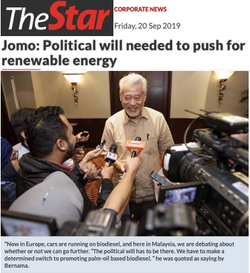
The Star 20 Sept 2019

The Star 20 Sept 2019

Political will needed to push for renewable energy

The Star 10July 2019

The Star 10July 2019

Malaysian businesses need boost

The Star 9 Oct 2019

The Star 9 Oct 2019

Subsidise public transport for bottom 40%

The Edge 26 Sept 2019

The Edge 26 Sept 2019

Call for measures to counteract global headwinds

The Edge 9 Oct 2019

The Edge 9 Oct 2019

Subsidise public transportation, not fuel

The Star 8 Oct 2019

The Star 8 Oct 2019

Subsidise public transportation for bottom 70%

TheEdge 2Oct 2019

TheEdge 2Oct 2019

"We need to counteract downward forces"

Fake News

PLEASE BEWARE OF MISREPRESENTATIONS OF IMAGES OF JOMO

Commercial and political misrepresentation of his image attributing to him to things which he never said or misrepresenting things he may have said is being circulated on websites such as those posted here. 


You should also be warned, in case you are not already aware, of ‘click bait’ i.e. using such images simply to attract your interest, and then to download your online information for abuse for a variety of ends.

Please inform us and provide a screenshot and weblink to enable further action, which is incredibly difficult. 

Thank you for reading this and for your help and cooperation.

This has also been flagged on his official Facebook page


JKS image ad2.jpg
JKS image Bitcoin ad on  Facebook.jpg
JKS - Fake News 2.jpg
Contact Me
JKS - Fake News 3.jpg
JKS fake news 1.jpg

Nadi Insan by the People's History Centre

Read all editions of #NadiInsan from 1979 to 1983 free of charge at the Peoples History Center website.


Containing writings on socio-political issues, film and cultural commentary, as well as in-depth interviews, Nadi Insan is motivated by community activists and intellectuals in Malaysia.

Happy reading!

Dapatkan kesemua siri majalah #NadiInsan dari tahun 1979 hingga 1983 secara percuma di laman Pusat Sejarah Rakyat.


Berisi tulisan memperihal sosio-politik, ulasan filem dan budaya sehinggalah wawancara yang rencam, Nadi Insan digerakkan oleh aktivis masyarakat dan intelektual di Malaysia.


Selamat membaca!

Contact Me

  • Facebook Social Icon
  • Twitter Social Icon

Thank you for reaching out!

bottom of page