top of page

Follow on Social Media

  • Facebook
  • Twitter
  • Screenshot 2022-09-18 at 5.20.40 PM

M'sia Developments
[on SubStack]

  • Screenshot 2022-09-18 at 5.20.40 PM

by Tim Wise


It’s been nearly fifty years since Frances Moore Lappé reminded us in her seminal work, Diet for a Small Planet, that hunger is not caused by a scarcity of food, it is caused by a scarcity of power. Economist Amartya Sen won a Nobel Prize more than twenty years ago for showing that famine was rarely caused by a lack of food.


Yet, here in 2020, with the world well aware of the twin dangers of hunger and malnutrition, there was Agnes Kalibata, the leader of the Alliance for a Green Revolution in Africa (AGRA), telling an online audience that poor, hungry countries can’t think about diet diversity, “it’s a luxury.”


The comments earned a sharp response from Jomo Kwame Sundaram, the Malaysian economist whose most recent post was Assistant Director General at the UN Food and Agriculture Organization.


“A popular and persistent misconception is that it is necessary to first overcome dietary energy undernourishment before addressing malnutrition,” he wrote in his column for InterPress Service.


Updated: Aug 18, 2020

Jomo Kwame Sundaram

KUALA LUMPUR: With the Covid-19 contagion from late 2019 spreading internationally this year, governments have responded, often desperately. Meanwhile, predatory international law firms are encouraging multimillion-dollar investor-state dispute settlement (ISDS) lawsuits citing Covid-19 containment, relief and recovery measures.


Sharing the pain

Most governments failed to introduce sufficient precautionary measures early enough to prevent Covid-19 contagions from spreading. And when they did act, they often believed they had little choice but to impose nationwide ‘stay in shelter’ lockdowns to enforce preventive physical distancing.

To enable businesses and households to survive the adverse effects of such lockdowns, governments have provided relief measures, for at least some of those believed to have been adversely affected, especially for businesses better able to lobby effectively. 

Meanwhile, there are already thousands of mainly bilateral investment treaties as well as bilateral and plurilateral trade agreements worldwide, enabling foreign investors to sue governments before private arbitration tribunals to profit from their wide-ranging treaty rights.

Transnational corporations (TNCs) can claim staggering sums in damages for alleged investment losses, for either alleged expropriation, or more typically, indirect ‘damage’ caused by regulatory changes, in this case, Covid-19 government response measures. 

As some such measures try to share the burden of the crisis, e.g., with asset owners and other contracting parties, the international law firm Shearman & Sterling advises financial firms, “While helping debtors, these measures would inevitably impact creditors by causing loss of income”, referring to debt relief and restructuring efforts among others. Foreign registered real estate or property companies can also sue governments that protect lessees or tenants who cannot make their lease or rent payments as contractually scheduled after their operations are shut down or disrupted by emergency regulations imposed. 

Pharmaceutical and medical supplies companies can also appeal to such arbitration tribunals to claim losses due to price controls and ‘violated’ intellectual property rights for Covid-19 tests, treatments, medical and protective equipment as well as vaccines.  Lucrative ISDS lawsuits

In recent months, international law firms have been encouraging ISDS lawsuits citing government measures to check contagion and mitigate their economic consequences, urging clients to invoke investment and trade agreements to claim for allegedly lost income or additional losses or costs due to new government policy measures.

Another firm Ropes & Gray advises: “Governments have responded to COVID-19 with a panoply of measures, including…limitations on business operations, and tax benefits. Notwithstanding their legitimacy, these measures can negatively impact businesses by reducing profitability, delaying operations or being excluded from government benefits…For companies with foreign investments, investment agreements could be a powerful tool to recover or prevent loss resulting from COVID-19 related government actions.” [my italics] 

Shearman & Sterling advises, “Some interventions will be protectionist—they will seek to support or benefit domestic enterprises (strategic or otherwise) but not foreign investors”, without mentioning their generally far lower tax contributions and generous investment incentives enjoyed. Profiting from the pandemic 

After advising clients to look out for discriminatory measures which could become the bases for such claims, law firm Sidley warns governments that proceedings can be very costly as “it is not only the actually invested amounts that can be considered recoverable damages, but also lost future profits”. 

Such law firms remind their clientele that many of the more than thousand ISDS lawsuits filed worldwide have arisen during political or economic crises. Covid-19 pandemic response measures are now being widely studied as possible pretexts for another round of lawsuits. 

These corporate lawsuits can impose massive fiscal burdens on governments. As Pia Eberhardtshows, legal costs average well over US$6 million per party, but can be much higher. Hence, such suits can drain government fiscal resources. 

Although it becomes much more expensive if governments lose, they still have to cover their own legal expenses even if they do not lose. As of 2018, governments had been ordered to pay US$88 billion for settlements made public.  There is considerable scope for such cases given the still growing, broad range of government Covid-19 measures, e.g., foreign-owned water supply companies can sue governments for insisting that more public water supply sources be provided, or household water supplies remain uninterrupted, even if water bills are not settled, to enable more regular hand washing.  ISDS undemocratic, illegitimate

International investment law is generally independent of national legislatures and biased toward TNC interests. Investment agreements prescribe foreign investor rights and privileges very broadly, but their duties and obligations, usually rather minimally. 

Sovereign national societies, parliaments and governments have considerable scope for discretion in addressing complex political issues involving diverse social and economic interests. Also, national courts generally do not award damages for lost future profits as these are considered completely conjectural. 

But ISDS provides much more favourable treatment to powerful TNCs. Also, international arbitration tribunals ignore and undermine the legitimate scope for national courts, law-making and democratic government decision-making.  The typically transnational arbitration tribunals that interpret such law generally ignore recent legal developments, which take more account of the rights and responsibilities of various other stakeholders in national societies. Thus, arbitration awards tend to be much more lucrative, for both TNCs and their lawyers, than ordinary national court decisions.

A South Centre Southview urges considering various measures in response to the threat such as terminating or suspending investment treaties, withdrawing consent to arbitration, statutorily prohibiting recourse to arbitration and appealing to TNCs’ corporate moral responsibility

Already, there are growing appeals for an immediate moratorium on ISDS lawsuits and to end ISDS proceedings involving Covid-19 emergency measures, while some countries, e.g., India, South Africa and Indonesia, had scrapped some of their bilateral investment treaties even before the crisis. 


The Southview opinion also chides the United Nations Commission on International Trade Law (UNCITRAL) for trifling with marginal reforms, instead of radically reconsidering the very illegitimacy of international investment arbitration itself.


Anis Chowdhury and Jomo Kwame Sundaram

SYDNEY & KUALA LUMPUR: Developing country debt has continued to grow rapidly since the 2008-2009 global financial crisis (GFC). Warnings against debt have been reiterated by familiar prophets of debt doom such as new World Bank chief economist, Carmen Reinhart, once dubbed the ‘godmother of austerity’.


Growing debt burden


Falling commodity prices, dwindling foreign reserves, slower global growth and weakening currencies have made it harder for developing countries to meet external debt payments.


This has involved economies of all income categories, reaching historical highs even before the pandemic. By early May, more than 100 countries had asked the International Monetary Fund (IMF) for help.


Developing countries’ government debt is likely to worsen with the pandemic induced recessions, triggering appeals for urgent debt standstills, cancellations and restructuring. While accumulated debt is undoubtedly problematic, debt phobia is now limiting fiscal options for coping with the worst economic downturn since the Great Depression.

In March, the United Nations called for a US$2.5 trillion package for developing countries to cope. By May, IMF Managing Director Kristalina Georgieva warned that the need is far greater.


While the Trump administration blocked the latest IMF Special Drawing Rights (SDRs) initiative, other debt relief initiatives, e.g., by the G20 and the IMF, are quite inadequate. Even David Malpass, the Trump nominated World Bank president, has criticised the G20 for falling short on debt relief, insisting “more needs to be done”.

Debt buybacks hardly novel


Surprisingly, rather than seeking to finance stronger fiscal responses to Covid-19 recessions, Joseph Stiglitz and Hamid Rashid have joined the chorus to address “catastrophic debt crises”, offering no evidence they are “impending”.


They discuss various options for debt relief and restructuring, and offer guidelines for bond buybacks, without mentioning April proposals by the UN, UNCTAD, the African Union and the UN Economic Commission for Africa.

While recognizing some limitations, the duo insist “bond buy-backs present a highly attractive solution, offering substantial debt relief at a relatively low cost”, which “has not received sufficient attention”.


They urge the IMF to use its New Arrangements to Borrow to buy debt at a discount, supplemented by funds from donors and multilateral institutions, but offer no convincing evidence why debt buybacks should now be prioritised over fiscal resources for recovery.

Brady debt buybacks


Under a US-led debt buyback initiative, named after then Treasury Secretary Nicholas Brady, indebted developing countries purchased US Treasury bonds to collateralize more than US$160 billion in replacement ‘Brady bonds’ from 1989.


The scheme restructured the debt of 18 developing countries long after sovereign debt crises began in 1981, following the US Fed’s sharp increase of interest rates to kill inflation. Thus, governments helped banks take defaulted loans, trading for small fractions of their face value on illiquid secondary markets, off their books.


Some banks took ‘haircuts’, but still got much more than what was available in secondary markets. Unlike in the current era, US interest rates were high, and thus, countries bought the Treasury zero-coupon bonds at an attractive discount.


Bloomberg’s Sydney Maki argued on 5 May that a second Brady plan is unlikely to work. The Brady plan transformed commercial bank loans, many in default, into collateralized bonds, but government debt today is owed to more diverse creditors including New York hedge funds, Gulf sovereign wealth funds and Asian pension funds.


Maki doubts that fund managers’ fiduciary duties would allow them to be lenient, even if so inclined. Terms of many deals cannot be legally changed without approval from most bondholders.

Debt buybacks for whom?


As some have noted, the plan undoubtedly relieved “pressure on Wall Street”, saving large US commercial banks which had pushed loans to developing countries in the 1970s. Stock prices of US commercial banks with significant developing country loan exposure rose 35% by US$13 billion after countries accepted the deal.


Jeremy Bulow and Kenneth Rogoff noted that “when highly indebted countries retire their deeply discounted debt, either through buy-backs or ‘debt-equity’ swaps, they may simply be using their scarce resources to subsidize their creditors”.


For them, buybacks and debt-equity swaps “are by themselves a boondoggle benefiting … creditors”. Stiglitz and Rashid dismiss this as just a “possibility”, citing the 1988 Bolivian debt buyback and the 2012 Greek bond buyback as two “good examples” of success stories.


In fact, when Bolivia bought back US$308 million in debt at face value in 1988, the price rose to 11 cents from 6 cents on the dollar, lowering the market value of the remaining debt (US$362 million at face value) to US$39.8 million.

As the earlier market value of its total bonds (US$670 million at face value) was US$40.2 million, the buyback only reduced its debt by US$400,000. This miniscule reduction cost donors US$34 million, which Bolivia would have been better off investing otherwise.


Furthermore, debtor countries participating in the Brady plan were required to deregulate, liberalize and privatize, i.e., implement structural adjustment, to qualify for Fund-Bank money to supplement their own foreign currency reserves for buybacks.

Greek tragedy


Financed by European taxpayers, the Greek buyback experience was no better. The price of 10-year benchmark Greek bonds also rose, as yield fell 147 basis points following announcement of the buyback.


Former Greek Finance Minister Yanis Varoufakis observed, “rumours of a debt buyback have pushed these bond prices to above 43%”; “its effect will be a net debt reduction 40% less than the Eurogroup’s stated target”, constituting “a reward to hedge funds and a ruthless,… massive involuntary haircut for Greece’s embattled banks”.


The New York Times agreed that the “bigger winners were hedge funds, which pocketed higher profits than many had expected”, while Moody’s Analytics correctly predicted that the “bond buyback will not end Greece’s debt woes”.

Greece was forced into excruciating austerity, plunging it into economic depression. As the economy contracted by 24%, unemployment hit 26%, the highest in the euro zone, by September 2009, less than a year later. Thus, debt buybacks may well help financial markets, litigious funds and global finance, rather than indebted countries.

Bond buybacks no panacea


Undoubtedly, debt buybacks may sometimes work in favourable circumstances when well planned as part of a broader financing strategy. Ecuador’s 2008-2009 bond buybacks were part of its external debt restructuring to secure relief from illegitimate ‘odious debt’.


With no pressure from acute financial stress, Ecuador repurchased over 90% through financial intermediaries, at 35 cents on the dollar, as its bond prices fell during the GFC.


Jeffrey Sachs agreed with Bulow and Rogoff that debt buybacks are “not necessarily a panacea for heavily indebted countries” unless “part of a comprehensive arrangement” for reduction of all debt with the full participation of all creditors involved.


Writing before Brady, he doubted the feasibility of such debt reduction as the US had previously blocked such arrangements in the interest of US banks. The political influence of US financial lobbies has only grown in recent decades. And, as Maki notes, a comprehensive arrangement involving all creditors is an even taller order now as they are more heterogenous.


Furthermore, it was reasonable then to assume that debtors only had a certain amount to repay, with other prices adjusting accordingly. However, bond market prices today easily ‘overshoot’, while debt restructurings are rarely sufficient, often delayed and very costly.


Promoting buybacks, backed by institutions like the IMF, also runs the risk of encouraging holdouts in future debt restructurings.


Instead of using scarce financial resources to buy back bonds, multilateral institutions and donors should help developing countries retrieve fiscal space to urgently prevent Covid-19 recessions becoming depressions.


Latest Videos

All Videos

All Videos

AN URGENT CALL: A PEOPLE"S VACCINE AGAINST COVID-19

00:00
9 June 2020: IHD-ILO-ISLE Virtual Conference - Day 2

9 June 2020: IHD-ILO-ISLE Virtual Conference - Day 2

05:08:34
Learning in Governance in times of COVID-19

Learning in Governance in times of COVID-19

46:30
Beyond the Lockdown: Towards the ‘New Normal’

Beyond the Lockdown: Towards the ‘New Normal’

59:10

About Jomo

Jomo Kwame Sundaram is Research Adviser, Khazanah Research Institute, Fellow, Academy of Science, Malaysia, and Emeritus Professor, University of Malaya. Previously, he was UN Assistant Secretary-General for Economic Development, Assistant Director General, Food and Agriculture Organization (FAO), Founder-Chair, International Development Economics Associates (IDEAs) and President, Malaysian Social Science Association. 

In The Media

TheStar 26 June 2020

TheStar 26 June 2020

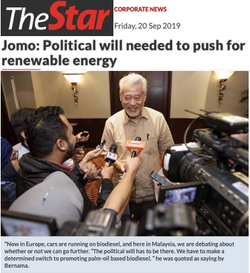
The Star 20 Sept 2019

The Star 20 Sept 2019

Political will needed to push for renewable energy

The Star 10July 2019

The Star 10July 2019

Malaysian businesses need boost

The Star 9 Oct 2019

The Star 9 Oct 2019

Subsidise public transport for bottom 40%

The Edge 26 Sept 2019

The Edge 26 Sept 2019

Call for measures to counteract global headwinds

The Edge 9 Oct 2019

The Edge 9 Oct 2019

Subsidise public transportation, not fuel

The Star 8 Oct 2019

The Star 8 Oct 2019

Subsidise public transportation for bottom 70%

TheEdge 2Oct 2019

TheEdge 2Oct 2019

"We need to counteract downward forces"

Fake News

PLEASE BEWARE OF MISREPRESENTATIONS OF IMAGES OF JOMO

Commercial and political misrepresentation of his image attributing to him to things which he never said or misrepresenting things he may have said is being circulated on websites such as those posted here. 


You should also be warned, in case you are not already aware, of ‘click bait’ i.e. using such images simply to attract your interest, and then to download your online information for abuse for a variety of ends.

Please inform us and provide a screenshot and weblink to enable further action, which is incredibly difficult. 

Thank you for reading this and for your help and cooperation.

This has also been flagged on his official Facebook page


JKS image ad2.jpg
JKS image Bitcoin ad on  Facebook.jpg
JKS - Fake News 2.jpg
Contact Me
JKS - Fake News 3.jpg
JKS fake news 1.jpg

Nadi Insan by the People's History Centre

Read all editions of #NadiInsan from 1979 to 1983 free of charge at the Peoples History Center website.


Containing writings on socio-political issues, film and cultural commentary, as well as in-depth interviews, Nadi Insan is motivated by community activists and intellectuals in Malaysia.

Happy reading!

Dapatkan kesemua siri majalah #NadiInsan dari tahun 1979 hingga 1983 secara percuma di laman Pusat Sejarah Rakyat.


Berisi tulisan memperihal sosio-politik, ulasan filem dan budaya sehinggalah wawancara yang rencam, Nadi Insan digerakkan oleh aktivis masyarakat dan intelektual di Malaysia.


Selamat membaca!

Contact Me

  • Facebook Social Icon
  • Twitter Social Icon

Thank you for reaching out!

bottom of page