top of page

Follow on Social Media

  • Facebook
  • Twitter
  • Screenshot 2022-09-18 at 5.20.40 PM

M'sia Developments
[on SubStack]

  • Screenshot 2022-09-18 at 5.20.40 PM

Jomo Kwame Sundaram

KUALA LUMPUR, Malaysia, Aug 11 (IPS)  - The Trans-Pacific Partnership (TPP) Agreement should be dead and buried after President Trump announced US withdrawal immediately after his inauguration in January 2017. After all, most major US presidential candidates in the last election, including Hillary Clinton, had opposed the TPP.


Encircling China with trade pact

However, the Japanese, Australian and Singaporean governments have kept the TPP alive, first by mooting TPP11, i.e., minus the USA, later pretentiously relabelled the Comprehensive and Progressive TPP (CPTPP), with the hope that the US will rejoin later.

Other governments have remained ‘on board' for various reasons, mainly foreign policy considerations, rather than with serious expectations of economic benefits, while ignoring the dangers and risks.

Last week, yet another ministerial meeting reiterated pious claims of steady progress as CPTPP boosters try to remain relevant despite the fast declining appetite for regional trade deals.

The CPTPP did not even get rid of the most onerous TPP provisions, but only suspended some intellectual property (IP) and other provisions, mainly of interest to the USA. These can easily be reincluded to bring the USA back in after the November election.

However, other onerous aspects, such as investor-state dispute settlement (ISDS) provisions, remain. In the wake of Covid-19, lawyers are already advising foreign investors how to use extraordinary coping measures to sue governments, which will cost them even if they win.

If re-elected, the Trump administration's opposition to ISDS can easily be accommodated to bring the US back on board as it seeks new measures to isolate and weaken China. Biden will also revive a TPP avatar, having supported it before as Obama's loyal Vice-President.

But reselling the TPP in the USA will not be easy. Already, many US manufacturing jobs have been lost due to corporations automating and relocating abroad. Trump has changed US public discourse so much that most Americans now blame globalization, immigration, China and foreigners for the problems they face.

False claims for trade deal

Various studies have shown that supposed trade gains from the TPP claimed by its advocates were greatly exaggerated and misleading. This should come as no surprise.

The US already has free trade agreements with six of the other 11 TPP countries. Trade barriers with the other five were already low in most cases, so there was little scope for further trade liberalization, except for US post-Vietnam war legislation.

All twelve also belong to the World Trade Organization (WTO) which concluded the ‘single largest trade agreement ever' over a quarter century ago. For trade liberalization guru Jagdish Bhagwati, both bilateral and plurilateral FTAs undermine trade liberalisation welfare arguments.

For the Peterson Institute of International Economics (PIIE), the principal TPP advocate, gains mainly come from additional foreign direct investment (FDI), due to more investor rights, implying greater concessions from, and less gains for host economies.

But the official US International Trade Commission doubted PIIE claims of significant growth benefits in mid-2016, well before Trump was elected. Supposed gains were either dubious or paltry over the long-term time horizon involved.

Investor friendly rules?

Rather than promoting trade, the TPP really sought more transnational corporation (TNC)-friendly rules. After all, the 6350-page deal had been negotiated by various working groups including hundreds of major US corporate representatives. But by involving lobbyists, US negotiators may well have locked themselves into a deal of little interest to most other businesses.

Doubts also remain over whether most TNCs really value the CPTPP's enhanced investor rights. The World Bank has found that investment treaties rank far below other considerations such as infrastructure, natural resource endowments, market size and growth potential.

Also, rules favouring foreign investors do not necessarily improve investment flows to host countries, let alone ensure development benefits without good national industrial policies in place.

Enriching rentiers

There is no evidence that stronger IP rights increase innovation, research and development. Strengthening IP monopolies for powerful TNCs, such as pharmaceutical firms, would raise the value of trade through higher prices, not more goods and services.

Extending IP protection would raise the prices of pharmaceutical drugs, including ‘biologics', significantly increasing health costs. For Medecins Sans Frontieres, the TPP would go down in history as the worst "cause of needless suffering and death" in developing countries.

US laws cannot protect consumers anywhere. Martin Shkreli infamously raised the price of a drug whose patent he had bought by 6000%, from USD12.50 to USD750! As ‘price-gouging' is not unlawful in the US, he was convicted for unrelated financial fraud.

Meanwhile, powerful pharmaceutical TNCs have made clear their intention to charge high prices for new vaccines despite enjoying government subsidies. Whereas vaccines for smallpox, polio, tuberculosis and other communicable diseases were available at cost, higher costs, due to enhanced IPRs, will impose heavy human and economic tolls.

Enabling foreign corporate bullying

FDI was expected to go up, thanks to enhanced TPP investor protection. Foreign companies could then sue TPP governments for ostensible loss of profits due to policy changes, even if in the national or public interest, e.g., to contain Covid-19 contagion.

ISDS is arbitered by private tribunals. This extrajudicial system supersedes national laws and judiciaries, with secret rulings not bound by precedent or subject to appeal.

All who have seriously studied TPP impacts concede that it offers little additional growth. Even the modest trade growth claims are premised on US market access, no longer on offer with the CPTPP, which incredibly, now claims even more growth benefits.

Without the USA, the CPTPP will mainly strengthen Japanese TNCs. With greater rights for foreign investors, domestic investments may even relocate abroad, e.g., to CPTPP tax havens. Declining foreign investment in recent years could thus accelerate with the CPTPP.

From the frying pan into the fire

The Covid-19 pandemic has precipitated severe recessions, which threaten to become depressions, as many governments had to impose nationwide ‘stay in shelter' lockdowns with physical distancing and other preventive requirements disrupting economic life.

It is now clear that the CPTPP has not slowed growing trade protectionism. Instead, transborder supply chains have been disrupted, sometimes deliberately, with the US and Japan demanding ‘onshoring', urging TNCs to withdraw investments and outsourcing from China, also hurting suppliers, many from South East Asia.


Jomo Kwame Sundaram, Anis Chowdhury

SYDNEY and KUALA LUMPUR, Aug 07 (IPS)  - International Monetary Fund (IMF) Managing Director Kristalina Georgieva has warned that developing countries would need more than the earlier estimated US$2.5 trillion to provide relief to affected families and businesses and expedite economic recovery.


With their limited fiscal capacities, developing countries will need to borrow more, increasing their often already high public debt burdens. Developing country debt has grown rapidly since the 2008-2009 global financial crisis (GFC), reaching historical highs even before the pandemic.


A deep pandemic induced depression may also require governments to take over huge private debt liabilities. All this has increased calls for urgent debt relief, cancellation and restructuring, and for new IMF and World Bank lending lines, including new IMF special drawing rights (SDRs).


Not enough debt relief

On 13 April, the IMF approved debt service relief for 25 eligible low-income countries (LICs), estimated at US$213.5 million, for six months, i.e., from 14 April until mid-October 2020.


On 15 April, G20 leaders announced their ‘Debt Service Suspension Initiative for Poorest Countries’ from May to the end of 2020 for 73 primarily LICs. The G20 initiative would cover around US$20 billion of bilateral public debt owed to official creditors by International Development Association (IDA) and least developed countries (LDCs).


Such steps are welcome, providing some temporary relief, but far short of the eligible countries’ long-term public and publicly guaranteed external debt of US$457 billion in 2018.


UNCTAD estimates that in 2020 and 2021, middle- and low-income countries face debt service repayments between US$700 billion and US$1.1 trillion, while upper middle-income developing countries expect to pay US$2.0~2.3 trillion.

The G20 initiative is already seen as merely kicking the can down the road. It does not cancel any debt, which is to be repaid in full over 2022–2024, as interest continues to grow. Hence, it is quite unlike the Heavily Indebted Poor Country (HIPC) Initiative and Multilateral Debt Relief Initiative (MDRI).


Furthermore, money saved from debt relief “can be used to pay the private creditors on time and in full”, i.e., prioritizing private over public creditors. The G20 initiative only applies to a limited number of countries, and does not impact the US$8 billion owed to private lenders and the US$12 billion debt to multilateral creditors.


An Oxfam report estimated that eligible countries are still required to pay at least US$33.7 billion for debt servicing this year, or US$2.8 billion monthly, “double the amount Uganda, Malawi, and Zambia combined spent on their annual health budget”.


Furthermore, the initiatives presume that Covid-19 shocks to developing economies will be short and swift, and that developing countries can make debt repayments over the next 3-4 years.


IMF and World Bank falling short

The World Bank has put in place a US$14 billion fast-track package to meet immediate health and economic needs, envisaging financial support of around US$160 billion during 2020-2021.


The IMF has doubled access to its Rapid Credit Facility and Rapid Financing Instrument to meet greater expected demand for emergency financing of about US$100 billion, without requiring “a full-fledged program in place”. By mid-June, various IMF facilities had committed around US$300 billion.


Although these financing instruments involve fewer conditionalities and faster approval, eligibility still depends on familiar — and, in current conditions, very restrictive — criteria. These include, inter alia, having to satisfy the ‘revamped’ joint Bank-Fund debt sustainability framework, which critics deem “obsolete”.


Therefore, actual urgent liquidity support falls far short of the IMF’s US$1 trillion lending capacity while the attempt to issue new SDRs for Covid-19 has been blocked by the Trump administration.


Debt reduction wrong priority now

The UN warned of the dire consequences of the Covid-19 pandemic in April, and in May, argued that without bold policy action, the pandemic would set back the SDGs.


Facing the greatest economic crisis since the 1930s, many developing countries have little choice but to borrow to create fiscal space, rather than focus on complicated, time-consuming long-term debt restructuring, workouts or buybacks.


Instead of obsessing over debt, some developing countries are tapping global debt markets to meet Covid-19 financing needs. When governments can borrow on reasonable terms to invest in projects needed for sustainable development, debt may even be desirable, if not necessary, especially in resource-poor countries.


For some, in a low interest rate environment, it is reasonable for developing countries to borrow more, even raising their debt/GDP ratios to levels previously regarded as dangerous, to fund recovery. This time, it is really different as debt costs are lower and are expected to stay low for some time to come.


Furthermore, the consequences of fiscal inaction, so as to not take on debt, can be disastrous for the developing world, paradoxically making current stock of debt unsustainable. On the other hand, new borrowing to mitigate the negative impact of the pandemic on growth can make debt sustainable.


However, most non-investment grade developing countries have to pay substantially higher risk premiums, due to the prejudices and biases of market finance, even when their macroeconomic ‘fundamentals’ are sound.


Pandemic emergency financing fiasco

After the 2014 Ebola epidemic in West Africa, the Bank launched the Pandemic Emergency Financing Facility (PEF) in July 2017, using insurance-like ‘catastrophe bonds’ and derivatives to raise private sector money for LICs’ pandemic responses.


The PEF promised to “blend the best of the public and private sectors, helping to keep 1.6 billion people safe” while “transferring [financial] risk [from governments] to international markets”.


To draw investors, the PEF has stringent and controversial rules on when and how much to pay-out. To make them attractive to investors, PEF bonds were designed to reduce the probability of paying out.


Due to its complicated approval process the PEF had not paid out a single dollar until the end of March, although the World Health Organization designated the Covid-19 outbreak a “public health emergency of international concern” on January 30, and a “pandemic” on 11 March. The pay-out decision was only made on 27 April; as of 27 July, only a paltry US$146.5 million had been “transferred to support” 48 countries — “too little, too late”, even for The Wall Street Journal.


Meanwhile, its “cash window” – funded by donors – has not been replenished after being used up for the Ebola outbreak in the Democratic Republic of Congo in 2018-2019.


In April 2019, Larry Summers, former World Bank chief economist and US Treasury Secretary, described the PEF as “an embarrassing mistake” and “financial goofiness”, noting that the programme was “loved” for promoting private sector involvement.


Intermediation role required

With preferred creditor status, the Fund and the Bank can borrow ‘cheaply’, i.e., at the much lower interest rates available to them. By intermediating, they can enable developing countries, especially LICs and LDCs, to borrow cheaply for their relief and recovery.


A first step would be to ditch the last Bank president’s now discredited ‘mobilizing finance for development’ (MFD) framework to use public funds, including official development assistance (ODA), to leverage private finance for public-private partnerships (PPPs).


As with the PEF, the MFD approach has failed to leverage billions in ODA into trillions of development finance, as promised, mobilizing only US$0.37 of additional private capital for LICs for every US$1 of public money invested.


Jomo Kwame Sundaram


KUALA LUMPUR, Malaysia, Aug 04 (IPS)  - The 2020 State of Food Security and Nutrition in the World, issued by the Food and Agriculture Organization and its United Nations partners in mid-July, reports that chronic hunger continued to increase to 690 million worldwide in 2019, 60 million more than in 2014. Some two billion people worldwide were already experiencing some food insecurity during 2019, a number likely to spike upward due to Covid-19. Although headline hunger numbers have been significantly revised down retrospectively with better official data, the uptrend remains alarming. The 2020 UN report continues to expand its coverage of malnutrition, going beyond the old narrow focus on dietary energy or caloric undernourishment. With its cost estimates for healthy diets much higher than for energy-based diets, as many as three billion people in the world cannot afford nutritious diets. Another false start in Africa Even progress in addressing dietary energy undernourishment in the world has been uneven, with Africa projected to overtake South Asia in a decade as the region with the most hungry people, rising to 433 million in 2030 from a quarter billion. The report False Promises argues that despite improved understanding of malnutrition, a narrow focus on increasing caloric supply, at the expense of both crop and dietary diversity, is being promoted by the Alliance for a Green Revolution in Africa (AGRA). AGRA promised to double productivity and incomes for 30 million small-scale farming households while halving food insecurity by 2020 in the 11 remaining focus countries using high-yielding commercial seeds, fertilizers and pesticides. Launched by the Bill and Melinda Gates Foundation in 2006, AGRA has spent almost US$1 billion promoting such practices. The report shows problematic outcomes, with AGRA "failing on its own terms". Who gains from subsidies? As most farmers cannot afford AGRA's expensive recommended commercial seeds and fertilizers, African governments subsidise them at the cost of about US$1 billion annually. Subsidies for commercial seeds and fertilizers have mainly promoted ‘starchy' crops, such as maize and rice, resulting in much more land planted with such subsidized crops, often replacing more climate-resilient, nutritious crops such as sweet potato and millet. However, the promised productivity surge has not happened, only rising modestly, with net incomes barely increasing, if at all, despite the subsidies. Meanwhile, the number of hungry people in AGRA focus countries has increased by 30% since 2006! Maize production rose 87%, mainly due to more land being planted with it, while millet fell 24%, with yields falling 21% in AGRA countries. Staple root crops, including sweet potato and cassava, saw a 7% yield decline under AGRA. As it reaches its own 2020 deadline, neither AGRA nor the Gates Foundation has published any overall evaluation of its impacts on the yields, incomes, food security and nutritional status of the smallholder households reached. Food systems for healthy diets Most African farmers are believed to be poor, growing crops for both subsistence and sale. But diverse, healthy diets for them are now less affordable as nutritious, climate-resilient, ‘traditional' crops have been displaced by AGRA-promoted crops such as maize and rice.     Such Green Revolution programmes have thus undermined sustainable crop diversity supportive of dietary diversity. These generally include more plant-based diets, considered better for both human health and the environment. Sustainable farming should instead promote nutritious, affordable diets for all, especially the world's half billion small-scale farmers who, along with their families, comprise many of the world's hungry. By contrast, nearly 300 large ‘ecological agriculture' projects in more than fifty poor countries apparently averaged a 79% productivity increase, with declining costs and increasing incomes, more impressive than AGRA, and with superior nutrition outcomes. Rwanda's AGRA record Rwanda's purported success as an AGRA focus country elevated Rwandan Agriculture Minister Agnes Kalibata to AGRA's leadership in September 2014. In late 2019, she was named to lead preparations for the UN Secretary-General's World Food Systems Summit in 2021. Rwanda's maize production grew four-fold, with a 66% yield rise due to fertilizers and high-yielding seeds, with the rest presumably due to 146% more land under the crop. Rice output nearly doubled under AGRA, as planted rice land rose 147% as yields fell 19%. But this boom has come at the expense of more nutritious and diverse small-scale agriculture, with the AGRA package imposed with a heavy hand, and the government reportedly banning cultivation of some other staple crops in some areas. Sorghum, cassava, sweet potato, and other roots and tubers were more important food crops than maize before AGRA, providing dietary diversity and benefits to the soil. Land under cassava fell 16%, while that under sorghum declined 17%. One step forward, two steps back Dr Kalibata claims to have raised per capita calorie production from 1,700 to 2,700 daily. But Tim Wise's Staple Yield Index suggests a more modest overall net yield increase of 24% after 12 years of AGRA-influenced policy. Although maize output rose four-fold as rice harvested doubled, chronic hunger increased by over 40% between 2006 and 2019 as the number of undernourished rose by 1.3 million to 4.4 million according to the UN report. Meanwhile, Rwandan poverty, which had fallen by half a million in the dozen years before AGRA, rose by half a million under AGRA. The Rwandan government campaign was resisted by many farmers, eventually forcing it to relax some crop restrictions, to allow more diversity, as President Paul Kagame sought re-election in 2017. Nonetheless, maize and other favoured crops remain heavily subsidized and supported. The AGRA model imposed on previously relatively diverse Rwanda farming almost certainly undermined its more nutritious and sustainable traditional agricultural cropping patterns, which are not easily measured using money-metric indices. Replacing hunger with malnutrition A popular and persistent misconception is that it is necessary to first overcome dietary energy undernourishment before addressing malnutrition. Dr Kalibata has argued that "poor, hungry countries can't think about diet diversity, it's a luxury". While traditional and subsistence food production and consumption undoubtedly had problems, food access and dietary diversity were generally better. ‘Hidden hunger' is best addressed by dietary diversity, supported by crop diversity in farming, rather than the Green Revolution's exclusive focus on raising caloric intake. Thus, seemingly paradoxically, ‘dirt-poor' subsistence farmers' children may have better diets than those of richer mono-cropping farmers. Monoculture's damaging impacts on biodiversity, natural resources and ecosystems are also well-known. With growing recognition of the many problems of health, human development and wellbeing due to malnutrition, including maternal, infant and child malnutrition, it would be a major step back to singularly focus on dietary energy intake. Food systems against malnutrition At the mid-point of the UN Decade of Action on Nutrition since 2016, it is crucial that the 2021 UN Food Systems Summit ensures that food systems do not leave anyone behind in the ongoing struggle against malnutrition. This could happen if micronutrient deficiencies and other health problems are ignored in singular pursuit of increasing caloric output, which may not even reduce hunger, as in Rwanda. Clearly, progress will not be achieved by either a nostalgic return to tradition or subsistence in very changed circumstances, or blind faith in corporate profit-driven technological change, insensitive to the needs of resource and ecological sustainability, social justice, farmer welfare, food safety, human nutrition and health. Progressively transform food systems The July UN report, subtitled Transforming Food Systems for Affordable Healthy Diets, suggests how food systems need to be changed to enable affordable, nutritious diets for the billions who cannot afford them, thus building on the 2014 second International Conference on Nutrition. The report recognises the fundamental importance of both the ‘hidden hunger' of micronutrient deficiencies and diet-related non-communicable diseases (NCDs). Most fruits, vegetables and other nutrient dense foods are now beyond the reach of low-income households. The challenge is compounded by poor food consumption habits and bad dietary behaviour due to other influences such as advertising, markets, convenience and changing lifestyles. Policies to reduce costs and improve access to healthy diets for all clearly need urgent attention. As developing countries reconsider food supply chains after recent disruptions due to unexpected Covid-19 contagion, containment and relief measures, the vulnerable must be prioritized, with up to 130 million more projected to go hungry due to lost incomes.


Latest Videos

All Videos

All Videos

AN URGENT CALL: A PEOPLE"S VACCINE AGAINST COVID-19

00:00
9 June 2020: IHD-ILO-ISLE Virtual Conference - Day 2

9 June 2020: IHD-ILO-ISLE Virtual Conference - Day 2

05:08:34
Learning in Governance in times of COVID-19

Learning in Governance in times of COVID-19

46:30
Beyond the Lockdown: Towards the ‘New Normal’

Beyond the Lockdown: Towards the ‘New Normal’

59:10

About Jomo

Jomo Kwame Sundaram is Research Adviser, Khazanah Research Institute, Fellow, Academy of Science, Malaysia, and Emeritus Professor, University of Malaya. Previously, he was UN Assistant Secretary-General for Economic Development, Assistant Director General, Food and Agriculture Organization (FAO), Founder-Chair, International Development Economics Associates (IDEAs) and President, Malaysian Social Science Association. 

In The Media

TheStar 26 June 2020

TheStar 26 June 2020

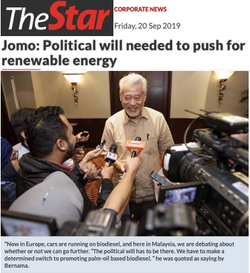
The Star 20 Sept 2019

The Star 20 Sept 2019

Political will needed to push for renewable energy

The Star 10July 2019

The Star 10July 2019

Malaysian businesses need boost

The Star 9 Oct 2019

The Star 9 Oct 2019

Subsidise public transport for bottom 40%

The Edge 26 Sept 2019

The Edge 26 Sept 2019

Call for measures to counteract global headwinds

The Edge 9 Oct 2019

The Edge 9 Oct 2019

Subsidise public transportation, not fuel

The Star 8 Oct 2019

The Star 8 Oct 2019

Subsidise public transportation for bottom 70%

TheEdge 2Oct 2019

TheEdge 2Oct 2019

"We need to counteract downward forces"

Fake News

PLEASE BEWARE OF MISREPRESENTATIONS OF IMAGES OF JOMO

Commercial and political misrepresentation of his image attributing to him to things which he never said or misrepresenting things he may have said is being circulated on websites such as those posted here. 


You should also be warned, in case you are not already aware, of ‘click bait’ i.e. using such images simply to attract your interest, and then to download your online information for abuse for a variety of ends.

Please inform us and provide a screenshot and weblink to enable further action, which is incredibly difficult. 

Thank you for reading this and for your help and cooperation.

This has also been flagged on his official Facebook page


JKS image ad2.jpg
JKS image Bitcoin ad on  Facebook.jpg
JKS - Fake News 2.jpg
Contact Me
JKS - Fake News 3.jpg
JKS fake news 1.jpg

Nadi Insan by the People's History Centre

Read all editions of #NadiInsan from 1979 to 1983 free of charge at the Peoples History Center website.


Containing writings on socio-political issues, film and cultural commentary, as well as in-depth interviews, Nadi Insan is motivated by community activists and intellectuals in Malaysia.

Happy reading!

Dapatkan kesemua siri majalah #NadiInsan dari tahun 1979 hingga 1983 secara percuma di laman Pusat Sejarah Rakyat.


Berisi tulisan memperihal sosio-politik, ulasan filem dan budaya sehinggalah wawancara yang rencam, Nadi Insan digerakkan oleh aktivis masyarakat dan intelektual di Malaysia.


Selamat membaca!

Contact Me

  • Facebook Social Icon
  • Twitter Social Icon

Thank you for reaching out!

bottom of page