top of page

Follow on Social Media

  • Facebook
  • Twitter
  • Screenshot 2022-09-18 at 5.20.40 PM

M'sia Developments
[on SubStack]

  • Screenshot 2022-09-18 at 5.20.40 PM

By Vladimir Popov and Jomo Kwame Sundaram  BERLIN and KUALA LUMPUR, Jul 21 2020 (IPS) - GDP has been increasingly challenged on many grounds as a measure of economic and social progress. Clearly, GDP does not take account of other dimensions of wellbeing, natural resource depletion or environmental damage.  What increases GDP? 

There is a humourous economic fable instructive about money-metric measures of economic progress. Two economic professors find a dead rat while on a long stroll. In disgust, the older don dares his younger colleague: “if you eat it, I’ll pay you $10,000”. The younger economist makes a quick cost-benefit analysis in his head, then accepts the challenge, to his colleague’s surprise.  Sometime later, realizing the enormity of his financial loss, the older man offers to reciprocate to get his money back. Feeling ashamed of being the only one to eat a dead rat, his younger colleague quickly agrees.  A few days later, feeling quite foolish about what happened, the younger don laments: “Looks like we both ate dead rats for nothing”. The more senior professor reassures him, “Yes, but remember we increased GDP by $20,000”.  Did gross domestic product (GDP) really increase? From a national income accounting perspective, the two ‘meals’, requested and paid for by the other, constitute paid services unlike, say, much care work by family members which goes unremunerated.  Indeed, there are many other controversies over measuring GDP. 

Lower GDP better? 

At the end of the 20th century, similar arguments were made regarding ‘transformational recessions’, i.e., the deep and protracted GDP contractions with the transition in former communist countries from largely collectively owned, centrally planned to much more privately-owned market economies in the 1990s.  The sharp declines were unprecedented in peacetime. The recessions lasted several years, and output fell by more than half in some countries!  ‘Shock therapy’ was said to be necessary to overcome interrelated obstacles to progress in one fell swoop. Slogans such as ‘no pain, no gain’ were bandied around to justify and explain the hardship caused.  However, for some economists in the West, such falling ‘redundant output’, e.g., of tanks and Lenin statues, did not adversely affect the populations’ welfare.  If only such redundant output was excluded from GDP measures, it could be shown that welfare did not decline.  Thus, for Åslund, the actual output decline was much less as “Socialism was a system of waste. Soviet production usually needed three times more inputs than a Western factory since costs were irrelevant to managers. Some of these losses represented inefficiency, others theft ... The investment that was sheer waste should preferably be deducted from GDP”.  Similarly, Gaddy and Ickes insisted that “value added can rise...even as domestic consumption, investment, and standards of living appear to decline”. They argued that “measured GDP” in transition economies should, but do not accurately reflect “true value produced in the economy”.  Military spending, armaments production 

Åslund dismissed the recorded output contractions during the transformational recessions as “a myth”, partly due to the unusually high share of defence spending in many ‘socialist’ countries (estimated at 15~17% of Soviet GDP in the 1980s), and its reduction during the transitions.  With the transitions, these shares were brought down closer to the “internationally normal level of about 3 percent of GDP”. Åslund therefore recommended deducting 10% of GDP from statistical output losses due to transformational recessions.  For Gaddy and Ickes, less measured output due to lower defence spending represents a welfare gain, not loss, at least in such ‘communist’ economies: “This is an output fall, but welfare is certainly higher with lower defence production”.  Åslund invokes a variant of this logic to recommend deducting the excess over “the internationally normal level of about 3 percent of GDP” from total output.  As these methodologies are quite arbitrary, one may well ask why not zero or the newly recommended 2% of GDP threshold for NATO member countries? And what about military spending and armaments production in other economies?  Defence spending has long been counted as part of GDP. Defence expenditure’s share of GDP in the US was 40% in 1945 at the end of the Second World War, 15% in 1953 during the Korean War, and 10% in 1968 during the Vietnam War.  Arbitrary criteria 

Soviet production may well have been inefficient, but so is most protected economic activity throughout the world. Soviet monuments may be dismissed as value subtracting, but what about those erected elsewhere, whether or not politically controversial?  Such arguments also largely ignore evidence of welfare declines due to such transformational recessions, e.g., of much reduced life expectancy.

Also, unlike much else produced in the former Soviet Union, armaments were among the few internationally competitive exports, bringing in valuable foreign exchange. 

Also, unlike much else produced in the former Soviet Union, armaments were among the few internationally competitive exports, bringing in valuable foreign exchange.  Excluding some economic activities, but not others, when calculating a country’s national income is also problematic as it is difficult to agree on what economic activities should be included to enhance welfare.  Clearly, setting criteria for what to include or exclude when calculating national income is typically a quite arbitrary exercise. 

Measuring progress 

Unsurprisingly, there is now a large and growing literature on the shortcomings of national income accounting, proposing many alternative indicators of economic and social progress. 

Interestingly, US and European statistical offices only started national income accounts after the Second World War using Simon Kuznets’ pioneering work for the Roosevelt administration. 

The Soviet Union had introduced an accounting system in the 1920s to compute its national income. This differed from GDP, e.g., by not recognizing value added by services, or by not depreciating fixed capital stock, but otherwise included data needed for computing GDP. 

Undoubtedly, GDP related measures have long been criticized, and we should strive to do better to measure and improve human progress. After all, as Robert F. Kennedy famously quipped over half a century ago, GDP “measures everything, except that which makes life worthwhile”.  Also available online here: http://www.ipsnews.net/2020/07/dead-rats-can-raise-gdp-economists-lowered/ © Copyright IPS. All rights reserved.


Jomo Kwame Sundaram, Anis Chowdhury SYDNEY and KUALA LUMPUR, Jul 16 (IPS)  - Announcing an independent evaluation of the global Covid-19 response on 9th July, World Health Organization (WHO) Director-General Dr Tedros Adhanom Ghebreyesus asked why it has been "difficult for humans to unite and fight a common enemy that is killing people indiscriminately?". He warned: "The greatest threat we face now is not the virus itself. Rather, it is the lack of leadership and solidarity at the global and national levels… we cannot defeat this pandemic as a divided world", highlighting inter-governmental conflicts over the pandemic and its containment. 

Solidarity desperately needed With more than 600,000 acknowledged deaths, almost 13 million are believed to have been infected by Covid-19 in mid-July. In less than half a year, every country had been affected by the pandemic, designated by the WHO as a "public health emergency of international concern" (PHEIC) on 30th January. Richard Horton, editor of the prestigious Lancet medical journal, has urged the United Nations to convene an emergency special session of the UN General Assembly (UNGA) to make "appropriate recommendations to Members for collective measures".  A "meeting under the auspices of the UN is the only means available to construct a global response to this pandemic". Wondering "why such a global gathering has not yet taken place", he pleaded, "It must take place. And soon".  Covid-19 has been devastating, not only because of its heavy toll on human life, but also because of its adverse impacts on livelihoods, especially for much of the ‘precariat', particularly in the most vulnerable developing countries.  The pandemic's indirect impacts are not well understood as national health systems, already undermined by years of under-investment and creeping privatization, struggle to cope.  Other preventable deaths are rising as less people get medical attention due to loss of livelihoods and health coverage. The Global Fund to Fight AIDS, Tuberculosis and Malaria has estimated an additional 1·44 million deaths from the three killer diseases.  Horton warns, "Global health has entered a period of rapid reversal...Yet no plan is in place, or even being proposed, to address this global regression in human health". For him, "this pandemic deserves historically unrivalled global political leadership. And yet all we have is silence". He asks, "How have we fallen so low?".  WHO "left out to dry" Helen Clark, former New Zealand Prime Minister and co-chair of the independent review, lamented that the WHO has been undermined by lack of support from the United Nations Security Council (UNSC) and the G20, observing, "toxic geopolitics have stopped it doing anything useful at all". On 7th July, the United States gave the required one year's notice to the UN that it would withdraw from the WHO. With the world's largest economy, US withdrawal will greatly weaken WHO finances when it is needed more than ever. The US has not provided meaningful world leadership in recent years, but has instead increasingly undermined the multilateral order it was the primary architect of. Yet, the current campaign against the WHO is unprecedented, and is widely believed to be connected to political, economic and diplomatic mobilization to check China's rise.  In the current context, US withdrawal is expected to greatly undermine multilateral cooperation more broadly. sides endangering the lives and health of billions worldwide, it will undermine multilateralism more generally, not only in the UN system, but even at the World Trade Organization (WTO). WHO could have done better Undoubtedly, the WHO's role in the pandemic could have been better, although how so depends on one's perspective. Despite resource constraints and member-imposed regulations and protocols, it has done well, designating the outbreak a ‘public health emergency of international concern' (PHEIC) on 30th January.  Then, there were only 7,818 confirmed cases of human-to-human transmission, mostly in China, and 82 cases in 18 countries outside China. The WHO advised all countries to "be ready to contain any introduction of the virus and its spread through active surveillance, early detection, isolation and case management, contact tracing, and prevention".  Yet, mistakes were undoubtedly made, e.g., discouraging the use of face masks, ostensibly to ensure adequate protective personal equipment for medical personnel and other ‘frontline workers'.  But there is no conclusive evidence, except for uncorroborated claims by the anti-China Japanese and Taiwanese authorities, greatly amplified by the media in India, Australia and the US, of the WHO being controlled by and biased towards China. Refusing to prepare The first WHO fact-finding mission to China emphasized the success of prompt, early precautionary measures, including testing, tracing, isolation and treatment. Contagion could still have been contained by adopting WHO recommended measures. Yet, except for a handful of East Asian countries and Kerala state, in southwest India, much of the rest of the world, including most who could afford more adequate precautionary measures, did little to contain the contagion until they had little choice but to impose ‘stay in shelter' lockdown measures.  When the WHO declared Covid-19 a "pandemic" on 11th March, there were over 118,000 confirmed cases and 4,291 deaths in 114 countries, with more than 90% of cases in four countries: China, Iran, Italy and South Korea.  By then, new infections were already declining rapidly in China and South Korea, while 81 countries reported no cases, and 57 had ten cases or less. Yet, inaction persisted, even justified in terms of developing ‘herd immunity'. To be sure, many rich countries had been weakening the WHO for decades before the Covid-19 pandemic. Reliable long-term mandatory funding had fallen from 62% of its budget in 1970-71 to 18% in 2017.  As Stewart Patrick noted, "much of the blame can be laid at the feet of member states, which have saddled the WHO with an ever-expanding mission set reflecting their individual priorities, while providing it with a modest operating budget… smaller than that of some big city U.S. hospitals.  "Compounding these difficulties, national governments have repeatedly proved resistant to accepting WHO guidance or fulfilling their international legal obligations during declared public health emergencies".  Security Council must act  In 2014, the UNSC responded promptly to the Ebola crisis, declaring the virus a threat to peace and security, thus ‘legally obliging' Member States to do whatever they can to check the threat.  Despite its much greater morbidity and mortality impacts worldwide, the UNSC took half a year to back the UN Secretary-General's global ceasefire appeal following the Covid-19 outbreak.  Covid-19 is arguably the greatest threat to peace and security since the Second World War. Now that the UNSC is finally acting, only seven of the 15-member Council can convene UN Member States for an emergency UNGA special session to do the right thing.


Also available online here: http://www.ipsnews.net/2020/07/covid-19-cannot-defeated-divided-world/


The contents of this 649-page book ’confronts the vulnerabilities that have been revealed by the pandemic and its consequences.


It examines vulnerabilities for people who have been harmed or will be harmed by the virus directly and those harmed by measures taken to slow its relentless march; vulnerabilities exposed in our institutions, governance, and legal structures; and vulnerabilities in other countries and at the global level where persistent injustices affect us all.


Covid-19 has forced us to not only reflect on how we govern and how we set policy priorities, but also to ensure that pandemic preparedness, precautions, and recovery include all individuals, not just some.’

Most of its contents are focused on Canada. However, there are articles about other places, with the last 100 pages on “Global health and governance”. 


Latest Videos

All Videos

All Videos

AN URGENT CALL: A PEOPLE"S VACCINE AGAINST COVID-19

00:00
9 June 2020: IHD-ILO-ISLE Virtual Conference - Day 2

9 June 2020: IHD-ILO-ISLE Virtual Conference - Day 2

05:08:34
Learning in Governance in times of COVID-19

Learning in Governance in times of COVID-19

46:30
Beyond the Lockdown: Towards the ‘New Normal’

Beyond the Lockdown: Towards the ‘New Normal’

59:10

About Jomo

Jomo Kwame Sundaram is Research Adviser, Khazanah Research Institute, Fellow, Academy of Science, Malaysia, and Emeritus Professor, University of Malaya. Previously, he was UN Assistant Secretary-General for Economic Development, Assistant Director General, Food and Agriculture Organization (FAO), Founder-Chair, International Development Economics Associates (IDEAs) and President, Malaysian Social Science Association. 

In The Media

TheStar 26 June 2020

TheStar 26 June 2020

The Star 20 Sept 2019

The Star 20 Sept 2019

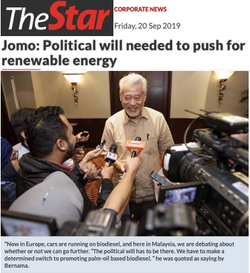
Political will needed to push for renewable energy

The Star 10July 2019

The Star 10July 2019

Malaysian businesses need boost

The Star 9 Oct 2019

The Star 9 Oct 2019

Subsidise public transport for bottom 40%

The Edge 26 Sept 2019

The Edge 26 Sept 2019

Call for measures to counteract global headwinds

The Edge 9 Oct 2019

The Edge 9 Oct 2019

Subsidise public transportation, not fuel

The Star 8 Oct 2019

The Star 8 Oct 2019

Subsidise public transportation for bottom 70%

TheEdge 2Oct 2019

TheEdge 2Oct 2019

"We need to counteract downward forces"

Fake News

PLEASE BEWARE OF MISREPRESENTATIONS OF IMAGES OF JOMO

Commercial and political misrepresentation of his image attributing to him to things which he never said or misrepresenting things he may have said is being circulated on websites such as those posted here. 


You should also be warned, in case you are not already aware, of ‘click bait’ i.e. using such images simply to attract your interest, and then to download your online information for abuse for a variety of ends.

Please inform us and provide a screenshot and weblink to enable further action, which is incredibly difficult. 

Thank you for reading this and for your help and cooperation.

This has also been flagged on his official Facebook page


JKS image ad2.jpg
JKS image Bitcoin ad on  Facebook.jpg
JKS - Fake News 2.jpg
Contact Me
JKS - Fake News 3.jpg
JKS fake news 1.jpg

Nadi Insan by the People's History Centre

Read all editions of #NadiInsan from 1979 to 1983 free of charge at the Peoples History Center website.


Containing writings on socio-political issues, film and cultural commentary, as well as in-depth interviews, Nadi Insan is motivated by community activists and intellectuals in Malaysia.

Happy reading!

Dapatkan kesemua siri majalah #NadiInsan dari tahun 1979 hingga 1983 secara percuma di laman Pusat Sejarah Rakyat.


Berisi tulisan memperihal sosio-politik, ulasan filem dan budaya sehinggalah wawancara yang rencam, Nadi Insan digerakkan oleh aktivis masyarakat dan intelektual di Malaysia.


Selamat membaca!

Contact Me

  • Facebook Social Icon
  • Twitter Social Icon

Thank you for reaching out!

bottom of page