top of page

Follow on Social Media

  • Facebook
  • Twitter
  • Screenshot 2022-09-18 at 5.20.40 PM

M'sia Developments
[on SubStack]

  • Screenshot 2022-09-18 at 5.20.40 PM

By Jomo Kwame Sundaram KUALA LUMPUR, Jul 30 2020 (IPS) - Covid-19 threatens economic life the world over. The most urgent and important need is for governments, businesses and families to survive. Governments must revive economies and livelihoods to prevent Covid-19 recessions from becoming protracted depressions.

The Covid-19 crisis is clearly a ‘black swan event’, threatening both public health and livelihoods. Both the pandemic and containment efforts are not due to business operations and decisions, but nonetheless have compelling consequences for them.


Covid-19 contagion contractionary, costly

In East Asia and a few other societies, successful early precautionary and preventive measures, as well as testing, tracking and treatment of the infected, plus sufficient physical distancing, isolation and quarantine measures have been enough to contain the contagion so far. 

When such measures were not taken, inadequate or failed, ‘stay in shelter’ lockdowns became necessary as contagion spread. Nationwide lockdowns have been imposed in many countries. Such preventive and other precautionary measures have reduced economic activity and demand in many sectors. 

But trying to maintain aggregate demand as if there is no pandemic does not make sense. No matter what governments do, some output losses are unavoidable. So, the main challenge in addressing Covid-19 recessions is to avoid protracted recessions or depressions. 

Due to the continued need for physical distancing and other precautionary measures, likely to remain for some time to come, vaccine or no vaccine, some business disruptions may be more lasting than others, i.e., more likely to be medium, if not long-term. 

No ‘one size fits all’

Economies are neither monolithic nor homogenous, and no single inflexible policy can possibly be suitable for all. As recessions are uneven in impact, different sectors, industries, services and businesses are affected differently. Covid-19 recessions are also unlike other past recessions. 

Many businesses may not be able to survive major stoppages and demand shortfalls, however temporary. Such businesses could go bankrupt, severely affecting workers’ families, related businesses and those directly and indirectly employed. 

Much has to be learnt quickly from other experiences, and from learning by doing. Some businesses and sectors may not be able to survive, and options should include business redeployment, infrastructure and facility repurposing as well as staff retraining. 

Strict verification and correction can take place later, even after the lockdown is over. Conditions should be strict enough to deter abuse, but not participation. For example, government grants or subsidies, later found to be ‘excessive’, can be converted into low interest loans that governments recover later, rather than treated as criminal fraud.

Business disruptions threaten livelihoods

Business disruption has broader implications, threatening the entire economy with long-term costs. If relations — including trust among entrepreneurs, workers and customers — are disrupted, they will need to be rebuilt, requiring time and expense. 

Conventional economics ignores ‘transactions costs’ incurred in recruiting workers, seeking and keeping clients and customers, obtaining credit and investing capital, building trust, and other relations, and thus is a poor guide to policy.  The adverse effects of livelihood disruption should be minimised. Income maintenance policies need to help fired workers and others whose livelihoods have been greatly diminished. Hence, extraordinary and novel social protection measures are needed.

Helping businesses survive enforced idleness or hibernation due to such measures, and protecting livelihoods are both needed. Businesses, especially smaller ones with fewer reserves, will need help to keep their workers and to avoid liquidating their businesses. 

Simple payment systems help. Idle workers should immediately receive special social protection, while staying formally employed. Such measures will minimise rehiring costs when they return to work, but should not excessively burden their employers with debt.

Only governments can help

Governments may not be able to stop, let alone reverse or fully compensate for the effects of public health measures. But they can certainly help alleviate economic hardship due to the epidemic, and minimise lasting damage to the economy. 

Crucially, timely government interventions can prevent unavoidable, potentially brief recessions from becoming longer lasting stagnations or depressions. Without appropriate government measures, output losses due to work disruption will cause large business losses leading to mass layoffs. 

Even when no longer operating, rent, lease, infrastructure, utility and other such payments vital for business maintenance and employees’ welfare, such as health protection for employees, need to be made or absorbed. Some, mainly developed countries have acted promptly and appropriately to minimise layoffs, business destruction and worker welfare.

Governments can also act more boldly to subordinate unproductive rentier claims, based on asset ownerhip or property rights, to much more essential operating costs — not unlike how US bankruptcy law enables businesses to continue operating to work themselves out of their predicaments.

Current support often inappropriate

Many governments have provided liquidity — e.g., usually by offering low-interest or interest-free loans — to help businesses and workers survive the crisis. But such measures only ‘smoothen’ debt burdens over longer periods, ‘postponing the pain’, without reimbursing or compensating victims for their income losses.

Temporary and partial compensation for income losses enables businesses to quickly resume operations after lockdowns end, rather than having to also contend with additional debt burdens. Many businesses need help to survive, and aid can be provided conditionally, e.g., on avoiding or minimising employee retrenchments.

Postponing tax payments also helps, but tend to benefit the better-off, liable for more tax, rather than those most adversely affected or needy. 

Direct payments undoubtedly help. But without some ‘easy’ targeting, especially for businesses, often, too little is available for those in greatest need, while benefiting some who are not. 

Although policymakers typically insist on means-testing for anti-poverty programmes, they rarely demand targeting for businesses, reducing the efficacy of government relief. 

An already existing, developed social protection system makes it easier to ‘compensate’ idle workers, but is rarely available in developing and transition economies. 

Lowly-paid and casual workers and many self-employed typically have debt, more than savings. Not able to survive temporary losses, they are more likely to be displaced by lockdowns, and less likely to work from home. Government ‘unemployment benefits’ can easily be made progressive, with a higher fraction of previous earnings for the poorest. 

Government ‘payer of last resort’

In March, French economists Emmanuel Saez and Gabriel Zucman, both at Berkeley, proposed that governments help ease pain and disruption with payer-of-last-resort programmes, with adversely affected businesses reporting unavoidable monthly overhead and maintenance costs to qualify for government aid. 

A government ‘payer-of-last-resort’ during lockdowns can thus help ‘suspended’ or ‘hibernating’ businesses to continue paying unavoidable maintenance bills to avoid insolvency on condition of keeping their involuntarily idle workers, instead of firing them. 

Such a payer-of-last-resort programme would reduce hardship for workers and businesses. It could enable businesses to temporarily suspend or scale down operations, to limit haemorrhage and avoid insolvency, and to pick up quickly as conditions improve. 

It would maintain ‘cash flow’ for families and businesses, minimising Covid-19 shocks’ adverse secondary impacts on demand (e.g., due to fired workers spending less on consumption), while enabling more rapid recovery as demand resumes. 

Payer-of-last-resort programmes can be affordable if well complemented by effective contagion containment measures, enabling early resumption of business operations. While unavoidably high for lockdowns, government spending, typically financed by sovereign debt, can remain manageable. 


This article is also available online here:


Updated: Jul 28, 2020

SYDNEY and KUALA LUMPUR, Jul 28 2020 (IPS) 


With uneven progress in containing contagion, worsened by the breakdown in multilateral cooperation due to mounting US-China tensions, recovery from the Covid-19 recessions of the first half of 2020 is now expected to be more gradual than previously forecast.


Pandemic response measure

In the face of the Covid-19 pandemic, many governments, especially of Organization for Economic Cooperation and Development (OECD) economies, have introduced massive fiscal and monetary packages for contagion containment, relief and recovery.

Such efforts represent a U-turn after long eschewing countercyclical fiscal policy, mostly for ideological reasons, such as dogmatic commitment to ‘budgetary balance’ and ‘fiscal consolidation’, besides giving central banks more economic policy discretion since the 2008-2009 global financial crisis (GFC).


The International Monetary Fund (IMF) estimated new government measures through mid-June 2020 at almost US$11 trillion. The Fund projected new borrowing by all governments to rise from 3.7% of global output in 2019 to 9.9% in 2020.


Projecting gradual recovery from the second half of 2020, the Fund expects average fiscal deficits to rise by 14% as global public debt reaches an all-time high, exceeding 101% of gross domestic product (GDP) in 2020-2021.


After much wrangling, EU leaders compromised on a new US$2.1 trillion (€1.8 trillion) package on 21 July. The European Commission has also activated the general escape clause in EU fiscal rules, allowing deficits to exceed 3% of GDP.


Complementary monetary initiatives include relaxing recommended Basel 3 capital buffers, lowering mandatory reserve ratios and easing terms for additional temporary credit facilities for banks and businesses.


Thus, central banks have committed an estimated US$17 trillion to extend ‘unconventional’ measures to buy corporate bonds, besides government bonds and government-sponsored mortgage-backed securities introduced during the GFC.


Windmills of financial minds

Macroeconomic economic policy makers must resist quixotic impulses to fight against financial ‘windmills of the mind’, instead fulfilling their responsibility to pursue consistently counter-cyclical macroeconomic policies.


Financial market analysts exaggerate real concerns, even using discredited research. Citing old research, even doubted by The Economist, a Forbes columnist insisted that “the surge in government debt” would cause “economic growth to decline”, claiming that government debt beyond 85% of GDP would slow growth.


Global public debt came to 83% of world output in 2019, up from 60% in 2008, before the GFC. This sharp rise happened despite austerity measures since 2010 when many G20 and OECD countries adopted fiscal consolidation.


That turn to austerity followed advice from the IMFOECD and European Central Bank, who invoked influential, but misleading academic research. But fiscal consolidation “after the Great Recession was a catastrophic mistake”, concluded a Forbes columnist. It failed to deliver robust recovery, let alone sustained growth.


Subsequent IMF research found fiscal consolidation raised short-term unemployment, with even harder impacts in the long-term, hurting wage-earners much more than profit- and rent-earners. IMF chief economist Olivier Blanchard and his colleagues found Fund advice for early fiscal retrenchment inappropriate.


Windmills can block recovery

Reversing emergency expansionary measures too soon risks aborting recovery and may even trigger new recessions. Even an assets fund manager has acknowledged, “Like a course of antibiotics, an economic relief package is most efficacious when administered to completion”.


When President Franklin Delano Roosevelt tried to balance the budget in 1937 after securing re-election, the ensuing downturn ended the recovery, only revived after deficit spending resumed in 1939. Also, countries that abandoned fiscal expansion for consolidation from 2009 had worse recovery records than others.


Deficits and debt have, in fact, not been reliable indicators of long-term growth prospects. Obsessed with debt and deficits, while ignoring spending composition and efficiency, ‘deficit hawks’ tend to downplay the potential growth impacts of expansionary fiscal policy.


Nevertheless, the Fund continued to warn in January 2019 that high and rising public debt constituted “a potential fault line”. Pre-pandemic economic stagnation, tax cuts and poor commodity prices induced larger fiscal deficits, requiring more government debt, now compounded by Covid-19 containment, relief and recovery efforts.


Clearly, government macroeconomic policies should not be guided by financial market whims. Leaving policy making to such influential market signals can push an economy in recession into a lasting depression. The recent IMF leadership transition appears to have led to greater pragmatism just in time.


Investing for the future

The Fund’s April 2020 Fiscal Monitor urged governments to take advantage of historically low borrowing costs to invest for the future—in health systems, infrastructure, low-carbon technologies, education and research—while boosting productivity growth. After all, a year ago, advanced economies were spending only 1.77% of their combined GDP on debt interest—the lowest since 1975.


Unusually, it also advised governments to enhance automatic stabilizers, including a tax and benefit system to stabilize incomes and consumption, involving progressive taxation and social security payments or unemployment assistance.

Undoubtedly, politicians are often tempted, by lower debt costs, to borrow to spend more on “populist” programmes while cutting taxes. Such irresponsible fiscal policies need to be corrected.


Clearly, governments need to look at how money, borrowed or otherwise, is spent. If, for example, borrowed money goes into investments enhancing productivity, public assets can contribute not only to growth, but also to revenue.

Covid-19 recessions are quite different from recent ones following financial crises. Yet, all recessions threaten to become depressions if not quickly and appropriately addressed.


We are in for a long hard struggle, on both public health and economic fronts. Policies must not only be appropriate for the problems at hand, but should also create conditions for a better future, rather than simply trying to return to the status quo ante Covid.


As visionary leaders did during and after the Second World War, we need appropriate plans, not only to revive economies and livelihoods, but also to build a more dynamic, sustainable and equitable economy.


Also available online here: https://www.ipsnews.net/2020/07/fight-pandemic-not-windmills-mind/


By Anis Chowdhury and Jomo Kwame Sundaram


SYDNEY and KUALA LUMPUR, Jul 23 2020 (IPS) – Covid-19 is expected to take a heavy human and economic toll on developing countries, not only because of contagion in the face of weak health systems, but also containment measures which have precipitated recessions, destroying and diminishing the livelihoods of many.


Limited fiscal space

Developing countries generally have limited fiscal capacities to finance relief and liquidity provision in the short-term while rebuilding economic life on a more sustainable basis in the longer-term.


The 2020 Financing for Sustainable Development Report shows debt vulnerability growing in many developing countries well before the pandemic. For example, public sector borrowings of commodity exporters increased substantially after prices collapsed in 2014-15. With these prices further depressed now, the pandemic will increase developing country debt.


Investors withdrew nearly US$80 billion from emerging markets in the first quarter of 2020 – the largest capital outflow in history, according to the Institute of International Finance – as remittances fell at least 20%, i.e., by over US$100 billion.


Most other developing countries do not have strong enough credit ratings to secure low-cost foreign sovereign debt despite low interest rates in the North.


Ballooning debt

According to the World Bank’s recent Global Waves of Debt, the past decade has seen the largest, fastest and most broad-based increase in emerging market and developing economies (EMDE) debt in the past half century.


Since 2010, total EMDE debt – both public and private – rose from 108.6% of GDP (88% without China) to more than 170% (108% excluding China), totalling US$57 trillion in 2019.


Private corporate debt accounted for much of this ballooning EMDE debt, rising from 77% of GDP in 2010 to 117% in 2018. But public debt (without China) has also risen from 38.6% of GDP in 2010 to 49.4% in 2018.


Following a sharp decline during 2000-10, total low-income country (LIC) debt rose from 51.5% of GDP (US$137 bn) in 2010 to 65.8% (US$268 bn) in 2018. Public debt is far more important in LICs, rising from 36.5% of GDP in 2010 to 45.7% in 2018, borrowing more from ‘non-traditional’ sources, notably China.


Dangerous borrowings

When governments can borrow on reasonable terms to invest in projects needed for sustainable development, debt may be desirable, if not necessary, especially in resource-poor countries. IMF research suggests that optimal debt levels depend on many considerations.


Nevertheless, debt can have very undesirable impacts, especially when not well used. Debt composition can also be worrisome. The recent debt build-up is particularly concerning because much of it is external.


And now, developing countries’ ability to service growing debt is constrained by falling export revenues due to pandemic-induced commodity price collapses complicated by the shift to riskier debt.


The external share of EDME government debt reached 43% in 2018, while foreign currency denominated corporate debt rose from 19% of GDP in 2010 to 26% in 2018.


Commercial credit increased over three-fold from 2010 to 2019, rising from 5.0% to 17.5% of LICs’ external public debt, while contributing to more than half of their non-concessional government debt.


Heavier burdens

Many developing countries face sovereign debt crises, unable to pay off accumulated debt or interest. An increasing share is owed to China, especially by ‘un-creditworthy’ poor countries, but European bond markets and private lenders still account for more.


African government external debt payments doubled in two years, from 5.9% of government revenue in 2015 to 11.8% in 2017. A fifth of Africa’s external debt of about US$405 bn is owed to China, 32% (US$132 bn) to bond markets and other private lenders, and 35% (US$144 bn) to multilateral institutions such as the World Bank.


Debt servicing accounts for the largest share of government spending, and remains the fastest growing expenditure item in sub-Saharan African budgets. As debt from private creditors is more expensive, 55% of interest payments go to them.


Interest payments due on private debt to African nations for the rest of 2020 are around US$3 billion. Compared to very low to negative rates in Europe, America and Japan, most African governments are paying 5~16% interest on 10-year government bonds.


African countries have been accused of borrowing too much, but the problem is that they are paying far too much interest, mainly due to rating agencies’ and bond issuers’ prejudices and practices. Thus, although Ethiopia has grown at 8~11% for over a decade, its sovereign credit rating has not improved.


Also, transparency about contingent liabilities, e.g., due to state-owned enterprise debt and public-private partnership transactions, is limited in most developing countries, especially for debt owed to commercial and non-Paris Club creditors.


Contingent liabilities may also grow during this pandemic as governments have to extend loan guarantees for the private sector to prevent total economic collapse.


Debt worsens inequality

Debt also increases inequality in at least four ways. First, debt enriches creditors and financial intermediaries, typically at the expense of borrowers. Interest and other capital gains greatly increase asset incomes, wealth and capital.


Second, government debt often enriches wealthy elites. Some of the politically well-connected profit from project financing, the burden of which is borne by the people.


A leaked World Bank study estimated that 5% of all new Bank finance to poor countries ended up in tax havens. Bank loans to 22 countries receiving aid during 1990-2010 also increased deposits in secret offshore bank accounts.


Third, fiscal arrangements involving debt typically deepen inequality. To service debt, governments often increase taxation and cut spending. While the IMF and financial interests usually insist on fiscal consolidation involving austerity, creditors may even demand ‘credible’, compliant finance ministers.


While taxes on the wealthy can be increased, the dominant trend in the last four decades has been otherwise. Instead, the IMF has urged governments for decades to increase revenue through value added and other regressive indirect taxation, usually on consumption.


Many governments have had to cut expenditure to increase revenue to service debt, usual making social spending cuts, worsening inequality and social discontent, triggering widespread protests in Kenya, Ecuador, Lebanon and elsewhere.


Relief urgently needed

The severity of current recessions, affecting most countries, and dim prospects of robust rebounds, may tip many LICs into debt distress. The United Nations Conference on Trade and Development has warned of a “looming debt disaster” in developing countries, calling for US$1 trillion in debt relief.


On 15 April 2020, G20 finance ministers agreed to a “time-bound suspension of debt service payments” for 76 low-income developing countries eligible for World Bank International Development Associationconsideration, while the IMF has offered debt service relief to 25 of the poorest countries.


Nevertheless, the UN believes these actions will not be enough to avoid defaults as the G20 move does not effect private lenders.


The unique, but varied and changing nature of the pandemic and efforts to contain contagion, and the specific challenges of relief, revival and reorientation imply that neither ‘one size fits all’ nor other formulaic solutions, e.g., to address financial crisis, are appropriate.


Policy measures will not only need to address the specificities of the Covid-19 crises, but must also take into consideration the legacy of earlier problems, including the burdens of accumulated debt and debt-servicing.


Latest Videos

All Videos

All Videos

AN URGENT CALL: A PEOPLE"S VACCINE AGAINST COVID-19

00:00
9 June 2020: IHD-ILO-ISLE Virtual Conference - Day 2

9 June 2020: IHD-ILO-ISLE Virtual Conference - Day 2

05:08:34
Learning in Governance in times of COVID-19

Learning in Governance in times of COVID-19

46:30
Beyond the Lockdown: Towards the ‘New Normal’

Beyond the Lockdown: Towards the ‘New Normal’

59:10

About Jomo

Jomo Kwame Sundaram is Research Adviser, Khazanah Research Institute, Fellow, Academy of Science, Malaysia, and Emeritus Professor, University of Malaya. Previously, he was UN Assistant Secretary-General for Economic Development, Assistant Director General, Food and Agriculture Organization (FAO), Founder-Chair, International Development Economics Associates (IDEAs) and President, Malaysian Social Science Association. 

In The Media

TheStar 26 June 2020

TheStar 26 June 2020

The Star 20 Sept 2019

The Star 20 Sept 2019

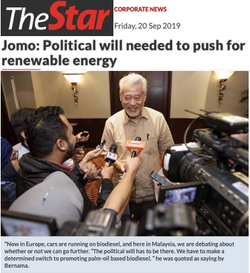
Political will needed to push for renewable energy

The Star 10July 2019

The Star 10July 2019

Malaysian businesses need boost

The Star 9 Oct 2019

The Star 9 Oct 2019

Subsidise public transport for bottom 40%

The Edge 26 Sept 2019

The Edge 26 Sept 2019

Call for measures to counteract global headwinds

The Edge 9 Oct 2019

The Edge 9 Oct 2019

Subsidise public transportation, not fuel

The Star 8 Oct 2019

The Star 8 Oct 2019

Subsidise public transportation for bottom 70%

TheEdge 2Oct 2019

TheEdge 2Oct 2019

"We need to counteract downward forces"

Fake News

PLEASE BEWARE OF MISREPRESENTATIONS OF IMAGES OF JOMO

Commercial and political misrepresentation of his image attributing to him to things which he never said or misrepresenting things he may have said is being circulated on websites such as those posted here. 


You should also be warned, in case you are not already aware, of ‘click bait’ i.e. using such images simply to attract your interest, and then to download your online information for abuse for a variety of ends.

Please inform us and provide a screenshot and weblink to enable further action, which is incredibly difficult. 

Thank you for reading this and for your help and cooperation.

This has also been flagged on his official Facebook page


JKS image ad2.jpg
JKS image Bitcoin ad on  Facebook.jpg
JKS - Fake News 2.jpg
Contact Me
JKS - Fake News 3.jpg
JKS fake news 1.jpg

Nadi Insan by the People's History Centre

Read all editions of #NadiInsan from 1979 to 1983 free of charge at the Peoples History Center website.


Containing writings on socio-political issues, film and cultural commentary, as well as in-depth interviews, Nadi Insan is motivated by community activists and intellectuals in Malaysia.

Happy reading!

Dapatkan kesemua siri majalah #NadiInsan dari tahun 1979 hingga 1983 secara percuma di laman Pusat Sejarah Rakyat.


Berisi tulisan memperihal sosio-politik, ulasan filem dan budaya sehinggalah wawancara yang rencam, Nadi Insan digerakkan oleh aktivis masyarakat dan intelektual di Malaysia.


Selamat membaca!

Contact Me

  • Facebook Social Icon
  • Twitter Social Icon

Thank you for reaching out!

bottom of page