top of page

Follow on Social Media

  • Facebook
  • Twitter
  • Screenshot 2022-09-18 at 5.20.40 PM

M'sia Developments
[on SubStack]

  • Screenshot 2022-09-18 at 5.20.40 PM
  • Jun 23, 2020
  • 5 min read

Jomo Kwame Sundaram, Anis Chowdhury SYDNEY and KUALA LUMPUR, Jun 23 (IPS)  - Over the course of his presidency, US President Donald Trump's racism has become more evident with more leaks of his private remarks, which he has been generally quick to deny, qualify and explain away. Despite his thinly disguised contempt for women, ‘non-white' ethnic minorities, and most foreigners, unsurprisingly, he is respectful of power and privilege, especially when they may help him. Trump's version of ‘kiss up, kick down'. "Least racist person in the world" Unsurprisingly, Trump has claimed he is the least racist person in the world. Unsurprisingly too, his record suggests otherwise. Trump has frequently created controversies with racially charged comments and actions, and was even sued for racial discrimination by the US Justice Department in the 1970s. Trump won the 2016 presidential election with an ethno-populist agenda featuring racist elements. He has infamously promised a wall on the US-Mexico border to stop Mexicans, whom he deemed "criminals" and "rapists", and imposed bans on Muslims entering the US. Since entering the Oval Office, Trump continued to insist that he is the world's least racist person, but frequently loses self-restraint, e.g., repeatedly stereotyping non-white reporters and pandering to white supremacists, even cracking jokes in bad taste. Trump has even tweeted that several non-white Members of Congress should go back to the "totally broken and crime infested places" they came from. Adding insult to injury Two years ago, Trump referred to Haiti, El Salvador and some other African countries as ‘shitholes', sparking unprecedented international outrage. The UN human rights spokesperson described the comments as "shocking and shameful", and simply "racist", not that Trump cared. To be sure, underdevelopment is not the original condition of Africa before European colonialism, but rather, the historical outcome of various forces, most importantly Western imperialism from about half a millennium ago. From around 1445 to 1870, Africa was the major source of slaves, especially for the New World, both in North and South America. Portugal, Spain, the Netherlands, Britain, France and others in the New World and Europe all benefited, albeit differently over time. The processes and their effects were undoubtedly uneven, creating wealth for exploiters, often from abroad, while many of the exploited were enslaved, dispossessed and otherwise immiserised. Neo-colonialism Thus, contrary to the claims of Niall Ferguson, the most prominent contemporary apologist of British imperialism, that colonialism laid the foundations for post-colonial progress, Africa was ruined, irreversibly maiming its development prospects. A half-century or so after gaining independence between 1957 and 1975, or 1994, if apartheid South Africa is also included, ‘neo-colonial' policy conditionalities and advice from donors and the Bretton Woods institutions have privileged foreign investment and export markets. One major casualty of such policy advice was public investment. African countries were told not to invest in food agriculture and to dismantle supportive arrangements. Thus, with trade liberalization, food security suffered as Africa deindustrialized. The sagas of Trump's other shithole countries are not very dissimilar. Former US President Bill Clinton, who headed the United Nations' effort to rebuild Haiti after the devastating earthquake of 2010, expressed regret for having forced Haiti to open its economy to food imports, effectively destroying domestic rice production, while benefiting American farmers. ‘Shitholes' in Trump's world view Trump's candid ‘shitholes' comments presumably reflect his world view, in this case, of poor countries unlikely to provide much benefit and advantage to him or his view of American interests. Even his ambiguous and ambivalent remarks about police and ‘vigilante' brutality and killings of African-American and other ‘coloured' minorities, or his dismissive treatment of ‘minority' and inquisitive journalists should surprise no one. Trump's approval hit an all time high early in the year after securing the US-China trade deal. But having badly managed the Covid-19 pandemic, his poll ratings have declined precipitously since. Despite lavishly praising China's constructive cooperative attitude and handling of the virus outbreak in January, within months, he was encouraging to politically driven allegations of a Chinese conspiracy behind the outbreak. To add insult to injury, some African countries (e.g., Ghana, Senegal and Ethiopia) seem to have managed the pandemic better than he has. Using anti-racist protests for re-election Meanwhile, worldwide anti-racist demonstrations have revived earlier transnational protests against statues of persons identified with imperialism, slavery and the US Confederacy. The latest round of outrage following Floyd's videoed murder by policemen is already being used by the Trump camp. White supremacist and other extremist groups have joined some planned peaceful protests, initiating violence and inciting others to loot. The Lancaster, Pennsylvania police chief has confirmed, with "definite evidence", suspicions that non-violent anti-racism protests have been infiltrated by such agent provocateurs. US political observers note how the ‘long, hot summer' of 1968, including the riots at the Democratic Party convention in Chicago hosted by then Mayor Richard Daley, helped Richard Nixon win the 1968 election. Invoking more racial themes, Trump is already recasting himself as the ‘law and order' President. The emperor has no clothes More recently, the Trump administration has sought to suppress his former National Security Adviser John Bolton's embarrassing new book, The Room Where It Happened, providing considerable evidence of Trump's ignorance, incompetence, impulsiveness and pursuit of self-interest; even Secretary of State Mike Pompeo reportedly observed "He is full of shit". Bolton reports that POTUS asked China to help his re-election prospects by buying more US agricultural exports, which they did. The book's pre-publication release, widespread dissemination and publicity may nudge Trump to enhance his re-election chances by depicting himself more credibly as a China hawk by becoming even more belligerent in his rhetoric and policy actions. Trump is likely to paint presidential challenger Joe Biden as too weak and accommodative of China. Democrats may then try to outdo him, or at least not be left too far behind in terms of anti-China rhetoric, by promising to further militarize President Obama and Hillary Clinton's ‘pivot to Asia' to ‘contain' China.


Bolton may help Trump, again But Trump may also turn Bolton on his head, depicting him as a ‘trigger-happy', belligerent bully who wanted POTUS to be more aggressive, tying up the US in ‘wars without end' on many fronts on flimsy pretexts. Most people who know Bolton would testify to this effect, ironically allowing Trump to present himself as a peaceful president carrying a big stick, but refusing to go to war unnecessarily. The alternative is worse. Just over four months from the early November polls, and anxious about his re-election chances, an increasingly desperate Trump is likely to become more reckless to secure a second mandate. Trump may even provoke what he intends as a ‘limited' conflict with China, probably in the South China Sea. Regardless of the original motive, once begun, such conflicts can easily spin out of control, threatening the world and world peace. George W Bush used fictional ‘weapons of mass destruction' to start a war with Iraq, famously supported by Tony Blair, at tremendous human and economic cost. Margaret Thatcher also secured re-election by going to war over the Falkland Islands or Malvinas. Trump will be in good company if he resorts to this option. Visit this story at http://ipsnews.net/2020/06/racism-shitholes-re-election


Jomo Kwame Sundaram KUALA LUMPUR, Malaysia, Jun 18 (IPS)  - How often have you heard someone lamenting or even condemning inequality in society, concluding with an appeal to meritocracy? We like to think that if only the deserving, the smart ones, those we deem competent or capable, often meaning the ones who are more like us, were in charge, things would be better, or just fine. Meritocracy's appeal Since the 1960s, many institutions, the world over, have embraced the notion of meritocracy. With post-Cold War neoliberal ideologies enabling growing wealth concentration, the rich, the privileged and their apologists invoke variants of ‘meritocracy' to legitimize economic inequality. Instead, corporations and other social institutions, which used to be run by hereditary elites, increasingly recruit and promote on the bases of qualifications, ability, competence and performance. Meritocracy is thus supposed to democratize and level society. Ironically, British sociologist Michael Young pejoratively coined the term meritocracy in his 1958 dystopian satire, The Rise of the Meritocracy. With his intended criticism rejected as no longer relevant, the term is now used in the English language without the negative connotations Young intended. It has been uncritically embraced by supporters of a social philosophy of meritocracy in which influence is supposedly distributed according to the intellectual ability and achievement of individuals. Many appreciate meritocracy's two core virtues. First, the meritocratic elite is presumed to be more capable and effective as their status, income and wealth are due to their ability, rather than their family connections. Second, ‘opening up' the elite supposedly on the bases of individual capacities and capabilities is believed to be consistent with and complementary to ‘fair competition'. They may claim the moral high ground by invoking ‘equality of opportunity', but are usually careful to stress that ‘equality of outcome' is to be eschewed at all cost. As Yale Law School Professor Daniel Markovits argues in The Meritocracy Trap, unlike the hereditary elites preceding them, meritocratic elites must often work long and hard, e.g., in medicine, finance or consulting, to enhance their own privileges, and to pass them on to their children, siblings and other close relatives, friends and allies.


Gaming meritocracy Meritocracy is supposed to function best when an insecure ‘middle class' constantly strives to secure, preserve and augment their income, status and other privileges by maximizing returns to their exclusive education. But access to elite education – that enables a few of modest circumstances to climb the social ladder – waxes and wanes. Most middle class families cannot afford the privileged education that wealth can buy, while most ordinary, government financed and run schools have fallen further behind exclusive elite schools, including some funded with public money. In recent decades, the resources gap between better and poorer public schools has also been growing. Elite universities and private schools still provide training and socialization, mainly to children of the wealthy, privileged and connected. Huge endowments, obscure admissions policies and tax exemption allow elite US private universities to spend much more than publicly funded institutions. Meanwhile, technological and social changes have transformed the labour force and economies greatly increasing economic returns to the cognitive, ascriptive and other attributes as well as credentials of ‘the best' institutions, especially universities and professional guilds, which effectively remain exclusive and elitist. As ‘meritocrats' captured growing shares of the education pies, the purported value of ‘schooling' increased, legitimized by the bogus notion of ‘human capital'. While meritocracy transformed elites over time, it has also increasingly inhibited, not promoted social mobility. A different elite Thus, although meritocrats like to see themselves as the antithesis of the old ‘aristocratic' elite, rather than ‘democratize' society through greater inclusion, meritocracy may even increase inequality and further polarize society, albeit differently. While the old ‘aristocratic' elite was often unable to ensure their own children were well educated, competent and excellent, meritocrats – who have often achieved their status and privileges with education and related credentials – have often increased their significance. Hence, a meritocratic system – seemingly open to inclusion, ostensibly based on ability – has become the new means for exclusion, which Chicago University Professor Raghuram Rajan attributes to the digital revolution. Meritocrats have increased the significance of schooling, with credential attainment legitimizing growing pay inequality, as they secure even better education for thus own children, thus recreating and perpetuating inequalities. Recent public doubts about, and opposition to rising executive remuneration, MBA education, professional guild cartels and labour remuneration disparities reflect the growing delegitimization of ostensibly meritocratic hierarchies and inequalities. High moral ground To add insult to injury, meritocratic ideology suggests that those excluded are undeserving, if not contemptible. With progressive options lacking middle class and elite support, those marginalized have increasingly turned to ‘ethno-populism' and other ‘communal' appeals in this age of identity politics. Unsurprisingly, their opposition to educational and economic inequalities and marginalization is typically pitted against the ethnic ‘Other' – real, imagined or ‘constructed' – typically seen as ‘foreign', even if domestic, as the ‘alien within'. Markovits argues that meritocracy undermines not only itself, but also democratic and egalitarian ideals. He insists that meritocracy also hurts the new ‘meritocratic' and ‘technocratic' elite, hoping to recruit them to the anti-meritocracy cause, perhaps reflecting his appreciation of the need to build broad inclusive coalitions to bring about social transformation. "Progressives inflame middle-class resentment, and trigger elite resistance while demagogues and charlatans monopolize and exploit meritocracy's discontents. Meritocratic inequality therefore induces not only deep discontent but also widespread pessimism, verging on despair." Reducing inequality possible In the US and elsewhere, tax policy, other incentives and even Covid-19 will encourage replacing mid-skilled workers with automation and highly skilled professionals, e.g., facilitated by the growing use of artificial intelligence applications. One alternative is to reform labour market as well as tax policies and regulations to promote more skilled, ‘middle-class' employment. Those introducing new technologies would then be motivated to enable more productive, higher income, middle-class employment. A more open, inclusive and broader educational system would also provide the workforce needed for such technologies. Thus, the transitions from school to work, which have tended to increase inequality, can be transformed to reduce inequality. Rather than de-skill workers to be paid less in order to become more profitable, ‘up-skilling' workers to be more productive can also be profitable. For example, an Indian cardio-thoracic hospital has trained nurses for many routine medical procedures, allowing specialist doctors to focus on tasks really requiring their expertise. At relatively lower cost, using workers who are not fully trained doctors, but are paid and treated better, can cost-effectively deliver important healthcare services at lower cost at scale. Such innovations would strengthen the middle class, rather than undermine and erode it. Visit this story at http://ipsnews.net/2020/06/meritocracy-legitimizes-deepens-inequality


Jomo Kwame Sundaram, Anis Chowdhury SYDNEY and KUALA LUMPUR, Jun 16 (IPS)  - The Covid-19 pandemic has significantly impacted most economies in the world. Its full impacts will not be felt, let alone measured, until it runs its course. Many countries are still struggling to contain contagion, while the costs on both lives and livelihoods will undoubtedly have long-term repercussions.


Back to the future?


The pandemic has exposed economic vulnerabilities building up for decades, especially since the counter-revolution, against Keynesian and development economics in the 1980s, gathered pace with transnational corporation-led privatization, liberalization and globalization.


As the world become more interdependent via trade, finance and communications, inequality and economic insecurity have waxed and waned unevenly, exacerbated by deregulation, reregulation, financialization and less public social provisioning, undermining public health and social protection.


Policymakers shied away from addressing the fundamental causes of several financial crises from the 1990s (e.g., in Mexico, East Asia and Russia) and during the first decade of this century, e.g., the dotcom, food and global financial crises. Now, once again, all too many are focused on getting back to ‘business as usual'.


What multilateral coordination?

The global economic situation remains unpredictable, with uncertainties about the varied nature of pandemic recessions. Government responses have not only been diverse, but often poorly conceived due to the novel nature of the crisis. Impacts have varied with the contagion and policy responses, unhelped by often confusing, if not misleading metrics.

Such uncertainty is also reflected in the wide-ranging growth forecasts by major international organizations. The International Monetary Fund (IMF) has recognized the ‘Great Lockdown' as due to ‘self-imposed' contractions, leading to the "worst recession since the Great Depression".

The IMF has supported government fiscal and monetary initiatives, declaring that it "stands ready to mobilize its US$1 trillion lending capacity to help its membership". The World Bank has also promised an additional US$14 billion to help governments and businesses address the pandemic.

Plurilateralism also almost irrelevant

A March G-7 countries' joint statement promised "a strongly coordinated international approach", with no specific actions mentioned or forthcoming thereafter. Instead, countries have pursued their own divergent strategies, even banning exports of medical equipment.

Meanwhile, the Trump administration continues to prioritise ‘America First' while undermining most multilateral institutions and even plurilateral arrangements, including those created by the US, such as the G20.

Already, G20 members have been dragged into US-China tensions, as the White House blames China for the pandemic and other American problems. Meanwhile, Saudi Arabia, the G20 chair for 2020, is itself embroiled in its own political and economic quagmire, undermined by falling oil revenues, worsened by its oil price war with Russia.

Poor diagnosis, bad medicine

Economic growth slowdowns, especially in manufacturing, services and trade, started prior to the Covid-19 outbreak. Yet, the pandemic's economic effects were expected to be short-term as factories and offices were closed, and strict ‘stay in shelter' lockdowns were enforced to stop contagion.

The drop in economic output, as the epidemic began and spread to industrial hubs, has had international repercussions with supply chains disrupted.

Such supply disruptions have engendered and interacted with prolonged, wide-ranging demand shocks as Covid-19 crisis-induced policy responses and other uncertainties reduced consumption and investment spending, slowing economic growth and undermining employment.

Almost 2.7 billion workers, around 81% of the world's workforce, work and earn less due to the Covid-19 recession, with those in lower middle-income developing countries losing most. And almost 1.6 billion in the informal economy are in the hardest hit sectors or significantly impacted by lockdown measures.

The longer the lockdowns persist, the greater the economic disruption and adverse impacts as the effects spread via trade and finance linkages to an ever growing number of countries, firms and households.

Governments have adopted various monetary and fiscal measures to try to revive and sustain economic activity. Such measures include cash transfers to households, extending unemployment insurance or social security benefits, temporary deferment of tax payments, and increasing guarantees and loans to businesses.

Early ‘stimulus packages' assumed that the ‘pandemic shock' would be short-lived and easily reversible. They have largely ignored addressing the unsustainability, inequality, instability and other vulnerabilities of their economic, social and ecological systems.

Monetary ruse, liquidity trap

Basel 3 recommended capital conservation and countercyclical capital buffers for all banks. Many central banks have cut interest rates and increased liquidity through a combination of measures, by lowering reserve and Basel 3 requirements, besides easing loan terms for new temporary loan facilities for banks and businesses.

Continued credit support, through unconventional monetary policies, has not addressed liquidity problems due to truncated business turnover. Increased liquidity provision has instead been captured by better ‘credit risks', even fuelling inflation while doing little for the most vulnerable and needy, deepening pre-Covid-19 inequalities.

Unconventional monetary policies before Covid-19 were already creating stock market bubbles, instead of financing investments in the real economy, thus contributing to growing inequality.

Central banks have not been able to repair their balance sheets or draw back excess liquidity, for fear of financial sector collapse, thus ironically increasing its fragility by pumping in more liquidity, increasing speculation and fuelling inflation.

Fiscal traps unsustainable

Without better planned coordination, initial relief measures for households and businesses were often wrongly portrayed as fiscal stimulus packages while output has remained constrained by lockdown enforcement.

Despite cuts in government expenditure, especially for public health and social protection, there was little political will to increase progressive taxation. Still mounting government debt, already at historically high levels prior to the pandemic, has not helped.

Instead, earlier tax cuts have increased public debt, while the failure to improve fiscal capacities after the 2008 global financial crisis has meant eschewing productivity enhancing public investments, boosting revenue via progressive taxation, and strengthening universal health coverage and social protection.

Designing recovery

The design of measures matters, crucially affecting likely effects. As countries prepare for recovery, they should ask what ‘recovery' can and should mean. To address the many problems we have to contend with, it should not mean a return to ‘business as usual'.

First, as workplaces and social spaces – where people meet, socialize, shop, etc. – have to be redesigned and repurposed to meet precautionary public health requirements, such as physical distancing. Second, the unsustainable, financialized and grossly unequal pre-Covid-19 economy needs to be fundamentally transformed.

Covid-19 policy responses have rarely addressed deeper prior malaises, such as stagnant or falling productivity growth and declining labour remuneration, not to speak of ‘sustainable industrial policy' measures to address global warming, resource exhaustion and other sustainability problems.

---------------------------------------


Latest Videos

All Videos

All Videos

AN URGENT CALL: A PEOPLE"S VACCINE AGAINST COVID-19

00:00
9 June 2020: IHD-ILO-ISLE Virtual Conference - Day 2

9 June 2020: IHD-ILO-ISLE Virtual Conference - Day 2

05:08:34
Learning in Governance in times of COVID-19

Learning in Governance in times of COVID-19

46:30
Beyond the Lockdown: Towards the ‘New Normal’

Beyond the Lockdown: Towards the ‘New Normal’

59:10

About Jomo

Jomo Kwame Sundaram is Research Adviser, Khazanah Research Institute, Fellow, Academy of Science, Malaysia, and Emeritus Professor, University of Malaya. Previously, he was UN Assistant Secretary-General for Economic Development, Assistant Director General, Food and Agriculture Organization (FAO), Founder-Chair, International Development Economics Associates (IDEAs) and President, Malaysian Social Science Association. 

In The Media

TheStar 26 June 2020

TheStar 26 June 2020

The Star 20 Sept 2019

The Star 20 Sept 2019

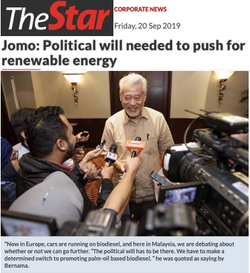
Political will needed to push for renewable energy

The Star 10July 2019

The Star 10July 2019

Malaysian businesses need boost

The Star 9 Oct 2019

The Star 9 Oct 2019

Subsidise public transport for bottom 40%

The Edge 26 Sept 2019

The Edge 26 Sept 2019

Call for measures to counteract global headwinds

The Edge 9 Oct 2019

The Edge 9 Oct 2019

Subsidise public transportation, not fuel

The Star 8 Oct 2019

The Star 8 Oct 2019

Subsidise public transportation for bottom 70%

TheEdge 2Oct 2019

TheEdge 2Oct 2019

"We need to counteract downward forces"

Fake News

PLEASE BEWARE OF MISREPRESENTATIONS OF IMAGES OF JOMO

Commercial and political misrepresentation of his image attributing to him to things which he never said or misrepresenting things he may have said is being circulated on websites such as those posted here. 


You should also be warned, in case you are not already aware, of ‘click bait’ i.e. using such images simply to attract your interest, and then to download your online information for abuse for a variety of ends.

Please inform us and provide a screenshot and weblink to enable further action, which is incredibly difficult. 

Thank you for reading this and for your help and cooperation.

This has also been flagged on his official Facebook page


JKS image ad2.jpg
JKS image Bitcoin ad on  Facebook.jpg
JKS - Fake News 2.jpg
Contact Me
JKS - Fake News 3.jpg
JKS fake news 1.jpg

Nadi Insan by the People's History Centre

Read all editions of #NadiInsan from 1979 to 1983 free of charge at the Peoples History Center website.


Containing writings on socio-political issues, film and cultural commentary, as well as in-depth interviews, Nadi Insan is motivated by community activists and intellectuals in Malaysia.

Happy reading!

Dapatkan kesemua siri majalah #NadiInsan dari tahun 1979 hingga 1983 secara percuma di laman Pusat Sejarah Rakyat.


Berisi tulisan memperihal sosio-politik, ulasan filem dan budaya sehinggalah wawancara yang rencam, Nadi Insan digerakkan oleh aktivis masyarakat dan intelektual di Malaysia.


Selamat membaca!

Contact Me

  • Facebook Social Icon
  • Twitter Social Icon

Thank you for reaching out!

bottom of page