top of page

Follow on Social Media

  • Facebook
  • Twitter
  • Screenshot 2022-09-18 at 5.20.40 PM

M'sia Developments
[on SubStack]

  • Screenshot 2022-09-18 at 5.20.40 PM

Updated: Jun 12, 2020

Jomo Kwame Sundaram


KUALA LUMPUR, Malaysia, Jun 11 (IPS)  - Even before Covid-19, the world was facing a care crisis. The plight of often neglected, under-appreciated, under-protected and poorly equipped ‘frontline' health personnel working to contain the pandemic has drawn attention to the tip of the care crisis iceberg. Rising care work burden: Ageing populations as well as cuts to public services and social protection were making matters worse, increasing the burden on carers, or care givers/providers, regardless of their employment status. Elderly people need long-term care as they age, while existing social arrangements, including government services, remain inadequate and ill prepared. Such demands on caregivers will continue to increase as populations grow and people live longer. Oxfam's annual early 2020 Davos report, Time to Care, estimates that 2.3 billion people will need care by 2030, 200 million more than in 2015, including 100 million more older people and an additional 100 million children aged 6 to 14 years. Care work, unpaid or underpaid, is generally not visible, greatly undervalued and typically taken for granted. It is often not considered real or proper ‘work', with spending for care work considered a cost, not an investment. The nature of care work and gender discrimination undermines the health and well-being of its mainly female workers. Women and girls, especially the poor and marginalized, do 12.5 billion hours of care work daily for free, and much more for poor wages. The women and girls are left ‘time-poor', often unable to meet their own needs. Consequently, they have less time for education and paid work, let alone fully participate socially and politically.


Unpaid care work: The study argued that unpaid care work is essential for our economies, businesses and societies. However, unpaid care work is often underappreciated when measuring economic progress and social wellbeing, not least because this burden is mainly borne by women and girls, who do more than three-quarters of all unpaid care work. Oxfam estimates that the monetary value of women's unpaid care work globally, for women aged 15 and over, is at least US$10.8 trillion annually. Although high, this figure is still believed to be an underestimate, with the true figure far higher. Women thus often earn less because their unpaid care work limits their time for paid work; in fact, 42 per cent of working age women, compared to six per cent of males, cannot get paid work due to their caregiving responsibilities. Climate change is also increasing the need for unpaid care. In five years, up to 2.4 billion people will be living in areas without enough water, forcing women and girls to carry more water even further. Also, as global warming and other developments adversely affect health and food production, many women and girls will have to work more to cope. Domestic workers:

Besides doing care work for free at home, many poor women also provide care for others, especially as domestic workers, among the most poorly treated employees in the world. Hence, they are also more likely to be in undesirable, poorly paid, dirty and precarious jobs. Only about a tenth of domestic workers are covered by labour laws as much as other workers, while only around half have minimum wage protection. For more than half of all domestic workers, national laws do not limit working hours. Meanwhile, 3.4 million domestic workers in forced labour do not get US$8 billion yearly, or about three-fifths of the wages due to them. Forced labour and trafficking cause domestic workers to be "trapped in other people's homes", with "their lives controlled", but also "rendered invisible and unprotected". Two-thirds of the paid ‘care workforce' are women. Jobs -- such as nursery workers, domestic workers, and ‘care assistants' -- are often physically and emotionally draining, besides being poorly paid, with few benefits, despite having to work irregular hours. Redistributing care burden: The Oxfam report notes that governments greatly under-tax the wealthy, and hence do not collect enough revenue to better fund vital public services, including social services and infrastructure. Progressive taxation and spending, including subsidized social services and social protection, would reduce the burden of care work and social inequality. Better investments in electricity, water, sanitation, childcare and healthcare would improve the quality of care workers' lives by easing their care work responsibilities. Such efforts should recognize unpaid and poorly paid care work as providing real value. Better, affordable and equitable access to time-saving care-supporting infrastructure and devices would also reduce the burden of unpaid care tasks. With government and employers reducing the burden of care work, redistributing unpaid care work more fairly within households would become more feasible. Enabling meaningful participation by care givers, paid and unpaid, in policy-making would also help. Oxfam proposals: Oxfam proposed various actions, including national care systems, to help care givers including: improving the lot of both the unpaid and the underpaid; addressing the greater burden on women and girls; improving and protecting care workers' rights, with paid employees entitled to living wages and decent working conditions. Governments were urged to ratify ILO Convention 189, protecting domestic workers and eliminating gender wage gaps. Societies should also challenge the harmful and discriminatory social and cultural norms that care work is the responsibility of women and girls, including by encouraging men and boys to share care work responsibilities. Businesses must also recognize the value of care work for employees' wellbeing and productivity. Employers should provide benefits and services, such as crèches and other childcare entitlements, while ensuring decent working conditions for care providers. ---------------------------------------- Link http://ipsnews.net/2020/06/unsung-heroines-cares-carers


Jomo Kwame Sundaram

KUALA LUMPUR, Malaysia, Jun 09 (IPS)  - As governments the world over struggle to revive their economies after the debilitating lockdowns they imposed following their failure to undertake adequate precautionary containment measures to curb Covid-19 contagion, neoliberal naysayers are already warning against needed deficit financing for relief and recovery. Deficit financing options The range of deficit financing options has changed little since first legitimized by Roosevelt and Keynes in the 1930s and used extensively to finance wartime government spending. First, debt financing has typically involved government borrowing. More recent understandings of sovereign debt stress the implications of the source of borrowing, domestic or external, e.g., Japan's total government debt now greatly exceeds double its annual national income, but this is not considered problematic as most of it is domestically held by Japanese. Second, price controls, general or selective, can cut both ways, and may require subsidies. Price controls on extracted natural resources can also enable governments to capture resource rents to augment revenue. Third, the widespread use of unconventional monetary measures since the 2008 global financial crisis has forced economists to reconsider earlier monetarist articles of faith about deficit financing by ‘taxing' everyone via inflation, also giving an unexpected boost to modern monetary theory. Exchange rate policy Finally, an overvalued exchange rate has been favoured by elites who travel and purchase abroad wanting strong currencies, which they often portray as cause for national pride. After all, governments collect taxes in domestic currency, but pay for international debt and imports with foreign exchange. However, a strong exchange rate only provides a temporary solution, worsening balance of payments' difficulties in the longer term, favouring consumers over producers, and importers over exporters, besides encouraging consumption at the expense of savings. Increasing imports for consumption either deplete foreign exchange reserves or require external borrowing. Overvalued exchange rates' potential for fighting inflation is risky as balance of payments deficits cannot be sustained indefinitely. Exchange rate-based currency board and stabilization arrangements in transition and developing economies are similarly problematic. Economies maintaining overvalued exchange rates have often later experienced severe currency crises. Quasi-nationalist development ideologies and weak elite opposition enabled many East Asian economies to use undervalued exchange rates to discourage imports and promote exports, with effective protection for import-substituting industries conditional on successful exports.


"The stagnation of the last decade was due to the failure to reform adequately after the global financial crisis. Covid-19 recessions are undoubtedly different from recent financial crises, and will need bolder monetary, supply-side and industrial policy measures to catalyse and sustain economic relief, recovery and restructuring measures to address previous maladies and the post-lockdown malaise."


Macroeconomic populism? Deficit spending supposedly responded to ‘populist' demands by ‘distributional coalitions' of interest groups demanding higher wages, cheap housing, public healthcare and free schooling. Undoubtedly, their political support was sought by regimes, elected or otherwise, who were typically unwilling or unable to collect enough revenue to sustain such expenditure. In recent decades, macroeconomic populism has become a catch-all explanation for deficit financing, ostensibly to finance redistributive government spending, regardless of actual expenditure patterns. But rather than populist redistribution, deficit spending was often for ‘security' (i.e., the military and police) or physical infrastructure, rather than social expenditure, or corruption. The narrative implies that regimes could not resist demands for redistribution, presumably the price of retaining political authority and influence. Undoubtedly, government capacities to directly tax incomes and assets have been constrained, with the influential generally better able to evade taxes. Sovereign debt and fiscal crises, due to borrowing to spend beyond budgetary means, were rarely due to ‘excessive' populist demands. The actual reasons for budgetary deficits were often multiple as well as historically and politically specific, rather than simply due to regimes succumbing to redistributive claims. US presidential endorsement of Arthur Laffer's ‘supply side' economics' claim of greater growth due to more investments with lower taxes on the rich fuelled the counter-revolution against progressive taxation. Nevertheless, ‘macroeconomic populism' became the default explanation for all manner of deficit financing, including ‘soft budget constraints' in ‘communist' ‘command economies'. Latin American populist fables Although there have been few truly ‘populist' regimes in Latin America, most famously Peronist Argentina, ‘macroeconomic populism' has become a catch-all term, used to explain why governments increase spending and run budgetary deficits. Undoubtedly, many Latin American regimes pursued import-substituting industrialization using high tariffs to protect ‘infant industries' from the 1930s. But high import tariffs augmented, rather than diminished government revenues, in contrast to the tax breaks and subsidies for export growth. Although precipitated by then US Federal Reserve Bank chairman Paul Volcker raising bank interest rates from 1980 to kill inflation, the Latin American debt crises from 1982 were again misleadingly primarily attributed to preceding populist macroeconomic policies. Similarly, the significant improvements in popular wellbeing earlier this century in Brazil under the PT, Uruguay under the Frente Amplio, Ecuador under Correa and Bolivia under Morales primarily involved massive employment generation and secondarily, ‘productive' social protection, rather than the unsustainable transfers depicted by macroeconomic populism. Neoliberal ghosts return

Macroeconomic populism thus became the default formulaic Washington Consensus ‘explanation' for deficit financing from the 1980s to explain away all manner of fiscal deficits, and to justify policies imposed by the Bretton Woods institutions, precipitating the region's ‘lost decade'. The International Monetary Fund required short-term macroeconomic (price) stabilization policies to counter often runaway inflation. The World Bank's typically medium-term ‘neoliberal' structural adjustment policies sought to liberalize not only goods and services markets, but also those for finance, labour and social services, previously provided by governments and state enterprises. Reviving ideological ghosts from the past, neoliberal commentators are once again warning against deficit financing. Instead of recognizing the need for consistently counter-cyclical fiscal policies over the duration of business cycles, they dogmatically insist on minimal annual budget shortfalls in the short-term, and on balancing budgets by next year, regardless of the recession's nature and duration. The stagnation of the last decade was due to the failure to reform adequately after the global financial crisis. Covid-19 recessions are undoubtedly different from recent financial crises, and will need bolder monetary, supply-side and industrial policy measures to catalyse and sustain economic relief, recovery and restructuring measures to address previous maladies and the post-lockdown malaise.

The crisis presents us with an opportunity to do better, to move forward. There is much to learn and do to progress, including abandoning the very modes of thinking which have led to the mess we are in. Exorcising ghosts from the past will be imperative. --------------------------------------- Link: http://ipsnews.net/2020/06/economic-ghosts-block-post-lockdown-recovery


Jomo Kwame Sundaram, Vladimir Popov BERLIN and KUALA LUMPUR, Jun 04 (IPS)  - The world economic contraction so far this year is largely due to measures, especially at the national or local level, to contain or prevent Covid-19 contagion, particularly those restricting business operations, thus reducing economic activity, output, incomes and spending. Lower business and worker incomes have reduced spending, for both consumption and investment, and thus overall or aggregate demand. While there has indeed been much novel ‘financial folly' in the last decade, responsible for its dreary ‘recovery', and financial circumstances will retard recovery, the cruel public health dilemma posed by the viral pandemic is surely its immediate cause. To be sure, recent economic performance in much of the world had been quite lacklustre, with no strong recovery since the 2008-09 global financial crisis and Great Recession despite the unexpected impact of ‘unconventional monetary measures', especially in the north Atlantic economies. Recessions and recessions The recessions have been quite uneven, due to different circumstances and responses. Various aspects may bear some resemblance to other supply-side recessions, e.g., those caused or worsened by post-war conversion of armaments industries, oil price shocks (e.g., in 1973, 1979, 2007) and ‘shock therapy'-induced ‘transformational recessions' in ‘post-communist' and other economies in the 1990s. A general recession typically involves declines in many, if not most industries, sectors and regions. Such output contraction typically implies underutilized production capacities, raising unemployment unevenly during a general recession. In contrast, a structural recession refers to falling output in one or a few related industries, sectors or regions, not sufficiently offset by other rises. However, not all supply side recessions necessarily involve structural transformation, especially if not deliberately induced by government.


Newly restructured economies will inevitably emerge from the pandemic,

but some will do better than others.

Really different this time? A structural transformation – with unviable activities declining as more ‘competitive' alternatives grow – may not involve overall economic contraction if resource transfers – from declining activities to rising ones – are easy, rapid and low cost. Such resource transfers typically require ‘repurposing' labour as well as plant, equipment and other ‘fixed capital' stock. Typically, unplanned structural transformations result in supply-side recessions as resources are withdrawn without being redeployed for alternative productive ends. Some examples include post-war recessions when converting military industries to peacetime non-military purposes after wars end. After the Second World War, US output declined for three years, and was 13% lower in 1947 compared to 1944. The 1990s' recessions in many post-communist economies were similarly due to poor management of structural transformations with declining agriculture and manufacturing, often despite more resource extraction, with some contractions deeper than the 1930s' Great Depression. In market economies, such adjustments typically increase unemployment as industries become unprofitable – e.g., due to cost spikes – and lay off workers. Growing unemployment lowers wages, while the conventional wisdom claims that cheaper labour costs will induce new investments. Market resolution of such unexpected, massive disruptions is likely to be poorly coordinated, slow and painful, with high unemployment for years. Alternatively, governments can guide, facilitate and accelerate desired changes with appropriate relief and industrial policy measures. Keynes needed, but not sufficient Slumps in travel, tourism, mass entertainment, public events, sit-down eateries, hotels, hospitality, catering, classrooms, personal services and other such activities have been due to physical distancing and other containment requirements. Such collapses will not be overcome with support, relief and stimulus measures as most such activities cannot fully resume soon, even in the medium term. Expansionary Keynesian fiscal and monetary policies to address collapses in aggregate demand have limited relevance in addressing government-mandated restrictions intended to contain contagion. Furthermore, as Nobel economics laureate Paul Romer and Alan Garber note, "loan guarantees and direct cash transfers will stave off bankruptcy and default on debt, but these measures cannot restore the output that is lost when social distancing keeps people from producing goods and services". Of course, relief measures for those losing incomes can help mitigate the effects of the adverse supply and demand shocks involved, but much depends not only on direct, but also indirect, second or even third order effects, partly reflected in Keynes' ‘multiplier' muted by other government measures. A necessary precondition for the multiplier to accelerate broader economic recovery is the prior existence of underutilized productive capacities. Otherwise, increasing demand will simply raise prices when output and efficiency cannot be quickly increased profitably. One size does not fit all Newly restructured economies will inevitably emerge from the pandemic, but some will do better than others. There is and will be greater need and demand for new as well as modified goods and services such as medical supplies, health facilities, care services, distance learning and web entertainment. Economies trying to adjust to the new post-contagion context should use industrial policy or selective investment and technology promotion to expedite restructuring by directing scare resources from unviable, declining, sunset industries to more feasible, emerging, sunrise activities. Enabling, incentivizing or even requiring needed resource reallocations can help overcome supply bottlenecks. China and other East Asian countries have already had some early successes in thus addressing their Covid-19 downturns. All workplaces adversely affected by precautionary requirements will need to be safely reconfigured or repurposed accordingly. Structural unemployment problems, due to skill shortages not coinciding with available labour skill supplies, can be better addressed by appropriate government-employer coordination to appropriately identify and meet skill requirements. Government policies, e.g., using official incentives, can thus encourage or induce adoption of desirable new practices, such as ‘clean investments' for ‘green' restructuring, e.g., by using renewable energy and energy saving technologies. Without such inducements, stimuli and support for desirable new investments, desired structural shifts may be much more difficult, painful and costly. Thus, the ongoing Covid-19 crisis should be seen as an opportunity to make much needed, if not long overdue investments in desirable sunrise industries, services and enterprises, including personnel retraining and capability enhancement as well as workplace repurposing.

---------------------------------------


Vladimir Popov is a Research Director in the Dialogue of Civilizations Research Institute in Berlin and author of How to Deal with a Coronavirus Economic Recession? ---------------------------------------


Resources:

Politics, Profits Undermine Public Interest in Covid-19 Vaccine Race http://www.ipsnews.net/2020/05/politics-profits-undermine-public-interest-covid-19-vaccine-race/ Covid-19 Straw Breaks Free Trade Camel’s Back http://www.ipsnews.net/2020/05/covid-19-straw-breaks-free-trade-camels-back/ Why Some National Health Care Systems Do Better than Others http://www.ipsnews.net/2020/05/national-health-care-systems-better-others/ ‘Passing the Buck’ Becomes Reckless ‘Conspiracy Blame Game’ http://www.ipsnews.net/2020/05/passing-buck-becomes-reckless-conspiracy-blame-game/ Argentina Responds Boldly to Coronavirus Crisis http://www.ipsnews.net/2020/05/argentina-responds-boldly-coronavirus-crisis/ All-of-Government, Whole-of-Society Involvement Needed to Fight Virus http://www.ipsnews.net/2020/04/government-whole-society-involvement-needed-fight-virus/ Covid-19: Brazil’s Bolsonaro trumps Trump http://www.ipsnews.net/2020/04/covid-19-brazils-bolsonaro-trumps-trump/ Vietnam Winning New War Against Invisible Enemy https://www.ipsnews.net/2020/04/vietnam-winning-new-war-invisible-enemy/ Kerala Covid-19 Response Model for Emulation http://www.ipsnews.net/2020/04/kerala-covid-19-response-model-emulation/ West First Policies Expose Myths http://www.ipsnews.net/2020/03/west-first-policies-expose-myths/ East Asian Lessons for Controlling Covid-19 http://www.ipsnews.net/2020/03/east-asian-lessons-controlling-covid-19/ Stronger UN Leadership Needed to Cope with Coronavirus Threat http://www.ipsnews.net/2020/03/stronger-un-leadership-needed-cope-coronavirus-threat/ State Intervention Necessary to Overcome Covid-19 Threats http://www.ipsnews.net/2020/03/state-intervention-necessary-overcome-covid-19-threats/ Coronavirus Exposes Global Economic Vulnerability http://www.ipsnews.net/2020/03/coronavirus-exposes-global-economic-vulnerability/ Global Economy Still Slowing, Dangerously Vulnerable http://ipsnews.net/2020/02/global-economy-still-slowing-dangerously-vulnerable Intellectual Property Raises Costs of Living http://www.ipsnews.net/2020/02/intellectual-property-raises-costs-living/


Latest Videos

All Videos

All Videos

AN URGENT CALL: A PEOPLE"S VACCINE AGAINST COVID-19

00:00
9 June 2020: IHD-ILO-ISLE Virtual Conference - Day 2

9 June 2020: IHD-ILO-ISLE Virtual Conference - Day 2

05:08:34
Learning in Governance in times of COVID-19

Learning in Governance in times of COVID-19

46:30
Beyond the Lockdown: Towards the ‘New Normal’

Beyond the Lockdown: Towards the ‘New Normal’

59:10

About Jomo

Jomo Kwame Sundaram is Research Adviser, Khazanah Research Institute, Fellow, Academy of Science, Malaysia, and Emeritus Professor, University of Malaya. Previously, he was UN Assistant Secretary-General for Economic Development, Assistant Director General, Food and Agriculture Organization (FAO), Founder-Chair, International Development Economics Associates (IDEAs) and President, Malaysian Social Science Association. 

In The Media

TheStar 26 June 2020

TheStar 26 June 2020

The Star 20 Sept 2019

The Star 20 Sept 2019

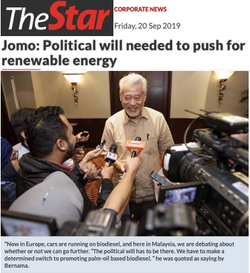
Political will needed to push for renewable energy

The Star 10July 2019

The Star 10July 2019

Malaysian businesses need boost

The Star 9 Oct 2019

The Star 9 Oct 2019

Subsidise public transport for bottom 40%

The Edge 26 Sept 2019

The Edge 26 Sept 2019

Call for measures to counteract global headwinds

The Edge 9 Oct 2019

The Edge 9 Oct 2019

Subsidise public transportation, not fuel

The Star 8 Oct 2019

The Star 8 Oct 2019

Subsidise public transportation for bottom 70%

TheEdge 2Oct 2019

TheEdge 2Oct 2019

"We need to counteract downward forces"

Fake News

PLEASE BEWARE OF MISREPRESENTATIONS OF IMAGES OF JOMO

Commercial and political misrepresentation of his image attributing to him to things which he never said or misrepresenting things he may have said is being circulated on websites such as those posted here. 


You should also be warned, in case you are not already aware, of ‘click bait’ i.e. using such images simply to attract your interest, and then to download your online information for abuse for a variety of ends.

Please inform us and provide a screenshot and weblink to enable further action, which is incredibly difficult. 

Thank you for reading this and for your help and cooperation.

This has also been flagged on his official Facebook page


JKS image ad2.jpg
JKS image Bitcoin ad on  Facebook.jpg
JKS - Fake News 2.jpg
Contact Me
JKS - Fake News 3.jpg
JKS fake news 1.jpg

Nadi Insan by the People's History Centre

Read all editions of #NadiInsan from 1979 to 1983 free of charge at the Peoples History Center website.


Containing writings on socio-political issues, film and cultural commentary, as well as in-depth interviews, Nadi Insan is motivated by community activists and intellectuals in Malaysia.

Happy reading!

Dapatkan kesemua siri majalah #NadiInsan dari tahun 1979 hingga 1983 secara percuma di laman Pusat Sejarah Rakyat.


Berisi tulisan memperihal sosio-politik, ulasan filem dan budaya sehinggalah wawancara yang rencam, Nadi Insan digerakkan oleh aktivis masyarakat dan intelektual di Malaysia.


Selamat membaca!

Contact Me

  • Facebook Social Icon
  • Twitter Social Icon

Thank you for reaching out!

bottom of page