top of page

Follow on Social Media

  • Facebook
  • Twitter
  • Screenshot 2022-09-18 at 5.20.40 PM

M'sia Developments
[on SubStack]

  • Screenshot 2022-09-18 at 5.20.40 PM

Jomo Kwame Sundaram, Vladimir Popov BERLIN and KUALA LUMPUR, Jun 04 (IPS)  - The world economic contraction so far this year is largely due to measures, especially at the national or local level, to contain or prevent Covid-19 contagion, particularly those restricting business operations, thus reducing economic activity, output, incomes and spending. Lower business and worker incomes have reduced spending, for both consumption and investment, and thus overall or aggregate demand. While there has indeed been much novel ‘financial folly' in the last decade, responsible for its dreary ‘recovery', and financial circumstances will retard recovery, the cruel public health dilemma posed by the viral pandemic is surely its immediate cause. To be sure, recent economic performance in much of the world had been quite lacklustre, with no strong recovery since the 2008-09 global financial crisis and Great Recession despite the unexpected impact of ‘unconventional monetary measures', especially in the north Atlantic economies. Recessions and recessions The recessions have been quite uneven, due to different circumstances and responses. Various aspects may bear some resemblance to other supply-side recessions, e.g., those caused or worsened by post-war conversion of armaments industries, oil price shocks (e.g., in 1973, 1979, 2007) and ‘shock therapy'-induced ‘transformational recessions' in ‘post-communist' and other economies in the 1990s. A general recession typically involves declines in many, if not most industries, sectors and regions. Such output contraction typically implies underutilized production capacities, raising unemployment unevenly during a general recession. In contrast, a structural recession refers to falling output in one or a few related industries, sectors or regions, not sufficiently offset by other rises. However, not all supply side recessions necessarily involve structural transformation, especially if not deliberately induced by government.


Newly restructured economies will inevitably emerge from the pandemic,

but some will do better than others.

Really different this time? A structural transformation – with unviable activities declining as more ‘competitive' alternatives grow – may not involve overall economic contraction if resource transfers – from declining activities to rising ones – are easy, rapid and low cost. Such resource transfers typically require ‘repurposing' labour as well as plant, equipment and other ‘fixed capital' stock. Typically, unplanned structural transformations result in supply-side recessions as resources are withdrawn without being redeployed for alternative productive ends. Some examples include post-war recessions when converting military industries to peacetime non-military purposes after wars end. After the Second World War, US output declined for three years, and was 13% lower in 1947 compared to 1944. The 1990s' recessions in many post-communist economies were similarly due to poor management of structural transformations with declining agriculture and manufacturing, often despite more resource extraction, with some contractions deeper than the 1930s' Great Depression. In market economies, such adjustments typically increase unemployment as industries become unprofitable – e.g., due to cost spikes – and lay off workers. Growing unemployment lowers wages, while the conventional wisdom claims that cheaper labour costs will induce new investments. Market resolution of such unexpected, massive disruptions is likely to be poorly coordinated, slow and painful, with high unemployment for years. Alternatively, governments can guide, facilitate and accelerate desired changes with appropriate relief and industrial policy measures. Keynes needed, but not sufficient Slumps in travel, tourism, mass entertainment, public events, sit-down eateries, hotels, hospitality, catering, classrooms, personal services and other such activities have been due to physical distancing and other containment requirements. Such collapses will not be overcome with support, relief and stimulus measures as most such activities cannot fully resume soon, even in the medium term. Expansionary Keynesian fiscal and monetary policies to address collapses in aggregate demand have limited relevance in addressing government-mandated restrictions intended to contain contagion. Furthermore, as Nobel economics laureate Paul Romer and Alan Garber note, "loan guarantees and direct cash transfers will stave off bankruptcy and default on debt, but these measures cannot restore the output that is lost when social distancing keeps people from producing goods and services". Of course, relief measures for those losing incomes can help mitigate the effects of the adverse supply and demand shocks involved, but much depends not only on direct, but also indirect, second or even third order effects, partly reflected in Keynes' ‘multiplier' muted by other government measures. A necessary precondition for the multiplier to accelerate broader economic recovery is the prior existence of underutilized productive capacities. Otherwise, increasing demand will simply raise prices when output and efficiency cannot be quickly increased profitably. One size does not fit all Newly restructured economies will inevitably emerge from the pandemic, but some will do better than others. There is and will be greater need and demand for new as well as modified goods and services such as medical supplies, health facilities, care services, distance learning and web entertainment. Economies trying to adjust to the new post-contagion context should use industrial policy or selective investment and technology promotion to expedite restructuring by directing scare resources from unviable, declining, sunset industries to more feasible, emerging, sunrise activities. Enabling, incentivizing or even requiring needed resource reallocations can help overcome supply bottlenecks. China and other East Asian countries have already had some early successes in thus addressing their Covid-19 downturns. All workplaces adversely affected by precautionary requirements will need to be safely reconfigured or repurposed accordingly. Structural unemployment problems, due to skill shortages not coinciding with available labour skill supplies, can be better addressed by appropriate government-employer coordination to appropriately identify and meet skill requirements. Government policies, e.g., using official incentives, can thus encourage or induce adoption of desirable new practices, such as ‘clean investments' for ‘green' restructuring, e.g., by using renewable energy and energy saving technologies. Without such inducements, stimuli and support for desirable new investments, desired structural shifts may be much more difficult, painful and costly. Thus, the ongoing Covid-19 crisis should be seen as an opportunity to make much needed, if not long overdue investments in desirable sunrise industries, services and enterprises, including personnel retraining and capability enhancement as well as workplace repurposing.

---------------------------------------


Vladimir Popov is a Research Director in the Dialogue of Civilizations Research Institute in Berlin and author of How to Deal with a Coronavirus Economic Recession? ---------------------------------------


Resources:

Politics, Profits Undermine Public Interest in Covid-19 Vaccine Race http://www.ipsnews.net/2020/05/politics-profits-undermine-public-interest-covid-19-vaccine-race/ Covid-19 Straw Breaks Free Trade Camel’s Back http://www.ipsnews.net/2020/05/covid-19-straw-breaks-free-trade-camels-back/ Why Some National Health Care Systems Do Better than Others http://www.ipsnews.net/2020/05/national-health-care-systems-better-others/ ‘Passing the Buck’ Becomes Reckless ‘Conspiracy Blame Game’ http://www.ipsnews.net/2020/05/passing-buck-becomes-reckless-conspiracy-blame-game/ Argentina Responds Boldly to Coronavirus Crisis http://www.ipsnews.net/2020/05/argentina-responds-boldly-coronavirus-crisis/ All-of-Government, Whole-of-Society Involvement Needed to Fight Virus http://www.ipsnews.net/2020/04/government-whole-society-involvement-needed-fight-virus/ Covid-19: Brazil’s Bolsonaro trumps Trump http://www.ipsnews.net/2020/04/covid-19-brazils-bolsonaro-trumps-trump/ Vietnam Winning New War Against Invisible Enemy https://www.ipsnews.net/2020/04/vietnam-winning-new-war-invisible-enemy/ Kerala Covid-19 Response Model for Emulation http://www.ipsnews.net/2020/04/kerala-covid-19-response-model-emulation/ West First Policies Expose Myths http://www.ipsnews.net/2020/03/west-first-policies-expose-myths/ East Asian Lessons for Controlling Covid-19 http://www.ipsnews.net/2020/03/east-asian-lessons-controlling-covid-19/ Stronger UN Leadership Needed to Cope with Coronavirus Threat http://www.ipsnews.net/2020/03/stronger-un-leadership-needed-cope-coronavirus-threat/ State Intervention Necessary to Overcome Covid-19 Threats http://www.ipsnews.net/2020/03/state-intervention-necessary-overcome-covid-19-threats/ Coronavirus Exposes Global Economic Vulnerability http://www.ipsnews.net/2020/03/coronavirus-exposes-global-economic-vulnerability/ Global Economy Still Slowing, Dangerously Vulnerable http://ipsnews.net/2020/02/global-economy-still-slowing-dangerously-vulnerable Intellectual Property Raises Costs of Living http://www.ipsnews.net/2020/02/intellectual-property-raises-costs-living/


Jomo Kwame Sundaram, Anis Chowdhury KUALA LUMPUR and SYDNEY, Jun 02 (IPS)  - Indonesia's founding President Sukarno delivered his annual Independence or National Day address on 17 August 1964 anticipating the forthcoming year as Tahun vivere pericoloso, the ‘year of living dangerously'. 2020 may well be the world's turn, and not only due to the obvious Covid-19 threat to the world. US as number one With the collapse of the Soviet Union and the end of the Cold War, the US became the world's sole superpower. Many argue that after abandoning its pre-Second World War isolationism to become the post-war hegemon, the US has needed threats to justify ever rising military spending for the US ‘military-industrial complex', as President (General) Dwight D. Eisenhower warned. The more recent rise of US President Donald Trump probably reflects these two seemingly contradictory claims, both the re-assertion of post-Cold War dominance as well as jingoist paranoia about American decline due to neoliberal globalization. After George W Bush saw God in the eyes of Vladimir Putin, the Obama administration reinstated Russia as the main US enemy threat, not particularly credible after its collapse during Boris Yeltsin's first presidency, reducing the economy by half and lowering life expectancy by more than five years in less than half a decade! Nevertheless, in the last three years, the US Democratic Party establishment has tried, in vain, to use ‘Russiagate' to discredit President Trump for trying to ‘normalize' relations with Russia. Making America great again? Trump's populist jingoism has multiple foreign enemies. Even though Japan, Korea, Germany, Canada and Mexico account for much of the large US trade deficit, it is easily blamed on China, the familiar source of most cheap consumer goods to the public. The US trade deficit with China grew rapidly from the end of the 20th century, as US transnational corporations (TNCs) ‘off-shored' production to China, reducing labour costs for more profits. With living costs thus lowered, consumers in the North did not really complain until job losses and lower real incomes eroded employees' wellbeing and self-esteem. The earlier US preoccupation with intellectual property probably accelerated China's fast-growing technological capabilities, epitomized by Huawei's 5G edge, recently the target of a largely unsuccessful Washington effort to mobilize allied support against its adoption. US TNCs remain divided over Trump's increasingly belligerent xenophobia against a wide range of security and economic threats from China, real and fictitious. Thus, Trump now blames China for Covid-19, despite praising its response in January after securing a favourable trade deal to reduce earlier US-China tensions following his moves against Huawei. China's emergence as the principal US threat is especially urgent as Trump seeks re-election after mishandling Covid-19 contagion. China's increasing willingness to stand up to him may thus help Trump secure re-election, as will protests against African-American deaths at the hands of the police. Presidential powers ripe for abuse The Trump administration has been considering punitive measures, including outright confiscation of China's assets in the US. The 1977 International Emergency Economic Powers Act (IEEPA) gives POTUS the right to do almost anything with any property of a foreign country posing an "unusual and extraordinary threat". In the past 40 years, the US has invoked the Act 58 times for supposed emergencies, most lasting more than a decade. Currently, there are 31 ongoing IEEPA declarations, including the longest-running emergency, the Iran hostage crisis declared by President Carter in 1979. Trump invoked the act last year to stop US companies from investing in China. On 1 May, Trump used the IEEPA to stop power-grid equipment imports from any ‘foreign adversary'. Outright default on sovereign debt, including over a trillion dollars of US Treasury (T) bonds held by China, is not only prohibited by the US Constitution, but would also greatly disrupt the US$18 trillion US T-bonds market. This would be reckless as the US needs to borrow heavily after Trump's huge post-election tax cuts. While the US cannot simply refuse to pay all its debt, it could try to target China, e.g., by seizing or freezing its assets, or by stopping banks from paying to ostensibly Chinese government accounts. China not helpless China could circumvent attempts to make it pay by reneging on US debt obligations to China by selling T-bonds on the international market. China also has several other options for retaliation. For example, if the US does not respect the laws of other countries, or international law, why should China defer to US laws on commercial contracts, patents, brands or even nationalization? Many US TNC production facilities are located in China, a preferred location for offshoring production until recently. Of course, POTUS could retaliate against Chinese assets in the US, but it is not clear who would be worse off following rounds of mutual retaliation. Of course, no one, except the most naïve, should expect the US to ‘play fair' regardless of its rhetoric. The US has already blacklisted Huawei and tried to coerce NATO and other allies to reject it. This has, in turn, inadvertently adversely affected US semiconductor corporations selling chips to Huawei. Washington's actions are seen by many TNCs, foreign and American, as disrupting global manufacturing supply chains and interdependence, enabled by previous administrations. Foreign investments, technologies and training have undoubtedly helped enhance China's industrial capacities. However, Chinese technological capabilities have also been developed by its own entrepreneurs, producing not only for export, but increasingly also for its own large consumer market. After China was forced to appreciate its currency from around a decade and a half ago, and its labour surplus declined, its authorities greatly expanded its domestic market by enabling real wage rates and working conditions to improve significantly. Success' high costs And if ‘weaponizing' Chinese ownership of US government debt proves ‘successful', others will be more cautious in buying US T-bonds, undermining the very market which has enabled easy and cheap US access to foreign savings. If the US Federal Reserve became the only purchaser of T-bonds, fiat money to finance the deficit could simply be printed, without issuing bonds. Such weaponization may also affect general willingness to hold other US dollar-denominated assets, thus negatively impacting stock and other financial markets, and undermining the dollar's role as world reserve currency, which would limit its ability to run trade and budget deficits by printing money. If Trump decides to ‘up the ante' against China, all the world will be at great risk. If he gets more politically desperate, he may view the adverse consequences of stepping up measures against China as a small price to pay for its political benefits. The US-led encirclement of China, except on the Russian and Korean fronts, suggests that a conflict is more likely to be provoked in South or Southeast Asia. Although recent India-China hostilities have captured headlines, Pakistan's long-time alignment to both the US and China suggest that Southeast Asia may become the next theatre for confrontation. ---------------------------------------


Jomo Kwame Sundaram, Anis Chowdhury SYDNEY and KUALA LUMPUR, May 26 (IPS)  - With well over five million Covid-19 infections worldwide, and deaths exceeding 340,000, the race for an effective vaccine has accelerated since the SARS-Cov-2 virus was first identified as the culprit. Expecting to score politically from being ‘first' to have a vaccine, US President Trump's Operation Warp Speed promises to get 300 million doses to Americans by January, after the November polls, following several failed attempts to monopolize vaccines being developed by European companies. More than 115 vaccine development efforts are ongoing around the world. Eight human trials are underway, including five in China, with the most promising one government financed. Meanwhile, affordable access is the primary concern for most of the world.


Jonas Salk insisted that the polio vaccine he had developed remain patent free "could you patent the sun?"

Fighting epidemics together Sixty-five years ago, Jonas Salk insisted that the polio vaccine he had developed remain patent free. Asked who owned the patent, he replied, "The people I would say. There is no patent. You might as well ask, could you patent the sun?" Making vaccines and life-saving drugs available freely or affordably has been crucial for containing infectious diseases such as tuberculosis, HIV-AIDS, polio and smallpox. Smallpox had a 30% mortality rate among those infected, and was responsible for 10% of the world's blind. In 1958, the Soviet Union urged the World Health Organization (WHO) to eradicate smallpox, offering funding for a plan. Surprising many, the US, already WHO's major funder, agreed, resulting in the rivals' most successful collaboration during the Cold War. Smallpox was eradicated in 1977, following a WHO campaign seeking total eradication within a decade, launched in 1967, when there were over 2.5 million cases worldwide. However, the paltry budget approved by the WHA would not even have paid for the vaccines required. The programme was launched in developing countries with vaccines donated by other countries including both Cold War rivals. Developing countries quickly developed vaccine producing and vaccination capabilities with generous technical assistance from abroad. A people's vaccine? More than 140 world leaders and experts signed an open letter before the World Health Assembly (WHA) began on 18 May, calling on governments to commit to a ‘people's vaccine' against COVID-19, with all vaccines, treatments and tests patent-free, mass produced, fairly distributed and available to all, in every country, free of charge. Leaders of Italy, France, Germany, Norway, the European Commission and Council urged that the vaccine be "produced by the world, for the whole world" as a "global public good of the 21st century". President Xi promised that a China developed vaccine will be a "global public good", with "accessibility and affordability in developing countries", with President Macron pledging likewise. The United Nations Secretary-General also emphasized that everybody must have access to the vaccine when available. The WHA unanimously acknowledged that vaccines, treatments and tests are global public goods, but was vague on implications. Nevertheless, the US disassociated itself from over-riding patents in the interests of public health, objecting that it would send the "wrong message to innovators". Both Johnson & Johnson and French pharmaceutical giant Sanofi have US government contracts to develop potential treatments, but the US Health and Human Services Secretary refuses to guarantee they will be affordable. Earlier, the US did not join the 24 April world leaders' pledge to increase cooperation against Covid-19, besides ignoring a 4 May pledge by international leaders and organizations to spend US$8 billion to make available a vaccine and treatments. Contain China, not the pandemic Unfortunately, three decades after the Cold War ended, the context is very different now, due to politics and profits. Trump's ‘America first' administration and some key allies seeking to check China fear that Beijing's handling of the Covid-19 crisis has boosted its already fast rising standing. By April, the US and its allies were blaming China for the pandemic due to the "Chinese virus". Trump upped the ante on 27 April by threatening retaliatory measures against China for billions of dollars of damages worldwide, claiming that China could have stopped the epidemic at source, but did not. Offering no evidence, US Secretary of State Mike Pompeo has also accused ‘China-affiliated' hackers of trying to steal intellectual property (IP) for Covid-19 vaccines, treatments and testing. Meanwhile, some US states, politicians and companies have also filed lawsuits against China for damages. All this has also undermined the WHO, now depicted as China's puppet. POTUS's tough letter to the Director-General demanded "substantive", but unspecified "improvements" at the WHO within 30 days, threatening to permanently end already suspended US funding and to quit altogether. ‘America first' vs global public interest With elections less than half a year away, Trump's recent rhetoric and policies appear preoccupied with boosting his re-election prospects, slipping due to his handling of the outbreak. Unsurprisingly, international concerns over US control of an effective Covid-19 vaccine have grown. German weekly, Die Welt am Sonntag reported in March that POTUS had offered German biotech company, CureVac about US$1 billion for exclusive access to the vaccine it is developing. Earlier this month, Sanofi hastily backed down after the French Prime Minister insisted that access for all was "non-negotiable" following the CEO's 13 May announcement that the US government had "the right to the largest pre-order because it's invested in taking the risk" despite French government support for Sanofi worth hundreds of millions of euros. Profits vs public interest Only a few giant companies can develop and produce a vaccine from start to finish, due to the expense and range of expertise required. Historically, most vaccines have been developed in the North, often reaching the South much later. During the 2009 swine flu pandemic, some OECD governments contracted with pharmaceutical giants to monopolize the H1N1 swine flu vaccine. After developing a promising Zika vaccine in 2017, the US Army assigned production rights to Sanofi, but the deal fell through following profiteering charges by US watchdog organizations and Senator Bernie Sanders. Despite enjoying the patent system's extended monopolies, at the expense of public health, limited prospects for lucrative profits have generally discouraged investments to develop affordable medicines and vaccines for developing countries. What can be done Some pharmaceutical giants, e.g., Glaxo-Smith-Kline and Sanofi, claim they do not expect to profit from the Covid-19 vaccine. But such recent industry promises not to profiteer from making the vaccine globally available are hard to reconcile with the record that drug research and development has long been driven by the prospect of massive profits. Such firms have been urged to make the Open Covid pledge to voluntarily relinquish their IP rights (IPRs), at least until the Covid-19 pandemic is over. But Oxfam fears this may not be enough. As Big Pharma has long enjoyed massive government subsidies, national authorities can enforce the pledge. Governments can also use ‘compulsory licencing', permitted by World Trade Organization rules, to enable companies that do not have the IPRs, to make, manufacture and sell generic versions of patented medicines only for national sale, as the Bush administration did with Tamiflu a decade and a half ago in the face of the Avian flu threat. --------------------------------------- Link http://ipsnews.net/2020/05/politics-profits-undermine-public-interest-covid-19-vaccine-race


Latest Videos

All Videos

All Videos

AN URGENT CALL: A PEOPLE"S VACCINE AGAINST COVID-19

00:00
9 June 2020: IHD-ILO-ISLE Virtual Conference - Day 2

9 June 2020: IHD-ILO-ISLE Virtual Conference - Day 2

05:08:34
Learning in Governance in times of COVID-19

Learning in Governance in times of COVID-19

46:30
Beyond the Lockdown: Towards the ‘New Normal’

Beyond the Lockdown: Towards the ‘New Normal’

59:10

About Jomo

Jomo Kwame Sundaram is Research Adviser, Khazanah Research Institute, Fellow, Academy of Science, Malaysia, and Emeritus Professor, University of Malaya. Previously, he was UN Assistant Secretary-General for Economic Development, Assistant Director General, Food and Agriculture Organization (FAO), Founder-Chair, International Development Economics Associates (IDEAs) and President, Malaysian Social Science Association. 

In The Media

TheStar 26 June 2020

TheStar 26 June 2020

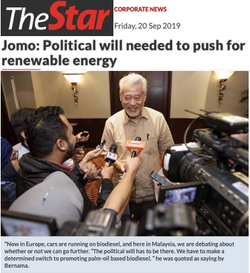
The Star 20 Sept 2019

The Star 20 Sept 2019

Political will needed to push for renewable energy

The Star 10July 2019

The Star 10July 2019

Malaysian businesses need boost

The Star 9 Oct 2019

The Star 9 Oct 2019

Subsidise public transport for bottom 40%

The Edge 26 Sept 2019

The Edge 26 Sept 2019

Call for measures to counteract global headwinds

The Edge 9 Oct 2019

The Edge 9 Oct 2019

Subsidise public transportation, not fuel

The Star 8 Oct 2019

The Star 8 Oct 2019

Subsidise public transportation for bottom 70%

TheEdge 2Oct 2019

TheEdge 2Oct 2019

"We need to counteract downward forces"

Fake News

PLEASE BEWARE OF MISREPRESENTATIONS OF IMAGES OF JOMO

Commercial and political misrepresentation of his image attributing to him to things which he never said or misrepresenting things he may have said is being circulated on websites such as those posted here. 


You should also be warned, in case you are not already aware, of ‘click bait’ i.e. using such images simply to attract your interest, and then to download your online information for abuse for a variety of ends.

Please inform us and provide a screenshot and weblink to enable further action, which is incredibly difficult. 

Thank you for reading this and for your help and cooperation.

This has also been flagged on his official Facebook page


JKS image ad2.jpg
JKS image Bitcoin ad on  Facebook.jpg
JKS - Fake News 2.jpg
Contact Me
JKS - Fake News 3.jpg
JKS fake news 1.jpg

Nadi Insan by the People's History Centre

Read all editions of #NadiInsan from 1979 to 1983 free of charge at the Peoples History Center website.


Containing writings on socio-political issues, film and cultural commentary, as well as in-depth interviews, Nadi Insan is motivated by community activists and intellectuals in Malaysia.

Happy reading!

Dapatkan kesemua siri majalah #NadiInsan dari tahun 1979 hingga 1983 secara percuma di laman Pusat Sejarah Rakyat.


Berisi tulisan memperihal sosio-politik, ulasan filem dan budaya sehinggalah wawancara yang rencam, Nadi Insan digerakkan oleh aktivis masyarakat dan intelektual di Malaysia.


Selamat membaca!

Contact Me

  • Facebook Social Icon
  • Twitter Social Icon

Thank you for reaching out!

bottom of page