top of page

Follow on Social Media

  • Facebook
  • Twitter
  • Screenshot 2022-09-18 at 5.20.40 PM

M'sia Developments
[on SubStack]

  • Screenshot 2022-09-18 at 5.20.40 PM

Updated: May 27, 2020

Jomo Kwame Sundaram, Anis Chowdhury SYDNEY and KUALA LUMPUR, May 12 (IPS)  - Although Wuhan local authorities undoubtedly ostracized local medical whistle-blowers, notably Dr Li Wenliang, who suspected a new virus was responsible for flu-like infections in Wuhan in late 2019, official responses were apparently not delayed, and possibly even expedited, as the novel character of the SARS-CoV-2 virus, responsible for Covid-19 infections, was not immediately self-evident. On 12 January this year, China publicly shared the genetic sequence for Covid-19 with the world. On 11 February, the International Committee on Taxonomy of Viruses named the newly discovered virus causing Covid-19 the "severe acute respiratory syndrome coronavirus 2 (SARS-CoV-2)". From praise to conspiracy US President Donald Trump went from praising China for its transparent handling of the Covid-19 outbreak in January, after securing a deal ending escalating trade tensions, to accusing China of lack of transparency in March. As he ratcheted up his criticisms of China's handling of the virus outbreak, POTUS threatened China on 18 April with consequences if it was "knowingly responsible" for the pandemic. Trump has also accused the World Health Organization (WHO) of being ‘China-centric', suspending its funding at a time of exceptional need. Even the mainstream media has joined such attacks on ‘soft targets', such as UN multilateral or inter-governmental organizations, constrained by their governance from robustly defending themselves. Initially, President Trump had downplayed the pandemic threat, promising "it will all work out well" and insisting "it was totally under control". Then, after grossly mismanaging the US epidemic, the Trump administration switched to a blame game, becoming ever shriller in his rhetoric as his approval ratings continued to slip from an initial all-time high. Trump has insisted on terming Covid-19 a "Chinese virus", and has tried to persuade allies to join him in blaming China for the pandemic. He has since ‘upped the ante', by insisting the outbreak -- which China could have stopped, but refused to, according to him -- as worse than the Pearl Harbor or 9/11 attacks. Japan, Taiwan and others seeking to mobilize against China's ascendance have joined the anti-China, anti-WHO alliance. With US elections less than half a year away, the epidemic's politicization is undermining the desperately needed multilateral cooperation needed to address the pandemic and its many ramifications. Conspiracy theories While some kooks still claim that the Covid-19 pandemic is an elaborate hoax, there are more biological warfare ‘conspiracy theories', of varying degrees of plausibility, going around, with some actively promoted by politicians, even governments. A coronavirus, referring to the European crown-like physical form or features of a virus, was first found in chickens in 1937, and has featured in various different contexts since, with coronaviruses first identified in humans in 1965. The internationally very influential right-wing media (e.g., Rupert Murdoch's media empire, especially Fox TV) and some influential public intellectuals continue to feed various versions of the China conspiracy theory although Western intelligence agencies have found no evidence of China either deliberately or accidentally releasing the deadly virus. The scientific evidence thus far is that the SARS-CoV-2 virus mutated naturally, resulting in at least three distinct strains, and could not have been ‘manufactured' in a Chinese, US or other laboratory. Yet, conspiracy theories persist, with those blaming China of the worst getting the most publicity in a US election year. Meanwhile, the supposedly ‘centrist' mainstream Western media have also contributed by publishing various more plausible stories invoking ‘circumstantial evidence' to blame China for causing the global pandemic, and worse, of a deliberate ‘cover-up'. Imperialist apologist's conspiracy theory Celebrated UK imperialist apologist historian Niall Ferguson, now at the Hoover Institution, cites the venerable New York Times (NYT) for the now oft-repeated claim that China unleashed seven million potentially Covid-19 infected, and therefore infectious, Wuhan residents on the rest of the world for most of January before imposing a lockdown. Long the hub of Chinese industry, Wuhan is a city into which millions from the rest of Hubei and the two neighbouring provinces commute – not unlike the millions travelling daily into and out of New York City (NYC) from NY state, New Jersey and Connecticut. But despite the heavier international traffic from NYC airports, no credible source would accuse NYC's daily commuters of all travelling to the rest of the world in any particular month, even before a major holiday comparable to the lunar new year. Flights of fantasy Ferguson even claimed that although China cancelled all flights from Wuhan to other Chinese cities on 23 January, regular direct flights from Wuhan to London, Paris, Rome, New York and San Francisco continued through January, and in some cases, into February. Although such flights were undoubtedly scheduled and advertised, all direct international flights from Wuhan were cancelled, and those from other cities via Wuhan were redirected to bypass China's Covid-19 epicentre. Daniel Bell, a Canadian professor, who had strongly criticized China's authorities for grossly mishandling the epidemic at the start, challenged Ferguson's implication that China deliberately allowed, if not encouraged, contagion beyond China, particularly to the West. When asked for the basis for his claim, Ferguson sent Bell a link to a NYT story, which did not corroborate Ferguson's claim that direct commercial flights from Wuhan to the US continued after 23 January, and well into February. Similarly, other source links sent by Ferguson to Bell turned out to be ‘economical with the truth', inaccurate or wrongly interpreted. Simply put, very little of the ostensible evidence Ferguson invoked actually supported his own allegations. ‘Heads, I'm right, tails, you're wrong' Ferguson eventually conceded that he had wrongly alleged that regular flights abroad left Wuhan after 23 January, but retaliated by questioning Bell's other scholarship, including his recent book on China, and insisting that China should have cancelled all international flights in an updated blog. Ferguson also challenges official data from China, citing the authorities' revision of its data as new information becomes available – as one hopes others do as well, especially as the world struggles to understand and address new phenomena. It should be amusing to see Ferguson's considerable skills deployed for his next analytical contortion as he addresses new evidence, e.g., that a Paris hospital patient was already infected with Covid-19 in December despite no history of travel to China or contact with any known infected person. Perhaps Ferguson will uncover communist Chinese bats from Wuhan infiltrating Parisian escargot markets. Visit this story at http://ipsnews.net/2020/05/passing-buck-becomes-reckless-conspiracy-blame-game


Updated: May 27, 2020

Jomo Kwame Sundaram, Anis Chowdhury SYDNEY and KUALA LUMPUR, May 05 (IPS)  - Like much of the West, Argentina did not take many early precautionary actions after the Covid-19 epidemic was confirmed in January, but became the first Latin American country to act decisively with a 12 March public health emergency declaration. The presidential decree came a day after the World Health Organization (WHO) declared a global pandemic, just over a week after the first case was detected in the republic on 3 March. Lockdown to ‘flatten the curve' With neither vaccine nor cure available, Argentina decided on a lockdown to buy time to ‘flatten the curve' by slowing its rapid spread and quickly enhancing its public health capacities and capabilities, to do mass testing and contact tracing, and get protective equipment for frontline health workers and respirators for the severely infected. The measures include a mandatory ‘stay in shelter' lockdown, with those violating the order facing fines and harsh prison sentences from six months to two years, and other "social, preventive isolation" measures from 20 to 31 March, now extended to 10 May. All arrivals from Covid-19 ‘hot spots' (including China, Iran, South Korea, Italy and the US) have to be quarantined for 14 days regardless of nationality. All direct flights between Argentina and the US as well as Europe were suspended for 30 days from 17 March, now extended indefinitely. As infections surge in neighbouring Brazil, the government has set up secure corridors in border provinces, allowing Brazilian drivers to access bathrooms, get food and unload products with minimal contact with Argentines. Health ‘non-system' fragmented, ineffective, inequitable All Argentines have a constitutional right to health care, but this does not mean much, due to its gross inequalities. Its patchwork of regional and national laws without much coherence compounds the problem, resulting in very complicated and uneven coverage. The new left populist government from December 2019 of Peronist President Alberto Fernandez reversed the previous Macri government's severe austerity measures under an IMF program, and demotion of the Health Minister to a non-cabinet position, which had further undermined its already debilitated health ‘non-system'. A tenth of the population, mostly around Buenos Aires, has private health insurance, ensuring access to private hospitals with most of the best physicians, nurses and equipment. About a third of the population – mostly rural poor – does not have any health insurance, and little choice other than the chronically underfunded and understaffed public hospitals. Many Argentines get health coverage through unions, with more than 300 various schemes, offering very different benefits. By 30 April, 214 deaths had been attributed to the virus, while confirmed infections reached 4,285, probably too few, due to the low testing rate. By 26 April, only around 50,000 tests had been done for its 45.2 million population, compared to Chile's 150,000 for 19.1 million. However, the Argentine government is rapidly enhancing its testing capacity. Protecting the economy, people For the new government, the crisis could not have come at a worse time, inheriting an economy in deep recession, with gross public debt around US$323 billion (93.3% of GDP), annual inflation over 50%, poverty above 40%, unemployment at almost 10%, and the Argentine peso having lost 68% of its value in 2019. Yet, Argentina committed around 2% of GDP to an economic and social relief package, ensuring that no essential services – electricity, gas, water, mobile telephony, fixed landlines, internet and cable television – are cut for retirees, social welfare recipients and households earning less than about U$520 due to non-payment. The government provides 10,000 pesos (about US$150) as an Emergency Family Income to domestic workers and other low-income earners, prioritizing those who qualify for the Universal Child Allowance and the Allowance for Pregnant Women. Nearly eight million Argentines received relief payments from 21 April. The administration has made every employer, regardless of trade and size, eligible for the Emergency Aid Program for Work and Production, postponing or reducing taxes on small businesses by up to 95% and paying employees half to all the monthly minimum wage. More than US$30 million has been allocated for food aid alone, with national, provincial and municipal authorities mobilizing many to work in public kitchens. Fernandez has promised food and other resources needed to survive, especially by the poor. The government has also required banks to extend hundreds of millions of US dollars in loans at reduced interest rates to keep the economy afloat. The administration has also suspended evictions and frozen all rent increases until September, besides absolving the lowest tax bracket of penalties for not paying their March taxes. As the lockdown continues, Argentina's economic and social relief package has grown, almost daily, to almost double the original sum committed, to 3.5% of GDP by April's end. National unity against epidemic Despite Argentina's fiercely divisive politics, the new President insisted on standing with leaders from across the political spectrum in a rare display of unity to announce the 19 March lockdown. The national government is working closely with state governors as well as all health providers, securing private sector cooperation without nationalization. Meanwhile, the armed forces are building triage centres in case of a surge in infections while social, religious and business groups work together to deliver food to more than two million in the greater Buenos Aires area alone. Despite relief measures, much hardship remains, especially for those in poor crowded barrio slums and relying on daily incomes. Yet, its measures have 94.7% approval, with the President's popularity soaring to 81%. Crisis as opportunity After taking office, President Fernandez increased progressive taxation to try to balance the budget to restore growth, rather than pay foreign creditors. Rather than cut social expenditures, he cut spending benefitting the wealthy, e.g., by reducing higher pensions, but not cutting smaller ones. Having announced that its debt needed restructuring, the new government made a restructuring offer to creditors well before the pandemic became its central concern. The government organized another display of national unity to back its insistence that it cannot pay creditors while dealing with the pandemic. On 16 April, Economy Minister Martín Guzmán demanded that creditors accept new securities to replace US$65 billion worth of bonds, almost 40% of its foreign currency debt. Argentina is also seeking a small ‘haircut' of 5.4% on the debt principal, saving the government US$3.6 billion and cutting interest payments by 62%. These repayments will start low, at just 0.5%, beginning late in 2023, and will peak in 2029 at less than 5%. The plan will save the government U$37.9 billion in interest. President Fernandez also welcomed the joint G20 statement of the World Bank and International Monetary Fund proposing immediate debt relief for the poorest countries, while calling for a global humanitarian emergency fund to tackle the pandemic. Guzmán also urged fellow G20 finance ministers to use the ‘entire toolkit' of economic policies, including bilateral swaps, to aid countries most in need. Meanwhile, there seems to be a consensus of sorts that Argentina has tackled the epidemic rather well so far despite its problematic health system and economic problems. The 27 March Bloomberg headline, Argentina Sacrifices Economy to Ward Off Virus, Winning Praise, captured the cruel dilemma Covid-19 has posed for people and governments to choose between lives and livelihoods. Related Links + Covid-19: Brazil's Bolsonaro trumps Trump (https://www.ipsnews.net/2020/04/covid-19-brazils-bolsonaro-trumps-trump/) Visit this story at http://ipsnews.net/2020/05/argentina-responds-boldly-coronavirus-crisis


Updated: May 27, 2020

Jomo Kwame Sundaram, Anis Chowdhury SYDNEY and KUALA LUMPUR, Apr 28 (IPS)  - The Covid-19 pandemic is now widely considered more threatening than any other recent viral epidemic. Most believe that many more have been infected or even died than officially confirmed. Despite available information, some national leaders believed that the epidemic would not affect them. Others believed that promoting ‘herd immunity' would protect populations by exposing them to the virus, triggering human immune systems to produce antibodies. Flattening the curve? The principal strategy adopted by most governments is to ‘flatten the curve', so that countries' health systems can cope with new infections by tracing, testing, isolating and treating those infected until such time that an approved vaccine or ‘cure' is available to all. But this is easier said than done. Vulnerability to infection and capacity to respond depend on many factors including healthcare system preparedness, experience and ability in managing viral outbreaks besides the specific challenges raised by Covid-19. Government capacity to respond depends crucially on system capacity and capabilities -- e.g., authorities' ability to speedily trace, isolate and treat the infected -- and available fiscal resources -- e.g., to quickly enhance testing capacity and secure personal protective equipment. But funding cuts, privatization and other types of rent-seeking in recent decades -- in the face of rising costs, not least for medicines -- have constrained and undermined most public health systems, albeit on various different pretexts. Early action without lockdowns Physical distancing, mask use and other precautionary measures as well as mass testing, tracing, isolation and treatment have checked the epidemic without lockdowns. Such measures have been quite successful so far in much of East Asia, Vietnam and the Indian state of Kerala. Physical distancing and other precautionary measures, such as wearing masks in public areas, will be critically necessary until a vaccine is affordably available to all. Even the availability of a cure will not obviate the need for prevention offered by a vaccine. Precautionary measures must be appropriate and affordable. To minimize the risk of infection, authorities can encourage and enable, if not require, changes in social interactions, including work and other public space arrangements, including offices, factories, shops, public transportation and classrooms. Lockdowns: enforced, extended physical distancing Since Wuhan, many governments have resorted to various types of ‘stay-in-shelter' ‘lockdowns' to enforce physical distancing for protracted periods to try to ‘circuit-break' transmission. They buy precious time, for complementary interventions, allowing health authorities to check and reverse the spread of infections. Besides enforcing extended physical distancing through lockdowns, appropriate complementary measures are needed for lockdowns to work. Testing, treating and quarantining the infected need to be complemented by tracing to identify those more likely to be infected. But it has to be acknowledged that lockdowns are only part of an array of measures available to authorities to deal with the Covid-19 pandemic. Lockdowns are blunt measures of last resort, often due to the failure, inadequacy or delay of precautionary ‘early actions'. And ‘if you only have a hammer, every problem begins to look like a nail'. A lockdown was deemed necessary to deal with the Covid-19 outbreak in Wuhan, and the surrounding three provinces, after other measures to deal with the novel epidemic seemed ‘too little, too late'. But in most other situations, adequate appropriate early precautionary measures may well have proved enough. Lockdowns should not be economic knockouts Depending on context, lockdowns have many other effects as well. Good planning, implementation and enforcement of movement restrictions and provisioning for all adversely affected are crucial, not only for efficacy, but also for transitions before, during and after. Nonetheless, lockdowns typically incur huge economic costs, distributed unevenly in economies and societies. Governments must therefore be mindful of the costs, including of disruptions, and also of how policies affect various people differently.

The effectiveness of a lockdown has to be judged primarily by its ability to quickly ‘flatten the curve' and ensure no resurgence of infections. Success should not be measured by duration, enforcement stringency or even by unsustainable declines in new cases. Most ‘casual' labourers, petty businesses reliant on daily cash turnover and others in the ‘informal' economy will find it especially difficult to survive extended lockdowns. Although they need more relief support than most, they are often difficult for governments to reach. Those living in cramped conditions, e.g., urban slums, cannot realistically be expected to practice consistent physical distancing, but will nonetheless need to be enabled to sustainably practice other precautionary measures within their modest means, e.g., using washable masks. Governance, mobilization, leadership To enhance efficacy and minimize disruptions, an ‘all of government' approach at all levels needs to be developed, involving much more than public health and police enforcement authorities. Human resource, social protection, transport, education, media, industry, fiscal and other relevant authorities need to be appropriately engaged to develop the various required transitions and to plan for the post-lockdown ‘new normal'. Another condition for success is ‘whole of society' mobilization and support. Government transparency and explanations for various measures undertaken are important for public understanding, cooperation, support and legitimacy. The authorities must also realize how measures will be seen. Singapore's apparent early success, for example, was not what it seemed as it had overlooked official disincentives for possibly infected migrant workers to cooperate. Appropriate enhanced public health and other relevant communications and education will often need to be quickly developed to succeed. The efficacy and consequences of a ‘lockdown' and related measures are contingent on public appreciation of the challenges and the ability of societies to respond appropriately with socio-economic, cultural and behavioural changes. While the Covid-19 crisis is undoubtedly exceptional and full social mobilization is needed, such special ‘wartime' measures must not be abused, e.g., by the temptation to bias implementation of measures for political advantage. Success can thus be greatly enabled by legitimate, credible and exemplary leadership, government and otherwise. --------------------------------------- Excerpt: Related Links + East Asian Lessons for Controlling Covid-19' (http://www.ipsnews.net/2020/03/east-asian-lessons-controlling-covid-19/) + Vietnam Winning New War Against Invisible Enemy (http://www.ipsnews.net/2020/04/vietnam-winning-new-war-invisible-enemy/) + Kerala Covid-19 Response Model for Emulation (Kerala Covid-19 Response Model for Emulation) Visit this story at http://ipsnews.net/2020/04/government-whole-society-involvement-needed-fight-virus


Latest Videos

All Videos

All Videos

AN URGENT CALL: A PEOPLE"S VACCINE AGAINST COVID-19

00:00
9 June 2020: IHD-ILO-ISLE Virtual Conference - Day 2

9 June 2020: IHD-ILO-ISLE Virtual Conference - Day 2

05:08:34
Learning in Governance in times of COVID-19

Learning in Governance in times of COVID-19

46:30
Beyond the Lockdown: Towards the ‘New Normal’

Beyond the Lockdown: Towards the ‘New Normal’

59:10

About Jomo

Jomo Kwame Sundaram is Research Adviser, Khazanah Research Institute, Fellow, Academy of Science, Malaysia, and Emeritus Professor, University of Malaya. Previously, he was UN Assistant Secretary-General for Economic Development, Assistant Director General, Food and Agriculture Organization (FAO), Founder-Chair, International Development Economics Associates (IDEAs) and President, Malaysian Social Science Association. 

In The Media

TheStar 26 June 2020

TheStar 26 June 2020

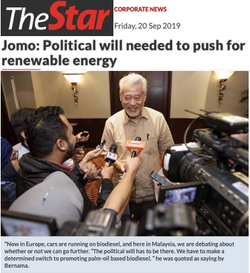
The Star 20 Sept 2019

The Star 20 Sept 2019

Political will needed to push for renewable energy

The Star 10July 2019

The Star 10July 2019

Malaysian businesses need boost

The Star 9 Oct 2019

The Star 9 Oct 2019

Subsidise public transport for bottom 40%

The Edge 26 Sept 2019

The Edge 26 Sept 2019

Call for measures to counteract global headwinds

The Edge 9 Oct 2019

The Edge 9 Oct 2019

Subsidise public transportation, not fuel

The Star 8 Oct 2019

The Star 8 Oct 2019

Subsidise public transportation for bottom 70%

TheEdge 2Oct 2019

TheEdge 2Oct 2019

"We need to counteract downward forces"

Fake News

PLEASE BEWARE OF MISREPRESENTATIONS OF IMAGES OF JOMO

Commercial and political misrepresentation of his image attributing to him to things which he never said or misrepresenting things he may have said is being circulated on websites such as those posted here. 


You should also be warned, in case you are not already aware, of ‘click bait’ i.e. using such images simply to attract your interest, and then to download your online information for abuse for a variety of ends.

Please inform us and provide a screenshot and weblink to enable further action, which is incredibly difficult. 

Thank you for reading this and for your help and cooperation.

This has also been flagged on his official Facebook page


JKS image ad2.jpg
JKS image Bitcoin ad on  Facebook.jpg
JKS - Fake News 2.jpg
Contact Me
JKS - Fake News 3.jpg
JKS fake news 1.jpg

Nadi Insan by the People's History Centre

Read all editions of #NadiInsan from 1979 to 1983 free of charge at the Peoples History Center website.


Containing writings on socio-political issues, film and cultural commentary, as well as in-depth interviews, Nadi Insan is motivated by community activists and intellectuals in Malaysia.

Happy reading!

Dapatkan kesemua siri majalah #NadiInsan dari tahun 1979 hingga 1983 secara percuma di laman Pusat Sejarah Rakyat.


Berisi tulisan memperihal sosio-politik, ulasan filem dan budaya sehinggalah wawancara yang rencam, Nadi Insan digerakkan oleh aktivis masyarakat dan intelektual di Malaysia.


Selamat membaca!

Contact Me

  • Facebook Social Icon
  • Twitter Social Icon

Thank you for reaching out!

bottom of page