top of page

Follow on Social Media

  • Facebook
  • Twitter
  • Screenshot 2022-09-18 at 5.20.40 PM

M'sia Developments
[on SubStack]

  • Screenshot 2022-09-18 at 5.20.40 PM

KUALA LUMPUR, Malaysia, Apr 24 2024 (IPS) - Rich nations’ climate hypocrisy is accelerating global heating, pushing the planet closer to irreversible catastrophe, with its worst consequences borne by the poorest, both countries and peoples.


Climate injustice

While official and other discourses acknowledge or even invoke the need for collective responsibility, the disparity in culpability between wealthy nations and the developing world is stark.

Historically, the industrialised nations of the global North have been the primary contributors to greenhouse gas emissions but continue to evade their fair share of responsibility.

The narrative of an equally shared burden of combating climate change conveniently obscures disproportionately greater emissions and historical exploitation by rich countries.

The European Union’s ambitious new ‘equitable’ climate policies, such as the Carbon Border Adjustment Mechanism (CBAM), continue this hypocrisy. While ostensibly aimed at reducing emissions, such measures burden developing countries more, further deepening world inequalities.


Market solutions best?

Similarly, carbon taxes, prices and emissions trading systems make it much harder for nations with fewer resources to afford adequate climate action. They have few resources to adapt to global heating and its effects, let alone afford the costly transitions to cleaner technologies and other mitigation measures.

Furthermore, developed nations have relocated energy-intensive industries to the global South to ‘export emissions’. Thus, they effectively shift blame while consuming most goods and services produced at high environmental costs.

Limiting the average temperature increase to no more than 1.5°C (degrees Celsius) above pre-industrial levels, as agreed to by the UNFCCC, will require drastic reduction of carbon (dioxide equivalent) emissions by 45% below 2010 levels by 2030!

Instead, the Intergovernmental Panel on Climate Change (IPCC) estimates current trends will increase the average temperature by 2.7°C by 2100, far above catastrophic levels.

Despite the urgency, countries are mainly focused on committing to the distracting ‘net-zero’ carbon emissions by 2050, ignoring the urgent need for substantial greenhouse gas (GHG) emissions cuts.

At recent climate conferences, carbon pricing and related market mechanisms have been ‘sold’ as an effective and fair means to rapidly reduce carbon dioxide and other GHG emissions to mitigate climate change.


Carbon tax revenue distribution

Worse, there is no discussion of how revenues from carbon taxation should be distributed equitably to accelerate climate adaptation and mitigation efforts in poorer countries.

Carbon pricing claims to penalise GHG emitters for the economic damages and losses caused by global warming. However, there is little evidence of efforts to compensate those most adversely affected.

Moreover, carbon market schemes have only made grossly inadequate impacts. Emissions have only been marginally reduced, well short of what the world needs to address the climate threat.

Besides being ineffective, only a tiny fraction of global GHG emissions are subject to carbon taxes, often imposed using biased methods and assumptions.


Carbon price discounts

Carbon prices have also been grossly discounted to induce market participation and public acceptability. Hence, carbon tax rates do not reflect the supposed social costs of adverse externalities.

Worse, despite the potential of carbon taxes to generate significant revenue for climate finance, progressive redistributive measures have not been developed, let alone implemented.

Hence, carbon pricing policies are not up to the task. They also fail to address underlying systemic issues driving global heating. Carbon taxes tend to be regressive, disproportionately burdening low-income individuals and countries.

Without a progressive reallocation of resources, poor nations and people cannot afford to adapt to global heating, let alone contribute to needed worldwide climate action efforts or achieve sustainable development.

Government fossil fuel subsidies, e.g., to ensure support against Russia after its Ukraine invitation, have undermined the purpose of carbon pricing. With such subsidies, carbon prices became negative in many countries in 2022.


Zero for ‘net-zero’

Carbon offset markets, touted as a way to achieve net-zero emissions, have been criticised as an ineffective distraction, allowing the wealthy to continue emitting GHGs while profiting financial intermediaries.

While successfully touted as a rallying slogan for climate action, the net-zero emissions target is dangerously misleading. Commitments to achieve net-zero emissions typically rely on ‘offsetting’, which allows countries and companies to avoid reducing emissions.

Despite earlier surges in demand for carbon offsets from major financial investors, much of the profit goes to arbitrage, speculation, and trading rather than decarbonisation efforts.

Initiatives like the Glasgow Financial Alliance for Net Zero were touted as significant breakthroughs. However, there is much reason to be sceptical about the effectiveness of such initiatives for reducing GHG emissions.

Less than half a year after the Glasgow Conference of Parties (COP), the North Atlantic Treaty Organization (NATO) and allied countries abandoned their declared commitment to end burning coal despite all its additional dangers, such as sulphide and sulphate emissions.


Market solutions or delusions?

While carbon pricing and offset markets have been promoted as solutions to mitigate global warming, their limitations and ineffectiveness in significantly reducing emissions underscore the need for alternative strategies.

Selective investment and technology promotion policies and greatly increased climate finance for adaptation and mitigation in developing countries are crucial.

They can only succeed if pragmatically conceived and implemented, considering the range of sustainable development and other challenges faced.

Addressing climate change requires a comprehensive, equitable, and pragmatic approach that prioritises substantial emissions reductions and supports vulnerable populations most affected by global heating.


Related IPS Articles

·                Carbon Markets Biased, Distorted, Undermined

·                Beware Climate Finance Charade

·                Can Carbon Trading Stop Global Heating?

·                Climate Hypocrisy Ensures Global Warming

·                Profiting from the Carbon Offset Distraction

·                Carbon Tax Over-Rated


  • Apr 10, 2024
  • 1 min read

THE LIVING HISTORY PROJECT is a digital museum archiving the stories of the many who have helped shaped Malaysia, in their own words. This non-profit initiative is a valuable public resource that is available for access anywhere and anytime. By being a free digital resource, The Living History Project stands not only as a local initiative but also as an international project that anyone can access.


Watch the video here.


KUALA LUMPUR, Malaysia, Apr 9 2024 (IPS) - Carbon dioxide emission taxes, prices and markets have been touted as key to stopping global heating. However, carbon markets have failed mainly because they favour the rich and powerful.


Market solutions better?

Mainstream economists believe the best way to check global heating is to tax greenhouse gas (GHG) emissions. Equivalent ‘carbon prices’ have been set for the other significant GHGs. But many have been revised due to their moot, varied and unstable, arguably incomparable nature.

High carbon prices for GHG emissions are expected to persuade emitters to switch to ‘cleaner’ energy sources. Higher prices for energy-intensive goods and services are supposed to get consumers to buy less energy-intensive alternatives.

Positive carbon prices tax fossil fuels, GHG emissions, and products according to their energy intensity. Hence, when carbon prices fall, they deter fossil fuel use less effectively.

Developed countries have set up ‘carbon trading’ systems ostensibly to deter GHG emissions. Firms wanting to emit more than their assigned quotas must buy emission permits from others who commit to emit under quota.


Getting prices right?

Conventional economists believe carbon prices should cover the ‘social costs’ of GHG emissions, but disagree on how to estimate them. But policymakers believe it necessary to discount these prices to gain broad acceptance for carbon markets.

A recent International Monetary Fund paper acknowledged, “Differences between efficient prices and retail fuel prices are large and pervasive”. But such distortions undermine the very purpose of carbon pricing.

Gro Intelligence estimated the social cost of carbon emissions at $4.08 per metric tonne in 2022, which is used by the influential Gro-Kepos Carbon Barometer. But Resources for the Future estimated it at $185/tonne, over forty times higher!

While carbon prices are meant to tax fossil fuels, low prices reduce their deterrent effect. Fossil fuel subsidies lower carbon prices, which can even become negative. Such price subsidies undermine carbon markets’ intended effects.

Whenever carbon prices are discounted or deliberately kept low, they are much less effective in deterring GHG emissions. They also distort the price system with many other unintended, but perverse consequences.

Writing in the New York TimesPeter Coy noted the carbon price rose from under $4 per metric tonne in 2012 to almost $20/tonne in 2020 before dropping sharply to around $4/tonne in 2022!

Incredibly, he still concluded carbon prices were “headed in the right direction” since 2012. How low and volatile carbon prices are supposed to discourage fossil fuel use and accelerate renewable energy investments must be self-evident to him alone?


Western fossil fuel subsidies

Carbon prices shot up when fossil fuel energy prices spiked after the Russian invasion of Ukraine in February 2022. But they soon collapsed as European governments intervened to subsidise energy prices.

As the rich nations’ Organization for Economic Cooperation and Development noted, “government support for fossil fuels almost doubled in 2022” to over $1.4 trillion!

State subsidies rise with prices when governments try to mitigate rising fossil fuel prices. Such subsidies negate the purpose of carbon pricing, and can lower them so much as to become negative!

Such subsidies were deemed necessary to retain public support for NATO’s Ukraine war effort and to drive down Russian fossil fuel export prices. Thus, such ‘geopolitical’ interventions have undermined carbon taxes, prices and markets.

Carbon prices dropped sharply worldwide, from $18.97/tonne in 2021 to $4.08 in 2022. In 2022, nine of the 26 countries in the Barometer had negative prices, with only six – not the US – above $25.

Oil and natural gas prices have since fallen from their 2022 peaks, with consumer subsidies declining correspondingly. Hence, carbon prices for GHG emissions have recovered.

Such price subsidies and volatility do not help enterprises plan and invest their energy use – crucial to accelerate needed ‘carbon transitions’.

Unsurprisingly, after over a decade, there is little evidence that carbon markets have effectively cut GHG emissions to avert climate catastrophe. Clearly, they cannot be counted upon to cut them sufficiently.


China, market conformist!

Significantly, after China began its emissions trading system in 2021, its carbon price rose to a level higher than the US price in 2022. As its per capita income is much lower than in the West, its higher carbon price is probably a more significant deterrent to fossil fuel use.

China is now the world’s largest carbon emitter, so its $19/tonne price in 2022 significantly raised the international weighted average. Nevertheless, thanks to the subsidies, the weighted average for all other countries was negative at -$4.50/tonne in 2022!

Despite much rich nation rhetoric demanding carbon prices and markets for the whole world, their own commitment to this problematic approach to mitigating GHG emissions has been much more compromised than China’s!


Latest Videos

All Videos

All Videos

AN URGENT CALL: A PEOPLE"S VACCINE AGAINST COVID-19

00:00
9 June 2020: IHD-ILO-ISLE Virtual Conference - Day 2

9 June 2020: IHD-ILO-ISLE Virtual Conference - Day 2

05:08:34
Learning in Governance in times of COVID-19

Learning in Governance in times of COVID-19

46:30
Beyond the Lockdown: Towards the ‘New Normal’

Beyond the Lockdown: Towards the ‘New Normal’

59:10

About Jomo

Jomo Kwame Sundaram is Research Adviser, Khazanah Research Institute, Fellow, Academy of Science, Malaysia, and Emeritus Professor, University of Malaya. Previously, he was UN Assistant Secretary-General for Economic Development, Assistant Director General, Food and Agriculture Organization (FAO), Founder-Chair, International Development Economics Associates (IDEAs) and President, Malaysian Social Science Association. 

In The Media

TheStar 26 June 2020

TheStar 26 June 2020

The Star 20 Sept 2019

The Star 20 Sept 2019

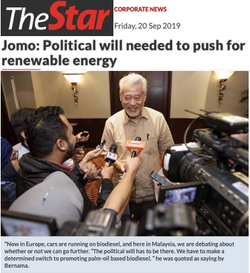
Political will needed to push for renewable energy

The Star 10July 2019

The Star 10July 2019

Malaysian businesses need boost

The Star 9 Oct 2019

The Star 9 Oct 2019

Subsidise public transport for bottom 40%

The Edge 26 Sept 2019

The Edge 26 Sept 2019

Call for measures to counteract global headwinds

The Edge 9 Oct 2019

The Edge 9 Oct 2019

Subsidise public transportation, not fuel

The Star 8 Oct 2019

The Star 8 Oct 2019

Subsidise public transportation for bottom 70%

TheEdge 2Oct 2019

TheEdge 2Oct 2019

"We need to counteract downward forces"

Fake News

PLEASE BEWARE OF MISREPRESENTATIONS OF IMAGES OF JOMO

Commercial and political misrepresentation of his image attributing to him to things which he never said or misrepresenting things he may have said is being circulated on websites such as those posted here. 


You should also be warned, in case you are not already aware, of ‘click bait’ i.e. using such images simply to attract your interest, and then to download your online information for abuse for a variety of ends.

Please inform us and provide a screenshot and weblink to enable further action, which is incredibly difficult. 

Thank you for reading this and for your help and cooperation.

This has also been flagged on his official Facebook page


JKS image ad2.jpg
JKS image Bitcoin ad on  Facebook.jpg
JKS - Fake News 2.jpg
Contact Me
JKS - Fake News 3.jpg
JKS fake news 1.jpg

Nadi Insan by the People's History Centre

Read all editions of #NadiInsan from 1979 to 1983 free of charge at the Peoples History Center website.


Containing writings on socio-political issues, film and cultural commentary, as well as in-depth interviews, Nadi Insan is motivated by community activists and intellectuals in Malaysia.

Happy reading!

Dapatkan kesemua siri majalah #NadiInsan dari tahun 1979 hingga 1983 secara percuma di laman Pusat Sejarah Rakyat.


Berisi tulisan memperihal sosio-politik, ulasan filem dan budaya sehinggalah wawancara yang rencam, Nadi Insan digerakkan oleh aktivis masyarakat dan intelektual di Malaysia.


Selamat membaca!

Contact Me

  • Facebook Social Icon
  • Twitter Social Icon

Thank you for reaching out!

bottom of page