top of page

Follow on Social Media

  • Facebook
  • Twitter
  • Screenshot 2022-09-18 at 5.20.40 PM

M'sia Developments
[on SubStack]

  • Screenshot 2022-09-18 at 5.20.40 PM

Anis Chowdhury and Jomo Kwame Sundaram


SYDNEY and KUALA LUMPUR. Once deemed a basic human needs success story, Sri Lanka (SL) is now in its worst economic crisis since independence in 1948. Nonetheless, SL’s ‘moment of truth’ now offers lessons for other developing countries.


China scapegoat

SL has just defaulted on its foreign debt for the very first time. Attributing its current predicament to a Chinese ‘debt-trap’ is a new Cold War propaganda distraction – which we will undoubtedly hear much more of.

In this fable, SL is a country caught in a debt trap due to white elephant projects mooted and financed by borrowings from China. Blaming SL’s debt crisis on Chinese loans is not only factually wrong, but also prevents understanding the origins and nature of its current crisis.

Outstanding SL government foreign debt in April 2021 was US$35.1bn. Policy errors have reduced foreign direct investment (FDI), exports and government revenue, changing the composition of its foreign debt for the worst.

Debt to the Asian Development Bank (ADB), World Bank, China, Japan and other bilateral lenders, including India, came to about a tenth each. Borrowing from capital markets – 47%, or almost half – is mainly responsible for its debt unsustainability.

After all, borrowing from multilateral development banks – mainly the World Bank and ADB – and bilateral lenders are mostly on concessional terms, while debt from commercial sources incurs higher interest rates.

Commercial loans tend to be more short term, and subject to stricter conditions. As sovereign bonds or commercial loans become due, their full value must be repaid. External debt servicing costs surge accordingly.

As of April 2021, about 60% of SL’s debt was for durations of less than ten years. The US dollar denominated debt share rose sharply – from 36% in 2012 to 65% in 2019, as Chinese renminbi denominated loans remained around 2%.

Adding government guaranteed debt to state-owned enterprises, total borrowings from China were 17.2% of SL’s total public foreign debt liabilities in 2019. Meanwhile, commercial borrowings grew rapidly from merely 2.5% of foreign debt in 2004 to 56.8% in 2019.

The effective interest rate on commercial loans in January 2022 was 6.6% – more than double that for Chinese debt. Unsurprisingly, SL’s interest payments alone came to 95.4% of its declining government revenue in 2021!


Deep-rooted problems

Following its 2001 recession, SL recovered, before growth declined again after 2012 and the pandemic contraction in 2020. SL also experienced premature deindustrialization, with manufacturing’s GDP share falling from 22% in 1977 to 15% in 2017.

Government tax revenue declined from 18.4% of GDP (1990-92 average) to 12.7% (2017-19), and a 8.4% pandemic nadir in 2020. Non-tax revenue – mainly dividends and profits from public investments – fell from 2.3% of GDP in 2000 to 0.9% in 2015.

SL’s exports-GDP ratio almost halved from 39% in 2000 to 20% in 2010. This took a big hit during the pandemic, dropping to 17% in 2020. From 2000, FDI inflows into SL were between 1.1% and 1.8% of GDP, before falling to 0.5% in 2020.

During 2012-19, the share of International Monetary Fund (IMF) Special Drawing Rights (SDRs) in SL’s debt stock fell from 28% to 14%, as borrowings ballooned! SL’s debt crisis is clearly due to the policy choices of successive governments since the 1990s.


Crisis-prone

In February 2022, SL had only US$2.31 billion in foreign exchange reserves – too little to cover its import bill and debt repayment obligations of US$4 billion.

Its 22 million people face 12-hour power cuts, and extreme scarcities of food, fuel and other essential items such as medicines. Inflation reached an all-time high of 17.5% in February 2022, with food prices rising 24% in January-February 2022. But economic crisis is not new to SL.

As a commodity producer – mainly exporting tea, coffee, rubber and spices – export earnings have long been volatile, vulnerable to external shocks. Foreign exchange earnings have also come from ready-made garments, tourism and remittances, but their shares have grown little over decades.

Since 1965, SL has obtained 16 IMF loans, typically with onerous conditionalities. The last was in 2016, providing US$1.5 billion over 2016-19. Required austerity measures have squeezed public investment, hurting growth and welfare.

Two recent shocks made things worse. First, bomb blasts in Colombo churches and luxury hotels in April 2019 drastically cut tourist arrivals by 80%, squeezing foreign exchange earnings.

Second, the pandemic has damaged not only economic activity, but also foreign exchange reserves, as it often paid monopoly prices to get COVID-19 tests, treatments, equipment, vaccines and other needs.


Tax cuts galore

The ethno-populist policies of the Gotabaya Rajapaksa government – which came to power in 2019 – have added fuel to fire. Successfully mobilizing majority Buddhist Singhala sentiment – against Tamils, Muslims and Christians – he sought political support by cutting taxes on the ‘middle class’.

His government cut taxes across the board, collecting only 12.7% of GDP in revenue in 2017-19 – one of the lowest shares among middle-income countries. Losing about 2% of GDP in revenue, its tax-GDP ratio fell to 8.4% in 2020.

SL’s value-added tax rate was cut from 15% to 8%, while the VAT registration threshold was raised from one to 25 million SL rupees monthly. Other indirect taxes and the ‘pay-as-you-earn’ system were abolished.

The minimum income tax threshold was raised from 500,000 SL rupees annually to three million, with few earning that much! Personal income tax rates were not only reduced, but also became even less progressive.

The corporate income tax rate was cut from 28% to 24%. With a 33.5% drop in registered taxpayers (corporate and individual) between 2019 and 2020, SL’s tax base shrank.

Thus, even more of the population became exempt from direct taxes, increasing government popularity, especially among the middle class. But tax cuts failed to spur investment and growth – despite old claims by Ronald Reagan, Donald Trump and their ‘guru’, Arthur Laffer.

Successive SL governments thus failed to increase tax collection, squeezing government revenue. To finance budget deficits, they increasingly borrowed from international capital marketsat higher commercial rates, with shorter maturities.

As the government cut tax rates and exempted most from paying income tax, government revenue fell. Due to its falling revenue and deteriorating credit rating, the government had to borrow more, at higher interest rates.

Facing fiscal and foreign exchange constraints, the government declared SL a 100% organic farming nation in April 2021. Banning all fertilizer imports – ostensibly to promote ‘agro-ecological’ farming as part of a larger ‘green’ transformation – compounded the looming ‘perfect storm’.

Dropped in November 2021, the policy drastically cut agricultural output, with more food imports becoming necessary. Falling tea and rubber output also reduced export earnings, exacerbating foreign exchange shortfalls.

Evidently, the SL government addressed the economic challenges it faced with ‘populist’ policy choices. Instead of addressing longstanding problems faced, this effectively ‘kicked the can’ down the road, worsening the inevitable meltdown.


Related IPS commentaries

China debt traps in the new Cold War. 12 Apr 2022. https://www.ipsnews.net/2022/04/china-debt-traps-new-cold-war/

Most financial inflows not developmental. 14 Mar 2017. http://www.ipsnews.net/2017/03/most-financial-inflows-not-developmental/

IMF, World Bank must urgently help finance developing countries. 30 Mar 2021. https://www.ipsnews.net/2021/03/imf-world-bank-must-urgently-help-finance-developing-countries/

Paltry international support for spending needs sets South further back. 8 Jun 2021. https://www.ipsnews.net/2021/06/paltry-international-support-spending-needs-sets-south-back/


Anis Chowdhury and Jomo Kwame Sundaram


SYDNEY and KUALA LUMPUR. As China increases lending to other developing countries, ‘debt trap’ charges are growing quickly. As it greatly augments financing for development while other sources continue to decline, condemnation of China’s loans is being weaponized in the new Cold War.


Debt-trap diplomacy?


The catchy term ‘debt-trap diplomacy’ was coined by Indian geo-strategist Brahma Chellaney in 2017. According to him, China lends to extract economic or political concessions when a debtor country is unable to meet payment obligations. Thus, it overwhelms poor countries with loans, to eventually make them subservient.

Unsurprisingly, his catchphrase has been popularized to demonize China. Harvard’s Belfer Center has obligingly elaborated on the rising Asian power’s nefarious geostrategic interests. Meanwhile, as with so much else, the Biden administration continues related Trump policies.

But even Western researchers generally wary of China dispute the new narrative. A London Chatham House study concluded it is simply wrong – flawed, with scant supporting evidence.

Studying China’s loan arrangements for 13,427 projects in 165 countries over 18 years, AidData– at the US-based Global Research Institutecould not find a single instance of China seizing a foreign asset following loan default.

China has been the ‘new kid on the block’ of development financing for more than a decade. Its growing loans have helped fill the yawning gap left by the decline and increasing private business orientation of financing by the global North.

Instead of tied aid pushing exports, as before, it now shamelessly promotes foreign direct investment from donor nations. Unless disbursed via multilateral institutions, China’s increased lending to support businesses abroad has not really helped developing countries cope with renewed ‘tied’ concessional aid.

Grand ‘debt trap diplomacy’ narratives make for great propaganda, but obscure debt flows’ actual impacts. Most Chinese lending is for infrastructure and productive investment projects, not donor-determined ‘policy loans’. Some countries ‘over-borrow’, but most do not. Deals can turn sour, but most apparently don’t.

While leaving less room for discretionary abuse in implementation, project lending typically puts borrowers at a disadvantage. This is largely due to the terms of sought-after foreign investment and financing, regardless of source. Hence, the outcomes of most such borrowing – not just from China – vary.


Sri Lanka


Sri Lanka’s Hambantota Port is the most frequently mentioned China debt trap case. The typical media account presumes it lent money to build the port expecting Sri Lanka to get into debt distress. China then supposedly seized it – in exchange for providing debt relief – enabling use by its navy.

But independent studies have debunked this version. Last year, The Atlantic insisted, ‘The Chinese “Debt Trap” Is a Myth’. The subtitle elaborated, “The narrative wrongfully portrays both Beijing and the developing countries it deals with”.

It elaborated: “Our research shows that Chinese banks are willing to restructure the terms of existing loans and have never actually seized an asset from any country, much less the port of Hambantota”.

The project was initiated by then President Mahindra Rajapaksa – not China or its bankers. Feasibility studies by the Canadian International Development Agency and the Danish engineering firm Rambol found it viable. The Chinese Harbour Group construction firm only got involved after the US and India both refused Sri Lankan loan requests.

Sri Lanka’s later debt crisis has been due to its structural economic weaknesses and foreign debt composition. The Chatham House report blamed it on excessive borrowing from Western-dominated capital markets – not Chinese banks.

Even the influential US Foreign Policy journal does not blame Sri Lanka’s undoubted economic difficulties on Chinese debt traps. Instead, “Sri Lanka has not successfully or responsibly updated its debt management strategies to reflect the loss of development aid that it had become accustomed to for decades”.

As the US Fed tapered ‘quantitative easing’, borrowing costs – due to Sri Lanka’s persistent balance of payment problems – rose, forcing it to seek International Monetary Fund help. Some argue borrowing even more from China is the best option available to the island republic.

To set the record straight, there was no debt-for-asset swap after Sri Lanka could no longer service its foreign debt. Instead, a Chinese state-owned enterprise leased the port for US$1.1 billion. Sri Lanka has thus boosted its foreign reserves and paid down its debt to other – mainly Western – creditors.

Also, Chinese navy vessels cannot use the port – home to Sri Lanka’s own southern naval command. “In short, the Hambantota Port case shows little evidence of Chinese strategy, but lots of evidence for poor governance on the recipient side”.


Malaysia


China has also been accused by the media of seeking influence over the Straits of Malacca, through which some 80% of its oil imports pass. Debt-trap proponents claim Beijing therefore inflated lending for Malaysia’s controversial East Coast Rail Link (ECRL).

The Chatham House report notes, “The real issue here is not one of geopolitics, but rather – as in Sri Lanka – the recipient government’s efforts to harness Chinese investment and development financing to advance domestic political agendas, reflecting both need and greed”.

ECRL was initiated by convicted former Malaysian prime minister Najib Razak. Ostensibly to develop the less developed East Coast of Peninsular Malaysia as part of China’s Belt and Road Initiative, it rejected other less costly, but much needed options.

Borrowings are far more than needed – probably for nefarious purposes. Loan terms were structured to delay repayment – to Najib’s political advantage by ‘passing the buck’ to later generations. But such abuse is by the borrower – not the lenderunless Chinese official connivance is involved.


Non-alignment for our times


There is undoubtedly much room for improving development finance, especially to achieve more sustainable development. Instead of mainly lending to the US, as before, China’s growing role can still be improved. To begin, all involved should respect the United Nations’ principles on responsible sovereign lending and borrowing.

After more than half a century of Western donors’ largely betrayed promises, China’s development finance has significantly improved ‘South-South cooperation’. Meanwhile, sustainable development finance needs – compounded by global warming, the pandemic and Ukraine war – have increased.

After decades of the West denying China commensurate voice in decision making, even under rules it made, its role on the world stage has grown. But instead of working together for the benefit of all, rich countries seem intent on demonizing it. Unsurprisingly, most developing country governments seem undeterred.

As the new Cold War and the scope of economic sanctions spread, collateral damage is undermining development finance and developing countries. To cope with the new situation, developing countries need to consider building a new non-aligned movement for our dark times.


Related IPS commentaries

Paltry international support for spending needs sets south further back. 8 June 2021. https://www.ipsnews.net/2021/06/paltry-international-support-spending-needs-sets-south-back/

Development banks needed to finance sustainable development. 22 October 2019. http://www.ipsnews.net/2019/10/development-banks-needed-finance-sustainable-development/

Scaling up development finance. 5 September 2017. http://www.ipsnews.net/2017/09/scaling-development-finance/

Can the SDGs be financed? 29 March 2017.

Most financial inflows not developmental. 14 March 2017. http://www.ipsnews.net/2017/03/most-financial-inflows-not-developmental/


Anis Chowdhury and Jomo Kwame Sundaram


SYDNEY and KUALA LUMPUR: The world is sailing into a perfect storm as key leaders seem intent on threatening more war, albeit while proclaiming the noblest of intentions. By doing so, they block international cooperation to create conditions for sustainable peace and shared prosperity for all.


Monetarist counter-revolution

The 1970s saw Milton Friedman disciples’ monetarist counter revolution blaming stagflation on ostensibly Keynesian economic policies. In 1974, Nixon replacement President Gerald Ford declared inflation “public enemy number one” and US “determination to whip inflation”.

Monetarists wanted tighter monetary policies to fight inflation. Curbing rising prices was deemed urgent, even though it would increase joblessness. They advocated abandoning expansionary fiscal measures for more growth and jobs.

But US Federal Reserve Bank chair Arthur Burns still considered ensuring full employment his top priority. For Burns, addressing inflation ‘head-on’ – as urged by his detractors – was too costly for the economy and people’s wellbeing.

Nevertheless, the monetarist ascendance was confirmed when the 1946 Employment Act was replaced. The successor 1978 Full Employment and Balanced Growth Act is better known as the Humphrey-Hawkins Act for its sponsors, including the Democrats’ 1968 presidential nominee.

In early 1980, Burns’ Fed chair successor, Paul Volcker insisted, “[M]y basic philosophy is over time we have no choice but to deal with the inflationary situation because over time inflation and the unemployment rate go together.… Isn’t that the lesson of the 1970s?”

Thus, ‘fight inflation first’ became the clarion call in 1980. This was the pretext for sharply raising US interest rates, while claiming that reducing inflation would somehow eventually create many more jobs. The UK and many other industrial countries followed, deepening recessions and raising unemployment.

By post-1950s’ Western standards, the 1980s saw very high unemployment. Unemployment in rich developed OECD countries averaged 7.3% during 1980-89, compared to just under 5% during 1974-79, and under 3% during the 1960s.


Debt crises, lost decades

The sharp US interest rate spike triggered debt crises in Poland, Latin America and elsewhere in the early 1980s. Earlier, US commercial banks had enjoyed windfall gains following the two oil price spikes in the 1970s.

The US government had long provided concessional low interest rate loans to allies to secure support during the Cold War. Flush with deposits from Organization of Petroleum Exporting Countries (OPEC) members in the 1970s, they pushed loans to borrowing governments, many in Latin America.

With the interest rate spikes, borrowing countries suddenly faced liquidity crises, also creating systemic risks for their US and UK bankers. Successive US Treasury Secretaries, James Baker and Nicholas Brady, came up with various debt restructuring schemes to contain the problem, with the latter adopted.

Meanwhile, International Monetary Fund (IMF) and World Bank financial support was tied to short-term stabilization programmes and medium-term liberalizing reforms, packaged as structural adjustment programmes (SAPs) with explicit policy conditionalities.

The liquidity crises were due to the sudden sharp interest rate increases. But instead, these were portrayed as solvency crises stemming from weak ‘economic fundamentals’, blamed on ‘over regulation’ and protectionism.

Although African countries were generally not able to borrow as much, they too faced problems as commodity prices collapsed with the growth slowdowns. Many were forced to seek financial support from the IMF and World Bank, and thus obliged to implement SAPs as well.

The liberalizing and deregulating SAP reforms were supposed to usher in rapid growth. Instead, however, both Latin America and Sub-Saharan Africa experienced “lost decades of development”.


Stagflation in Europe

Stagflation in our times is expected to be initially most severe in Europe. This has been caricatured as fighting for Ukraine until ‘the last European’ as it bears the brunt of NATO imposed sanctions on Russia. Besides oil and gas, they will pay more for imported wheat, fertilizers and other Russian exports.

But other economic trends will likely make things worse. First, some rich economies – particularly the UK and the US – are weaker now, having lost much of their manufacturing edge. Others have been experiencing declines in productivity growth since the mid-1970s.

Second, low wages – due to labour market deregulation and ‘off-shoring’, i.e., relocating production abroad – have meant less productive activities have survived. Very low interest ratesdue to ‘unconventional’ monetary policies since the 2008-09 global financial crisis – have allowed unviable ‘zombie’ enterprises to stay alive.

Third, the declining labour income share has increased income inequalities, lowering aggregate demand. But demand has been sustained by rising household debt. Low, if not negative real interest rates have also encouraged more corporate debt, but with less used for productive new investments.

Fourth, the pandemic has raised all types of debt – household, corporate and government – to record levels. Fifth, countries, especially smaller ones, are now far more internationally integrated – via trade and finance – than in the 1970s.

Therefore, small interest rate increases can have devastatingly large impacts on household, corporate and government finances. Advanced countries are thus likely to see severe economic contractions and rising unemployment.

Meanwhile, more racism and intolerance in recent decades show little sign of receding. Worse, these are likely to worsen as political elites compete in the ethno-populist league to blame Others for their problems. The recent European decision to privilege Ukrainian refugees is a poignant reminder of what is in store.

But impacts on developing countries are likely to be far worse due to capital outflows, declining development finance and aid, as well as slowing world trade after decades of globalization. Increasing inequality since the 1980s and declining growth since 2014 – now worsened by the pandemic – will not help.

Thus, instead of striving to ensure sustainable peace, necessary to improve conditions for all, the world seems set for sustained conflict. This has involved easy resort to sanctions, namely war by economic siege, hurting all. We all thus risk the prospect of mutual destruction instead of shared prosperity for all.


Related IPS commentaries

War or Peace, Barbarism or Hope: War threatens world with stagflation. 29 Mar. 2022. https://www.ipsnews.net/2022/03/war-peace-barbarism-hope/

Stagflation Threat: Be Pragmatic, Not Dogmatic. 22 Mar. 2022. https://www.ipsnews.net/2022/03/stagflation-threat-pragmatic-not-dogmatic/

Ukraine Incursion, World Stagflation. 15 Mar. 2022. https://www.ipsnews.net/2022/03/ukraine-incursion-world-stagflation/

Financialization at Heart of Economic Malaise. 22 Feb. 2022. https://www.ipsnews.net/2022/02/financialization-heart-economic-malaise/

Coronavirus Exposes Global Economic Vulnerability. 4 Mar. 2020. https://www.ipsnews.net/2020/03/coronavirus-exposes-global-economic-vulnerability/


Latest Videos

All Videos

All Videos

AN URGENT CALL: A PEOPLE"S VACCINE AGAINST COVID-19

00:00
9 June 2020: IHD-ILO-ISLE Virtual Conference - Day 2

9 June 2020: IHD-ILO-ISLE Virtual Conference - Day 2

05:08:34
Learning in Governance in times of COVID-19

Learning in Governance in times of COVID-19

46:30
Beyond the Lockdown: Towards the ‘New Normal’

Beyond the Lockdown: Towards the ‘New Normal’

59:10

About Jomo

Jomo Kwame Sundaram is Research Adviser, Khazanah Research Institute, Fellow, Academy of Science, Malaysia, and Emeritus Professor, University of Malaya. Previously, he was UN Assistant Secretary-General for Economic Development, Assistant Director General, Food and Agriculture Organization (FAO), Founder-Chair, International Development Economics Associates (IDEAs) and President, Malaysian Social Science Association. 

In The Media

TheStar 26 June 2020

TheStar 26 June 2020

The Star 20 Sept 2019

The Star 20 Sept 2019

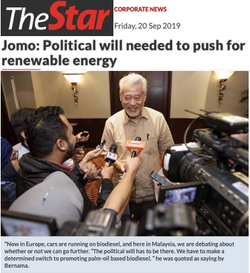
Political will needed to push for renewable energy

The Star 10July 2019

The Star 10July 2019

Malaysian businesses need boost

The Star 9 Oct 2019

The Star 9 Oct 2019

Subsidise public transport for bottom 40%

The Edge 26 Sept 2019

The Edge 26 Sept 2019

Call for measures to counteract global headwinds

The Edge 9 Oct 2019

The Edge 9 Oct 2019

Subsidise public transportation, not fuel

The Star 8 Oct 2019

The Star 8 Oct 2019

Subsidise public transportation for bottom 70%

TheEdge 2Oct 2019

TheEdge 2Oct 2019

"We need to counteract downward forces"

Fake News

PLEASE BEWARE OF MISREPRESENTATIONS OF IMAGES OF JOMO

Commercial and political misrepresentation of his image attributing to him to things which he never said or misrepresenting things he may have said is being circulated on websites such as those posted here. 


You should also be warned, in case you are not already aware, of ‘click bait’ i.e. using such images simply to attract your interest, and then to download your online information for abuse for a variety of ends.

Please inform us and provide a screenshot and weblink to enable further action, which is incredibly difficult. 

Thank you for reading this and for your help and cooperation.

This has also been flagged on his official Facebook page


JKS image ad2.jpg
JKS image Bitcoin ad on  Facebook.jpg
JKS - Fake News 2.jpg
Contact Me
JKS - Fake News 3.jpg
JKS fake news 1.jpg

Nadi Insan by the People's History Centre

Read all editions of #NadiInsan from 1979 to 1983 free of charge at the Peoples History Center website.


Containing writings on socio-political issues, film and cultural commentary, as well as in-depth interviews, Nadi Insan is motivated by community activists and intellectuals in Malaysia.

Happy reading!

Dapatkan kesemua siri majalah #NadiInsan dari tahun 1979 hingga 1983 secara percuma di laman Pusat Sejarah Rakyat.


Berisi tulisan memperihal sosio-politik, ulasan filem dan budaya sehinggalah wawancara yang rencam, Nadi Insan digerakkan oleh aktivis masyarakat dan intelektual di Malaysia.


Selamat membaca!

Contact Me

  • Facebook Social Icon
  • Twitter Social Icon

Thank you for reaching out!

bottom of page