top of page

Follow on Social Media

  • Facebook
  • Twitter
  • Screenshot 2022-09-18 at 5.20.40 PM

M'sia Developments
[on SubStack]

  • Screenshot 2022-09-18 at 5.20.40 PM

Jomo Kwame Sundaram


KUALA LUMPUR: Many factors frustrate the international cooperation needed to address the looming global warming catastrophe. As most rich nations have largely abdicated responsibility, developing countries need to think and act innovatively and cooperatively to better advance the South.


Climate action

The world is woefully offtrack to achieving the current international consensus that it is necessary to keep the global temperature rise by the end of the 21st century to no more than 1.5°C (degrees Celsius) above pre-industrial levels two centuries ago.

The last Intergovernmental Panel on Climate Change (IPCC) report warns that temperatures are then likely to exceed 2.2°C. Many climate scientists fear many underlying interactions and feedback effects are still little known or poorly understood. Hence, they have not been factored enough into current projections.

Although the threat of global warming was scientifically recognized almost half a century ago, there has been much foot ragging since. Contrary to widespread belief, industrialized nations – the earliest and biggest greenhouse gas emitters –have actually held back much more adequate responses to the climate threat.

Although the UN’s 1992 Earth Summit in Rio de Janeiro secured the international community’s commitment to sustainable development, actual progress since has been modest at best. Undermining multilateralism – particularly since the end of the Cold War around the same time – has certainly not helped.

By effectively killing the Kyoto Protocol, the US has undermined the UN system and other multilateral initiatives not in its own interest since the first Cold War’s end. Consequently, most other signatory rich nations have not even tried to meet the Kyoto Protocol obligations they had signed up to.

Unsurprisingly, then Vice-President Al Gore – who presided over the US Senate’s 95-0 vote against the Kyoto Protocol – did not stress climate change in his 2000 presidential campaign. His public advocacy against global warming only began after his political ambitions ended with his controversial loss to George W. Bush.

Likewise, President Obama did little against global warming during his first presidential term – e.g., at the 2009 Copenhagen UN Framework Convention on Climate Change (UNFCCC) Conference of Parties (COP) – before the US actively shaped the 2015 Paris Agreement.

But, unlike Kyoto, the Paris deal is voluntary – i.e., not binding. Nonetheless, climate action was dealt yet another blow when President Donald Trump withdrew the US in early 2017 before President Joe Biden brought the US back in 2021.


Climate finance

To induce developing countries to accept binding new obligations at the 2009 Copenhagen COP, the European Commission President, French President Nicolas Sarkozy and UK Prime Minister Gordon Brown all pledged US$100 billion of climate finance annuallyfar from enough, but still a decent start.

But not even half this grossly inadequate, originally European commitment has actually been delivered. Other rich countries have generally given even less than the Europeans. All this is far short of what developing countries need to cope, worsened by requiring more aid to donor country export sales.

Most concessional climate finance since has been to mitigate climate change, with much less for adaptation. Worse, almost nothing has gone to help the typically impoverished victims of global warming for their cumulative ‘losses and damages’!

Sustainable Development Goal (SDG) 13 seeks to combat climate change and its impacts. Meanwhile, current global warming continues to worsen the effects of accumulated greenhouse gas emissions by industrialized countries.

In December 2015, the Paris COP reached agreement on a range of voluntary promises. Yet, climate scientists agree that neither the binding Kyoto Protocol nor the voluntary Paris Agreement can keep global warming by the end of the century under 1.5°C.

Economic damage to developing countries due to global warming so far is currently assessed at more than double the better documented adverse impacts on rich nations. But its victims get little help adapting to the daunting consequences of climate change, let alone ‘compensation’ for irreversible ‘losses and damages’.

Meanwhile, ostensible climate finance book-keeping involves considerable ‘creative accounting’. Thus, such resources have been exaggerated in various ways – e.g., by citing numbers for ‘blended finance’ and other dubious arrangements.

Thus, official ‘overseas development assistance’ or aid funds have been abused to subsidize ‘greenwashing’ public-private partnerships – e.g., by ‘de-risking’ profit-seeking private investments presented to the public as ‘climate-friendly’.


Climate justice

More recently, ‘climate justice’ is increasingly being demanded, especially of Western nations – instead of mere ‘climate action’. Although the climate action approach claims to treat all countries equally, by ignoring existing inequalities and disparities, climate action inevitably deepens them.

Invoking justice implies equitable actions are needed to redress the unequal implications of climate actions – e.g., reducing energy generation and use – for the poor and the richboth people and countries. Thus, without addressing the need for equitable sustainable development, climate action often worsens inequities.

Hence, while claiming to offer seemingly fair solutions, some climate action measurese.g., simply raising carbon prices, and thus, fuel costs for all – will be unfair in impact. Instead, climate justice measures must equitably address global warming and other climate change challenges.

The challenge – from a sustainable development perspective – is to address climate change while improving living standards equitably, especially for the worse off. This requires widespread generation and use of affordable renewable energy – instead of using fossil fuels – to slow global warming.

But markets are not going to do so on their own. Hence, novel, including hybrid means and much more affordable transfer of relevant technologies are needed to rapidly promote renewable energy use and ecological adaptation to global warming without adversely affecting the worse off.


Related IPS articles


Jomo Kwame Sundaram


KUALA LUMPUR: Governments must innovatively develop progressive means to finance the large-scale social spending needed to improve lives and livelihoods, especially following the COVID-19 pandemic. More egalitarian tax reforms should enable governments to equitably mobilize desperately needed revenue to advance sustainable development for all.


Fiscal policy challenges

To respond to the pandemic and its economic fallout, massive resource mobilization has been necessary to protect people’s health and livelihoods, stem economic decline and stagnation, and ensure sustainable progress.

Fiscal policy involves governments harnessing and deploying resources. But modes of state financing and spending impact economic inequalities. Monetary policy measures can be supportive, but they cannot replace fiscal efforts.

However, the economic slowdown requires much more state spending, largely financed by sovereign debt, i.e., government borrowing. This has undoubtedly been necessary to deal with the pandemic, but fiscal policy should be consistently countercyclical: expansionary to counter downturns, and conservative in good times.

Rich countries have generally been fiscally bolder by running deficits to spend since the global financial crisis, but especially in response to the pandemic. Massive economic relief and recovery packages have tried to protect incomes and failing businesses, albeit unevenly.

Taxation regressive

Regressive colonial taxes were levied on subject populations, but tax incidence became more progressive after independence in most, though not all post-colonial societies. In the last four decades, most governments have reformed tax policies for the worse, reducing tax revenue shares and shifting the tax burden from the better off to the public at large.

Policy advice from international financial institutions and political pressure from powerful elites and foreign investors have reduced taxation’s progressive aspects. With Trump, laughable arguments such as Arthur Laffer’s curve – without any sound theoretical or empirical bases – are still being invoked to justify regressive tax reforms.

Rich corporations and individuals paid less and less in direct taxes, as the public paid more and more in indirect taxation, typically on consumption. Most countries still tax income, but tax rates on corporate income, high income individuals, property and inheritance have declined in most countries in recent decades.

The wealthy’s assets are mainly held as stocks, shares and real property. Their incomes are mainly from such assets, rather than earned as wages. Taxing excess profits and wealth can raise considerable revenue to finance development policies and measures, besides narrowing gaps between the beneficiaries and others.

Instead, wealth is typically taxed at low rates, while huge loopholes allow such assets to be hidden, typically abroad. Many trillions are hoarded in often secret accounts in tax havens, both off- and on-shore. All this has accelerated wealth concentration and economic inequality.

Making taxation more progressive

Governments mainly get fiscal resources from tax revenue or by borrowing. Taxation is undoubtedly the most sustainable, effective and accountable means for states to raise funds. Progressive taxation and government expenditure can both reduce inequalities, albeit in different ways.

Windfall profit taxes

A few individuals and businesses are reaping huge rewards from the pandemic while most have been hurting. Many billionaires have reportedly become much more affluent, with the ten richest more than doubling their wealth from US$700 billion to US$1500 billion since March 2020!

Windfall taxes at high rates are easily justified. After all, most who have gained much owe their newfound wealth to circumstances largely not of their own making. Windfall incomes or profits during the pandemic can be ascertained by comparing recent with previous profits. Such gains should be heavily taxed for the same reason.

Wealth taxes

Wealth taxation has diminished significantly in recent decades due to successful lobbying by the rich. The introduction or reintroduction and extension of progressive wealth taxation will raise considerable revenue if loopholes can be closed, not only domestically, but also internationally.

Perhaps even more than income taxation, wealth taxes are a progressive means to raise revenue. They also have greater potential to address other inherited privileges and inequalities, including those associated with culture, lineage, ethnicity and gender.

Conditional support

Government spending – including subsidies and relief measures – should not benefit businesses paying taxes abroad or not paying them at all. Many companies resort to tax havens and other loopholes to pay less tax where they operate and profit from.


More progressive systems

Tax systems should get much more from those most liable and able to pay. Concretely, this should include:

• Introducing or increasing taxes on assets like real property, wealth, inheritance and investment income (‘capital gains’).

• Raising the rates and progressivity of personal and business income taxes.

• Shifting relative reliance from indirect taxes – e.g., on value-added or sales or consumption – which tend to be regressive to more progressive direct taxation.

• Cracking down hard on tax avoidance and evasion – especially by the wealthy, however politically influential.

• Enhancing international cooperation on taxation to enhance and distribute tax revenue progressively.

Such systemic reforms are essential for progressive fiscal redistribution, e.g., by financing sustainable development in the medium and long-term. Of course, an immediate priority in the near term is financing a forward-looking recovery from the pandemic and its aftermath.


Coordinating fiscal policy

Governments are expected to raise enough revenue to finance the services, goods, facilities and infrastructure they are supposed to provide, i.e., to fulfil public expectations of citizens’ entitlements. The popular presumption is that tax incidence is not only progressive, but has also become increasingly so, although the converse is more likely to be true.

Taxation is widely expected to reduce, if not remedy inequalities. If well-designed for effective implementation and enforcement, the international record suggests this is achievable. In line with the public’s progressive redistribution expectations, the government is expected to be Robin Hood-like, i.e., to take from the rich to give to the poor.

Of course, whether taxation is progressive depends on how it is collected and spent. Hence, tax and spending policies should be considered together. But it is now clear that some pandemic relief packages have mainly benefited influential businesses, with crumbs going to the most needy.

International cooperation is needed to for appropriate tax reforms in this age of financial globalization, and to prevent increasing capital outflows from developing countries. For the time being, minimizing tax evasion depends on equitable and effective international cooperation on terms fair to all, rather than conditions imposed by the rich countries, as has been the case.


Selected IPS articles


Jomo Kwame Sundaram and Nazihah Noor


KUALA LUMPUR: Failure to vaccinate most in poor countries sustains the COVID-19 pandemic. Rich country greed and patent monopolies block developing countries from affordably making the means to protect themselves.


Mutant menace

The SARS-CoV-2 virus has been mutating as it replicates. Numerous replications in hundreds of millions of hosts have generated many variants. Some mutations are more resilient than others, and better able to overcome human defences.

Early data suggest the B.1.1.529 Omicron variant is more transmissible than others, including Delta, and possibly more resistant to existing treatments and vaccines. Health authorities the world over are concerned WHO’s latest ‘variant of concern’ may trigger a new wave of preventable infections and deaths.

South Africans first scientifically identified the new variant, alerting global health authorities immediately. Instead of appreciating its prompt actions, southern African nations are being punished with travel restrictions.

In fact, Dutch health authorities acknowledge the new Omicron variant was already in western Europe before the first South African cases. Punitive responses – e.g., travel bansmay deter other governments from rapid action and notification, so essential for effective international cooperation.


Promises, promises

With huge inequalities in vaccinations – especially between high-income countries (HICs) and low-income countries (LICs) – the virus has been enabled to continue replicating, mutating, infecting and killing, especially those least protected.

Richer countries have taken more than half the first 7.5 billion vaccine doses. Rich countries have bought manyup to five – times their populations’ needs. Ten HICs will have more than 870 million excess doses by year’s end.

While some HICs have been shamed into pledging vaccine doses to LICs and lower middle-income countries (MICs), delivery has fallen well short of their modest promises. By late October, only about a tenth of the over 1.3 billion vaccine doses pledged had been delivered.

Most rich countries have ignored WHO appeals to suspend boosters until the rest of the world is vaccinated. Ex-UK premier Gordon Brown notes that for every vaccine reaching LICs, there are six times as many boosters in rich nations.

US President Biden’s September summit set an end-2021 target of 40% vaccination of the world’s 92 poorest countries, but at least 82 are unlikely to meet this target.

As Brown observed, although the US accounts for half the vaccines donated, it has only delivered a quarter of its pledge. Most other rich countries have delivered less than a fifth. Only China and New Zealand have given over half of what they promised.


Apartheid victims

With vaccines being hoarded by HICs, less than 3% of LIC populations are fully vaccinated. By late November, only 5.8% in LICs had at least one vaccine dose, compared to 54% of the world.

Most LICs do not even book via COVAX – the global programme to distribute vaccines – as they cannot afford to pay for them. Also, the programme has never secured enough vaccine doses since its inception.

COVAX was supposed to provide two billion doses by end-2021, but under 576 million were actually delivered by November. Also, the WHO appeal to G20 countries to give COVAX priority has gone largely unheeded.

With LICs unable to vaccinate their populations, the pandemic will go on for years. WHO now expects around 200 million more infections in the year from 21 October, with total deaths expected to double from the five million to date! Unsurprisingly, vaccine apartheid’s worst victims are in the LICs.

Profits block progress

The World Trade Organization (WTO) ministerial meetings scheduled to start on 30 November were expected to decide on the waiver proposal. With no resolution likely, the meeting has been postponed indefinitely, ostensibly due to Omicron.

First proposed in October 2020, it is now supported by well over a hundred of WTO’s 164 member states. The elaborated waiver proposal, co-sponsored by 63 countries, would allow others to more affordably make the means to fight the pandemic, without fear of intellectual property (IP) litigation.

But over 14 months later, the proposal remains blocked. Most European countries continue to oppose the waiver request to temporarily suspend IP rights protecting corporate monopolies on COVID-19 medical technologies and products for the pandemic’s duration.

As the pandemic increasingly infects and kills in poor countries, the public is being misled about the waiver proposal. It is dishonestly claimed that new vaccines cannot be developed without patent protection. Worse, all developing countries are falsely said to lack technical expertise to make vaccines.


Profits against people

LICs have received than one percent of all Pfizer-BioNTech vaccines and 0.2 percent of Moderna’s. Instead, the three have prioritized their most profitable contracts with rich governments, while paying lip service to poor countries.

Pfizer expects to sell three billion doses by year’s end, and four billion more in 2022. With COVID-19 now endemic, Pfizer CEO Alberto Bourla expects to sell boosters for years to come, while Moderna recently announced an Omicron-specific booster.

Using the firms’ own earnings reports, the People’s Vaccine Alliance (PVA) estimates mRNA vaccine manufacturers – Pfizer, BioNTech and Moderna – will make pre-tax profits of US$34 billion this year.

Maximizing profits by blocking the waiver is effectively prolonging the pandemic. Instead of vaccinating those who have not yet had their first shot, they make much more by selling booster vaccinations to HICs.

Despite getting over US$8 billion in public funding, the three have refused to transfer vaccine technology to developing countries. Instead, Pfizer’s Bourla has dismissed technology transfer to developing countries as “dangerous nonsense”.


Profitable catastrophe

The main barrier to vaccinating the world is profits. Clearly, the Omicron danger is due to the world’s failure to vaccinate billions of vulnerable people in developing countries. This catastrophe has been worsened by ongoing European opposition to their effort to suspend IP monopolies.

The 12 billion vaccines made in 2021 could have vaccinated the entire world, but clearly did not. Omicron is plainly due to corporations’ ability to profiteer from the pandemic, refuse to share knowledge and know-how, and bully governments into unfair contracts.


Related IPS readings


Latest Videos

All Videos

All Videos

AN URGENT CALL: A PEOPLE"S VACCINE AGAINST COVID-19

00:00
9 June 2020: IHD-ILO-ISLE Virtual Conference - Day 2

9 June 2020: IHD-ILO-ISLE Virtual Conference - Day 2

05:08:34
Learning in Governance in times of COVID-19

Learning in Governance in times of COVID-19

46:30
Beyond the Lockdown: Towards the ‘New Normal’

Beyond the Lockdown: Towards the ‘New Normal’

59:10

About Jomo

Jomo Kwame Sundaram is Research Adviser, Khazanah Research Institute, Fellow, Academy of Science, Malaysia, and Emeritus Professor, University of Malaya. Previously, he was UN Assistant Secretary-General for Economic Development, Assistant Director General, Food and Agriculture Organization (FAO), Founder-Chair, International Development Economics Associates (IDEAs) and President, Malaysian Social Science Association. 

In The Media

TheStar 26 June 2020

TheStar 26 June 2020

The Star 20 Sept 2019

The Star 20 Sept 2019

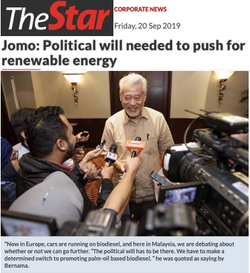
Political will needed to push for renewable energy

The Star 10July 2019

The Star 10July 2019

Malaysian businesses need boost

The Star 9 Oct 2019

The Star 9 Oct 2019

Subsidise public transport for bottom 40%

The Edge 26 Sept 2019

The Edge 26 Sept 2019

Call for measures to counteract global headwinds

The Edge 9 Oct 2019

The Edge 9 Oct 2019

Subsidise public transportation, not fuel

The Star 8 Oct 2019

The Star 8 Oct 2019

Subsidise public transportation for bottom 70%

TheEdge 2Oct 2019

TheEdge 2Oct 2019

"We need to counteract downward forces"

Fake News

PLEASE BEWARE OF MISREPRESENTATIONS OF IMAGES OF JOMO

Commercial and political misrepresentation of his image attributing to him to things which he never said or misrepresenting things he may have said is being circulated on websites such as those posted here. 


You should also be warned, in case you are not already aware, of ‘click bait’ i.e. using such images simply to attract your interest, and then to download your online information for abuse for a variety of ends.

Please inform us and provide a screenshot and weblink to enable further action, which is incredibly difficult. 

Thank you for reading this and for your help and cooperation.

This has also been flagged on his official Facebook page


JKS image ad2.jpg
JKS image Bitcoin ad on  Facebook.jpg
JKS - Fake News 2.jpg
Contact Me
JKS - Fake News 3.jpg
JKS fake news 1.jpg

Nadi Insan by the People's History Centre

Read all editions of #NadiInsan from 1979 to 1983 free of charge at the Peoples History Center website.


Containing writings on socio-political issues, film and cultural commentary, as well as in-depth interviews, Nadi Insan is motivated by community activists and intellectuals in Malaysia.

Happy reading!

Dapatkan kesemua siri majalah #NadiInsan dari tahun 1979 hingga 1983 secara percuma di laman Pusat Sejarah Rakyat.


Berisi tulisan memperihal sosio-politik, ulasan filem dan budaya sehinggalah wawancara yang rencam, Nadi Insan digerakkan oleh aktivis masyarakat dan intelektual di Malaysia.


Selamat membaca!

Contact Me

  • Facebook Social Icon
  • Twitter Social Icon

Thank you for reaching out!

bottom of page