top of page

Follow on Social Media

  • Facebook
  • Twitter
  • Screenshot 2022-09-18 at 5.20.40 PM

M'sia Developments
[on SubStack]

  • Screenshot 2022-09-18 at 5.20.40 PM

Anis Chowdhury and Jomo Kwame Sundaram


SYDNEY and KUALA LUMPUR: Funding for developing countries to address global warming is grossly inadequate. Very little finance is for adaptation to climate change, the urgent need of countries most adversely affected. Also, adaptation needs to be forward-looking rather than only addressing accumulated problems.


Suicide pact?

Climate change poses an existential threat, especially to poor countries with little means to adapt. Rich countries’ failure to deliver promised financial support has only made things worse. COVID-19 has dealt another knock-out blow, worsened by rich countries’ “health apartheid”.

The COP26 deal was undoubtedly a “historically shameful dereliction of duty” and “nowhere near enough to avoid climate disaster”. Glasgow’s failure shows up lack of real progress and inadequate policy responses. Worse, no significant new resources came with the “Glasgow Suicide Pact”.

The United Nations Conference on Trade and Development (UNCTAD)’s Trade and Development Report 2021 laments rich countries’ unwillingness to address grave challenges facing developing countries. After all, Agenda 2030 for Sustainable Development was in trouble even before COVID-19.

Climate policy responses involve both mitigation and adaptation. Mitigation seeks to reduce greenhouse gas (GHG) emissions through more efficient energy use, and by using renewable energy instead of fossil fuels. Adaptation involves strengthening resilience and protection to minimize adverse effects on human lives.

National adaptation needs get far less international funding than mitigation for the world. Thus, poor countries struggle alone addressing global warming mainly caused by others. Adaptation challenges are also wide-ranging, due to varying country vulnerabilities.


Risky approach to risk

Governments have been advised to reduce vulnerability to shocks by improving data and risk assessment. Most measures to strengthen resilience use conventional financial risk management methods. These seek to better protect existing assets, and to provide temporary financial support when shocks happen.

Climate adaptation is thus addressed via disaster risk assessment, early warning systems, improved ecosystem management and better social safety nets. But the approach hardly distinguishes climate change from other risks.

Relying on past experience, the conventional approach is hardly forward-looking in addressing new challenges. Recommended measures tend to deploy scarce resources to address past and current effects of climate change.

Focussing on current vulnerabilities enables adapting to extant climate threats. This may provide some temporary resilience and relief. But it does not prepare for new threats. Thus, the approach ignores future problems, not providing much protection from or reducing vulnerability to emerging threats.

Counting on pricing and other market techniques for climate adaptation risk assessment is also limiting. The approach tends to focus on what is predictable and incremental, rather than on what is more uncertain and systemic.

With its roots in financial risk management, the approach favours returning to some assumed norms of normality and stability. It thus rejects considering new possibilities, including a more dynamic approach to sustainable transformation.

Furthermore, returning to ‘normal’ for many communities implies exploitation and precarity. Preservation and coping are also favoured by the approach. Typically, these are hardly enough to address the complex challenges faced. Worse, they may inadvertently cause maladaptation.


Avoid maladaptation

A transformative approach to climate risk is needed instead. The only lasting solution may be to reduce developing countries’ reliance on climate sensitive activities, such as cattle breeding, through far reaching changes to create more resilient economies.

This requires moving away from de-risking in favour of a more integrated and systemic approach to diversify economies for greater resilience. More diversified economies are more supportive of sustainable development, and much less vulnerable or likely to be disrupted by external shocks.

In recent years, this has been clear from the greater vulnerability of primary export-dependent economies to economic shocks originating elsewhere. But it is also true of climate shocks. Thus, climate adaptation requires a new vision of common goals, instead of merely avoiding risks and worst-case scenarios.


Diversification crucial

Thus, climate adaptation in the global South needs to be addressed through development. Moving from de-risking to diversification requires a developmental state committed to ‘green’ industrial policy – involving investment and technology – to do so.

Diversification involves two cumulative processes working in tandem. First, shifting from primary production to manufacturing and higher value services. Second, moving resources from less to more capital-intensive activities.

Developing countries have to pursue sustainable development, keeping emissions and resource consumption within ecological limits. This requires economic diversification, raising productivity and improving social conditions.

Such new transformation strategies must recognize ecological and climate constraints. Developing country policymakers have limited means to address such challenges. With uneven ‘neo-liberal’ globalization, they are also handicapped by institutional weaknesses, e.g., even in mobilizing domestic resources.


Multilateralism key

Some rich countries – e.g., the UK and Australia – have cut their aid budgets and not deployed their unused Special Drawing Rights to help developing countries. They have done little to encourage private creditors to enable developing countries to invest to develop out of the multiple crises they face.

Thus far, measures for debt relief are very modest and grossly inadequate, “kicking the can down the road”. Deferring debt simply means borrowings are due to be paid later, as compound interest accumulates. Meanwhile, debt burdens continue to grow.

The UNCTAD report warns that measly climate funding is accelerating global warming, undermining prospects for decarbonizing the world. It highlights the need for pro-active multilateralism and support for developing countries to address the climate and pandemic induced crises.

“Global challenges clearly require multilateral responses”. But so far, only the IMF has provided some real relief by cancelling debt service obligations for 28 countries – worth US$727 million – between April 2020 and October 2021.

The end of the first Cold War undermined the felt need for UN-led multilateralism. If US President Biden really seeks to emulate President Roosevelt, he can begin by reviving the UN-led multilateralism FDR envisaged, instead of recklessly pursuing the new Cold War favoured by neo-conservatives in his team.


Related IPS commentaries

Profiting from the carbon offset distraction. 30 Nov. 2021. https://www.ipsnews.net/2021/11/profiting-carbon-offset-distraction/

Climate injustice at Glasgow cop-out. 23 Nov. 2021. https://www.ipsnews.net/2021/11/climate-injustice-glasgow-cop/

A New Deal for sustainable development. 13 Nov. 2019. http://www.ipsnews.net/2019/11/new-deal-sustainable-development/

Industrial policy still relevant. 29 Oct. 2019. http://www.ipsnews.net/2019/10/industrial-policy-still-relevant/

Much more climate finance now! 12 Sep. 2017. http://www.ipsnews.net/2017/09/much-climate-finance-now/


Anis Chowdhury and Jomo Kwame Sundaram

SYDNEY and KUALA LUMPUR: Carbon offset markets allow the rich to emit as financial intermediaries profit. By fostering the fiction that others can be paid to cut greenhouse gases (GHGs) instead, it undermines efforts to do so.

Committing to achieve ‘net-zero’ carbon emissions has become a major climate change policy goal. But most climate scientists agree the target is dangerously misleading. Ostensibly promoting decarbonization, it actually allows carbon emissions to continue rising.


Breakthrough?

On 28 January 2021, two High-Level Climate Action Champions, the COP25 and COP26 Presidents, and the United Nations Framework Convention on Climate Change (UNFCCC) Executive Secretary launched the Davos’ World Economic Forum’s ‘Race to Zero Breakthroughs’ initiative.

More than 130 countries pledged in Glasgow to reach net-zero carbon emissions by 2050. Despite well-known setbacks, the COP26 Glasgow Climate Pact has been hailed as a breakthrough on the “path to a safer future”.

Before COP26, many cities, regions, businesses, investors and higher education institutions joined the 120 countries already committed then. Achieving net-zero via offset trading has thus become the main climate action distraction.

Following difficult, protracted negotiations after the 2015 Paris Agreement (PA), Article 6 was the last of its 29 Articles agreed to. Article 6 unifies carbon offset trading standards in order to minimize ‘double counting’.

Offsetting allows countries and companies to continue emitting GHGs instead of cutting them. Buying offsets lets them claim their emissions have been ‘cancelled’. Thus, offset markets have slowed climate action in the rich North, responsible for two-thirds of cumulative emissions.


Cheap cheats

Clearly, Article 6 does not stop emissions of carbon dioxide (CO2) and other GHGs. The Kyoto Protocol’s Clean Development Mechanism (CDM) also enables not cutting GHG production by paying others to do so. Thus, offset markets enable the wealthy to avoid cutting GHG discharges at little cost.

But why pay for emission cuts which would have happened anyway, even without being paid for via offset sales? At best, net-zero is a zero-sum game maintaining atmospheric GHG levels. But progress requires CO2 reduction, i.e., being net-negative, not just net-zero.

Many carbon credits sold as offsets do not additionally remove carbon as claimed. For example, J.P. Morgan, Disney and BlackRock have all paid millions to protect forests not even under threat. A CEO agreed its offset – buying into a Tanzania forestry programme – “is cheating”.

The Economist sees carbon offsets as “cheap cheats”. By ramping up the supply of offsets, prices were kept low. Much scope to game the system remains. Energy-intensive companies collude and lobby against high carbon prices, insisting they damage competitiveness.

Often buying in bulk, they pay too little for carbon credits to incentivize switching to renewable energy. Averaging only US$3 per tonne of CO2 in 2018 cannot accelerate desirable energy transitions.

Less than 5% of all offsets actually reduce CO2 in the atmosphere. A 2016 European Commission study of CDM offset projects found 85% provided no environmental benefits.


Making money instead

The Glasgow Financial Alliance for Net Zero (GFANZ) – a US$130 trillion investor club of over 450 financial firms in 45 countries – was launched at COP26 in Glasgow. It is chaired by former Bank of England Governor Mark Carney, now UN Special Envoy for Climate Action and Finance.

The GFANZ claims to be leveraging the power of big finance to innovatively achieve the PA goal of keeping the temperature rise over pre-industrial levels under 1.5 degrees Celsius.

Advocates claim this will unlock trillions of dollars to protect forests, increase renewable energy generation and otherwise mitigate global warming. But GFANZ does not even seek to cut finance for GHG-intensive industries.

GFANZ members pay ‘experts’, non-governmental organizations (NGOs) and governments to achieve net-zero ‘pathways’. Offset markets have enabled environmental NGOs to make money from supposed climate mitigating projects or by certifying other schemes.

Meanwhile, big businesses burnish their green credentials with offset purchases. After all, there are no agreed metrics to ensure portfolio alignment with the PA. Unsurprisingly, the Marshall Islands’ climate envoy urges remaining “vigilant against greenwashing”.

Touting market solutions, the World Bank has noted a recent surge in demand from major financial investors, including Goldman Sachs, Morgan Stanley and Lansdowne Partners. But much goes to profits from arbitrage, speculation or trading for third parties – not decarbonization or net-zero.

Even Larry Fink – CEO of Blackrock, the world’s largest asset manager – is sceptical, “We are lying to ourselves if we think we can do it just by conveniently asking banks and financial service companies, public companies, to conform to TCFD reporting. We are creating the biggest capital arbitrage of our lifetimes.”


Selling the sky

Offset markets have meant new opportunities to create new tradable assets. By aggregating all GHG emissions – from fossil fuels, deforestation, landfills, agriculture, etc. – profitable new financial products have been engineered for emissions trading and carbon credits.

The implicit premise is that market-based approaches always work best to address problems, in this case, to reduce GHG emissions. They do not distinguish between ‘luxury emissions’ and those due to the poor’s livelihoods.

Meanwhile, the world’s wealthiest 1% produces twice the total carbon emissions of the poorest 50%! Worse, emissions from private jets, mega-yachts and space travel of the super-rich greatly exacerbate global warming.

As with CDM and voluntary offset markets, the burden of emissions reduction has been shifted from North to South. While rich countries continue emitting GHGs, developing countries are now expected to ‘come clean’!


But no money for poor

At the GFANZ launch, Mark Carney claimed, “Make no mistake, the money is here, if the world wants to use it”. But developing countries are still waiting to see the promised US$100bn yearly to help finance their mitigation and adaptation efforts.

Following strong US opposition at the Article 6 negotiations, developing countries failed to secure ‘international transfers of mitigation outcomes’, i.e., mandatory contributions to the Adaptation Fund from the proceeds of international emissions trading among parties to the PA.

The US and European Union also successfully blocked a ‘loss and damage’ fund to finance recovery and reconstruction after climate disasters. Thus, Glasgow failed to deliver any significant additional climate finance for poor countries for climate change adaptation as well as losses and damages.


Related IPS commentaries

Climate injustice at Glasgow cop-out. 23 Nov. 2021. https://www.ipsnews.net/2021/11/climate-injustice-glasgow-cop/

Carbon tax over-rated. 9 Nov. 2021.

Big business capturing UN SDG agenda? 11 Dec. 2018. http://www.ipsnews.net/2018/12/big-business-capturing-un-sdg-agenda/


by Anis Chowdhury and Jomo Kwame Sundaram


SYDNEY and KUALA LUMPUR: The planet is already 1.1°C warmer than in pre-industrial times. July 2021 was the hottest month ever recorded in 142 years. Despite the pandemic slowdown, 2020 was the hottest year so far, ending the warmest decade (2011-2020) ever.


Betrayal in Glasgow

Summing up widespread views of the recently concluded Glasgow climate summit, former Irish President Mary Robinson observed, “People will see this as a historically shameful dereliction of duty,… nowhere near enough to avoid climate disaster”.

A hundred civil society groups lambasted the Glasgow outcome: “Instead of a multilateral agreement that puts forward a clear path to address the climate crisis, we are left with a document that takes us further down the path of climate injustice.”

Even if countries fulfil their Paris Agreement pledges, global warming is now expected to rise by 2.7°C from pre-industrial levels by century’s end. Authoritative projections suggest that if all COP26 long-term pledges and targets are met, the planet will still warm by 2.1℃ by 2100.

The United Nations Environment Programme suggests a strong chance of global warming disastrously rising over 1.5°C in the next two decades. Earlier policy targets – to halve global carbon emissions by 2030, and reach ‘net-zero’ emissions by 2050 – are now recognized as inadequate.

The Glasgow UN Framework Convention on Climate Change 26th Conference of Parties (COP26) was touted as the world’s ‘last best hope’ to save the planet. Many speeches cited disturbing trends, but national leaders most responsible for greenhouse gas (GHG) emissions offered little.

Thus, developing countries were betrayed yet again. Despite contributing less to accelerating global warming, they are suffering its worst consequences. They have been left to pay most bills for ‘losses and damages’, adaptation and mitigation.


Glasgow setbacks

Glasgow’s two biggest hopes were not realized: renewing targets for 2030 aligned with limiting warming to 1.5℃, and a clear strategy to mobilize the grossly inadequate US$100bn yearly – promised by rich country leaders before the Copenhagen COP in 2009 – to help finance developing countries’ efforts.

An exasperated African legislator dismissed the Glasgow Leaders’ Declaration on Forests and Land Use as an “empty pledge”, as “yet another example of Western disingenuousness … taking on the role of ‘white saviour’” while exploiting the African rain forest.

Meanwhile, far too many loopholes open to abuse remain, undermining efforts to reduce emissions. Further, no commitment to end fossil fuel subsidies globally – at US$11 million every minute, i.e., around US$6 trillion annually – was forthcoming.

No new oil and gas fields should be developed for the world to have a chance of getting to net-zero by 2050. Nevertheless, governments are still approving such projects, typically involving transnational corporate giants.

Various measurese.g., ‘carbon capture and storage’ and ‘offsetting’ – have been touted as solutions. But carbon capture and storage technologies remain controversial, unproven at scale, expensive and rarely cost-competitive.

The Glasgow outcome did not include any commitment to fully phase out oil and gas. Meanwhile, the language on coal has been diluted to become virtually toothless: coal-powered plants will now be ‘phased down’, instead of ‘phased out’.


Offsets off track

Offset market advocates claim to reduce emissions or remove GHGs from the atmosphere by some to ‘off-set’ emissions by others. Thus, offsetting often means paying someone poor to cut GHG emissions or forcing them to pay someone else to do so. With more means, big business can more easily afford to ‘greenwash’.

Carbon offset markets have long overpromised, but underdelivered. As they typically exaggerate GHG emission reduction claims, offsetting is a poor substitute for actually cutting fossil fuel use. Meanwhile, disagreements over offset rules have long stalled international climate change negotiations.

Buying offsets allows GHG emitters “to keep polluting”, albeit for a fee. Highly GHG emitting activities by wealthier individuals, companies and nations can thus continue, after “transferring the burden of action and sacrifice to others” – typically to those in poorer nations – via the market.

For Tariq Fancy – who managed ‘sustainable investing’ at BlackRock, the world’s largest fund managerthe market for offsets is a “deadly distraction”, “leading the world into a dangerous mirage, … burning valuable time”.

Meanwhile, most established offset programmes – e.g., the United Nations’ REDD+ programmeor the Kyoto Protocol’s Clean Development Mechanism – have clearly failed to meaningfully reduce GHG emissions.

More than 130 countries have committed to achieve net-zero by 2050. But net-zero targeting has actually allowed the world to continue kicking the can down the road, instead of acting decisively and urgently to verifiably cut GHG emissions.

Hence, it is seen as a cynical “scam”, “nothing more than an expensive cover-up for continued toxic emissions”. Trading non-verifiable offsets – supposedly to achieve net-zero – allows continuing GHG emissions with business almost as usual.


Loss and damage?

Vulnerable and poor nations have argued for decades that rich countries owe them compensation for irreversible damage from global warming. In fact, no UN climate conference has delivered any funding for losses and damages to countries affected.

Rich countries agreed to begin a ‘dialogue’ to discuss “arrangements for the funding of activities to avert, minimize and address loss and damage”. Representing developing nations, Guinea expressed “extreme disappointment” at this ruse to delay progress on financing recovery from and rebuilding after climate disasters.

Developed nations account for two-thirds of cumulative emissions compared to only 3% from Africa. Carbon emissions by the wealthiest 1% of the world’s population were more than twice those of the bottom half between 1990 and 2015!

Low-lying small island nations – from the Marshall Islands to Fiji and Antigua – fear losing much of their land to rising sea levels. But their longstanding call to create a ‘loss and damage’ fund was rejected yet again.

South Pacific island representatives have expressed disappointment at lack of funding for losses and damages, and the watered down language on coal. For them, COP26 was a ‘monumental failure’, leaving them in existential peril.

Although historical responsibility for GHG emissions lies primarily with the wealthy countries, especially the US and the European Union, once again, they have successfully evaded serious commitments to address such longstanding problems due to global warming.


Climate injustice

For the UN Secretary-General, “[o]ver the past 25 years, the richest 10% of the global population has been responsible for more than half of all carbon emissions, and the poorest 50% were responsible for just 7% of emissions”.

The World Bank estimates that, if left unchecked, climate change will condemn 132 million more people into poverty over the next decade, while displacing more than 216 million from their homes and land by 2050.

Meanwhile, poorer countries – who have contributed least to cumulative GHG emissions – continue to suffer most. To address climate injustice, rich countries – most responsible for GHG emissions and global warming – must do much more.

Their finance for developing countries ought to be much more ambitious than US$100bn yearly. Financing terms should be far more generous than currently. Also, funding should prioritize adaptation, especially for the poorest countries most at risk.


Related IPS commentaries

Will Glasgow fix broken climate finance promises? 2 Nov. 2021.https://www.ipsnews.net/2021/11/will-glasgow-fix-broken-climate-finance-promises/

Much more climate finance now! 12 Sep. 2017. http://www.ipsnews.net/2017/09/much-climate-finance-now/

Big business capturing UN SDG agenda? 11 Dec. 2018. http://www.ipsnews.net/2018/12/big-business-capturing-un-sdg-agenda/


Latest Videos

All Videos

All Videos

AN URGENT CALL: A PEOPLE"S VACCINE AGAINST COVID-19

00:00
9 June 2020: IHD-ILO-ISLE Virtual Conference - Day 2

9 June 2020: IHD-ILO-ISLE Virtual Conference - Day 2

05:08:34
Learning in Governance in times of COVID-19

Learning in Governance in times of COVID-19

46:30
Beyond the Lockdown: Towards the ‘New Normal’

Beyond the Lockdown: Towards the ‘New Normal’

59:10

About Jomo

Jomo Kwame Sundaram is Research Adviser, Khazanah Research Institute, Fellow, Academy of Science, Malaysia, and Emeritus Professor, University of Malaya. Previously, he was UN Assistant Secretary-General for Economic Development, Assistant Director General, Food and Agriculture Organization (FAO), Founder-Chair, International Development Economics Associates (IDEAs) and President, Malaysian Social Science Association. 

In The Media

TheStar 26 June 2020

TheStar 26 June 2020

The Star 20 Sept 2019

The Star 20 Sept 2019

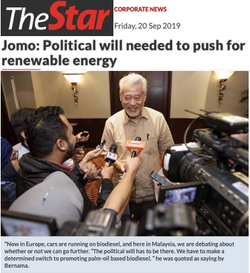
Political will needed to push for renewable energy

The Star 10July 2019

The Star 10July 2019

Malaysian businesses need boost

The Star 9 Oct 2019

The Star 9 Oct 2019

Subsidise public transport for bottom 40%

The Edge 26 Sept 2019

The Edge 26 Sept 2019

Call for measures to counteract global headwinds

The Edge 9 Oct 2019

The Edge 9 Oct 2019

Subsidise public transportation, not fuel

The Star 8 Oct 2019

The Star 8 Oct 2019

Subsidise public transportation for bottom 70%

TheEdge 2Oct 2019

TheEdge 2Oct 2019

"We need to counteract downward forces"

Fake News

PLEASE BEWARE OF MISREPRESENTATIONS OF IMAGES OF JOMO

Commercial and political misrepresentation of his image attributing to him to things which he never said or misrepresenting things he may have said is being circulated on websites such as those posted here. 


You should also be warned, in case you are not already aware, of ‘click bait’ i.e. using such images simply to attract your interest, and then to download your online information for abuse for a variety of ends.

Please inform us and provide a screenshot and weblink to enable further action, which is incredibly difficult. 

Thank you for reading this and for your help and cooperation.

This has also been flagged on his official Facebook page


JKS image ad2.jpg
JKS image Bitcoin ad on  Facebook.jpg
JKS - Fake News 2.jpg
Contact Me
JKS - Fake News 3.jpg
JKS fake news 1.jpg

Nadi Insan by the People's History Centre

Read all editions of #NadiInsan from 1979 to 1983 free of charge at the Peoples History Center website.


Containing writings on socio-political issues, film and cultural commentary, as well as in-depth interviews, Nadi Insan is motivated by community activists and intellectuals in Malaysia.

Happy reading!

Dapatkan kesemua siri majalah #NadiInsan dari tahun 1979 hingga 1983 secara percuma di laman Pusat Sejarah Rakyat.


Berisi tulisan memperihal sosio-politik, ulasan filem dan budaya sehinggalah wawancara yang rencam, Nadi Insan digerakkan oleh aktivis masyarakat dan intelektual di Malaysia.


Selamat membaca!

Contact Me

  • Facebook Social Icon
  • Twitter Social Icon

Thank you for reaching out!

bottom of page