top of page

Follow on Social Media

  • Facebook
  • Twitter
  • Screenshot 2022-09-18 at 5.20.40 PM

M'sia Developments
[on SubStack]

  • Screenshot 2022-09-18 at 5.20.40 PM
  • Jan 26, 2021
  • 4 min read

Jomo Kwame Sundaram


KUALA LUMPUR: Current development fads fetishize data, ostensibly for ‘evidence-based policy-making’: if not measured, it will not matter. So, forget about getting financial resources for your work, programmes and projects, no matter how beneficial, significant or desperately needed.


Measure for measure


Agencies, funds, programmes and others lobby and fight for attention by showcasing their own policy agendas, ostensible achievements and potential. Many believe that the more indicators they get endorsed by the ‘international community’, the more financial support they can expect to secure.


Collecting enough national data to properly monitor progress on the Sustainable Development Goals is expensive. Data collection costs, typically borne by the countries themselves, have been estimated at minimally over three times total official development assistance (ODA).


Remember aid declined after the US-Soviet Cold War, and again following the 2008-9 global financial crisis. More recently, much more ODA is earmarked to ‘support’ private investments from donor countries.


With data demands growing, more pressure to measure has led to either over- or under-stating both problems and progress, sometimes with no dishonest intent. ‘Errors’ can easily be explained away as statistics from poor countries are notoriously unreliable.


Political, bureaucratic and funding considerations limit the willingness to admit that reported data are suspect for fear this may reflect poorly on those responsible. And once baseline statistics have been established, similar considerations compel subsequent ‘consistency’ or ‘conformity’ in reporting.


And when problems have to be acknowledged, ‘double-speak’ may be the result. Organisations may then start reporting some statistics to the public, with other data used, typically confidentially, for ‘in-house’ operational purposes.


Money, money, money


Economists generally prefer and even demand the use of money-metric measures. The rationale often is that no other meaningful measure is available. Many believe that showing ostensible costs and benefits is more likely to raise needed funding. Using either exchange rates or purchasing power parity (PPP) has been much debated. Some advocate even more convenient measures such as the prices of a standard McDonald’s hamburger in different countries.


Money-metrics imply that estimated economic losses due to, say, smoking or non-communicable diseases (NCDs), including obesity, tend to be far greater in richer countries, owing to the much higher incomes lost or foregone as well as costs incurred.


Development discourse changes


The four UN Development Decades after 1960 sought to accelerate economic progress and improve social wellbeing. Unsurprisingly, for decades, there have been various debates in the development discourse on measuring progress.

The rise of neoliberal economic thinking, claiming to free markets, has instead mainly strengthened and extended private property rights. Rejecting Keynesian and development economics, both associated with state intervention, neoliberalism’s influence peaked around the turn of the century.


The so-called ‘Washington Consensus’ of US federal institutions from the 1980s also involved the Bretton Woods institutions, the International Monetary Fund (IMF) and World Bank, both headquartered in the American capital.

In 2000, the UN Secretariat drafted the Millennium Declaration. This, in turn, became the basis for the Millennium Development Goals which gave primacy to halving the number of poor. After all, who would object to reducing poverty. The poor were defined with reference to a poverty line, somewhat arbitrarily defined by the Bank.


Poverty fetish


Presuming money income to be a universal yardstick of wellbeing, this poverty measure has been challenged on various grounds. Most in poorer developing countries sense that much nuance and variation are lost in such measures, not only for poverty, but also for, say, hunger.


Anyone familiar with the varying significance, over time, of cash incomes and prices in most countries will be uncomfortable with such singular measures. But they are nonetheless much publicised and have implied continued progress until the Covid-19 pandemic.


Rejection of such singular poverty measures has led to multi-dimensional poverty indicators, typically to meet ‘basic needs’. While such ‘dashboard’ statistics offer more nuance, the continued desire for a single metric has led to the development, promotion and popularisation of composite indicators.


Worse, this has been typically accompanied by problematic ranking exercises using such composite indicators. Many have become obsessed with such ranking, instead of the underlying socio-economic processes and actual progress.


Blind neglect


Improving such metrics has thus become an end in itself, with little debate over such one-dimensional means of measuring progress. The consequent ‘tunnel vision’ has meant ignoring other measures and indicators of wellbeing.


In recent decades, instead of subsistence agriculture, cash crops have been promoted. Yet, all too many children of cash-poor subsistence farmers are nutritionally better fed and healthier than the offspring of monetarily better off cash crop or ‘commercial’ farmers.


Meanwhile, as cash incomes rise, those with diet-related NCDs have been growing. While life expectancy has risen in much of the world, healthy life expectancy has progressed less as ill health increasingly haunts the sunset years of longer lives.


Be careful what you wish for


Meanwhile, as poor countries get limited help in their efforts to adjust to global warming, rich countries’ focus on supporting mitigation efforts has included, inter alia, promoting ‘no-till agriculture’. Thus attributing greenhouse gas emissions implies corresponding mitigation efforts via greater herbicide use.


Maximising carbon sequestration in unploughed farm topsoil requires more reliance on typically toxic, if not carcinogenic pesticides, especially herbicides. But addressing global warming should not be at the expense of sustainable agriculture.


Similarly, imposing global carbon taxation will raise the price of, and reduce access to electricity for the ‘energy-poor’, who comprise a fifth of the world’s population. Rich countries subsidising affordable renewable energy for poor countries and people would resolve this dilemma.


Following the 2008-2009 global financial crisis, the UN proposed a Global Green New Deal (GGND) which included such cross-subsidisation by rich countries of sustainable development progress elsewhere.


The 2009 London G20 summit succeeded in raising more than the trillion dollars targeted. But the resources mainly went to strengthening the IMF, rather than for the GGND proposal. Thus, the finance fetish blocked a chance to revive world economic growth, with sustainable development gains for all.


  • Jan 19, 2021
  • 5 min read

Jomo Kwame Sundaram


KUALA LUMPUR: Covid-19 infection and death rates in the Western world and many developing countries in Asia and Latin America have long overtaken East Asia since the second quarter of 2020. Perhaps unsurprisingly, considering prevailing Western accounts of the Asian financial crises, there have been no serious efforts to draw policy lessons from East Asian contagion containment.


Lockdowns necessary?


Although most East Asian economies have successfully contained the pandemic without nationwide ‘stay in shelter lockdowns’, many governments have seen such measures as necessary. But lockdowns are blunt measures, with inevitable adverse consequences, especially for businesses and employment.


Many countries have thus imposed lockdowns, citing China’s response in Wuhan. But as the first WHO fact-finding mission to China noted, “The majority of the response in China, in 30 provinces, was about case finding, contact tracing, and suspension of public gatherings—all common measures used anywhere in the world to manage [infectious] diseases.


Lockdowns were limited to a few cities where contagion went “out of control in the beginning”. The key lesson from China was “all about…speed. The faster you can find the cases, isolate the cases, and track their close contacts, the more successful you’re going to be.”


To be sure, lockdowns ‘flatten the curve’ by temporarily preventing further contagion. But unless accompanied by appropriate complementary measures, undetected infectious individuals may cause silent community transmission that becomes evident only too late. Instead of lockdowns, it is far more prudent to find and isolate cases before numbers become unmanageable.


South Korean lessons


The Republic of Korea was the first country to dramatically reduce the number of Covid-19 cases and related deaths without nationwide movement restrictions. It checked the spread of Covid-19 infections without imposing lockdowns, even in Daegu its most infected city.


Mass testing has been key to its response, doing the most by mid-March. By late March, Korea’s newly confirmed cases had fallen from second to eighth place in the world. Meanwhile, Korean authorities urged physical distancing, personal hygiene and remote work while discouraging mass gatherings.


The government also had legal authority to collect phone, credit card and other data to expedite contact tracing, and initially only restricted incoming travellers from Hubei province, where Wuhan is, for precautionary reasons, and from Japan in political retaliation.


Just as China had rapidly identified pathogen characteristics using artificial intelligence and big data access, Korea innovatively deployed new technologies to expedite rapid responses to trace, test, treat and isolate those infected.


Lessons from Vietnam


Three months ago, a Vietnamese official described how “Vietnam is fighting Covid without pitting economic growth against public health”. Besides testing and contact-tracing, “the government has depoliticised the pandemic, treating it purely as a health crisis, allowing for effective governance”.


Hence, there is “no political motive for government officials to hide information, as they don’t face being reprimanded if there are positive cases in their authority area that are not due to their mistakes”.


He noted that “With the head of the Hanoi centre for disease control being arrested for suspected corruption in relation to the purchase of testing kits, and small traders getting fines for price-gouging face-masks, the government has also been clear that public health cannot be entangled with commercial interests”.


After China announced its first infections and deaths in January 2020, “Vietnam tightened its border and airport control of Chinese visitors. This wasn’t an easy decision, given that cross-border trade with China accounts for a significant part of the Vietnamese economy”.


Vietnam also “took precautionary measures above and beyond World Health Organization recommendations”. Preparations started “a week before the outbreak was officially declared a public health emergency of international concern, and more than a month before WHO declared Covid-19 a pandemic”.


The communist-led government also ensured “freedom of information on Covid-related matters”. “Lockdown and isolation are more selective” from the outset, without resorting to nationwide lockdowns, as has happened elsewhere without much benefit.


Vietnam is one of the few countries with “positive GDP growth” in 2020; “the supposed trade-off between the economy and public health… looks to be something of a false choice”.


In their war, Vietnam is believed to have lost over three million people compared to 58,209 US lives. In fighting the virus, Vietnam, with 97 million people, has lost 35 lives so far, while the US, with a 332 million population, has lost almost four hundred thousand.


Mass testing crucial


After a year of living with Covid-19, all governments can learn a great deal from critical evaluation of their own country experiences, other experiences as well as accumulated, especially new knowledge relevant to feasible policy options.

Thus far, appropriate East Asian policy measures for rapid early detection, isolation and contact tracing, while protecting the most vulnerable and treating the infected, have succeeded in flattening the curve.


More reliable, cheaper methods (e.g., ‘lateral-flow’ antigen tests) allow more frequent mass testing. As undetected cases are more likely to spread infection, such tests enable more frequent, faster and easier testing and quicker results, and facilitate faster, more efficacious actions.


This can help check contagion by identifying more of those infected earlier, thus reducing transmission. Even though less accurate than supposed ‘gold standards’, lower costs allow more widespread and frequent testing to identify many more of those infected.


Easier to administer and delivering results more rapidly, such cheaper, simpler and quicker tests more speedily detect the infected, especially among the asymptomatic, in time for appropriate and timely action.


As SARS-CoV-2 transmission peaks several days after infection, together with the viral load, more frequent testing is necessary to check contagion. More frequent mass testing is probably going to detect many more of those infected much earlier, while they are still infectious.


Look East


In the early 20th century, a young Cambridge-trained doctor, Wu Lien Teh returned to practice in the British colony of Penang where he mobilised thousands against the opium trade. The authorities arrested him, forcing him to seek employment outside the British empire.


He eventually found work with China’s Ching emperor in Manchuria where a plague was raging, eventually claiming 60,000 lives. Recognising it as pneumonic, Wu recommended use of multi-layered masks he designed to protect users against airborne infection, now recognised as forerunner of the N95 mask.


His later analysis of the socio-behavioural determinants of zoonotic transmission of the epidemic was also pioneering. Sadly, a famous French doctor Gerald Mesny, who rejected Wu’s mask advice as diagnostically wrong, died of the plague soon after arrival.


Over a century later, and over two decades after the 1997-1998 Asian financial crisis exposed the systemic financial fragility creating conditions for the 2008-2009 global financial crisis, the reluctance to learn from the East continues, ignoring Prophet Muhammad’s advice to ‘seek knowledge, even unto China’.


  • Jan 11, 2021
  • 5 min read

Jomo Kwame Sundaram

KUALA LUMPUR: The incoming Biden administration is under tremendous pressure to demonstrate better US economic management. Trade negotiations normally take years to conclude, if at all. Unsurprisingly, lobbyists are already urging the next US administration to quickly embrace and deliver a new version of the Trans-Pacific Partnership (TPP).


Trump legacy

Repackaging and reselling a TPP avatar will not be easy. Well before Trump’s election, even the official mid-2016 International Trade Commission’s assessment doubted Peterson Institute of International Economics (PIIE) claims of significant benefits from the TPP for all.

Unsurprisingly, most major US presidential candidates in the 2016 election – even Hillary Clinton, Obama’s Secretary of State, credited with his ‘pivot to Asia’ to isolate China – opposed the TPP.

Trump’s campaigns and presidency have since changed US public sentiment. All too many Americans now blame globalisation and foreign threats – especially immigrants and China – for many major problems the US faces.

Most believe that better jobs have been lost to cheaper production abroad, due to globalisation. Downward social mobility for most Americans in recent decades has actually been due to technological changes, including mechanisation and automation.


Frankenstein-like TPP avatar

Uncomfortable with Trump’s unilateralism despite other affinities, those keenest on checking China – namely the Japanese, Australian and Singapore governments – have kept the TPP flame alive.

They succeeded in getting the ‘TPP11’ – minus the USA – to endorse a Comprehensive and Progressive TPP (CPTPP). But even the modest trade growth claims of all pro-TPP reports were premised on US market access.

With the US out, the CPTPP would mainly have bolstered Japanese and other transnational corporations (TNCs) and Singapore as a financial centre. But other governments have stayed on for their own reasons, rather than due to realistic expectations of significant economic gains.

With the TPP favouring foreign investments, investors may even go abroad as there is less advantage in being domestic. Thus, foreign direct investment (FDI) and even portfolio inflows could decline under the TPP avatar, while its onerous provisions undermine the national and public interest.


TNCs rule

The CPTPP did not even drop or revise the worse TPP chapters. It only suspended some obviously onerous intellectual property (IP) and other provisions, mainly of interest to US TNCs. These can easily be reincluded as successes by the new administration.

IP and investor-state dispute settlement (ISDS) provisions are supposed to attract much FDI. ISDS has mainly been of interest to US TNCs, but was opposed by the jingoist Trump team for exposing the US to foreign TNC legal claims.

Under ISDS, TNCs can sue governments, e.g., for supposed loss of profits, including future projections, even if due to policy changes in the national or public interest, e.g., for contagion containment.

ISDS claims are typically referred to arbitration tribunals. This extrajudicial system supersedes national laws and judiciaries, with secret rulings not bound by precedent or subject to appeal. Regardless of who wins, these proceedings are very costly for governments, especially those with modest means.

Law firms have recently been urging foreign investors to use ISDS to sue governments for resorting to extraordinary COVID-19 measures. Meanwhile, COVID-19 vaccine companies have included indemnity clauses protecting them from lawsuits by governments and others.

If Trump had been re-elected instead, the ISDS chapter could have been removed to secure US acceptance during his second term. As with the North American Free Trade Area (NAFTA), citing other cosmetic changes, they would have been presented as major gains by him.


More IP ‘rent-gouging’

Strengthening IP monopolies would increase the value of trade by charging and paying higher prices for medicines, treatments, tests, vaccines as well as other patented and copyrighted products. COVID-19 has highlighted how IP rents impose avoidable costs and stymie progress by discouraging cooperation.

As ‘price-gouging’ is not unlawful in the US, its laws cannot be relied on to protect consumers elsewhere. Unsurprisingly, before the pandemic, Médecins Sans Frontieres warned that the TPP will go down in history as the worst “cause of needless suffering and death” in developing countries.

Having received massive government and other subsidies, pharmaceutical TNCs will profit immensely from the new vaccines, thus limiting access by poor countries and people. By contrast, free vaccinations have ensured effective campaigns against smallpox, polio, tuberculosis and other communicable diseases.

Enhanced IPRs thus undermine public health. Meanwhile, the popular justification – that stronger IP enhances innovation, research and development – is no longer deemed acceptable to most stakeholders, inter alia, due to lack of convincing supportive evidence.


FTAs strengthen TNC bullies

TPP trade gains have been greatly inflated by lobbyists. After all, the US already has free trade agreements (FTAs) with most other TPP countries. Trade barriers with the others were low in most cases, so real gains from further trade liberalisation were meagre, except for Vietnam, due to its US war legacy.

All twelve also belong to the World Trade Organization (WTO), which concluded the ‘single largest trade agreement ever’. As trade liberalisation guru Jagdish Bhagwati has noted, bilateral and plurilateral, including regional FTAs actually undermine gains from multilateral trade liberalisation.

Even the PIIE, the pre-eminent TPP and CPTPP advocate, mainly claimed gains from ‘non-trade issues’, especially additional FDI, attracted by more investor rights. Such incentives imply more concessions by host governments, and hence, less net gains for the countries.

Thus, the TPP mainly promoted more TNC-friendly rules, rather than trade. This is hardly surprising as the 6350-page document was drafted by various working groups, including hundreds of representatives of major US TNCs and other lobbyists.

Dubious gains, greater losses

The COVID-19 pandemic has disrupted supply chains, especially across national borders. Such transborder disruptions were often due to contagion containment measures, but some were deliberate. For example, the US and Japan governments have urged TNCs to end investments in and outsourcing from China.

These policy actions have also hit suppliers, many from Southeast Asia. While some TNCs relocated to other developing countries, the CPTPP has not helped those hurt by such recent economic rivalry and conflict.

Having served as Obama’s loyal Vice-President, Biden is being told that the new administration can easily secure a quick win with a few revisions to the TPP agreement to address earlier criticisms, objections and concerns in the US. Thus, the CPTPP is being presented in Washington as a low-hanging fruit, almost ripe for plucking.

The new US administration must realise that corporate neoliberalism’s consequences has been responsible for the rise of finance and the erosion of social protections resulting in the social pathologies which have enabled Trump’s rise.

Corporate globalisation and COVID-19 should also have taught developing countries that they must reject FTAs strengthening IPRs, ISDS and TNCs in order to secure policy space to ‘build back better’.


Latest Videos

All Videos

All Videos

AN URGENT CALL: A PEOPLE"S VACCINE AGAINST COVID-19

00:00
9 June 2020: IHD-ILO-ISLE Virtual Conference - Day 2

9 June 2020: IHD-ILO-ISLE Virtual Conference - Day 2

05:08:34
Learning in Governance in times of COVID-19

Learning in Governance in times of COVID-19

46:30
Beyond the Lockdown: Towards the ‘New Normal’

Beyond the Lockdown: Towards the ‘New Normal’

59:10

About Jomo

Jomo Kwame Sundaram is Research Adviser, Khazanah Research Institute, Fellow, Academy of Science, Malaysia, and Emeritus Professor, University of Malaya. Previously, he was UN Assistant Secretary-General for Economic Development, Assistant Director General, Food and Agriculture Organization (FAO), Founder-Chair, International Development Economics Associates (IDEAs) and President, Malaysian Social Science Association. 

In The Media

TheStar 26 June 2020

TheStar 26 June 2020

The Star 20 Sept 2019

The Star 20 Sept 2019

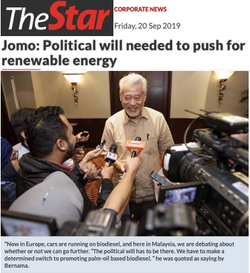
Political will needed to push for renewable energy

The Star 10July 2019

The Star 10July 2019

Malaysian businesses need boost

The Star 9 Oct 2019

The Star 9 Oct 2019

Subsidise public transport for bottom 40%

The Edge 26 Sept 2019

The Edge 26 Sept 2019

Call for measures to counteract global headwinds

The Edge 9 Oct 2019

The Edge 9 Oct 2019

Subsidise public transportation, not fuel

The Star 8 Oct 2019

The Star 8 Oct 2019

Subsidise public transportation for bottom 70%

TheEdge 2Oct 2019

TheEdge 2Oct 2019

"We need to counteract downward forces"

Fake News

PLEASE BEWARE OF MISREPRESENTATIONS OF IMAGES OF JOMO

Commercial and political misrepresentation of his image attributing to him to things which he never said or misrepresenting things he may have said is being circulated on websites such as those posted here. 


You should also be warned, in case you are not already aware, of ‘click bait’ i.e. using such images simply to attract your interest, and then to download your online information for abuse for a variety of ends.

Please inform us and provide a screenshot and weblink to enable further action, which is incredibly difficult. 

Thank you for reading this and for your help and cooperation.

This has also been flagged on his official Facebook page


JKS image ad2.jpg
JKS image Bitcoin ad on  Facebook.jpg
JKS - Fake News 2.jpg
Contact Me
JKS - Fake News 3.jpg
JKS fake news 1.jpg

Nadi Insan by the People's History Centre

Read all editions of #NadiInsan from 1979 to 1983 free of charge at the Peoples History Center website.


Containing writings on socio-political issues, film and cultural commentary, as well as in-depth interviews, Nadi Insan is motivated by community activists and intellectuals in Malaysia.

Happy reading!

Dapatkan kesemua siri majalah #NadiInsan dari tahun 1979 hingga 1983 secara percuma di laman Pusat Sejarah Rakyat.


Berisi tulisan memperihal sosio-politik, ulasan filem dan budaya sehinggalah wawancara yang rencam, Nadi Insan digerakkan oleh aktivis masyarakat dan intelektual di Malaysia.


Selamat membaca!

Contact Me

  • Facebook Social Icon
  • Twitter Social Icon

Thank you for reaching out!

bottom of page