top of page

Follow on Social Media

  • Facebook
  • Twitter
  • Screenshot 2022-09-18 at 5.20.40 PM

M'sia Developments
[on SubStack]

  • Screenshot 2022-09-18 at 5.20.40 PM

Jomo Kwame Sundaram and Anis Chowdhury


KUALA LUMPUR and SYDNEY: Fiscal and monetary measures needed to fight the economic downturn, largely due to COVID-19 policy responses, require more government accountability and discipline to minimise abuse. Such measures should ensure relief for the vulnerable, prevent recessions from becoming depressions, and restore progress.

They should help the most helpless, especially in the informal sector and casual employment. Efforts should also seek to accelerate structural transformation towards the Sustainable Development Goals (SDGs). Progress was already falling behind before the pandemic, e.g., on mitigating global warming.


Unconventional measures

The pandemic and policy responses have created a most unusual situation, demanding extraordinary policy responses to mitigate threats to livelihoods and incomes. Bold initiatives are needed to overcome obstacles to sustainable development.

Unconventional solutions need to be considered as the conventional wisdom is part of the problem, especially since the neoliberal counter-revolution against Keynesian and development economics four decades ago.

In recent decades, counter-cyclical fiscal policies over business cycles have been replaced by annually ‘balanced budgets’ and ‘fiscal consolidation’. This has involved spending cuts for public, including social services, and social protection more broadly.

Taxation has become more regressive, with lower direct tax rates, on wealth as well as corporate and personal income, as indirect taxation, mainly on consumption, has grown. Such tax reforms and regressive government spending have worsened inequality.


Deficit financing inflationary?

Publics often presume that governments tax first in order to spend. In practice, they usually spend first, and then tax. Government spending typically requires more borrowing and debt, traditionally by selling bonds and other securities, including to the central bank.

Selling government treasury bonds to the central bank increases money supply, unless the monetary authority correspondingly reduces its other liabilities. Neoliberal critics insist that increasing money supply, popularly referred to by the media as ‘printing money’, must inevitably worsen inflation.

However, there is overwhelming empirical evidence to the contrary as the US Federal Reserve, the European Central Bank, the Bank of England and the Bank of Japan greatly increased money supply over the last decade. They mainly did so by buying private securities, and getting commercial banks to lend more at lower interest rates.

As such unconventional monetary policies, including ‘quantitative easing’ (QE), in the last decade did not raise prices, there is no reason to presume that central banks buying treasury bonds – to pay for relief, recovery and building a better future – will be inflationary.


Deficit spending ineffective?

Governments can also borrow from the public, e.g., by selling bonds to them. But according to neoliberal beliefs, borrowing from the public will raise the interest rate, ‘crowding out’ private borrowers who cannot afford the higher ‘costs of borrowing’. Hence, they claim, investments will fall, slowing growth.

But for Keynesians, government spending is not inflationary when economic resources are not fully employed or utilised, i.e., as long as there is idle excess capacity, e.g., unemployment.

Keynesians also reject the neoliberal claim that public investment will ‘crowd out’ such private spending. Keynesians stress that economic stagnation discourages private investment. By boosting demand and sales, government spending increases private profits and investment.

Declining private spending or demand thus requires government spending to boost aggregate demand. Government spending on infrastructure, health and education also improves productivity, and hence profitability, offsetting higher borrowing costs. Thus, government spending serves to ‘crowd-in’, not ‘crowd-out’ private investment.


Incoherent, unsupported objections

The ‘Ricardian equivalence’ objection is very different, claiming that when governments borrow, people spend less, in anticipation of higher taxes. This supposedly undermines the intent of greater government spending to raise aggregate demand. But again, there is no strong supporting evidence for this effect.

This argument is not only quite different from the earlier ‘crowding out’ and inflation objections, but also implies that the three neoliberal arguments against deficit financing are mutually contradictory and cannot be coherently sustained.

In contrast, the International Monetary Fund (IMF) found that “debt-financed projects could have large output effects without increasing the debt-to-GDP ratio, if clearly identified infrastructure needs are met through efficient investment”, accelerating recovery from the global financial crisis (GFC).

Similarly, in response to the pandemic induced recessions, the IMF argues that “increasing public investment … could help revive economic activity from the sharpest and deepest global economic collapse in contemporary history”.


‘Sound finance’, fiscal rules

Unfortunately, expansionary fiscal policies are often abused by ‘short-termist’ governments of the day, little concerned about the long- and even medium-term consequences of increased spending, borrowing and debt.

In response, neoliberals invoke ostensible ‘sound finance’ principles. Sound finance seems desirable when spending abuse, wastage and leakages are widespread. However, it has become a pretext for dogmatically opposing bold fiscal measures, however much needed. Neoliberals want fiscal rules to straight-jacket governments, obliging the authorities to balance budgets annually or keep fiscal deficits minimal. Many advocate independent fiscal boards, akin to politically unaccountable ‘independent’ central banks, ostensibly to minimise political influence on government budgetary decisions.

Even when fiscal rules or boards allow some flexibility in times of crisis, or in response to severe shocks, biases towards ‘fiscal consolidation’ and pro-cyclicality run deep, undermining development efforts. Hence, fiscal rules typically hinder, rather than help development.

Counter-cyclical, developmental ‘functional finance’

Instead, ‘functional finance’, proposed by Abba Lerner to mitigate prejudice against fiscal policy activism, is needed. Government spending and taxation policy should instead be consistent with counter-cyclical and developmental fiscal needs.

This was recognised by the Development Committee of the World Bank and IMF in Fiscal Policy for Growth and Development: An Interim Report which observed:

“the problem of fiscal policy design is a reflection of the choice of the fiscal deficit as the policy target. The fiscal deficit is a useful indicator …, but it offers little indication of longer term effects on government assets or on economic growth… There is clearly a need for fiscal policy to incorporate…the likely impact of the level and composition of expenditure and taxation on long-term growth while also maintaining a focus on indicators essential for economic stabilization”.


Oppose abuse, not more spending

Poorly accountable governments often take advantage of real, exaggerated or imagined crises to pursue macroeconomic policies to secure regime survival and to benefit politically well-connected cronies and financial supporters.

Undoubtedly, much better governance, transparency and accountability are needed to minimise the likely immediate and longer-term harm due to ‘leakages’ and abuses associated with increased borrowing and spending.

There has to be much greater discipline and stricter scrutiny of government borrowings, spending and debt, as well as of government-guaranteed liabilities. Consistently counter-cyclical fiscal policy over the course of business cycles provides useful guidance.

Publics and their political representatives, especially in developing countries, must develop more effective modes of disciplining fiscal policy conduct to ensure space for responsible counter-cyclical and developmental spending. However, that task should not block the efforts urgently needed to finance relief, recovery and sustainable development.

Central banks must support governments’ fiscal stimulus packages for relief, recovery and building a better future. This requires complementary fiscal and monetary policies working in tandem for sustainable development.


Related IPS commentaries

1. “Fight Pandemic, Not Windmills of the Mind”, 28 July 2020. https://www.ipsnews.net/2020/07/fight-pandemic-not-windmills-mind/

2. “Reviving the Economy, Creating the ‘New Normal’”, 16 June 2020. http://www.ipsnews.net/2020/06/reviving-economy-creating-new-normal/

3. “Use Stimulus Packages for Longer Term Progress”, 18 March 2020. https://www.ipsnews.net/2020/03/use-stimulus-packages-longer-term-progress/

4. “Expansionary fiscal consolidation myth”, 11 August 2016. http://www.ipsnews.net/2016/08/expansionary-fiscal-consolidation-myth/

5. “Rethinking Fiscal Policy for Global Recovery”, 23 June 2016. http://www.ipsnews.net/2016/06/rethinking-fiscal-policy-for-global-recovery/


Jomo K. S.


Fiscal and monetary measures needed to fight the economic downturn, due to the COVID-19 pandemic and policy response measures, require greater government accountability and discipline to ensure success by minimising abuse besides improving contagion containment measures.

Such measures should prioritise providing relief to the vulnerable, prevent the recession from becoming a depression, and restore progress. They must help the most vulnerable, especially those in the informal sector and casual employment, restore aggregate demand and accelerate productive investments, technological progress and output growth.

Unconventional solutions need to be considered for implementation as conventional wisdom is part of the problem. This is an extraordinary situation, requiring unconventional policy responses to mitigate the loss of livelihoods and incomes, often due to disruptions caused by government policy responses to the pandemic.

With the neoliberal counter-revolution against Keynesian economics and development policy from four decades ago, counter-cyclical fiscal policies have been eschewed in favour of annually ‘balanced budgets’ and ‘fiscal consolidation’.

Meanwhile, there are widespread concerns that bolder expansionary fiscal policies are likely to be abused by typically short-termist governments of the day, tempted by macroeconomic (ethno-)populism, and unconcerned about the medium- and long-term consequences of increased spending, borrowing and debt.

Only much better governance, transparency and accountability can minimise harm due to likely ‘leakages’ and abuses associated with increased government borrowing and spending. Such fiscal policies typically involve governments borrowing, especially by selling bonds and other securities, including to central banks.

Publics often presume that governments tax first in order to spend. In fact, they usually spend first, and then tax. Poorly accountable governments often take advantage of real, exaggerated or imagined crises to pursue more populist macroeconomic policies to secure regime survival and benefit the politically well-connected.


Helicopter money

One recent controversy is over ‘printing money’ to finance such measures instead of via increased government debt or borrowing. For Keynesians, printing money is not inflationary when economic resources are not fully employed or utilised.

Monetary authorities in the West enabled or ‘nudged’ commercial banks to lend more at lower interest rates without fear of raising prices. Hence, unconventional monetary policies, including ‘quantitative easing’, in the last decade were not inflationary.

The term ‘helicopter money’ was originally used by Milton Friedman over half a century ago as a ‘thought experiment’ to consider the consequences of a one-time increase in money supply.

However, the term is now used to refer to increasing money supply by various means, ostensibly to catalyse economic growth. Some advocates invoke modern monetary theory (MMT) to claim that governments can indefinitely increase fiat money supply (quantitative easing) without any adverse consequences such as inflation.

In developed economies, easy money due to such measures has actually accelerated wealth accumulation by a privileged few, although economic growth remained modest. Real wages have gone down despite full employment before the pandemic. Thus, printing money, especially in the US and UK, has helped the rich more than others.

Very importantly, developing countries do not enjoy the degrees of freedom enjoyed by developed economies in terms of monetary policy sometimes termed to the ‘exorbitant privilege’. Hence, simply emulating quantitative easing (QE) is likely to have different consequences in developing countries, including so-called ‘emerging market’ economies.


Counter-cyclical fiscal policy

Successive Malaysian governments since the turn of the century have abandoned the consistently counter-cyclical fiscal policy of the 1990s under former Prime Minister Mahathir Mohamad and then Finance Minister Anwar Ibrahim.

Before the 1997-1998 Asian financial crisis, the government ran budget surpluses when the economy was booming with industrialisation accelerating from the late 1980s. This changed with the 1998 Budget, announced by Anwar in October 1997, following the downturn following the currency crises.

Since then, counter-cyclical fiscal policy discipline has been lost, especially after the economy recovered in the new century. Subsequent governments have borrowed increasingly, even raising the self-imposed, announced official public debt limit.

Meanwhile, the government set up special purpose vehicles, especially for infrastructure projects heavily reliant on borrowed funds. These government-guaranteed liabilities were not reported to Parliament at all until very recently.

Neither were they seriously reviewed by the Auditor-General’s office or the Public Accounts Committee. Worryingly, many such projects will never pay for themselves, but have been means to unaccountably access foreign finances.

For instance, the actual East Coast Rail Link (ECRL) project costs are believed by industry insiders to be less than a quarter of what Malaysians were asked to pay for it, even before considering deferred interest and other costs.

But it is not the contractors from China who will get most of what Malaysians will have to pay for the ECRL boondoggle for decades to come, but rather the Malaysian and other enablers.

In the Malaysian Budget for 2021, some spending items, previously deemed current or operational expenditure, are now categorised as development or capital spending. This may enhance the illusion of fiscal balance by ensuring that at least operating expenditure is covered by revenue.

There has to be much stricter scrutiny of government debt, borrowing and spending as well as government-guaranteed liabilities. Unfortunately, Malaysia’s political economy seems likely to continue to conspire against improved transparency, accountability and commitment to sustainable development.


Anis Chowdhury and Jomo Kwame Sundaram


SYDNEY & KUALA LUMPUR: COVID-19 recessions have hit most countries, requiring massive fiscal responses. While most developing countries struggled with mounting debt even before the pandemic, many developed countries also face unprecedented macroeconomic pressures despite earlier spending cuts due to ‘fiscal consolidation’ policies.


Tax, not aid?

Before the third United Nations’ Financing for Development conference (FfD3) in Addis Ababa in mid-2015, Organization for Economic Cooperation and Development (OECD) head Angel Gurria acknowledged, “Much of [the tax not collected] is lost abroad in illicit flows. Developing countries also lose tax revenue from aggressive tax planning by multinational corporations. This cannot go on.”

Earlier, then OECD Development Assistance Committee chair, Erik Solheim foresaw an end to official development assistance (ODA): “Nothing would please me more than seeing the end of ODA, and for development to be financed through taxes, normal trade relations, long term investments and sustainable businesses.”

Solheim also observed: “Developing nations need to be in control of their own revenues and economic resources through sound taxation … The fight against corruption and tax havens is crucial in this context…The amount of money leaving developing countries in the form of illicit financial flows each year is many times greater than the amount of aid coming in”.

However, before and at the conference, developed economies ganged up to block developing country efforts to enhance international cooperation to stem such illicit outflows, especially tax evasion.


Losing resources

The UN-initiated Financial Accountability, Transparency & Integrity (FACTI) interim report has made staggering estimates of lost resources that could contribute to development:

• 10% of world output held in offshore financial assets

• criminal money laundering worth 2.7% of global output

• US$7 trillion of private wealth hidden in mainly secret, tax havens

• US$500~600 billion yearly in lost global corporate tax revenue due to ‘profit-shifting’ by transnational corporations (TNCs)

• US$20~40 billion yearly in bribes in developing and transition economies


Illicit financial outflows

According to Global Financial Integrity (GFI), developing countries have lost US$13.4 trillion in unrecorded capital flight since 1980, via trade mis-invoicing and tax evasion, primarily by TNCs and ‘high worth’ individuals, with US$1.1 trillion lost in 2013 alone.

TNCs also steal money from developing countries through ‘same-invoice faking’, i.e., by shifting profits among subsidiaries by false trade invoicing. The GFI figure of illicit funds transfers does not include same-invoice faking, but estimates losses of US$700bn yearly from goods trade alone.

If trade in services is included, net resource outflows total about US$3 trillion yearly, 24 times more than OECD countries’ aid in 2014. In other words, developing countries lost $24 for every $1 of aid received in 2014, depriving them of much needed finance and government revenue for development.

Estimates of trade mis-invoicing in Africa during 2000-2016 averaged US$83 billion annually, totalling US$1.4 trillion, i.e., about 5.3% of Africa’s output value, worth about 11.4% of its trade in that period.

Such illicit outflows are greatest for Asia. Outflows grew by an average of over 9% yearly during 2004-2014, reaching around US$330 [272~388] billion in 2014. The equivalent of 7.6% of tax revenue in the Asia-Pacific region may have been lost to fraudulent trade declarations in 2016 alone.


OECD not inclusive, legitimate

Tax avoidance by TNCs frequently involves tax base erosion and profit shifting (BEPS), enabled by loopholes in tax governance and the law.

In 2013, G20 leaders endorsed the OECD BEPS action plan, requesting it to recommend international standards and measures to tackle corporate income tax (CIT) avoidance. CIT evasion cost US$100~240 billion annually, i.e., 4~10% of global CIT revenue. In response, the OECD initiated the Inclusive Framework on BEPS and the Global Forum on Transparency and Exchange of Information for Tax Purposes.

Developing countries are invited to participate on condition they commit to implement and enforce standards and norms they did not design or decide on, having been excluded from negotiations. Thus, the claim of developing country ‘inclusion’ in the OECD BEPS framework is misleading, to say the least.

Besides illegitimacy and other problems of exclusion, the proposals may also be inappropriate for developing countries. As the FACTI report observes, “Lack of inclusiveness in setting international norms results in implementation gaps and weakens the global fight against illegal and harmful tax practices”.


Digitalisation challenge

Rapid digitalisation presents new challenges, as TNC assets and profits can be easily moved among tax jurisdictions. Ensuring accurate company reporting on actual revenue and profits from each location is necessary for fairer taxation, but the status quo enables evasion instead.

Digitalisation threatens revenue collection as taxation practices try to catch up with innovations in tax evasion. Recent more ‘technology-driven’ businesses – increasingly involving ‘hard to value’ intangible assets such as patents and software – also require improving international corporate taxation.

Traditional assumptions about links between income, profits and physical presence now seem irrelevant, requiring new approaches, principles and norms. For example, countries with many users or consumers of digital services currently get little or no tax revenue from companies denying any physical presence.

But new international corporate taxation in this age of digitalisation should benefit all, both developing and developed countries. With marginal costs close to zero, all revenue can be taxed without adversely affecting digital services supply.

Current tax systems cannot prevent egregious tax avoidance by digital TNCs. For some time, the OECD has been discussing tax avoidance by digital TNCs within the BEPS framework without reaching consensus, mainly due to US opposition.

“With no consensus on taxation of the digital economy, some countries have resorted to unilateral measures”, noted the UN Committee of Experts on International Cooperation in Tax Matters. But such actions have provoked retaliation, e.g., the US threatened new tariffs on French exports following France’s attempt to tax tech giants.


Systemic challenges, cooperative solutions

Poor financial accountability, transparency and integrity – enabling illicit financial flows – is a global problem. As the FACTI report emphasised, the problem needs global solutions, while taking country circumstances into account.

It noted, “all aspects of this problem require action and ownership in developed and developing countries; in source, transit, and destination countries; in public and private sectors; and in small and large countries alike… there are no silver bullets or single measures”.

Governments around the world face severe fiscal pressures responding to COVID-19 economic crises with adequate relief and recovery measures as revenue collection shrinks. As other donor countries emulate the recent UK foreign aid budget cuts, aid-reliant developing countries will face more financing challenges.

As the OECD noted, domestic and external financing levels and trends already fell short of SDG spending needs well before the COVID-19 crises. External private financial inflows to developing economies could drop by US$700 billion in 2020 compared to 2019, 60% worse than the 2008 global financial crisis impact.

Hence, tackling resource haemorrhage from developing countries has become all the more urgent as even developed countries scramble for more fiscal means. This could finally catalyse the long-needed cooperation on international tax matters led by the UN, still the most inclusive and legitimate platform for multilateral cooperation.


Related IPS commentaries

“OECD Tax Reform Proposal Could Be Better”, 15 Oct. 2019. http://www.ipsnews.net/2019/10/oecd-tax-reform-proposal-better/

“Ensuring Fairer International Corporate Taxation”, 3 Sep. 2019. http://www.ipsnews.net/2019/09/ensuring-fairer-international-corporate-taxation/

“South Must Also Set International Tax Rules”, 20 Aug. 2019. http://www.ipsnews.net/2019/08/south-must-also-set-international-tax-rules/


Latest Videos

All Videos

All Videos

AN URGENT CALL: A PEOPLE"S VACCINE AGAINST COVID-19

00:00
9 June 2020: IHD-ILO-ISLE Virtual Conference - Day 2

9 June 2020: IHD-ILO-ISLE Virtual Conference - Day 2

05:08:34
Learning in Governance in times of COVID-19

Learning in Governance in times of COVID-19

46:30
Beyond the Lockdown: Towards the ‘New Normal’

Beyond the Lockdown: Towards the ‘New Normal’

59:10

About Jomo

Jomo Kwame Sundaram is Research Adviser, Khazanah Research Institute, Fellow, Academy of Science, Malaysia, and Emeritus Professor, University of Malaya. Previously, he was UN Assistant Secretary-General for Economic Development, Assistant Director General, Food and Agriculture Organization (FAO), Founder-Chair, International Development Economics Associates (IDEAs) and President, Malaysian Social Science Association. 

In The Media

TheStar 26 June 2020

TheStar 26 June 2020

The Star 20 Sept 2019

The Star 20 Sept 2019

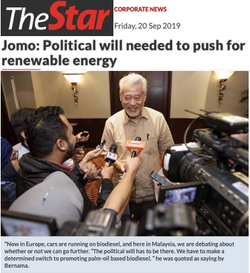
Political will needed to push for renewable energy

The Star 10July 2019

The Star 10July 2019

Malaysian businesses need boost

The Star 9 Oct 2019

The Star 9 Oct 2019

Subsidise public transport for bottom 40%

The Edge 26 Sept 2019

The Edge 26 Sept 2019

Call for measures to counteract global headwinds

The Edge 9 Oct 2019

The Edge 9 Oct 2019

Subsidise public transportation, not fuel

The Star 8 Oct 2019

The Star 8 Oct 2019

Subsidise public transportation for bottom 70%

TheEdge 2Oct 2019

TheEdge 2Oct 2019

"We need to counteract downward forces"

Fake News

PLEASE BEWARE OF MISREPRESENTATIONS OF IMAGES OF JOMO

Commercial and political misrepresentation of his image attributing to him to things which he never said or misrepresenting things he may have said is being circulated on websites such as those posted here. 


You should also be warned, in case you are not already aware, of ‘click bait’ i.e. using such images simply to attract your interest, and then to download your online information for abuse for a variety of ends.

Please inform us and provide a screenshot and weblink to enable further action, which is incredibly difficult. 

Thank you for reading this and for your help and cooperation.

This has also been flagged on his official Facebook page


JKS image ad2.jpg
JKS image Bitcoin ad on  Facebook.jpg
JKS - Fake News 2.jpg
Contact Me
JKS - Fake News 3.jpg
JKS fake news 1.jpg

Nadi Insan by the People's History Centre

Read all editions of #NadiInsan from 1979 to 1983 free of charge at the Peoples History Center website.


Containing writings on socio-political issues, film and cultural commentary, as well as in-depth interviews, Nadi Insan is motivated by community activists and intellectuals in Malaysia.

Happy reading!

Dapatkan kesemua siri majalah #NadiInsan dari tahun 1979 hingga 1983 secara percuma di laman Pusat Sejarah Rakyat.


Berisi tulisan memperihal sosio-politik, ulasan filem dan budaya sehinggalah wawancara yang rencam, Nadi Insan digerakkan oleh aktivis masyarakat dan intelektual di Malaysia.


Selamat membaca!

Contact Me

  • Facebook Social Icon
  • Twitter Social Icon

Thank you for reaching out!

bottom of page