top of page

Follow on Social Media

  • Facebook
  • Twitter
  • Screenshot 2022-09-18 at 5.20.40 PM

M'sia Developments
[on SubStack]

  • Screenshot 2022-09-18 at 5.20.40 PM

Anis Chowdhury and Jomo Kwame Sundaram


SYDNEY and KUALA LUMPUR: After decades of rejecting international tax cooperation under multilateral auspices, rich countries have finally agreed. But, by insisting on their own terms, progressive corporate income tax remains distant.

Tax avoidance and evasion by transnational corporations (TNCs) are facilitated by ‘tax havens’ – jurisdictions with very low ‘effective’ taxation rates. Intense competition among developing countries to attract foreign direct investment (FDI) makes things worse.

Developing countries need tax revenue most, but they will lose more, as a share of GDP, than wealthy countries. But a global minimum corporate (income) tax rate (GMCTR) can become a “game changer” undermining tax havens.


Minimal minimum rate

TNCs exploit legal loopholes to avoid or minimize tax liabilities. Such practices are referred to as ‘base erosion and profit shifting’ (BEPS).

Tax havens collectively cost governments US$500–600bn yearly in lost revenue. Low-income countries (LICs) will lose some US$200bn, more than the foreign aid, of around US$150bn, they receive annually.

Corporate income tax represents 15% of total tax revenue in Africa and Latin America, compared to 9% in OECD countries. Developing countries’ greater reliance on this tax means they suffer disproportionately more from BEPS.

A GMCTR requires TNCs to pay tax on their worldwide income. This discourages hiding profits in tax havens. The Independent Commission for the Reform of International Corporate Taxation (ICRICT) recommended a 25% GMCTR.

This 25% rate was around the current GDP-weighted average statutory corporate tax rate for 180 countries. Slightly below the OECD countries’ average, it is much less than the developing countries’ average. So, a GMCTR below 25% implies major revenue losses for most developing countries.

To reverse President Trump’s 2017 tax cut, the Biden administration proposed, in April 2021, to tax foreign corporate income at 21%. In June, the G7 agreed to a 15% GMCTR, endorsed by G20 finance ministers in July. This poor G7 rate is now sold as a “ground-breaking” tax deal.

Unsurprisingly, the World Bank President also rejected 21% as too high. The Bank has long promoted ‘race-to-the-bottom’ host country tax competition. Embarrassingly, its Doing Business Report was ‘suspended’ indefinitely in 2021 after its politically motivated data manipulation was exposed.

The OECD also wants to distribute taxing rights and revenue by sales, and not where their goods and services are produced. Critics, including The Economist, have pointed out that large rich economies would gain most. Small and poor developing economies, particularly those hosting TNC production, will lose out.

The OECD proposals could reduce small developing economies’ (SDEs) tax bases by 3%, while four-fifths of the revenue would likely go to high income countries (HICs). Hence, developing countries prefer revenue distribution by contribution to production, e.g., employees, rather than sales.


Undemocratic inclusion

Developing countries have never had a meaningful say in international tax matters. G20 members should have asked multilateral organizations, such as the UN and the IMF, which the G7 dominated OECD has long blocked.

Instead, the G20 BEPS initiative asked the OECD to work out its rules. After decades of keeping developing countries out of tax governance, its compromise Inclusive Framework on BEPS (IF) promotes lop-sided international tax cooperation.

          Developing countries were only involved “after the agenda had been set, the action points were agreed on, the content of the initiatives had been decided and the final reports were delivered”.

Developing countries have been allowed to engage with OECD and G20 members, supposedly “on an equal footing”, to develop some BEPS standards. To become an IF member, a country or jurisdiction must first commit to the BEPS outcome.

Thus, the non-OECD, non-G20 countries must enforce a policy framework they had little role in designing. Unsurprisingly, with little real choice or voice, the 15% GMCTR was agreed to, in October 2021, by 136 of the 141 IF members.


FDI vs taxes

The proposed OECD tax reforms are supposed to be implemented from 2023 or 2024. The United Nations Conference on Trade and Development (UNCTAD) Investment Division recognizes it will have major implications for international investment and investment policies affecting developing countries.

UNCTAD’s World Investment Report 2022, on International tax reforms and sustainable investment, offers guidance for developing country policymakers to navigate the complex new rules and to adjust their investment and fiscal strategies.

Committed to promoting investments in the real economy, especially by FDI, UNCTAD recognizes most developing countries lack the technical capacity to address the complex tax proposal. Implementing BEPS reports and related documents via legislation will be difficult, especially for LICs.

Existing investment treaty commitments also constrain fiscal policy reform. “The tax revenue implications for developing countries of constraints posed by international investment agreements (IIA) are a major cause for concern”, the Report notes.

Although tax regimes influence investment decisions, tax incentives are far from being the most important factor. Other factors – such as political stability, legal and regulatory environments, skills and infrastructure quality – are more significant.

Nonetheless, tax incentives have been important for FDI promotion. Such incentives inter alia include tax holidays, accelerated depreciation and ‘loss carry-forward’ provisions – reducing tax liability by allowing past losses to offset current profits.

With the GMCTR, many tax incentives will be less attractive to much FDI. Tax incentives will be affected to varying degrees, depending on their features. UNCTAD estimates productive cross-border investments could decline by 2%.

Hence, policymakers will need to review their incentives for both existing and new investors. The GMCTR may prevent developing countries from offering fiscal inducements to promote desired investments, including locational, sectoral, industry or even employment-creating incentives.


Investors rule

With generally lower rates, ‘top-up taxes’ could significantly augment SDEs’ revenue. Top-up taxes would apply to profits in any jurisdiction where the effective tax rate falls below the minimum 15% rate. This ensures large TNCs pay a minimum income tax in every jurisdiction where they operate.

However, host countries may be prevented by IIAs – especially Investor State Dispute Settlement (ISDS) provisions – from imposing ‘top-up taxes’. If so, they will be imposed by TNCs’ mainly rich ‘home countries’.

Thus, FDI-hosting countries would lose tax revenue without benefiting by attracting more FDI. Existing IIAs – of the type found in most developing countries – are likely to be problematic.

Hence, the GMCTR’s implications are very important for FDI promotion policies. Reduced competition from low-tax locations could benefit developing economies, but other implications may be more relevant.

As FDI competition relies less on tax incentives, developing countries will need to focus on other determinants, such as supplies of skilled labour, reliable energy and good infrastructure. However, many cannot afford the significant upfront financial commitments required to do so.

Many important details of reforms required still need to be clarified. Thus, developing countries must strengthen their cooperation and technical capabilities to more effectively negotiate GMCTR reform details. This is crucial to ‘cut losses’, to minimize the regressive consequences of this supposedly progressive tax reform.


Related IPS commentaries

Myths, Lobbies Block International Tax Cooperation. 29 Jun 2021. https://www.ipsnews.net/2021/06/myths-lobbies-block-international-tax-cooperation/

Powerful States Push Tax Race to the Bottom. 15 Jun 2021. http://www.ipsnews.net/2021/06/powerful-states-push-tax-race-bottom/

Only Multilateral Cooperation Can Stop Harmful Tax Competition. 13 Apr 2021. http://www.ipsnews.net/2021/04/multilateral-cooperation-can-stop-harmful-tax-competition/

UN Leadership Necessary for Fairer Tax Cooperation. 1 Apr 2021. https://www.ipsnews.net/2021/04/un-leadership-necessary-fairer-tax-cooperation/

OECD Tax Reform Proposal Could Be Better. 15 Oct 2019. http://www.ipsnews.net/2019/10/oecd-tax-reform-proposal-better/

Ensuring Fairer International Corporate Taxation. 3 Sep 2019. http://www.ipsnews.net/2019/09/ensuring-fairer-international-corporate-taxation/

South Must Also Set International Tax Rules. 20 Aug 2019. http://www.ipsnews.net/2019/08/south-must-also-set-international-tax-rules/

‘Beggar Thy Neighbour’ Policy Advice. 12 Aug 2019. http://www.ipsnews.net/2019/08/beggar-thy-neighbour-policy-advice/

World Bank Must Stop Encouraging Harmful Tax Competition. 10 Oct 2017. http://www.ipsnews.net/2017/10/world-bank-must-stop-encouraging-harmful-tax-competition-2


  • Jun 14, 2022
  • 5 min read

Anis Chowdhury and Jomo Kwame Sundaram


SWIFT strengthened dollar


The instant messaging system of the Society for Worldwide Interbank Financial Telecommunication (SWIFT) informs users, both payers and payees, of payments made. Thus, it enables the smooth and rapid transfer of funds across borders.

Created in 1973, and launched in 1977, SWIFT is headquartered in Belgium. It links 11,000 banks and financial institutions (BFIs) in more than 200 countries. The system sends over 40 million messages daily, as trillions of US dollars (USD) change hands worldwide.


Co-owned by more than 2,000 BFIs, it is run by the National Bank of Belgium, together with the G-10 central banks of Canada, France, Germany, Italy, Japan, the Netherlands, Sweden, Switzerland, the UK and the US. Joint ownership was supposed to avoid involvement in geopolitical disputes.


Many parties use USD accounts to settle dollar-denominated transactions. Otherwise, banks of importing and exporting countries would need accounts in each other’s currencies in their respective countries in order to settle payments.


SWIFT abuse


US and allied – including European Union (EU) – sanctions against Russia and Belarus followed their illegal invasion of Ukraine. Created during the US-Soviet Cold War, SWIFT remains firmly under Western control. It is now used to block payments for Russian energy and agriculture exports.


But besides stopping income flows, it inadvertently erodes USD dominance. As sanctions are increasingly imposed, such actions intimidate others as well. While intimidation may work, it also prompts other actions.


This includes preparing for contingencies, e.g., by joining other payments arrangements. Such alternatives may ensure not only smoother, but also more secure cross-border financial transfers.


As part of US-led sanctions against the Islamic Republic, the EU stopped SWIFT services to Iranian banks from 2012. This blocked foreign funds transfers to Iran until a compromise was struck in 2016.


US financial hegemony


Based in Brussels, with a data centre in the US, SWIFT is a ‘financial panopticon’ for surveillance of cross-border financial flows. About 95% of world USD payments are settled through the private New York-based Clearing House Interbank Payments System (CHIPS), involving 43 financial institutions.


About 40% of worldwide cross-border payments are in USD. CHIPS settles US$1.8 trillion in claims daily. As all CHIPS members maintain US offices, they are subject to US law regardless of headquarters location or ownership.


Hence, over nearly two decades, CHIPS members like BNP Paribas, Standard Chartered and others have paid nearly US$13 billion in fines for Iran-related sanctions violations under US law!


Exorbitant privilege


The USD remains the currency of choice for international trade and foreign reserve holdings. Hence, the US has enjoyed an “exorbitant privilege” since World War Two after the 1944 Bretton Woods conference created the gold-based ‘dollar standard’ – set at US$35 for an ounce of gold.


With the USD remaining the international currency of choice, the US Treasury could pay low interest rates for bonds that other countries hold as reserves. It thus borrows cheaply to finance deficits and debt. Hence, it is able to spend more, e.g., on its military, while collecting less taxes.


Due to USD popularity, the US also profits from seigniorage, namely, the difference between the cost of printing dollar notes and their face value, i.e., the price one pays to obtain them.


In August 1971, President Nixon unilaterally ‘ended’ US obligations under the Bretton Woods international monetary system, e.g., to redeem gold for USD, as agreed. Soon, the fixed USD exchange rates of the old order – determining other currencies’ relative values – became flexible in the new ‘non-system’.


In the ensuing uncertainty, the US ‘persuaded’ Saudi King Feisal to ensure all oil and gas transactions are settled in USD. Thus, OPEC’s 1974 ‘petrodollar’ deal strengthened the USD following the uncertainties after the Nixon shock.


Nevertheless, countries began diversifying their reserve portfolios, especially after the euro’s launch in 1999. Thus, the USD share of foreign currency reserves worldwide declined from 71% in 1999 to 59% in 2021.


With US rhetoric more belligerent, dollar apprehension has been spreading. On 20 April 2022, Israel – a staunch US ally – decided to diversify its reserves, replacing part of its USD share with other major trading partners’ currencies, including China’s renminbi.


Sanction reaction


The EU decision to bar Iranian banks from SWIFT prompted China to develop its Cross-border Interbank Payment System (CIPS). Operational since 2015, CIPS is administered by China’s central bank. By 2021, CIPS had 80 financial institutions as members, including 23 Russian banks.


At the end of 2021, Russia held nearly a third of world renminbi reserves. Some view the recent Russian sanctions as a turning point, as those not entrenched in the US camp now have more reason to consider using other currencies instead.

After all, before seizing about US$300 billion in Russian assets, the US had confiscated about US$9.5 billion in Afghan reserves and US$342 million of Venezuelan assets.


Threatened with exclusion from SWIFT following the 2014 Crimea crisis, Russia developed its own SPFS (Financial Message Transfer System) messaging system. Launched in 2017, SPFS uses technology similar to SWIFT’s and CIPS’s.


Both CIPS and SPFS are still developing, largely serving domestic BFIs. By April 2022, most Russian banks and 52 foreign institutions from 12 countries had access to SPFS. Ongoing developments may accelerate their progress or merger.


The National Payments Corporation of India (NPCI) has its own domestic payments systems, RuPay. It clears millions of daily transactions among domestic BFIs, and can be used for cross-border transactions.


Sanctions cut both ways


Unsurprisingly, those not allied to the US want to change the system. Following the 2008-9 global financial crisis, China’s central bank head called for “an international reserve currency that is disconnected from individual nations”.


Meanwhile, China’s USD assets have declined from 79% in 2005 to 58% in 2014, presumably falling further since then. More recently, China’s central bank has been progressively expanding use of its digital yuan or renminbi, e-CNY.


With over 260 million users, its app is now ‘technically ready’ for cross-border use as no Western bank is needed to move funds across borders. Such payments for imports from China using e-CNY will bypass SWIFT, and CHIPS will not need to clear them.


Russia has long complained of US abuse of dollar hegemony. Moscow has tried to ‘de-dollarize’ by avoiding USD use in trade with other BRICS – i.e., Brazil, India, China and South Africa – and in its National Wealth Fund holdings.


Last year, Vladimir Putin warned the US is biting the hand feeding it, by undermining confidence in the US-centric system. He warned, “the US makes a huge mistake in using dollar as the sanction instrument”.


The scope of US financial payments surveillance and USD payments will decline, although not immediately. Thus, Western sanctions have unwittingly accelerated erosion of US financial hegemony.


Besides worsening stagflationary trends, such actions have prompted its targets – current and prospective – to take pre-emptive, defensive measures, with yet unknown consequences.


Related IPS commentaries


US Leads Sanctions Killing Millions to No End. 7 Jun 2022. https://www.ipsnews.net/2022/06/us-leads-sanctions-killing-millions-no-end/


Sanctions Now Weapons of Mass Starvation. 31 May 2022. https://www.ipsnews.net/2022/05/sanctions-now-weapons-mass-starvation/


Jomo Kwame Sundaram and Anis Chowdhury


KUALA LUMPUR & SYDNEY: Food crises, economic stagnation and price increases are worsening unevenly, almost everywhere, following the Ukraine war. Sanctions against Russia have especially hurt those relying on wheat and fertilizer imports.


Unilateral sanctions illegal

Unilateral sanctions – not approved by the UN Security Council – are illegal under international law. Besides contravening the UN Charter, unilateral sanctions inflict much human loss. Countless civilians – many far from target countries – are at risk, depriving them of much, even life itself.

Sanctions, embargos and blockades – ‘sold’ as non-violent alternatives to waging war by military means – economically isolate and punish targeted countries, supposedly to force them to acquiesce. But most sanctions hurt the innocent majority, much more than ruling elites.

Like laying siege on enemy settlements, sanctions are ‘weapons of mass starvation’. They “are silent killers. People die in their homes, nobody is counting”. The human costs are considerable and varied, but largely overlooked. Knowing they are mere collateral damage will not endear any victim to the sanctions’ ‘true purpose’.


US sanctions’ victims

The US has imposed more sanctions, for longer periods, than any other nation. During 1990-2005, the US imposed a third of sanctions regimes worldwide. These were inflicted on more than 1,000 entities or individuals yearly in 2016-20 nearly 80% more than in 2008-15. Thus, the Trump administration raised the US share of all sanctions to almost half!

Tens of millions of Afghans now face food insecurity, even starvation, as the US has seized its US$9.5 billion central bank reserves. President Biden’s 11 February 2022 executive order gives half of this to 9/11 victims’ families, although no Afghan was ever found responsible for the atrocity.

Biden claims the rest will be for ‘humanitarian crises’, presumably as decided by the White House. But he remains silent about the countless victims of the US’s two-decade long war in Afghanistan, where airstrikes alone killed at least 48,308 civilians.

Now, the US-controlled World Bank and IMF both block access to financial resources for Afghanistan. The long US war’s massive population displacement and physical destruction have made it much more vulnerable and foreign aid dependent.

The six decade-long US trade embargo has cost Cuba at least US$130 billion. It causes shortages of food, medicine and other essential items to this day. Meanwhile, Washington continues to ignore the UN General Assembly’s call to lift its blockade.

The US-backed Israeli blockade of the densely populated Gaza Strip has inflicted at least US$17 billion in losses. Besides denying Gaza’s population access to many imported supplies – including medicines – bombing and repression make life miserable for its besieged people.

Meanwhile, the US supports the Saudi-led coalition’s war on Yemen with its continuing blockade of the poorest Arab nation. US arms sales to Saudi Arabia and the United Arab Emirates have ensured the worst for Yemenis under siege.

Blocking essential goods – including food, fuel and medical supplies – has intensified the “world’s worst ongoing humanitarian crisis”. Meanwhile, “years of famine” – including “starving to death a Yemeni child every 75 seconds” – have been aggravated by the “largest cholera outbreak anywhere in history”.

Humanitarian disasters and destroying lives and livelihoods are excused as inevitable “collateral damage”. Acknowledging hundreds of thousands of Iraqi child deaths, due to US sanctions after the 1991 invasion, an ex-US Secretary of State deemed the price “worth it”.

Poverty levels in countries under US sanctions are 3.8 percentage points higher, on average, than in other comparable countries. Such negative impacts rose with their duration, while unilateral and US sanctions stood out as most effective!

Clearly, the US government has not hesitated to wage war by other means. Its recent sanctions threaten living costs worldwide, reversing progress everywhere, especially for the most vulnerable.

Yet, US-led unilateral sanctions against Iran, Venezuela, North Korea and other countries have failed to achieve their purported objectives, namely, to change regimes, or at least, regime behaviour.


Changing US policy?

Although unilateral sanctions are not valid under the UN Charter, many US reformers want Washington to “lead by example, overhaul US sanctions, and ensure that sanctions are targeted, proportional, connected to discrete policy goals and reversible”.

Last year, the Biden administration began a comprehensive review of US sanctions policies. It has promised to minimize their adverse humanitarian impacts, and even to consider allowing trade – on humanitarian groundswith heavily sanctioned nations. But actual policy change has been wanting so far.

US sanctions continue to ruin Iran’s economy and millions of livelihoods. Despite COVID-19 – which hit the nation early and hard – sanctions have continued, limiting access to imported goods and resources, including medicines.

A US embargo has also blocked urgently needed humanitarian aid for North Korea. Similarly, US actions have repeatedly blocked meeting the urgent needs of the many millions of vulnerable people in the country.

The Trump administration’s sanctions against Venezuela have deepened its massive income collapse, intensifying its food, health and economic crises. US sanctions have targeted its oil industry, providing most of its export earnings.

Besides preventing Venezuela from accessing its funds in foreign banks and multilateral financial institutions, the US has also blocked access to international financial markets. And instead of targeting individuals, US sanctions punish the entire Venezuelan nation.

Russia’s Sputnik-V was the first COVID-19 vaccine developed, and is among the world’s most widely used. Meanwhile, rich countries’ “vaccine apartheid” and strict enforcement of intellectual property rightsaugmenting corporate profits – have limited access to ‘Western’ vaccines.

The US has not spared Sputnik-V from sanctions, disrupting not only shipments from Russia, but also production elsewhere, e.g., in India and South Korea, which planned to produce 100 million doses monthly. Denying Russia use of the SWIFT international payments system makes it hard for others to buy them.


Rethinking sanctions

Economic sanctions – originally conceived a century ago to wage war by non-military means – are increasingly being used to force governments to conform. Sanctions are still portrayed as non-violent means to induce ‘rogue’ states to ‘behave’.

But this ignores its cruel paradox – supposedly avoiding war, sanctions lay siege, an ancient technique of war. Yet, despite all the harm caused, they typically fail to achieve their intended political objectives – as Nicholas Mulder documents in The Economic Weapon: The Rise of Sanctions as a Tool of Modern War.

As Cuba, Iran, Afghanistan and Venezuela were not major food or fertilizer exporters, their own populations have suffered most from the sanctions against them. But Russia, Ukraine and even Belarus are significant producers and exporters.

Hence, sanctions against Russia and Belarus have much wider international implications, especially for European fuel supplies. More ominously, they threaten food security not only now, but also in the future as fertilizer supplies are cut off.

With tepid growth since the 2008 global financial crisis, the West now blocks economic recovery. Vaccine apartheid, deliberate supply disruptions and deflationary policies now disrupt international economic integration, once pushed by the West.

As war increasingly crowds out international diplomacy, commitments to the UN Charter, multilateralism, peace and sustainable development are being drowned by their enemies, often invoking misleadingly similar rhetoric.


Related IPS commentaries

Sanctions Now Weapons of Mass Starvation. 31 May 2022. https://www.ipsnews.net/2022/05/sanctions-now-weapons-mass-starvation/

Without Peace, Hunger Will Continue to Increase. 25 May 2022. http://www.ipsnews.net/2022/05/without-peace-hunger-will-continue-increase/

War or Peace, Barbarism or Hope. 29 March 2022. https://www.ipsnews.net/2022/03/war-peace-barbarism-hope/

Ukraine Incursion, World Stagflation. 15 March 2022. https://www.ipsnews.net/2022/03/ukraine-incursion-world-stagflation/


Latest Videos

All Videos

All Videos

AN URGENT CALL: A PEOPLE"S VACCINE AGAINST COVID-19

00:00
9 June 2020: IHD-ILO-ISLE Virtual Conference - Day 2

9 June 2020: IHD-ILO-ISLE Virtual Conference - Day 2

05:08:34
Learning in Governance in times of COVID-19

Learning in Governance in times of COVID-19

46:30
Beyond the Lockdown: Towards the ‘New Normal’

Beyond the Lockdown: Towards the ‘New Normal’

59:10

About Jomo

Jomo Kwame Sundaram is Research Adviser, Khazanah Research Institute, Fellow, Academy of Science, Malaysia, and Emeritus Professor, University of Malaya. Previously, he was UN Assistant Secretary-General for Economic Development, Assistant Director General, Food and Agriculture Organization (FAO), Founder-Chair, International Development Economics Associates (IDEAs) and President, Malaysian Social Science Association. 

In The Media

TheStar 26 June 2020

TheStar 26 June 2020

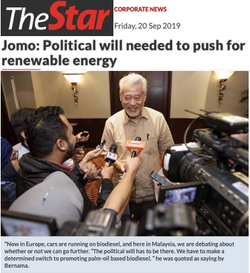
The Star 20 Sept 2019

The Star 20 Sept 2019

Political will needed to push for renewable energy

The Star 10July 2019

The Star 10July 2019

Malaysian businesses need boost

The Star 9 Oct 2019

The Star 9 Oct 2019

Subsidise public transport for bottom 40%

The Edge 26 Sept 2019

The Edge 26 Sept 2019

Call for measures to counteract global headwinds

The Edge 9 Oct 2019

The Edge 9 Oct 2019

Subsidise public transportation, not fuel

The Star 8 Oct 2019

The Star 8 Oct 2019

Subsidise public transportation for bottom 70%

TheEdge 2Oct 2019

TheEdge 2Oct 2019

"We need to counteract downward forces"

Fake News

PLEASE BEWARE OF MISREPRESENTATIONS OF IMAGES OF JOMO

Commercial and political misrepresentation of his image attributing to him to things which he never said or misrepresenting things he may have said is being circulated on websites such as those posted here. 


You should also be warned, in case you are not already aware, of ‘click bait’ i.e. using such images simply to attract your interest, and then to download your online information for abuse for a variety of ends.

Please inform us and provide a screenshot and weblink to enable further action, which is incredibly difficult. 

Thank you for reading this and for your help and cooperation.

This has also been flagged on his official Facebook page


JKS image ad2.jpg
JKS image Bitcoin ad on  Facebook.jpg
JKS - Fake News 2.jpg
Contact Me
JKS - Fake News 3.jpg
JKS fake news 1.jpg

Nadi Insan by the People's History Centre

Read all editions of #NadiInsan from 1979 to 1983 free of charge at the Peoples History Center website.


Containing writings on socio-political issues, film and cultural commentary, as well as in-depth interviews, Nadi Insan is motivated by community activists and intellectuals in Malaysia.

Happy reading!

Dapatkan kesemua siri majalah #NadiInsan dari tahun 1979 hingga 1983 secara percuma di laman Pusat Sejarah Rakyat.


Berisi tulisan memperihal sosio-politik, ulasan filem dan budaya sehinggalah wawancara yang rencam, Nadi Insan digerakkan oleh aktivis masyarakat dan intelektual di Malaysia.


Selamat membaca!

Contact Me

  • Facebook Social Icon
  • Twitter Social Icon

Thank you for reaching out!

bottom of page