top of page

Follow on Social Media

  • Facebook
  • Twitter
  • Screenshot 2022-09-18 at 5.20.40 PM

M'sia Developments
[on SubStack]

  • Screenshot 2022-09-18 at 5.20.40 PM

Jomo Kwame Sundaram


KUALA LUMPUR: Goodbye 2020, but unfortunately, not good riddance, as we all have to live with its legacy. It has been a disastrous year for much of the world for various reasons, Elizabeth II’s annus horribilis. The crisis has exposed previously unacknowledged realities, including frailties and vulnerabilities.

For many countries, the tragedy is all the greater as some leaders had set national aspirations for 2020, suggested by the number’s association with perfect vision. But their failures are no reason to reject national projects. As Helen Keller, the deaf and blind author activist, noted a century ago, “The only thing worse than being blind is having sight, but no vision.”

After JFK’s assassination in November 1963 ended US opposition to Western intervention in Indonesia, President Sukarno warned his nation in August 1964 that it would be living dangerously’,vivere pericoloso, in the year ahead. A year later, a bloody Western-backed military coup had deposed him, taking up to a million lives, with many more ruined.


Further economic slowdown

Lacklustre economic growth after the 2009 Great Recession has been worsened in recent years by growing international tensions largely associated with US-China relations, Brexit and slowing US and world growth although stock markets continued to bubble.

Economic growth has slowed unevenly, with Asia slowing less than Europe, Latin America and even the US. With effective early pre-emptive measures, much of East Asia began to recover before mid-2020. Meanwhile, most other economies slowed, although some picked up later, thanks to successful initial contagion containment as well as adequate relief and recovery measures.

International trade has been picking up rapidly, accelerating rebounds in heavily trading economies. Commodity prices, except for fossil fuels, have largely recovered, perhaps due to major financial investments by investment banks and hedge funds, buoying stock and commodity prices since late March.

Very low US, EU and Japanese interest rates have thus sustained asset market bubbles. Meanwhile, new arbitrage opportunities, largely involving emerging market economies, have strengthened developing countries’ foreign reserves and exchange rates, thus mitigating external debt burdens.


The pandemic worsened poverty, hunger and vulnerability by squeezing jobs, livelihoods and earnings of hundreds of millions of families. As economic activities resumed, production, distribution and supply barriers, constrained fiscal means, reduced demand, debt, unemployment, as well as reduced and uncertain incomes and spending have become more pronounced.

While many governments initially provided some relief, these have generally been more modest and temporary in developing countries. Past budget deficits, debt, tax incentives and the need for good credit ratings have all been invoked to justify spending cuts and fiscal consolidation.

Meanwhile, pandemic relief funds have been abused by corporations, typically at the expense of less influential victims with more modest, vulnerable and precarious livelihoods. Many of the super-rich got even richer, with the US’s 651 billionaires making over US$1 trillion.

On the pretext of saving or making jobs, existing social, including job protection has been eroded. But despite hopes raised by vaccine development, the crisis is still far from over.


Don’t cry for me, says Argentina

Meanwhile, intellectual property blocks more affordable production for all. Pharmaceutical companies insist that without the exhorbitant monopoly profits from intellectual property, needed tests, treatments and vaccines would never be developed. Meanwhile, a proposed patent waiver for Covid-19 vaccines has been blocked by the US and its rich allies at the World Trade Organization (WTO).

Hence, mass vaccination is likely to be very uneven and limited by intellectual property, national strategic considerations (‘vaccine nationalism’), prohibitive costs, fiscal and other constraints. Already, the rich have booked up almost all early vaccine supplies.

The main challenge then is fiscal. Economic slowdowns have reduced tax revenues, requiring more domestic debt to increase spending needed to ensure the recessions do not become protracted depressions. Meanwhile, rising debt-to-GDP ratios and increased foreign debt have long constrained bolder fiscal efforts.

But despite the urgent need for more fiscal resources, we are told that if the richest are required to pay more taxes, even on windfall profits, they will have no incentive to ‘save’ the rest of us. Nevertheless, new wealth taxes have just passed in Argentina.


This time is different

As the pandemic economic impacts began to loom large, International Monetary Fund Managing Director Kristalina Georgieva quickly offered debt relief for low-income countries on terms much better than the G20’s miserly proposal.

Unlike well-meaning debt-fixated researchers and campaigners, even new World Bank chief economist, erstwhile debt hawk Carmen Reinhart has urged, “First you worry about fighting the war, then you figure out how to pay for it”.

Nobel laureate Amartya Sen is concerned that “in the policies against the present pandemic, equity has not been a particularly noticeable priority… Instead, the focus has been on drastic control and sudden lockdowns…with little attention paid to labourers who lose their jobs or the many migrant workers, the poorest of the poor, who are kept hundreds of miles from their homes”.

COVID-19 may still bring major reforms, such as Roosevelt’s New Deal response to the Great Depression. But now, it seems likely to usher in a world where insecurity and unpredictability define the new normal. While professing to protect victims’ interests, ethno-populism blames ‘Others’ as the enemy responsible.

Still, many hope for a silver lining. Sen suggests that “a better society can emerge from the lockdowns”, as happened after World War Two, with greater welfare state provisioning and labour protections in much of the West and agrarian reforms in East Asia. But there is nothing to guarantee a better ‘new normal’.


Beyond neoliberalism?

For many, Joe Biden’s election to succeed Trump is being celebrated as a resurgent triumph for neoliberalism, enabling the US and the rest of the world to return to ‘business as usual’.

Incredibly, another Nobel laureate Michael Spence has even called for structural adjustment programme conditionalities for countries seeking help from the Bank and Fund, repudiating the Bank’s Growth Commission he once chaired, i.e., which found that seemingly fair, often well-intentioned conditionalities had resulted in “lost decades” of development.

But thankfully, there is widespread recognition that all is not well in the world neoliberalism and Western dominance created. Incredibly, Klaus Schwab, transnational capitalism’s high priest, has conceded, “the neoliberalist … approach centers on the notion that the market knows best, that the ‘business of business is business’...Those dogmatic beliefs have proved wrong”.

Instead, he advised, “We must move on from neoliberalism in the post-COVID era”, recognising: “Free-market fundamentalism has eroded worker rights and economic security, triggered a deregulatory race to the bottom and ruinous tax competition, and enabled the emergence of massive new global monopolies. Trade, taxation, and competition rules that reflect decades of neoliberal influence will now have to be revised”.


Will we ever learn?

The philosopher Santayana once warned, “Those who cannot remember the past are condemned to repeat it.” Hegel had observed earlier that history repeats itself, to which Marx added, “the first time as tragedy, the second time as farce”. Nevertheless, hope remains an incurable disease that keeps us all striving and struggling.

As FDR reminded his supporters, no progressive policies will come about simply by relying on the goodwill of those in authority. Instead, they will only be enacted and implemented thanks to popular pressure from below. As Ben Phillips has put it, “the story of 2021 has not yet been written: we can write it; we can right it”.


Anis Chowdhury and Jomo Kwame Sundaram

SYDNEY and KUALA LUMPUR: Just before the World Health Assembly (WHA), an 18 May open letter by world leaders and experts urged governments to ensure that all COVID-19 vaccines, treatments and tests are patent-free, fairly distributed and available to all, free of charge.

Pious promises

Leaders of Italy, France, Germany, Norway and the European Commission called for the vaccine to be “produced by the world, for the whole world” as a “global public good of the 21st century”, while China’s President Xi promised a vaccine developed by China would be a “global public good”.

The United Nations Secretary-General also insisted on access to all when available. The WHA unanimously agreed that vaccines, treatments and tests are global public goods, but was vague on the implications.

As COVID vaccines have become available, nearly 70 poor countries are left out. Many more people will be infected and may die without vaccinations, warns the People’s Vaccine Alliance, advocating equitable and low-cost access.

As the rich and powerful secure access, poor countries will leave out most people as only one in ten can be vaccinated in 2021, making a mockery of the Sustainable Development Goals’ over-arching principle of ‘leaving no one behind’.

Waiving WTO rules

The authors of “Want Vaccines Fast? Suspend Intellectual Property Rights (IPR) argue that IPR are the main stumbling block. Meanwhile, South Africa and India have proposed that the World Trade Organization (WTO) temporarily waive its Trade-Related Aspects of Intellectual Property Rights (TRIPS) rules limiting access to COVID-19 medicines, tools, equipment and vaccines.

The proposal – welcomed by the WHO Director-General and supported by nearly 100 governments and many civil society organisations around the world – goes beyond the Doha Declaration’s limited flexibilities for national emergencies and circumstances of extreme urgency.

But Brazil, one of the worst hit countries, opposes the proposal, together with the US, the EU, the UK, Switzerland, Norway, Canada, Australia and Japan, insisting the Doha Declaration is sufficient.

The empire fights back

The US insists that IP protection is best to ensure “swift delivery” while the EU claims there is “no indication that IPR issues have been a genuine barrier … to COVID-19-related medicines and technologies” as the UK dismisses the proposal as “an extreme measure to address an unproven problem”.

The Federation of Pharmaceutical Manufacturers and Associations Director-General claims it “would jeopardize future medical innovation, making us more vulnerable to other diseases”, while The Wall Street Journal denounced it as “A Global Covid Vaccine Heist”, warning “their effort would harm everyone, including the poor”.

Citing AstraZeneca’s agreement with the Serum Institute of India (SII) and Brazilian companies, other opponents assert that voluntary mechanisms should suffice, insisting the public-private COVAX initiative ensures fair and equitable access.

But the US has refused to join COVAX, part of the WHO-blessed, donor-funded Access to COVID-19 Tools Accelerator (ACT-A), ostensibly committed to “equitable global access to innovative tools for COVID-19 for all”.

Intellectual property fraud

The Doha Declaration only covers patents, ignoring proprietary technology to safely manufacture vaccines. Meanwhile, there is not enough interest, let alone capacity among leading pharmaceutical companies to produce enough vaccines, safely and affordably, for everyone before 2024.

Despite the Doha Declaration, developing countries are still under great pressure from the EU and the US. The rules allowing ‘compulsory licensing’ are very restrictive, with countries required to separately negotiate contracts with companies for specific amounts, periods and purposes, deterring and thus often bypassing those with limited financial and legal capacities.

South Africa cited the examples of Regeneron and Eli Lilly, which have already committed most of their COVID-19 antibody cocktail drugs to the US. In India, Pfizer has legally blocked alternative pneumococcal vaccines from Médecins Sans Frontières (MSF). In South Korea, Pfizer has forced SK Bioscience to stop producing its pneumococcal conjugate vaccine (PCV).

To be sure, patents are not necessary for innovation, with the Harvard Business Review showing IPR law actually stifling it. Meanwhile, The Economist has condemned patent trolling, which has reduced venture capital investment in start-ups and R&D spending, especially by small firms.

Public subsidies

Like most other life-saving drugs and vaccines, COVID-19 vaccines and treatment technologies owe much to public investment. Even the Trump administration provided US$10.5 billion to vaccine development companies.

Moderna’s vaccine emerged from a partnership with the National Institute of Health (NIH). Research at the NIH, Defence Department and federally funded university laboratories have been crucial for rapid US vaccine development.

Pfizer has received a US$455 million German government grant and nearly US$6 billion in US and EU purchase commitments. AstraZeneca received more than £84 million (US$111 million) from the UK government, and more than US$2 billion from the US and EU for research and via purchase orders.

But although public funding for most medicine and vaccine development is the norm, Big Pharma typically keeps the monopoly profits they enjoy from the IPR they retain.

Voluntary mechanisms inadequate

COVAX seeks to procure two billion vaccine doses, to be shared “equally” between rich and poor countries, but has only reserved 700,000 vaccine doses so far, while the poorest countries, with 1.7 billion people, cannot afford a single deal. Meanwhile, rich countries have secured six billion doses for themselves.

Thus, even if and when COVAX procures its targeted two billion vaccine doses, less than a billion will go to poor countries. If the vaccine requires two doses, as many – including Gavi, the Vaccine Alliance – assume, this will only be enough for less than half a billion people.

Meanwhile, ACT-A’s diagnostics work seeks to procure 500 million tests, only a small fraction of what is required. Even if fully financed, which is not the case, this is only a partial solution at best.

But with the massive funding shortfall, even these modest targets will not be reached. To date, only US$5 billion of the US$43 billion needed for poor countries in 2021 has been raised.

Profitable philanthropy

As of mid-October, while 18 generic pharmaceutical companies had signed up, not a single major drug company had joined WHO’s COVID-19 Technology Access Pool (C-TAP) to encourage industry contributions of IP, technologies and data to scale up worldwide sharing and production of all such needs.

Meanwhile, a few companies have ‘voluntarily’ given up some IPR, if only temporarily. Moderna has promised to license its COVID-19 related patents to other vaccine manufacturers, and not enforce its own patents. But their pledge is limited, allowing it to enforce its patents “post pandemic”, as defined by Moderna.

Besides profiting from licensing in the longer term, Moderna’s pledge will enable it to grow the new mRNA market its business is based on, by establishing and promoting a transformational drug therapy platform, yielding gains for years to come.

AstraZeneca has announced that its vaccine, researched at Oxford University, will be available at cost in some locations, but only until July 2021. Meanwhile, Eli Lilly has agreed, with the Gates Foundation, to supply – without demanding royalties from low- and middle-income countries – its (still experimental) COVID-19 antibody treatment, but did not specify how many doses.

Indeed, as Proudhon warned almost two centuries ago, ‘property is theft’.

Related IPS commentaries

“Covid-19 Cannot Be Defeated by a Divided World”, 16 July 2020. http://www.ipsnews.net/2020/07/covid-19-cannot-defeated-divided-world/

“Politics, Profits Undermine Public Interest in Covid-19 Vaccine Race”, 26 May 2020. https://www.ipsnews.net/2020/05/politics-profits-undermine-public-interest-covid-19-vaccine-race/

“West First Policies Expose Myths”, 31 Mar. 2020. https://www.ipsnews.net/2020/03/west-first-policies-expose-myths/

“Intellectual Property Raises Costs of Living”, 11 Feb. 2020. https://www.ipsnews.net/2020/02/intellectual-property-raises-costs-living/


Jomo K S

In three weeks, the year 2020 will end. Incredibly, it has been a year largely devoid of any serious discussion of Vision 2020, its significance, and the lessons its achievements and failures offer for the future. The philosopher Santayana warned, “Those who cannot remember the past are condemned to repeat it.” Hegel had observed earlier that history repeats itself, to which Marx added, “the first time as tragedy, the second time as farce”.

In February 1991, then Prime Minister Tun Mahathir articulated a bold vision for the future of Malaysia in three decades, branded Vision 2020, soon after the New Economic Policy’s (NEP) Outline Perspective Plan for 1971-1990 ended.

Thirty years later, instead of realising its promise of perfect vision, 2020 will soon end differently. The reality today is quite different, with the blame game continuing over what went wrong.

Many agree that 2020 unexpectedly became l’anno di vivere pericoloso, Sukarno’s ‘year of living dangerously’. But worse, it has been a disastrous year for most of the world for various reasons, Elizabeth II’s annus horribilis.

Vision and hope

Nevertheless, Vision 2020 offered a visionary commitment, comparable to Tun Razak’s Rukunegara and NEP two decades earlier in 1971 after May 1969. Razak sought to promote ‘national unity’ -- by ‘eradicating poverty’ and ‘restructuring society’ to eliminate the identification of race with economic function.

Vision 2020 aspired for a psychologically liberated, liberal, mature, ethical, tolerant, democratic, scientific, developed, industrialised, prosperous, progressive, caring, economically just, united and civilised Malaysian bangsa (nation).

This was soon accompanied by the notion of Melayu Baru, asserting a new self-confident Malay in ‘bangsa Malaysia’ rid of ketuanan Melayu’s supremacist racist pretensions.

Long preoccupied with nation-building, Rustam was the son of radical nationalist politician, Ahmad Boestamam, who helped craft the 1947 Perlembagaan Rakyat. Vision 2020 sought a bangsa Malaysia (Malaysian nation), just as the People’s Constitution envisaged a bangsa Melayu, defined by patriotism, not ethnic genealogy or religion.

Vision lost

The project was abandoned early, arguably due to the 1997-1998 financial crisis and the ensuing Mahathir-Anwar political fallout. However, although abandoned soon after birth, Vision 2020’s promise, and the dreams it generated, however briefly, suggest all is not lost.

Unfortunately, the country has not had a real debate over what happened to Vision 2020. This progressive national vision sought to go beyond the divisive dominant interpretation of the NEP which effectively undermined its own declared objective of forging national unity.

In 1986, Mahathir began economic, educational and cultural liberalisation, following the economic downturn and political challenges of the mid-1980s. Ketuanan Melayu was coined, almost in reaction, to boost the political comeback of an ambitious, erstwhile Razak aide, detained without trial for half a decade after his untimely passing in January 1976.

Capturing public policy and its interpretations, ruling party politicians and their business ‘cronies’ undermined prospects for improved inter-ethnic relations by invoking ethno-populist ‘victimhood’ to secure ketuanan Melayu privilege.

Like Trump’s beleaguered whites, Hitler’s Aryan nation and Afrikaner-driven apartheid (against ‘Anglo’ dominance and the ‘Black’ threat), ketuanan ideology is legitimised by invoking such ostensibly racial ‘victimhood’.

Ironically, for example, South Africa’s NEP-inspired ‘Black economic empowerment’ (BEE) was reimported as ‘Bumiputera economic empowerment’ to emulate creating Black billionaires despite the continuing sorry lot of most Africans there a quarter century later.

Vision betrayed

Although many consider Vision 2020 to have been Mahathir’s finest, statesman-like moment, rising above the divisive legacy of NEP implementation, privatisation and the 1980s’ UMNO factional splits, Mahathir has hardly mentioned it in his recent political comeback, for reasons best known to himself.

Mahathir successfully courted Pakatan Harapan (PH) leaders to take its helm before its May 2018 election victory. His campaign portrayed him as an old general coming out of retirement to save a nation hijacked by Najib and his mainly UMNO enablers.

However, despite wishful thinking by some enthusiasts, he did not abandon his ethno-populist politics. Wise and patient, he seemed to work well with most, within and outside PH, keeping his new partners in check.

No longer master of the moment, he expected his closest allies to let him lead a government of national unity as indispensable leader. But they seized the moment, hoping to capture the mantle of ‘Malay-Muslim unity’ from the well-funded Najib-Hadi ‘bromance’.

Meanwhile, some DAP leaders’ behaviour, seemingly insensitive to declining public support for PH, only seemed to confirm the ‘Malay-Muslim’ opposition’s ‘bogeyman’ caricature of their party. Thus, PH’s popular legitimacy, especially of its Malay leadership, was undermined by their conduct, enabling Bersatu’s February palace coup.

Dreams of a nation

The major political tendencies in Malaysia invoking ethno-populist agendas have inevitably torn the already divided nation apart, even while vehemently claiming otherwise.

While most post-colonial societies still struggle to overcome colonial legacies, ethno-populism employs pseudo-nationalist rhetoric for narrower, often reactionary agendas. By undermining national resolve, they enhance the influence of foreign interests and ideologies.

Yet, there is still potential in Vision 2020’s promise of a modern, industrialised, developed and united Malaysian nation. Despite responding to ethno-populism in Malaysia, Vision 2020, like its predecessors, also has the potential of transcending it. Such are the dialectics of history.

Hence, the latent progressive nationalism of the Rukunegara, NEP and Vision 2020 is still relevant, but remains largely unrealised. In 2020, the COVID-19 pandemic has unleashed much disruption, but this remains potentially creative, but only if wisely steered.

This will most certainly not involve a return to ‘business as usual’, or even a ‘new normal’. We will only emerge stronger as a nation if we can pull together, instead of working at cross-purposes for dubious short-term political advantage and personal economic gain.

The pandemic has emphasised the need for an ‘all of government’ approach, involving the ‘whole of society’, not only to contain and overcome COVID-19 contagion, but also to build the Malaysia promised three decades ago by Vision 2020, and half a century ago, by the Rukunegara and the NEP.

The audacity of hope

Is the nation condemned to wallow in more contemporary variations of the same old ‘ethno-populist’ travesty? Is Malaysia condemned to keep replaying the same tragic charade, albeit with new casts and stage designs? Or can we still salvage our national future from this sham?

Malaysian politicians’ ambitions and greed -- encouraged by ethno-populism the world over invoking identity politics a la Trump -- seem to have conspired for Malaysia’s ‘perfect storm’. But Malaysian politics of the last year is exposing the self-serving hypocrisy of all ethno-populisms.

But unlike in 1971, or even 1991, now, there is no shared alternative national project on offer to fill the vacuum post-2020 beyond recycling ethno-populist slogans spiced with buzzwords from Washington, London and Davos.

Emerging generational and gender differences in attitudes and priorities have opened cracks allowing occasional beams of light to inspire hope as we grope our way forward in this darkness, unaided, if not actually impeded by politicians and other would-be leaders.

Jomo K S was an economics professor and United Nations Assistant Secretary-General for Economic Development.


Latest Videos

All Videos

All Videos

AN URGENT CALL: A PEOPLE"S VACCINE AGAINST COVID-19

00:00
9 June 2020: IHD-ILO-ISLE Virtual Conference - Day 2

9 June 2020: IHD-ILO-ISLE Virtual Conference - Day 2

05:08:34
Learning in Governance in times of COVID-19

Learning in Governance in times of COVID-19

46:30
Beyond the Lockdown: Towards the ‘New Normal’

Beyond the Lockdown: Towards the ‘New Normal’

59:10

About Jomo

Jomo Kwame Sundaram is Research Adviser, Khazanah Research Institute, Fellow, Academy of Science, Malaysia, and Emeritus Professor, University of Malaya. Previously, he was UN Assistant Secretary-General for Economic Development, Assistant Director General, Food and Agriculture Organization (FAO), Founder-Chair, International Development Economics Associates (IDEAs) and President, Malaysian Social Science Association. 

In The Media

TheStar 26 June 2020

TheStar 26 June 2020

The Star 20 Sept 2019

The Star 20 Sept 2019

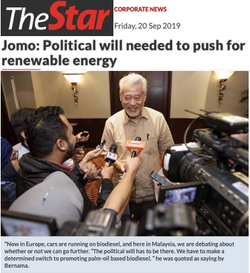
Political will needed to push for renewable energy

The Star 10July 2019

The Star 10July 2019

Malaysian businesses need boost

The Star 9 Oct 2019

The Star 9 Oct 2019

Subsidise public transport for bottom 40%

The Edge 26 Sept 2019

The Edge 26 Sept 2019

Call for measures to counteract global headwinds

The Edge 9 Oct 2019

The Edge 9 Oct 2019

Subsidise public transportation, not fuel

The Star 8 Oct 2019

The Star 8 Oct 2019

Subsidise public transportation for bottom 70%

TheEdge 2Oct 2019

TheEdge 2Oct 2019

"We need to counteract downward forces"

Fake News

PLEASE BEWARE OF MISREPRESENTATIONS OF IMAGES OF JOMO

Commercial and political misrepresentation of his image attributing to him to things which he never said or misrepresenting things he may have said is being circulated on websites such as those posted here. 


You should also be warned, in case you are not already aware, of ‘click bait’ i.e. using such images simply to attract your interest, and then to download your online information for abuse for a variety of ends.

Please inform us and provide a screenshot and weblink to enable further action, which is incredibly difficult. 

Thank you for reading this and for your help and cooperation.

This has also been flagged on his official Facebook page


JKS image ad2.jpg
JKS image Bitcoin ad on  Facebook.jpg
JKS - Fake News 2.jpg
Contact Me
JKS - Fake News 3.jpg
JKS fake news 1.jpg

Nadi Insan by the People's History Centre

Read all editions of #NadiInsan from 1979 to 1983 free of charge at the Peoples History Center website.


Containing writings on socio-political issues, film and cultural commentary, as well as in-depth interviews, Nadi Insan is motivated by community activists and intellectuals in Malaysia.

Happy reading!

Dapatkan kesemua siri majalah #NadiInsan dari tahun 1979 hingga 1983 secara percuma di laman Pusat Sejarah Rakyat.


Berisi tulisan memperihal sosio-politik, ulasan filem dan budaya sehinggalah wawancara yang rencam, Nadi Insan digerakkan oleh aktivis masyarakat dan intelektual di Malaysia.


Selamat membaca!

Contact Me

  • Facebook Social Icon
  • Twitter Social Icon

Thank you for reaching out!

bottom of page